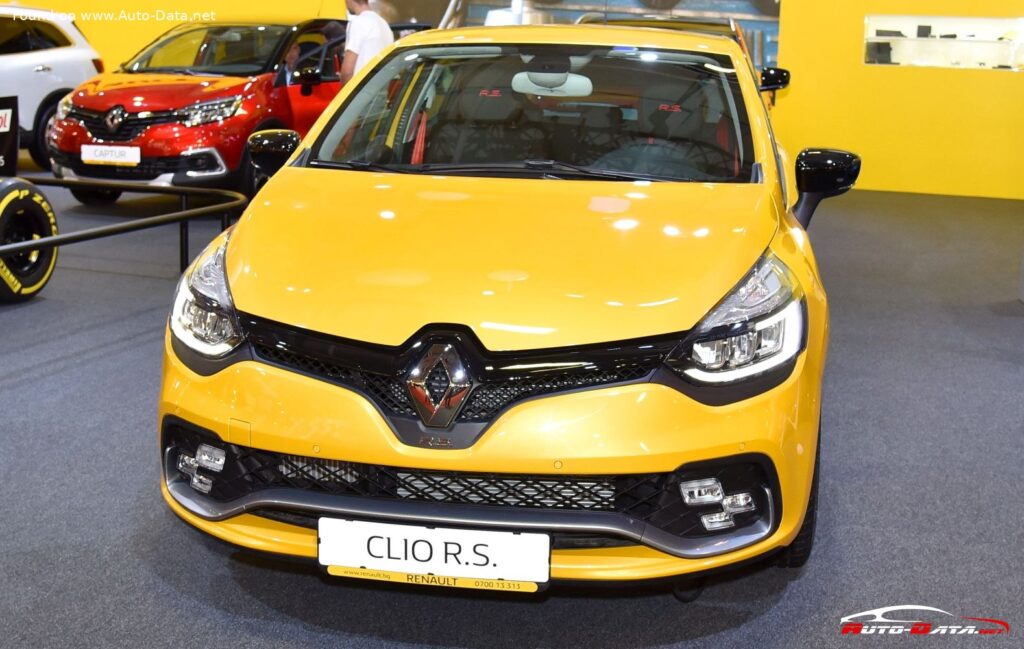
The Renault Clio IV (Phase II), specifically the variant equipped with the 0.9 TCe (75 Hp) engine, represents a significant iteration of Renault’s highly successful supermini. First launched in 1990, the Clio has consistently been one of Europe’s best-selling cars, known for its stylish design, practical size, and engaging driving dynamics. The fourth generation, introduced in 2012, received a mid-cycle refresh, or “Phase II,” in 2016, which brought subtle aesthetic updates and technological improvements to keep it competitive in the fiercely contested B-segment market. The 0.9 TCe (75 Hp) model, produced between 2018 and 2019, was positioned as an economical and efficient option within the Clio lineup, perfectly suited for urban environments and offering a balance of performance and fuel efficiency crucial for European consumers.
While the Renault brand enjoys a storied history in automotive manufacturing, its presence in the United States market has been sporadic since the 1980s. Consequently, the Renault Clio, a staple on European roads, was never officially sold in North America. This article will delve into the technical specifications, design philosophy, and market impact of this particular Clio variant, using American English terminology and units where applicable, to provide an expert perspective on a vehicle that defines a core segment of the international automotive landscape.
Powertrain & Engine Architecture
At the heart of this specific Renault Clio IV (Phase II) model is the H4B 408 engine, a compact 0.9-liter (898 cm³ or 54.8 cubic inches) three-cylinder gasoline (petrol) unit. Despite its small displacement, this engine benefits from a turbocharger and intercooler, technology typically associated with larger powertrains, allowing it to produce a respectable 75 horsepower at 5000 revolutions per minute (rpm). This power output, combined with a peak torque of 88.51 pounds-feet (120 Nm) delivered at a low 2500 rpm, provides adequate responsiveness for city driving and comfortable cruising on European highways.
The engine’s front, transverse layout and inline three-cylinder configuration are standard for a modern front-wheel-drive supermini, optimizing interior space and weight distribution. Each cylinder features four valves, contributing to efficient breathing and combustion, managed by a multi-port manifold injection system. Power is channeled to the front wheels via a smooth-shifting 5-speed manual transmission, a common choice in Europe for its driver engagement and efficiency. The H4B 408 engine utilizes a timing chain, contributing to lower long-term maintenance costs compared to engines employing timing belts.
Fuel Injection and Valvetrain
The H4B 408 engine employs a multi-point fuel injection system, delivering fuel directly to the intake ports. This system, coupled with the engine’s variable valve timing (VVT) on the intake side, optimizes combustion efficiency and reduces emissions. The VVT system adjusts the timing of the intake valves based on engine speed and load, improving both low-end torque and high-end power. The engine’s compact design and lightweight construction contribute to its overall efficiency and responsiveness.
Driving Characteristics
The 0.9 TCe (75 Hp) variant of the Clio IV (Phase II) offers a driving experience geared towards urban practicality and fuel efficiency. While not a performance-oriented model, the turbocharger provides a noticeable boost in power, making overtaking maneuvers on highways manageable. The 5-speed manual transmission is well-matched to the engine’s characteristics, offering smooth gear changes and a reasonable spread of ratios. The gear ratios are optimized for maximizing fuel economy, with a relatively tall fifth gear for comfortable cruising. Compared to higher-output Clio variants, such as those equipped with the 1.2 TCe engine, the 0.9 TCe feels less eager to rev and offers a more relaxed driving experience.
Acceleration from a standstill is adequate for city driving, but the engine can feel strained when fully loaded or climbing steep hills. The steering is light and precise, making it easy to maneuver in tight spaces. The suspension is tuned for comfort, absorbing bumps and imperfections in the road surface effectively. Overall, the driving experience is best described as refined and user-friendly, prioritizing ease of use and fuel efficiency over outright performance.
Equipment & Trim Levels
The 0.9 TCe (75 Hp) variant typically served as an entry-level or mid-range trim within the Clio IV (Phase II) lineup. Standard equipment generally included air conditioning, power windows, central locking, a basic audio system with USB connectivity, and ABS brakes. Safety features such as front airbags and electronic stability control (ESC) were also standard. Interior upholstery was typically cloth, with a functional and durable design.
Optional extras available for this trim level included alloy wheels, a touchscreen infotainment system with navigation, rear parking sensors, cruise control, and automatic headlights and wipers. Higher trim levels offered additional features such as leather upholstery, climate control, and a more advanced audio system. The dashboard configuration was generally consistent across all trim levels, featuring a simple and intuitive layout with easy-to-read instruments.
Chassis & Braking
The Clio IV (Phase II) utilizes a MacPherson strut front suspension and a torsion beam rear suspension. This configuration provides a good balance of ride comfort and handling. The torsion beam rear suspension is a cost-effective solution that minimizes weight and complexity. Front brakes are ventilated discs, providing effective stopping power, while the rear utilizes drum brakes, a cost-effective and adequate solution for a vehicle of this size and power. An Anti-lock Braking System (ABS) was standard, enhancing control during emergency braking. The steering system features an electric power-assisted rack and pinion setup, offering light steering at low speeds for easy maneuverability in urban areas and more feel at higher speeds.
Stabilizer bars are fitted to both the front and rear axles, reducing body roll during cornering. Tire sizes typically ranged from 185/65 R15 to 195/55 R16, depending on the trim level. The chassis is designed to be lightweight and rigid, contributing to the car’s overall handling and safety.
Market Reception & Comparison
Critics generally viewed the 0.9 TCe (75 Hp) variant of the Clio IV (Phase II) as a sensible and economical choice. It was praised for its fuel efficiency, comfortable ride, and stylish design. However, some reviewers noted that the engine could feel underpowered, particularly when fully loaded or on steep inclines. Compared to the 1.2 TCe variant, the 0.9 TCe offered lower running costs but sacrificed some performance. In terms of reliability, the H4B 408 engine proved to be generally reliable, although some owners reported issues with the turbocharger and fuel injectors.
Fuel economy was a key strength of the 0.9 TCe, consistently achieving around 47 US mpg (5 liters per 100 km) in combined driving. This made it one of the most fuel-efficient cars in its class. The Clio IV (Phase II) also benefited from relatively low insurance costs and affordable maintenance. Compared to rivals like the Ford Fiesta and Volkswagen Polo, the Clio offered a more stylish design and a more comfortable ride, but the Fiesta generally offered a more engaging driving experience.
Technical Specifications
| Category | Specification |
| Brand | Renault |
| Model | Clio |
| Generation | Clio IV (Phase II, 2016) |
| Type (Engine) | 0.9 TCe (75 Hp) |
| Start of Production | 2018 year |
| End of Production | 2019 year |
| Powertrain Architecture | Internal Combustion engine |
| Body type | Hatchback |
| Seats | 5 |
| Doors | 5 |
| Fuel consumption (urban) | 37.3 US mpg (6.3 l/100 km) |
| Fuel consumption (extra urban) | 56 US mpg (4.2 l/100 km) |
| Fuel consumption (combined) | 47 US mpg (5 l/100 km) |
| CO2 emissions | 113 g/km |
| Fuel Type | Petrol (Gasoline) |
| Acceleration 0 – 60 mph | 11.7 sec |
| Acceleration 0 – 100 km/h | 12.3 sec |
| Maximum speed | 110.6 mph (178 km/h) |
| Emission standard | Euro 6 |
| Power | 75 Hp @ 5000 rpm |
| Torque | 88.51 lb.-ft. @ 2500 rpm (120 Nm @ 2500 rpm) |
| Engine layout | Front, Transverse |
| Engine Model/Code | H4B 408 |
| Engine displacement | 0.9 l (898 cm³, 54.8 cu. in.) |
| Number of cylinders | 3 |
| Fuel injection system | Multi-port manifold injection |
Legacy
The 0.9 TCe (75 Hp) powertrain in the Renault Clio IV (Phase II) has proven to be reasonably reliable, although long-term ownership can reveal potential issues with the turbocharger and fuel injectors. Regular maintenance, including oil changes and air filter replacements, is crucial for ensuring longevity. In the used car market, this variant represents a good value proposition, offering a stylish and efficient supermini at an affordable price. Its fuel economy and low running costs make it an attractive option for budget-conscious buyers. While not a performance icon, the 0.9 TCe Clio IV (Phase II) remains a popular choice for urban commuters and first-time car owners, solidifying its place as a practical and dependable member of the Clio family.