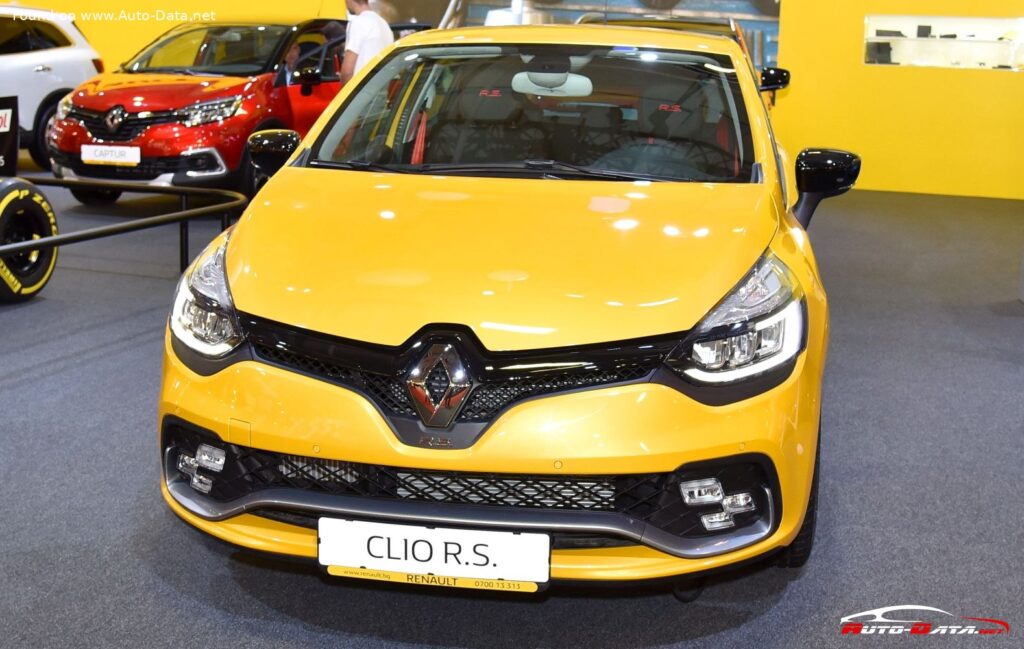
The Renault Clio IV, specifically the “Phase II” or facelifted model introduced in 2016, represents a significant chapter in the storied history of Renault’s popular subcompact car. This particular variant, the Renault Clio IV (Phase II, 2016) 1.5 dCi (75 Hp), was produced between 2018 and 2019, serving as an accessible and highly efficient entry-point into the Clio lineup for the European market. As a five-door hatchback, it continued the Clio’s tradition of offering a blend of stylish design, practical utility, and economical operation, making it a perennial best-seller in its segment across Europe.
The Clio series, first launched in 1990, has consistently been a benchmark in the B-segment, known for its youthful appeal and innovative features. The fourth generation, introduced in 2012, brought a dramatic shift in design language, moving towards more curvaceous lines and a dynamic stance. The Phase II refresh further refined this aesthetic, incorporating updated lighting signatures and minor exterior tweaks that kept it competitive and fresh against a rapidly evolving field of rivals. While not sold in the United States, the Clio’s impact on the global automotive landscape, particularly in Europe, is undeniable, shaping perceptions of what a modern subcompact can offer.
This specific iteration, powered by the 1.5-liter dCi diesel engine with 75 horsepower, was primarily targeted at drivers prioritizing exceptional fuel economy and low running costs. It was a testament to Renault’s expertise in diesel powertrain development, offering a compelling package for urban commuters and those seeking long-distance efficiency without sacrificing comfort or maneuverability.
Powertrain & Engine Architecture
At the heart of the Renault Clio IV (Phase II, 2016) 1.5 dCi (75 Hp) lies Renault’s ubiquitous K9K engine, a 1.5-liter (1461 cm3 or 89.16 cubic inches) inline four-cylinder diesel unit. This engine is renowned for its widespread use across various Renault and Nissan models, earning a reputation for reliability and outstanding fuel efficiency. In this particular application, it generates a modest but effective 75 horsepower at 4000 rpm, paired with a robust 154.89 lb.-ft. of torque delivered at a low 2000 rpm. The inclusion of a turbocharger and intercooler significantly boosts its performance and responsiveness, making it feel more capable than its horsepower figure might suggest, especially in city driving and at lower speeds.
The K9K engine utilizes a common rail direct fuel injection system, delivering precise fuel metering for optimal combustion and reduced emissions. The valvetrain features two valves per cylinder (SOHC), a configuration chosen for its simplicity and reliability. The engine block is constructed from cast iron, contributing to its durability, while the cylinder head is made of aluminum alloy to reduce weight. Power is channeled to the front wheels through a smooth-shifting 5-speed manual transmission, a common and reliable choice for this segment. This drivetrain architecture, with the engine mounted transversely at the front, is typical for modern front-wheel-drive hatchbacks, optimizing interior space and handling.
Driving Characteristics
The Renault Clio IV (Phase II, 2016) 1.5 dCi (75 Hp) offers a driving experience geared towards efficiency and ease of use rather than outright performance. The 75 horsepower output, while adequate for everyday driving, doesn’t provide brisk acceleration. The 0 to 60 mph sprint takes approximately 11.4 seconds, and the top speed is around 112.47 mph. However, the engine’s 154.89 lb.-ft. of torque, available from just 2000 rpm, provides ample pulling power for navigating city streets and merging onto highways.
Compared to higher-output versions of the Clio IV, such as those equipped with the 1.2 TCe gasoline engine, the 1.5 dCi (75 Hp) feels noticeably slower. The 5-speed manual transmission is well-matched to the engine’s characteristics, with gear ratios optimized for fuel economy. The gear shift action is light and precise, making it easy to navigate through the gears. The relatively low engine output means that the driver doesn’t need to shift gears frequently, contributing to a relaxed driving experience. Compared to a 1.5 dCi with a higher horsepower rating, this variant prioritizes fuel efficiency over spirited driving.
Equipment & Trim Levels
As an entry-level variant, the Renault Clio IV (Phase II, 2016) 1.5 dCi (75 Hp) typically came equipped with a standard set of features designed to provide essential comfort and safety. Standard equipment generally included power steering, central locking, electric front windows, an adjustable steering column, and a basic audio system with USB connectivity. Safety features included ABS, Electronic Stability Control (ESC), and front airbags.
Interior upholstery was typically cloth, with a functional and durable design. The dashboard configuration was straightforward, with clear instrumentation and intuitive controls. Optional extras available for this trim level often included air conditioning, alloy wheels, rear parking sensors, and a more advanced infotainment system with touchscreen display. Higher trim levels within the Clio IV range offered more luxurious features, such as leather upholstery, automatic climate control, and a premium audio system. However, the 1.5 dCi (75 Hp) model was intentionally positioned as a value-oriented option, focusing on providing essential features at an affordable price point.
Chassis & Braking
The Renault Clio IV (Phase II, 2016) 1.5 dCi (75 Hp) utilizes a MacPherson strut front suspension and a torsion beam rear suspension. This configuration provides a good balance of ride comfort and handling. The torsion beam rear suspension is a cost-effective solution that minimizes weight and complexity. The front suspension features coil springs and dampers, tuned to provide a comfortable ride while maintaining adequate control.
The braking system consists of front ventilated disc brakes and rear drum brakes. The use of drum brakes on the rear helps to reduce costs and weight. The Anti-lock Braking System (ABS) is standard, providing enhanced stopping power and control, particularly on slippery surfaces. The steering system is a rack and pinion type with electric power steering, offering light and responsive handling. The relatively low weight of the 1.5 dCi (75 Hp) variant contributes to its agility and maneuverability.
Market Reception & Comparison
Critics generally viewed the Renault Clio IV (Phase II, 2016) 1.5 dCi (75 Hp) as a sensible and practical choice for buyers prioritizing fuel economy and low running costs. While its performance wasn’t particularly exciting, its efficiency and affordability were highly praised. Compared to the gasoline-powered versions of the Clio IV, the 1.5 dCi (75 Hp) offered significantly better fuel economy, making it a more economical option for high-mileage drivers.
Compared to other trims in the Clio lineup, such as the 1.2 TCe, the 1.5 dCi (75 Hp) was positioned as the entry-level option. It was typically less expensive to purchase and insure, but it also offered less power and performance. In terms of reliability, the K9K engine has a generally good reputation, but like any diesel engine, it requires regular maintenance, including oil changes and filter replacements. The 1.5 dCi (75 Hp) variant offered a compelling alternative to rivals like the Volkswagen Polo 1.4 TDI and the Ford Fiesta 1.5 TDCi, often undercutting them on price while delivering comparable fuel economy.
Technical Specifications
| Brand | Renault |
| Model | Clio IV (Phase II, 2016) |
| Engine Type | 1.5 dCi (75 Hp) |
| Production Start | 2018 |
| Production End | 2019 |
| Body Type | Hatchback |
| Seats | 5 |
| Doors | 5 |
| Fuel Type | Diesel |
| Powertrain Architecture | Internal Combustion engine |
| Drivetrain Architecture | Front-wheel drive |
| Fuel Consumption (Urban) | 4.4 l/100 km (53.5 US mpg) |
| Fuel Consumption (Extra Urban) | 3.6 l/100 km (65.3 US mpg) |
| Fuel Consumption (Combined) | 4 l/100 km (58.8 US mpg) |
| CO2 Emissions | 104 g/km |
| Emission Standard | Euro 6 |
| Acceleration 0 – 60 mph | 11.4 sec |
| Acceleration 0 – 100 km/h | 12 sec |
| Maximum Speed | 181 km/h (112.47 mph) |
| Power | 75 Hp @ 4000 rpm |
| Power per liter | 51.3 Hp/l |
| Torque | 210 Nm (154.89 lb.-ft.) @ 2000 rpm |
| Engine Layout | Front, Transverse |
| Engine Model/Code | K9K 628 |
| Engine Displacement | 1461 cm3 (89.16 cu. in.) |
| Number of Cylinders | 4 |
| Engine Configuration | Inline |
| Number of Valves per Cylinder | 2 |
| Fuel Injection System | Diesel Commonrail |
| Engine Aspiration | Turbocharger, Intercooler |
| Engine Oil Capacity | 4.5 l (4.76 US qt) |
| Coolant Capacity | 5 l (5.28 US qt) |
| Engine Systems | Particulate filter |
| Trunk Space (Minimum) | 300 l (10.59 cu. ft.) |
| Fuel Tank Capacity | 45 l (11.89 US gal) |
| Permitted Trailer Load with Brakes (12%) | 1200 kg (2645.55 lbs) |
| Permitted Trailer Load without Brakes | 615 kg (1355.84 lbs) |
| Length | 4062 mm (159.92 in) |
| Width | 1732 mm (68.19 in) |
| Width including mirrors | 1945 mm (76.57 in) |
| Height | 1448 mm (57.01 in) |
| Wheelbase | 2589 mm (101.93 in) |
| Front Track | 1506 mm (59.29 in) |
| Rear Track | 1506 mm (59.29 in) |
| Ride Height (Ground Clearance) | 120 mm (4.72 in) |
| Minimum Turning Circle | 11.0 m (36.09 ft) |
| Drive Wheel | Front wheel drive |
| Gearbox Type | 5 gears, manual transmission |
| Front Brakes | Ventilated discs |
| Rear Brakes | Drum |
| Assisting Systems | ABS (Anti-lock braking system) |
| Steering Type | Steering rack and pinion |
| Power Steering | Electric Steering |
| Tires Size | 185/65 R15; 195/55 R16 |
| Wheel Rims Size | 15; 16 |
Legacy
The Renault Clio IV generation, and the 1.5 dCi (75 Hp) variant in particular, holds a significant place in the history of European subcompact cars. It demonstrated Renault’s ability to create a stylish, practical, and efficient vehicle that appealed to a wide range of buyers. The K9K engine, while now largely superseded by newer technologies, remains a testament to Renault’s diesel engineering expertise.
In the used car market today, the Clio IV (Phase II, 2016) 1.5 dCi (75 Hp) represents a relatively affordable and economical option. Its fuel efficiency and proven reliability make it a sensible choice for budget-conscious buyers. However, potential buyers should be aware of the potential maintenance costs associated with diesel engines, such as diesel particulate filter (DPF) replacements. Overall, this Clio variant remains a viable and practical option for those seeking a reliable and efficient subcompact hatchback.