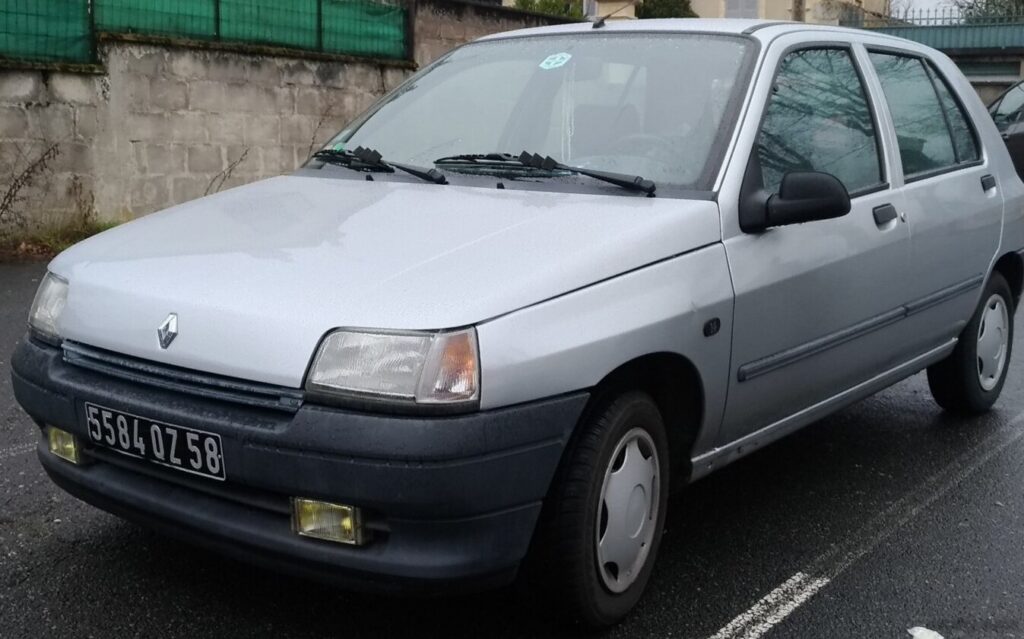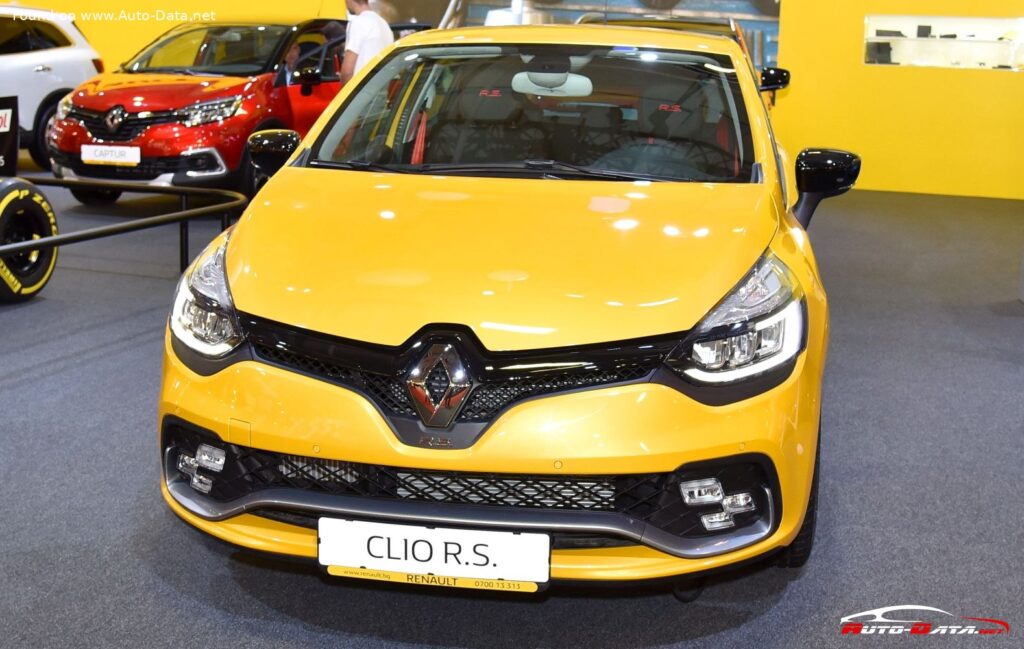
The Renault Clio IV (Phase II, 2016) 1.5 dCi (75 Hp) S&S represents a refined iteration of Renault’s highly successful fourth-generation Clio, produced from 2016 to 2017. This model is a key example of the European supermini, designed for urban environments and prioritizing fuel efficiency. The Clio IV, launched in 2012, marked a significant design shift for Renault, moving away from more conservative aesthetics. The Phase II update brought subtle styling revisions and technological enhancements. This specific variant, powered by a 1.5-liter diesel engine, was primarily targeted at European and international markets where compact size, low running costs, and favorable diesel fuel policies were prevalent. It was never officially sold in the United States.
Powertrain & Engine Architecture
The heart of the Renault Clio IV (Phase II, 2016) 1.5 dCi (75 Hp) S&S is the K9K 628 diesel engine. This 1.5-liter (1461 cm3, or 89.16 cu. in.) inline four-cylinder engine is a product of Renault’s long-standing expertise in small-displacement diesel technology. The engine utilizes a turbocharger with an intercooler to boost power output, and employs a common rail direct fuel injection system for precise fuel delivery. This configuration allows for a modest but usable 75 horsepower (56 kW) at 4000 rpm, and a more substantial 147.51 lb.-ft. (200 Nm) of torque available from a low 1750 rpm. The engine features a single overhead camshaft (SOHC) valvetrain with two valves per cylinder.
The engine is typically paired with a five-speed manual transmission, optimized for fuel economy rather than outright performance. The transmission’s gear ratios are geared towards maximizing efficiency and providing adequate acceleration for urban driving. The first gear is relatively short for quick starts, while higher gears are spaced to maintain low engine speeds during highway cruising. The “S&S” designation indicates the inclusion of a Start & Stop system, which automatically shuts off the engine when the vehicle is stationary, reducing fuel consumption and emissions. The K9K 628 engine also incorporates a diesel particulate filter (DPF) to meet stringent Euro 6b emission standards.
Driving Characteristics
The Renault Clio IV (Phase II, 2016) 1.5 dCi (75 Hp) S&S prioritizes fuel efficiency and ease of driving over sporty performance. The 75 horsepower and 147.51 lb.-ft. of torque provide adequate power for navigating city streets and merging onto highways, but acceleration is not particularly brisk. 0 to 60 mph (0-97 km/h) takes approximately 13.6 seconds, and the top speed is around 104.39 mph (168 km/h). Compared to higher-output Clio variants, such as those equipped with the 1.2 TCe gasoline engine, the 1.5 dCi feels noticeably slower, especially during overtaking maneuvers.
However, the engine’s strong low-end torque makes it feel more responsive in everyday driving situations than its horsepower figure suggests. The five-speed manual transmission is well-matched to the engine’s characteristics, providing smooth gear changes and allowing the driver to keep the engine in its optimal torque band. The relatively light weight of the Clio (approximately 2403-2605 lbs or 1090-1182 kg) helps to mitigate the effects of the modest power output, resulting in a reasonably nimble and engaging driving experience. The suspension is tuned for comfort, providing a compliant ride over uneven road surfaces.
Equipment & Trim Levels
The Clio IV (Phase II, 2016) 1.5 dCi (75 Hp) S&S typically served as an entry-level or mid-range trim within the Clio lineup. Standard equipment generally included air conditioning, power steering, electric front windows, a basic audio system with USB connectivity, and ABS brakes. Safety features such as driver and passenger airbags were also standard. The interior typically featured cloth upholstery, with a functional and straightforward dashboard layout.
Optional extras varied depending on the market and specific trim level, but commonly included alloy wheels, rear parking sensors, a touchscreen infotainment system with navigation, Bluetooth connectivity, cruise control, and automatic headlights and wipers. Higher trim levels offered more luxurious interior appointments, such as upgraded upholstery and leather-wrapped steering wheels. The S&S variant, with its Start & Stop system, was often positioned as a more environmentally conscious option.
Chassis & Braking
The Renault Clio IV utilizes a front-wheel-drive platform with a MacPherson strut suspension at the front and a torsion beam suspension at the rear. This configuration provides a good balance between ride comfort and handling. The torsion beam rear suspension is a cost-effective solution commonly found in vehicles of this class. Steering is provided by an electric power-assisted rack and pinion system, offering light and precise steering feel.
The braking system consists of ventilated disc brakes at the front and drum brakes at the rear. While the front discs provide adequate stopping power, the rear drums are a cost-saving measure. ABS (Anti-lock Braking System) is standard, enhancing braking performance and stability, particularly on slippery surfaces. The Clio IV’s relatively light weight contributes to its respectable braking performance. Stabilizer bars are fitted to both the front and rear axles to reduce body roll during cornering.
Market Reception & Comparison
The Renault Clio IV (Phase II, 2016) 1.5 dCi (75 Hp) S&S was generally well-received by automotive critics as a practical and economical supermini. Its strengths were its fuel efficiency, low running costs, and comfortable ride. However, its modest power output and relatively basic interior were often cited as drawbacks. Compared to the gasoline-powered Clio variants, the 1.5 dCi offered superior fuel economy but less performance. Against competitors like the Volkswagen Polo and Ford Fiesta, the Clio IV offered a more stylish design and a more comfortable ride, but the Polo and Fiesta were often praised for their more refined driving dynamics.
Fuel economy was a key selling point, with the 1.5 dCi achieving an impressive 71.3 US mpg (3.3 l/100 km) in combined driving. Reliability was generally good, although diesel particulate filters (DPFs) could require occasional maintenance, particularly for drivers who primarily undertake short journeys. The Clio IV’s competitive pricing and low total cost of ownership made it an attractive option for budget-conscious buyers.
Technical Specifications
| Category | Specification |
| General Information | |
| Brand | Renault |
| Model | Clio |
| Generation | Clio IV (Phase II, 2016) |
| Type (Engine) | 1.5 dCi (75 Hp) S&S |
| Start of Production | 2016 year |
| End of Production | 2017 year |
| Powertrain Architecture | Internal Combustion engine |
| Body Type | Hatchback |
| Seats | 5 |
| Doors | 5 |
| Performance Specs | |
| Fuel Consumption (Urban) | 3.5 l/100 km (67.2 US mpg) |
| Fuel Consumption (Extra Urban) | 3.1 l/100 km (75.9 US mpg) |
| Fuel Consumption (Combined) | 3.3 l/100 km (71.3 US mpg) |
| CO2 Emissions | 85 g/km |
| Fuel Type | Diesel |
| Acceleration 0 – 62 mph (0-100 km/h) | 14.3 sec |
| Acceleration 0 – 60 mph (Calculated) | 13.6 sec |
| Maximum Speed | 104.39 mph (168 km/h) |
| Emission Standard | Euro 6b |
| Weight-to-Power Ratio | 14.5 kg/Hp (68.8 Hp/tonne) |
| Weight-to-Torque Ratio | 5.5 kg/Nm (183.5 Nm/tonne) |
| Engine Specs | |
| Power | 75 Hp @ 4000 rpm |
| Power per liter | 51.3 Hp/l |
| Torque | 147.51 lb.-ft. (200 Nm) @ 1750 rpm |
| Engine Layout | Front, Transverse |
| Engine Model/Code | K9K 628 |
| Engine Displacement | 1461 cm3 (89.16 cu. in.) |
| Number of Cylinders | 4 |
| Engine Configuration | Inline |
| Number of Valves per Cylinder | 2 |
| Fuel Injection System | Diesel Commonrail |
| Engine Aspiration | Turbocharger, Intercooler |
| Engine Oil Capacity | 4.5 l (4.76 US qt) |
| Coolant Capacity | 5 l (5.28 US qt) |
| Engine Systems | Start & Stop System, Particulate Filter |
| Space, Volume and Weights | |
| Kerb Weight | 2403.04 – 2605.86 lbs (1090-1182 kg) |
| Max. Weight | 3736.84 – 3752.27 lbs (1695-1702 kg) |
| Max Load | 1146.4 – 1333.8 lbs (520-605 kg) |
| Dimensions | |
| Length | 159.92 in. (4062 mm) |
| Width | 68.15 in. (1731 mm) |
| Width Including Mirrors | 76.57 in. (1945 mm) |
| Height | 57.01 in. (1448 mm) |
| Wheelbase | 101.93 in. (2589 mm) |
| Front Track | 59.29 in. (1506 mm) |
| Rear Track | 59.29 in. (1506 mm) |
| Front Overhang | 33.5 in. (851 mm) |
| Rear Overhang | 24.49 in. (622 mm) |
| Ride Height (Ground Clearance) | 4.72 in. (120 mm) |
| Drivetrain, Brakes and Suspension Specs | |
| Drivetrain Architecture | Front-wheel drive, Internal Combustion Engine |
| Drive Wheel | Front wheel drive |
| Number of Gears and Type of Gearbox | 5 gears, manual transmission |
| Front Brakes | Ventilated discs |
| Rear Brakes | Drum |
| Assisting Systems | ABS (Anti-lock braking system) |
| Steering Type | Steering rack and pinion |
| Tire Sizes | 185/65 R15; 195/55 R16; 205/45 R17 |
| Wheel Rims Size | 15; 16; 17 |
Legacy
The Renault Clio IV, including the 1.5 dCi (75 Hp) S&S variant, has proven to be a durable and reliable vehicle. The K9K diesel engine, while not known for being particularly refined, is generally considered robust and capable of high mileage with proper maintenance. In the used car market, these Clios represent a cost-effective option for buyers seeking an economical and practical supermini. However, potential buyers should be aware of the potential maintenance costs associated with the diesel particulate filter (DPF), particularly if the vehicle has primarily been used for short journeys. Despite the declining popularity of diesel vehicles, the Clio IV 1.5 dCi remains a popular choice for those prioritizing fuel efficiency and low running costs. Its enduring appeal is a testament to Renault’s successful formula for a compact, stylish, and practical supermini.