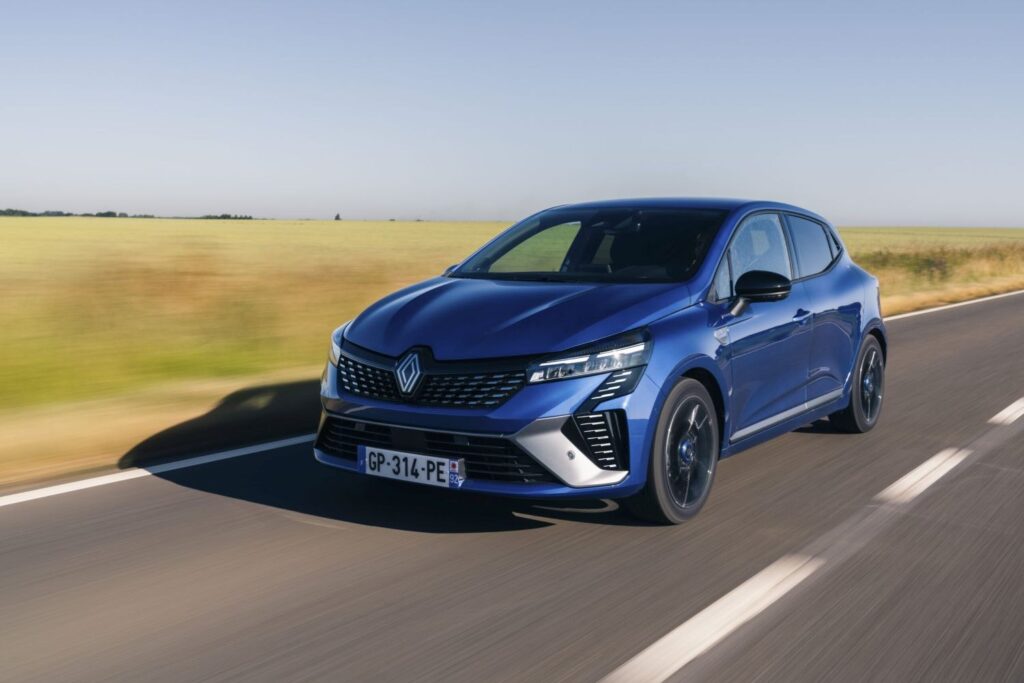
The Renault Clio V (Phase II, 2023) 1.0 TCe (91/101 Hp) LPG represents the refreshed iteration of Renault’s highly successful fifth-generation subcompact hatchback, a cornerstone of the European automotive market. Unveiled in April 2023, this Phase II model continues the Clio’s legacy of combining stylish design, practical utility, and efficient powertrains. This specific variant stands out for its innovative dual-fuel capability, allowing it to run on both gasoline and Liquefied Petroleum Gas (LPG), offering consumers a compelling blend of reduced running costs and lower environmental impact in its primary European and select international markets. While the Clio itself is a familiar sight across continents, this particular iteration with its advanced LPG integration highlights Renault’s commitment to diverse and sustainable mobility solutions, catering to a market where efficiency and emissions standards are paramount.
Engine & Performance: Dual-Fuel Efficiency with the Renault Clio V (Phase II, 2023) 1.0 TCe (91/101 Hp) LPG
At the heart of this Renault Clio V (Phase II) lies the H4D 470 engine, a compact yet capable 1.0-liter (999 cm³ or 60.96 cu. in.) inline three-cylinder unit. This powerplant benefits from a turbocharger and intercooler, ensuring a responsive driving experience despite its modest displacement. The engine utilizes a multi-port manifold injection system and is equipped with modern features like a Start & Stop System and a particulate filter, all designed to meet the stringent Euro 6E emission standards.
What truly distinguishes this model is its integrated dual-fuel system, allowing seamless operation on either conventional gasoline or LPG. When running on gasoline, the engine delivers 91 horsepower at 4800-5000 rpm and 118.01 lb.-ft. (160 Nm) of torque between 2100-3750 rpm. However, when switched to LPG, the power output increases to 101 horsepower at 4600-5000 rpm, accompanied by a bump in torque to 125.39 lb.-ft. (170 Nm) delivered across a slightly broader range of 2000-3500 rpm. This power advantage on LPG not only enhances performance but also underscores the efficiency benefits of the alternative fuel.
In terms of acceleration, the Clio V (Phase II) demonstrates its agility. It accelerates from 0 to 60 mph in 12.5 seconds on gasoline, improving to 11.9 seconds when operating on LPG. The maximum speed for both fuel types is 108.12 mph (174 km/h). Fuel economy figures, measured under the WLTP cycle, are impressive. On gasoline, it achieves a combined consumption of 5.4-6 liters per 100 km, which translates to 39.2-43.6 US mpg. When running on LPG, the consumption is 6.9-7.8 liters per 100 km, offering significant cost savings where LPG is cheaper than gasoline. CO2 emissions are also lower on LPG, at 107-121 g/km compared to 121-136 g/km on gasoline, contributing to a greener footprint.
Power is transmitted to the front wheels via a precise 6-speed manual transmission. The vehicle’s powertrain architecture is front-transverse, a common and efficient layout for front-wheel-drive subcompacts. With a curb weight ranging from 2522.09 to 2559.57 lbs. (1144-1161 kg), the weight-to-power ratio stands at a reasonable 12.6 kg/Hp (79.5 Hp/tonne), highlighting its sprightly nature for its class.
Design & Features: Refined Aesthetics and Practicality
The Renault Clio V (Phase II, 2023) maintains its popular 5-door hatchback body style, a practical choice that combines urban maneuverability with genuine passenger and cargo utility. The Phase II refresh introduced subtle design updates, focusing on revised front fascias, lighting signatures, and interior material enhancements. The exterior dimensions—a length of 159.57 inches (4053 mm), a width of 70.79 inches (1798 mm) with mirrors folded, and a height of 56.65 inches (1439 mm)—underscore its compact footprint, ideal for navigating cityscapes.
Inside, the Clio V (Phase II) accommodates five occupants comfortably. The trunk space is generous for a subcompact, offering a minimum of 13.81 cu. ft. (391 liters), which expands to 37.75 cu. ft. (1069 liters) with the rear seats folded, making it versatile for daily use or weekend trips. The dual-fuel nature is discreetly integrated, with separate fuel tanks for gasoline (10.3 US gallons / 39 liters) and LPG (32 liters), ensuring extended range capabilities.
The chassis and suspension are tuned for a balance of comfort and agility. It features an independent McPherson type front suspension and a semi-independent elastic beam rear suspension. Braking is handled by ventilated discs at the front and drums at the rear, complemented by an Anti-lock Braking System (ABS) for enhanced safety. The electric power steering system provides light and precise control, making parking effortless, with a minimum turning circle of 34.12 feet (10.4 meters). The vehicle offers a range of wheel and tire options, from 15-inch to 17-inch rims, allowing for personalization and varying levels of grip and ride comfort.
Technical Specifications
| Category | Specification |
| General Information | |
| Brand | Renault |
| Model | Clio |
| Generation | Clio V (Phase II, 2023) |
| Type (Engine) | 1.0 TCe (91/101 Hp) LPG |
| Start of production | April, 2023 |
| End of production | August, 2025 |
| Powertrain Architecture | Internal Combustion engine |
| Body type | Hatchback |
| Seats | 5 |
| Doors | 5 |
| Performance Specifications | |
| Combined fuel consumption (WLTP) – Petrol | 5.4-6 l/100 km |
| Combined fuel consumption (WLTP) – LPG | 6.9-7.8 l/100 km |
| CO2 emissions (WLTP) – Petrol | 121-136 g/km |
| CO2 emissions (WLTP) – LPG | 107-121 g/km |
| Fuel Type | Petrol / LPG |
| Acceleration 0 – 60 mph (Calculated) – Petrol | 12.5 sec |
| Acceleration 0 – 60 mph (Calculated) – LPG | 11.9 sec |
| Maximum speed | 108.12 mph |
| Emission standard | Euro 6E |
| Weight-to-power ratio | 12.6 kg/Hp |
| Engine Specifications | |
| Power – Petrol | 91 Hp @ 4800-5000 rpm |
| Power – LPG | 101 Hp @ 4600-5000 rpm |
| Torque – Petrol | 160 Nm @ 2100-3750 rpm |
| Torque – LPG | 170 Nm @ 2000-3500 rpm |
| Engine layout | Front, Transverse |
| Engine Model/Code | H4D 470 |
| Engine displacement | 999 cm³ |
| Number of cylinders | 3 |
| Fuel injection system | Multi-port manifold injection |
| Engine aspiration | Turbocharger, Intercooler |
| Space, Volume and Weights | |
| Kerb Weight | 1144-1161 kg |
| Trunk (boot) space – minimum | 391 l |
| Trunk (boot) space – maximum | 1069 l |
| Fuel tank capacity – Petrol | 39 l |
| Fuel tank capacity – LPG | 32 l |
| Dimensions | |
| Length | 4053 mm |
| Width with mirrors folded | 1798 mm |
| Height | 1439 mm |
| Wheelbase | 2583 mm |
Legacy and Market Impact: The Renault Clio’s Enduring Appeal
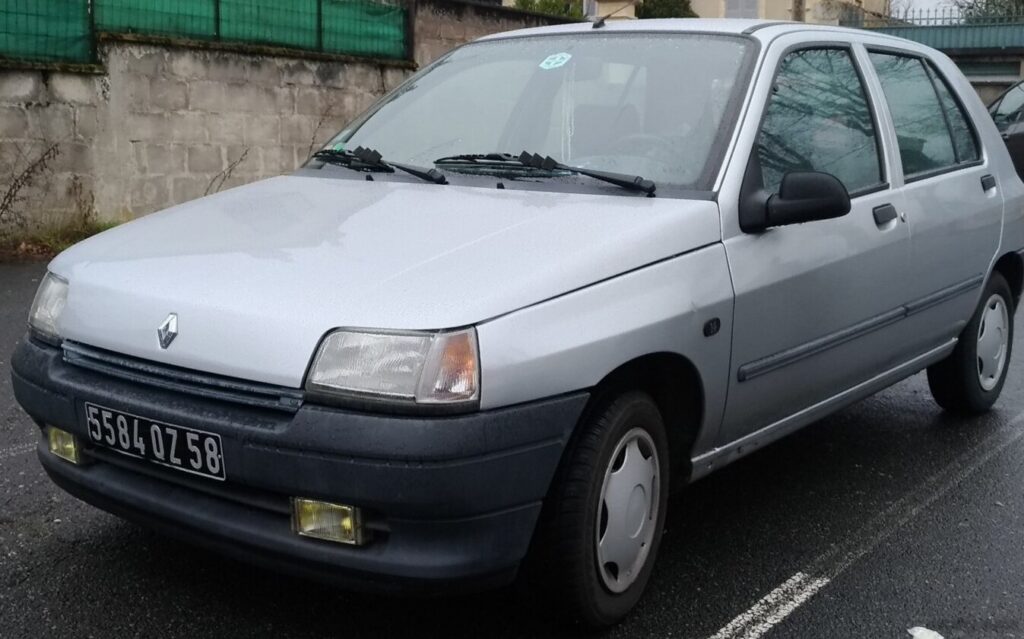
The Renault Clio has been a perennial bestseller in Europe since its introduction in 1990, consistently ranking among the top-selling vehicles across the continent. The Clio V (Phase II, 2023) 1.0 TCe (91/101 Hp) LPG continues this legacy, competing fiercely in the B-segment against rivals such as the Volkswagen Polo, Peugeot 208, Opel Corsa, and Toyota Yaris. Its enduring appeal stems from a carefully crafted balance of stylish design, practical packaging, and a strong value proposition.
In a market focused on environmental responsibility and running costs, the availability of an integrated LPG variant is a significant differentiator. LPG, often cheaper than gasoline in Europe and producing fewer emissions, offers a compelling alternative for budget-conscious and environmentally aware consumers. This dual-fuel strategy positions the Clio as a smart choice for those seeking to reduce their carbon footprint and fuel expenses.
The Clio’s reputation is built on its engaging driving dynamics, comfortable ride, and robust build quality. The Phase II refresh ensures the car remains visually current and technologically competitive. Its compact dimensions make it an ideal urban companion, while its interior volume and flexible cargo space ensure it can handle a variety of lifestyle needs.
Historically, the Clio has been a trendsetter in its segment, often introducing features and styling cues that later become mainstream. Its continued evolution, culminating in the refined Clio V Phase II, demonstrates Renault’s commitment to maintaining its leadership in the subcompact segment. The 1.0 TCe LPG variant, in particular, showcases Renault’s adaptive engineering, providing a practical and efficient solution that resonates strongly with the current demands of the European automotive landscape, bridging the gap between conventional internal combustion engines and the future of electrified mobility. The vehicle’s production timeline from April 2023 to August 2025 indicates its role as a key offering for Renault, solidifying its position as a cornerstone of the brand’s global sales strategy.