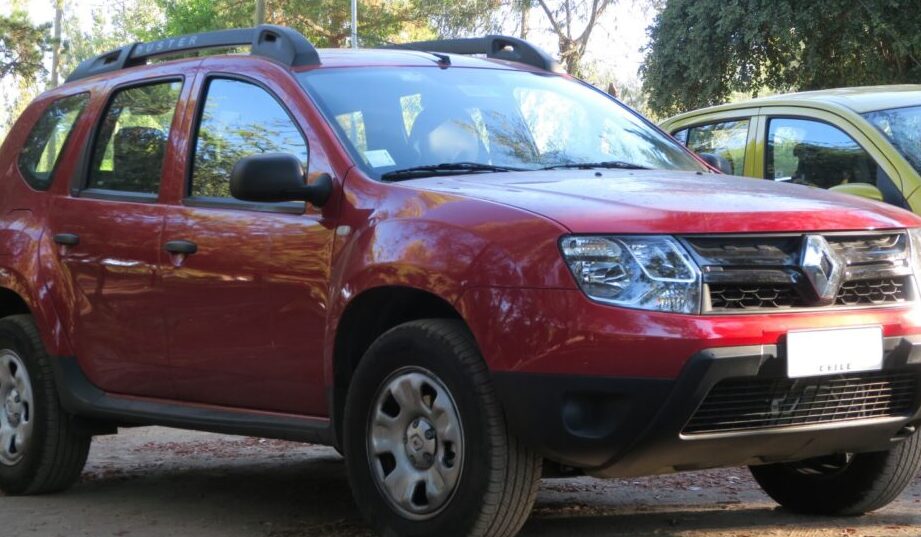
The Renault Duster I 1.6 (102 hp) represents an entry-level variant of the first-generation Duster, a subcompact crossover SUV produced by the French automaker Renault. Introduced in 2011 and continuing through a mid-2015 production run, this model played a significant role in Renault’s expansion into emerging markets, particularly in Eastern Europe, South America, and Russia. The Duster I, built on the B0 platform shared with other Renault-Nissan Alliance vehicles, aimed to provide affordable and practical transportation with a rugged aesthetic. The 1.6-liter engine and five-speed manual transmission combination positioned this trim as the most accessible option within the Duster lineup, targeting budget-conscious buyers.
Technical Specifications
| Brand | Renault |
| Model | Duster |
| Generation | Duster I |
| Type (Engine) | 1.6 (102 Hp) |
| Start of production | 2011 |
| End of production | June, 2015 |
| Powertrain Architecture | Internal Combustion engine |
| Body type | SUV |
| Seats | 5 |
| Doors | 5 |
| Fuel consumption (urban) | 9.8 l/100 km (24 US mpg, 28.8 UK mpg, 10.2 km/l) |
| Fuel consumption (extra urban) | 6.5 l/100 km (36.2 US mpg, 43.5 UK mpg, 15.4 km/l) |
| Fuel consumption (combined) | 7.6 l/100 km (30.9 US mpg, 37.2 UK mpg, 13.2 km/l) |
| CO2 emissions | 177 g/km |
| Fuel Type | Petrol (Gasoline) |
| Acceleration 0 – 100 km/h | 11.8 sec |
| Acceleration 0 – 62 mph | 11.8 sec |
| Acceleration 0 – 60 mph | 11.2 sec |
| Maximum speed | 163 km/h (101.28 mph) |
| Emission standard | Euro 4 |
| Weight-to-power ratio | 11.8 kg/Hp, 84.6 Hp/tonne |
| Weight-to-torque ratio | 8.3 kg/Nm, 120.3 Nm/tonne |
| Power | 102 Hp @ 5750 rpm |
| Power per litre | 63.8 Hp/l |
| Torque | 145 Nm @ 3750 rpm (106.95 lb.-ft. @ 3750 rpm) |
| Engine layout | Front, Transverse |
| Engine Model/Code | K4M |
| Engine displacement | 1598 cm3 (97.52 cu. in.) |
| Number of cylinders | 4 |
| Engine configuration | Inline |
| Cylinder Bore | 79.5 mm (3.13 in.) |
| Piston Stroke | 80.5 mm (3.17 in.) |
| Compression ratio | 9.8:1 |
| Number of valves per cylinder | 4 |
| Fuel injection system | Multi-port manifold injection |
| Engine aspiration | Naturally aspirated engine |
| Engine oil capacity | 4.5 l (4.76 US qt | 3.96 UK qt) |
| Coolant | 4.5 l (4.76 US qt | 3.96 UK qt) |
| Kerb Weight | 1205 kg (2656.57 lbs.) |
| Max. weight | 1705 kg (3758.88 lbs.) |
| Max load | 500 kg (1102.31 lbs.) |
| Trunk (boot) space – minimum | 408 l (14.41 cu. ft.) |
| Trunk (boot) space – maximum | 1570 l (55.44 cu. ft.) |
| Fuel tank capacity | 50 l (13.21 US gal | 11 UK gal) |
| Length | 4315 mm (169.88 in.) |
| Width | 1822 mm (71.73 in.) |
| Height | 1690 mm (66.54 in.) |
| Wheelbase | 2673 mm (105.24 in.) |
| Front track | 1560 mm (61.42 in.) |
| Rear (Back) track | 1567 mm (61.69 in.) |
| Front overhang | 822 mm (32.36 in.) |
| Rear overhang | 820 mm (32.28 in.) |
| Ride height (ground clearance) | 205 mm (8.07 in.) |
| Drivetrain Architecture | The Internal combustion engine (ICE) drives the front wheels of the vehicle. |
| Drive wheel | Front wheel drive |
| Number of gears and type of gearbox | 5 gears, manual transmission |
| Front suspension | Independent, type McPherson with coil spring and anti-roll bar |
| Rear suspension | Independent coil spring |
| Front brakes | Ventilated discs |
| Rear brakes | Drum |
| Assisting systems | ABS (Anti-lock braking system) |
| Tires size | 215/65 R16 |
| Wheel rims size | 16 |
Powertrain & Engine Architecture
The Renault Duster I 1.6 (102 hp) is powered by the K4M engine, a 1.6-liter inline-four cylinder gasoline engine. This engine, a mainstay in Renault’s lineup for many years, utilizes a multi-point fuel injection system and a single overhead camshaft (SOHC) valvetrain with two valves per cylinder. The K4M is known for its relative simplicity and durability, though it isn’t a particularly high-performance unit. The engine produces 102 horsepower at 5750 rpm and 145 Nm (107 lb-ft) of torque at 3750 rpm. This power is delivered to the front wheels through a five-speed manual transmission. The transmission is a conventional design, prioritizing robustness and affordability over sophisticated features. The engine’s transverse mounting and front-wheel-drive configuration contribute to the Duster’s compact footprint and efficient packaging.
Driving Characteristics
The 1.6-liter engine, paired with the five-speed manual transmission, provides adequate, but not exhilarating, performance. Acceleration from 0 to 60 mph takes approximately 11.2 seconds, and the top speed is around 101 mph. The engine feels somewhat strained when accelerating hard or climbing hills, requiring frequent downshifts to maintain momentum. The gear ratios are tuned for fuel economy rather than outright performance. Compared to the more powerful 1.5 dCi diesel variants or even the later 1.6 16V gasoline engine, the 1.6 (102 hp) feels noticeably slower. However, the engine is reasonably responsive in everyday driving situations, and the manual transmission allows for a degree of driver control. The relatively light weight of the Duster helps to mitigate the engine’s power deficit.
Equipment & Trim Levels
The 1.6 (102 hp) Duster typically served as the base trim level. Standard equipment generally included power steering, central locking, front electric windows, and an immobilizer. Air conditioning was often an optional extra. Interior upholstery was typically cloth, and the dashboard featured a functional, if somewhat basic, design. Higher trim levels added features such as alloy wheels, rear electric windows, a radio/CD player, and upgraded interior trim. Safety features were relatively basic, typically including ABS brakes and driver/passenger airbags. The focus was on providing essential features at an affordable price point.
Chassis & Braking
The Duster I utilizes a McPherson strut front suspension and an independent coil spring rear suspension. This setup provides a reasonable balance between ride comfort and handling. The front suspension incorporates an anti-roll bar to reduce body roll during cornering. Braking duties are handled by ventilated discs at the front and drum brakes at the rear. ABS (Anti-lock Braking System) is standard, enhancing braking performance and stability. The suspension is tuned for a comfortable ride on varied road surfaces, prioritizing practicality over sporty handling. The relatively high ground clearance of 205mm (8.07 inches) contributes to the Duster’s off-road capability.
Market Reception & Comparison
The Renault Duster I 1.6 (102 hp) was generally well-received as an affordable and practical SUV. Critics praised its spacious interior, rugged design, and value for money. However, the engine was often criticized for its lack of power, particularly when fully loaded or driving uphill. Fuel economy was considered reasonable, averaging around 31 mpg in combined driving. Compared to the diesel variants, the 1.6-liter gasoline engine offered lower fuel efficiency but a lower purchase price. The Duster’s main competitors included the Skoda Dacia Logan MCV and other budget-friendly compact SUVs.
Legacy
The Renault Duster I 1.6 (102 hp) remains a popular choice in the used car market, particularly in regions where it was originally sold in large numbers. The K4M engine is known for its reliability, although regular maintenance is essential. Common issues include oil leaks and occasional sensor failures. The Duster’s simple construction and readily available parts contribute to its relatively low cost of ownership. The Duster I established Renault as a major player in the affordable SUV segment and paved the way for the successful second-generation model.