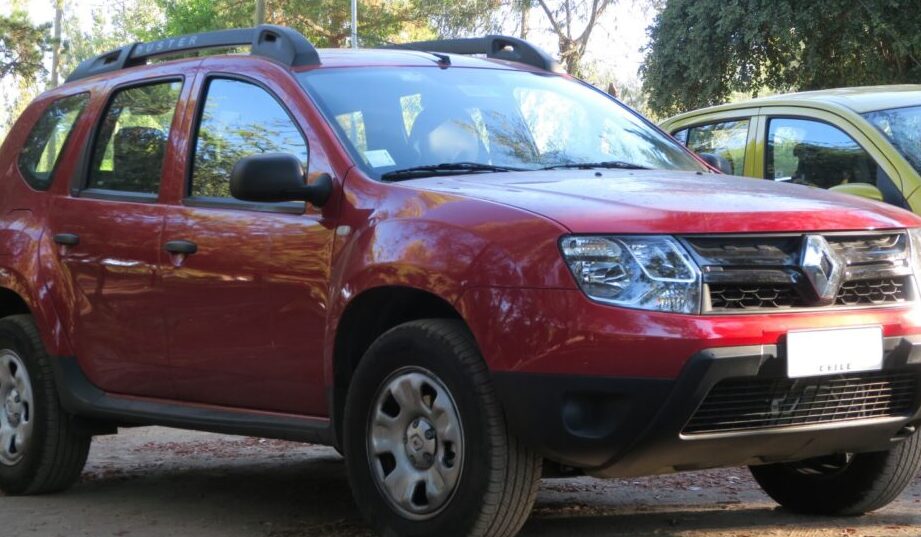
The Renault Duster I 2.0 (135 hp) Automatic, produced between 2011 and June 2015, represented a significant offering in the burgeoning compact SUV segment, particularly in markets outside of North America. Positioned as a mid-range trim within the first generation Duster (2010-2018), it aimed to provide a balance of affordability, practicality, and relative comfort with the convenience of an automatic transmission. The Duster, based on the shared Dacia/Renault B0 platform, was initially conceived as a budget-friendly SUV, and the 2.0L automatic variant broadened its appeal to customers seeking an easier driving experience. This model played a key role in establishing the Duster as a popular choice in Europe, Latin America, and other emerging markets.
Technical Specifications
| Brand | Renault |
| Model | Duster |
| Generation | Duster I |
| Type (Engine) | 2.0 (135 Hp) Automatic |
| Start of production | 2011 |
| End of production | June, 2015 |
| Powertrain Architecture | Internal Combustion engine |
| Body type | SUV |
| Seats | 5 |
| Doors | 5 |
| Fuel consumption (urban) | 11 l/100 km (21.4 US mpg) |
| Fuel consumption (extra urban) | 6.7 l/100 km (35.1 US mpg) |
| Fuel consumption (combined) | 8.3 l/100 km (28.3 US mpg) |
| CO2 emissions | 177 g/km |
| Fuel Type | Petrol (Gasoline) |
| Acceleration 0 – 100 km/h | 11.2 sec |
| Acceleration 0 – 62 mph | 11.2 sec |
| Acceleration 0 – 60 mph | 10.6 sec |
| Maximum speed | 168 km/h (104.39 mph) |
| Emission standard | Euro 4 |
| Weight-to-power ratio | 9.6 kg/Hp |
| Weight-to-torque ratio | 6.7 kg/Nm |
| Power | 135 Hp @ 5500 rpm |
| Torque | 195 Nm @ 3750 rpm (143.82 lb.-ft. @ 3750 rpm) |
| Engine layout | Front, Transverse |
| Engine Model/Code | F4R |
| Engine displacement | 1998 cm3 (121.93 cu. in.) |
| Number of cylinders | 4 |
| Engine configuration | Inline |
| Cylinder Bore | 82.7 mm (3.26 in.) |
| Piston Stroke | 93 mm (3.66 in.) |
| Compression ratio | 11.05:1 |
| Number of valves per cylinder | 4 |
| Fuel injection system | Multi-port manifold injection |
| Engine aspiration | Naturally aspirated engine |
| Engine oil capacity | 5.4 l (5.71 US qt | 4.75 UK qt) |
| Coolant capacity | 4.5 l (4.76 US qt | 3.96 UK qt) |
| Kerb Weight | 1299 kg (2863.8 lbs.) |
| Max. weight | 1799 kg (3966.12 lbs.) |
| Max load | 500 kg (1102.31 lbs.) |
| Trunk (boot) space – minimum | 408 l (14.41 cu. ft.) |
| Trunk (boot) space – maximum | 1570 l (55.44 cu. ft.) |
| Fuel tank capacity | 50 l (13.21 US gal | 11 UK gal) |
| Length | 4315 mm (169.88 in.) |
| Width | 1822 mm (71.73 in.) |
| Height | 1690 mm (66.54 in.) |
| Wheelbase | 2673 mm (105.24 in.) |
| Front track | 1560 mm (61.42 in.) |
| Rear track | 1567 mm (61.69 in.) |
| Front overhang | 822 mm (32.36 in.) |
| Rear overhang | 820 mm (32.28 in.) |
| Ride height (ground clearance) | 205 mm (8.07 in.) |
| Drivetrain Architecture | Front wheel drive |
| Number of gears | 4 |
| Gearbox type | Automatic transmission |
| Front suspension | Independent, type McPherson with coil spring and anti-roll bar |
| Rear suspension | Independent coil spring |
| Front brakes | Ventilated discs |
| Rear brakes | Drum |
| Assisting systems | ABS (Anti-lock braking system) |
| Tires size | 215/65 R16 |
| Wheel rims size | 16 |
Powertrain & Engine Architecture
The Renault Duster I 2.0 Automatic was powered by the F4R engine, a 1.998-liter inline-four cylinder gasoline engine. This engine, a mainstay in Renault’s lineup for many years, featured multi-point fuel injection and a single overhead camshaft (SOHC) valvetrain with four valves per cylinder. The F4R is known for its relative simplicity and durability, though it isn’t a particularly high-tech design. The 135 horsepower output at 5500 rpm and 195 Nm (144 lb-ft) of torque at 3750 rpm were adequate for the Duster’s weight, but didn’t provide particularly brisk acceleration. The automatic transmission was a four-speed unit, which, while providing convenience, was a generation behind the more modern five- and six-speed automatics becoming common at the time. This older transmission design contributed to slightly higher fuel consumption and less refined performance compared to manual transmission variants or those equipped with newer automatic gearboxes.
Driving Characteristics
The 2.0L automatic Duster offered a comfortable, if not particularly engaging, driving experience. The four-speed automatic transmission, while smooth in operation, lacked the responsiveness of a manual gearbox or a more modern automatic. Acceleration from 0-60 mph took around 10.6 seconds, and the engine felt somewhat strained when pushed hard. The gear ratios were optimized for fuel economy and everyday drivability rather than performance. Compared to the manual transmission version of the same engine, the automatic suffered a slight performance penalty. The automatic also felt less connected to the engine, diminishing the driver’s sense of control. However, for drivers prioritizing ease of use, particularly in urban environments, the automatic was a welcome addition.
Equipment & Trim Levels
The 2.0L Automatic trim typically included air conditioning, power windows, central locking, and an audio system with CD player. Higher trim levels added features such as alloy wheels, fog lights, a trip computer, and upgraded interior upholstery. Safety features included ABS brakes and driver/passenger airbags. The interior was functional and durable, with hard-wearing plastics dominating the cabin. The Duster prioritized practicality over luxury, and the interior reflected this ethos. Optional extras included a rear parking sensor, a navigation system (depending on the market), and metallic paint.
Chassis & Braking
The Duster I utilized a McPherson strut front suspension and an independent coil spring rear suspension. This setup provided a reasonably comfortable ride, although it wasn’t particularly sporty. The front brakes were ventilated discs, while the rear brakes were drums – a cost-saving measure common in this segment. ABS was standard, providing enhanced braking performance in emergency situations. The suspension was tuned for a balance of ride comfort and stability, making it suitable for both on-road and light off-road driving. The relatively high ground clearance of 205mm (8.07 inches) allowed the Duster to tackle moderately rough terrain.
Market Reception & Comparison
The Renault Duster I 2.0 Automatic was generally well-received by critics as a practical and affordable SUV. However, the four-speed automatic transmission was often criticized for its age and lack of refinement. Fuel economy was considered average for its class, and the engine, while reliable, wasn’t particularly powerful. Compared to the 1.6L petrol and 1.5 dCi diesel variants, the 2.0L automatic offered a more relaxed driving experience but at the cost of fuel efficiency and performance. The diesel models were particularly popular in Europe due to their superior fuel economy and torque. The 2.0L automatic appealed to buyers who prioritized convenience and ease of use over outright performance or fuel savings.
Legacy
The Renault Duster I 2.0 Automatic has proven to be a relatively reliable vehicle, with the F4R engine known for its durability. However, the four-speed automatic transmission can be prone to wear and tear, and regular maintenance is essential. In the used car market, these Dusters represent a good value proposition for buyers seeking an affordable and practical SUV. While not a performance standout, the 2.0L automatic Duster remains a popular choice for those who appreciate its simplicity, durability, and spacious interior. The Duster’s success paved the way for the second-generation model, which addressed many of the criticisms leveled at the first generation, including the adoption of more modern automatic transmissions.