
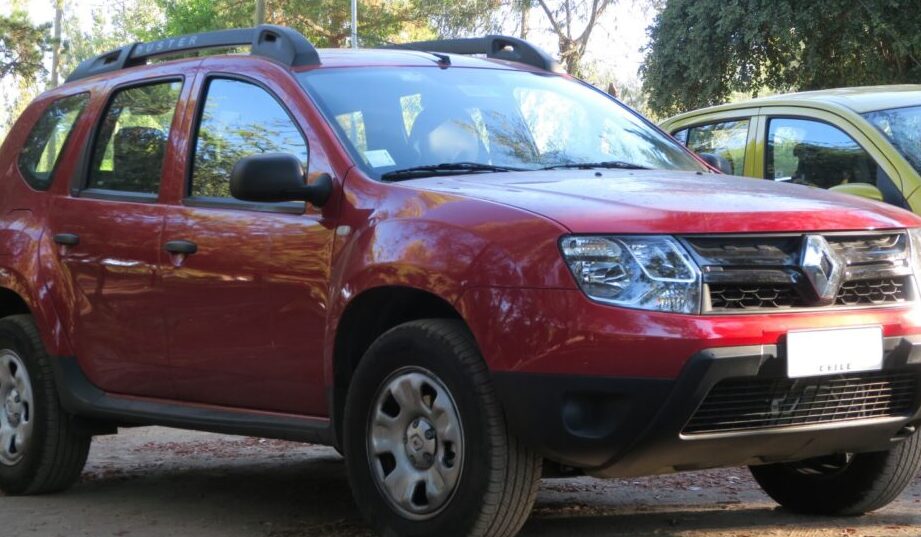
The Renault Duster I (facelift 2015) 2.0 (143 Hp) AWD Automatic represents a significant offering within the first generation Duster lineup, produced from June 2015 to May 2021. Positioned as a mid-to-upper trim level, this variant combined a potent 2.0-liter gasoline engine with the convenience of an automatic transmission and the added capability of all-wheel drive. The Duster, initially launched in 2010, was Renault’s entry into the increasingly popular compact SUV segment, primarily targeting emerging markets and budget-conscious buyers. The facelift in 2015 brought styling updates and refinements, enhancing the Duster’s appeal. This particular configuration aimed to provide a balance of performance, practicality, and all-weather capability, appealing to customers needing a versatile vehicle for varied conditions.
Technical Specifications
| Brand | Renault |
| Model | Duster |
| Generation | Duster I (facelift 2015) |
| Type (Engine) | 2.0 (143 Hp) AWD Automatic |
| Start of production | June, 2015 |
| End of production | May, 2021 |
| Powertrain Architecture | Internal Combustion engine |
| Body type | SUV |
| Seats | 5 |
| Doors | 5 |
| Fuel consumption (urban) | 11.3 l/100 km (20.8 US mpg, 25 UK mpg, 8.8 km/l) |
| Fuel consumption (extra urban) | 7.2 l/100 km (32.7 US mpg, 39.2 UK mpg, 13.9 km/l) |
| Fuel consumption (combined) | 8.7 l/100 km (27 US mpg, 32.5 UK mpg, 11.5 km/l) |
| CO2 emissions | 206 g/km |
| Fuel Type | Petrol (Gasoline) |
| Acceleration 0 – 100 km/h | 11.5 sec |
| Acceleration 0 – 62 mph | 11.5 sec |
| Acceleration 0 – 60 mph | 10.9 sec |
| Maximum speed | 174 km/h (108.12 mph) |
| Emission standard | Euro 5 |
| Weight-to-power ratio | 9.7 kg/Hp, 102.6 Hp/tonne |
| Weight-to-torque ratio | 7.1 kg/Nm, 139.9 Nm/tonne |
| Power | 143 Hp @ 5750 rpm |
| Torque | 195 Nm @ 4000 rpm (143.82 lb.-ft. @ 4000 rpm) |
| Engine layout | Front, Transverse |
| Engine Model/Code | F4R |
| Engine displacement | 1998 cm3 (121.93 cu. in.) |
| Number of cylinders | 4 |
| Engine configuration | Inline |
| Cylinder Bore | 82.7 mm (3.26 in.) |
| Piston Stroke | 93 mm (3.66 in.) |
| Compression ratio | 11.1:1 |
| Number of valves per cylinder | 4 |
| Fuel injection system | Multi-port manifold injection |
| Engine aspiration | Naturally aspirated engine |
| Engine oil capacity | 5.4 l (5.71 US qt | 4.75 UK qt) |
| Kerb Weight | 1394-1420 kg (3073.24 – 3130.56 lbs.) |
| Max. weight | 1894 kg (4175.56 lbs.) |
| Max load | 474-500 kg (1044.99 – 1102.31 lbs.) |
| Trunk (boot) space – minimum | 408 l (14.41 cu. ft.) |
| Trunk (boot) space – maximum | 1570 l (55.44 cu. ft.) |
| Fuel tank capacity | 50 l (13.21 US gal | 11 UK gal) |
| Permitted trailer load with brakes (12%) | 1000 kg (2204.62 lbs.) |
| Permitted trailer load without brakes | 730 kg (1609.37 lbs.) |
| Length | 4315 mm (169.88 in.) |
| Width | 1822 mm (71.73 in.) |
| Width including mirrors | 2000 mm (78.74 in.) |
| Height | 1695 mm (66.73 in.) |
| Wheelbase | 2674 mm (105.28 in.) |
| Front track | 1559 mm (61.38 in.) |
| Rear (Back) track | 1560 mm (61.42 in.) |
| Front overhang | 816 mm (32.13 in.) |
| Rear overhang | 825 mm (32.48 in.) |
| Ride height (ground clearance) | 210 mm (8.27 in.) |
| Approach angle | 29.3° |
| Departure angle | 34.9° |
| Ramp-over (brakeover) angle | 23° |
| Drive wheel | All wheel drive (4×4) |
| Number of gears and type of gearbox | 4 gears, automatic transmission |
| Front suspension | Independent, type McPherson with coil spring and anti-roll bar |
| Rear suspension | Independent multi-link spring suspension with stabilizer |
| Front brakes | Ventilated discs |
| Rear brakes | Drum |
| Assisting systems | ABS (Anti-lock braking system) |
| Steering type | Steering rack and pinion |
| Power steering | Hydraulic Steering |
| Tires size | 215/65 R16 |
| Wheel rims size | 16 |
Powertrain & Engine Architecture
The heart of this Duster variant is the Renault F4R 2.0-liter inline-four cylinder gasoline engine. This engine, a mainstay in Renault’s lineup for many years, is known for its relative simplicity and durability. It features multi-point fuel injection and a single overhead camshaft (SOHC) design with four valves per cylinder. The F4R engine produces 143 horsepower at 5750 rpm and 195 Nm (143.82 lb-ft) of torque at 4000 rpm. The engine’s design prioritizes usability and low-end torque over outright performance. Paired with this engine is a four-speed automatic transmission. While not the most modern transmission in terms of gear count, it was a common choice for providing ease of driving, particularly in markets where manual transmissions were less popular. The all-wheel-drive system is a part-time system, typically operating in front-wheel drive and engaging the rear wheels when traction is lost.
Driving Characteristics
The 2.0-liter automatic Duster offers a comfortable and capable driving experience. Acceleration from 0-60 mph takes around 10.9 seconds, which is adequate for everyday driving but doesn’t provide particularly sporty performance. The four-speed automatic transmission, while smooth, can feel somewhat dated compared to more modern transmissions with more gears. This can result in the engine feeling strained during hard acceleration or when climbing hills. The all-wheel-drive system provides enhanced traction on slippery surfaces, making it a suitable choice for drivers in regions with inclement weather or rough road conditions. The suspension is tuned for comfort, absorbing bumps and imperfections in the road reasonably well. However, this does come at the expense of some body roll during cornering.
Equipment & Trim Levels
The 2.0 AWD Automatic Duster typically came equipped with features such as air conditioning, power windows, central locking, and an audio system with USB connectivity. Higher trim levels often included alloy wheels, fog lights, a trip computer, and upgraded interior trim. Safety features generally included ABS brakes and driver/passenger airbags. Optional extras could include a rear parking sensor, a navigation system, and leather upholstery. The interior design is functional and durable, with hard-wearing plastics used throughout. The focus is on practicality rather than luxury.
Chassis & Braking
The Duster utilizes a McPherson strut front suspension and an independent multi-link rear suspension. This setup provides a good balance of ride comfort and handling. The front brakes are ventilated discs, while the rear brakes are drums. This configuration is typical for vehicles in this price range and weight class. The hydraulic power steering provides a reasonably light and responsive feel. The all-wheel-drive system adds to the vehicle’s weight, but also enhances its stability and traction.
Market Reception & Comparison
The Renault Duster, and specifically the 2.0 AWD Automatic variant, was generally well-received by critics for its affordability, practicality, and off-road capability. However, the automatic transmission was sometimes criticized for its lack of responsiveness and limited number of gears. Compared to other trims in the Duster lineup, the 2.0 AWD Automatic offered a significant performance upgrade over the smaller 1.6-liter engine options. Fuel economy, at 8.7 l/100 km (27 US mpg), was reasonable for a vehicle of its size and capability, but not class-leading. The Duster competed with other compact SUVs such as the Dacia Sandero Stepway, Skoda Yeti, and Nissan Juke.
Legacy
The Renault Duster I, including the 2.0 AWD Automatic variant, proved to be a popular and reliable vehicle in many markets. The F4R engine is known for its durability, and with proper maintenance, can provide many years of service. On the used car market, these Dusters represent a good value proposition for buyers seeking an affordable and capable SUV. While the four-speed automatic transmission may not be as refined as more modern units, it is generally reliable. The Duster’s simple construction and robust design contribute to its long-term dependability, making it a practical choice for those seeking a no-frills, go-anywhere vehicle.


