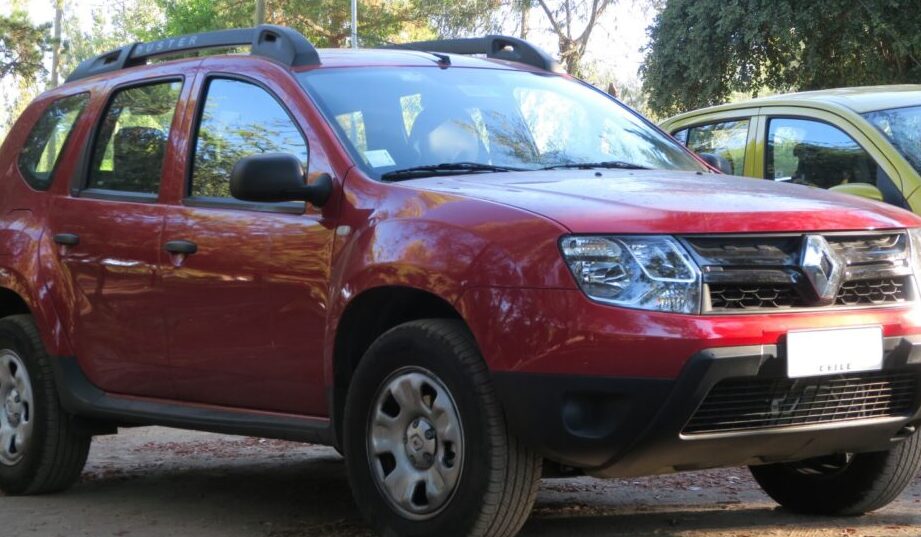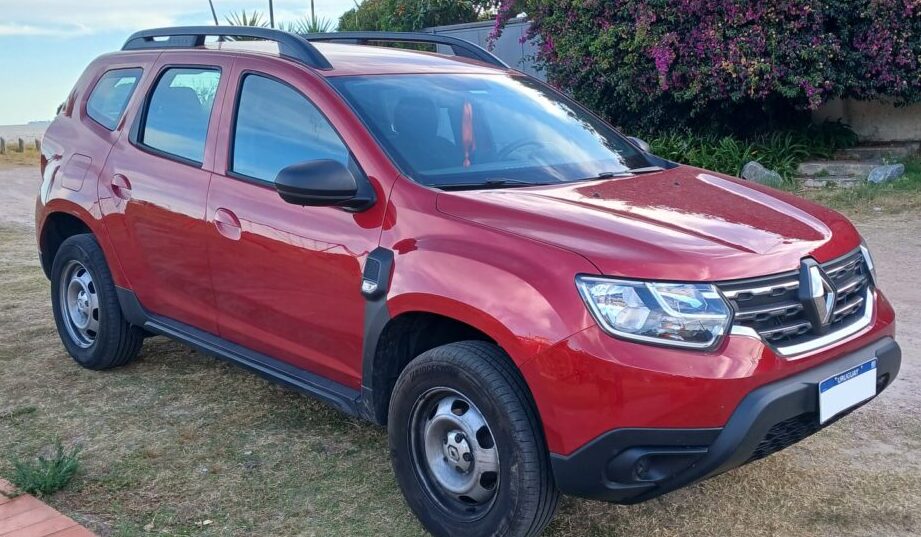
The Renault Duster II 1.5 dCi (109 hp) 4×4, produced from May 2021 to 2024, represents a compelling entry point into the all-wheel-drive compact SUV segment. Positioned as a mid-range offering within the second-generation Duster (Duster II) lineup, this variant balances fuel efficiency with the added capability of four-wheel drive. It builds upon the success of the original Duster, a vehicle known for its affordability and practicality, and aimed to broaden the appeal of the Duster II to customers seeking enhanced traction and versatility. The Duster II utilizes the B0+ platform, a modified version of the original Duster’s architecture, offering improved rigidity and refinement.
Technical Specifications
| Brand | Renault |
| Model | Duster |
| Generation | Duster II |
| Type (Engine) | 1.5 dCi (109 Hp) 4×4 |
| Start of production | May, 2021 |
| End of production | 2024 |
| Powertrain Architecture | Internal Combustion engine |
| Body type | SUV |
| Seats | 5 |
| Doors | 5 |
| Fuel consumption (economy) – urban (NEDC) | 5.6 l/100 km (42 US mpg, 50.4 UK mpg, 17.9 km/l) |
| Fuel consumption (economy) – extra urban (NEDC) | 5.2 l/100 km (45.2 US mpg, 54.3 UK mpg, 19.2 km/l) |
| Fuel consumption (economy) – combined (NEDC) | 5.3 l/100 km (44.4 US mpg, 53.3 UK mpg, 18.9 km/l) |
| CO2 emissions (NEDC) | 139 g/km |
| Fuel Type | Diesel |
| Acceleration 0 – 100 km/h | 13.3 sec |
| Acceleration 0 – 62 mph | 13.3 sec |
| Acceleration 0 – 60 mph | 12.6 sec |
| Maximum speed | 167 km/h (103.77 mph) |
| Emission standard | Euro 5 |
| Weight-to-power ratio | 12.9 kg/Hp, 77.5 Hp/tonne |
| Weight-to-torque ratio | 5.9 kg/Nm, 170.7 Nm/tonne |
| Power | 109 Hp @ 4000 rpm |
| Power per litre | 74.6 Hp/l |
| Torque | 240 Nm @ 1750 rpm (177.01 lb.-ft. @ 1750 rpm) |
| Engine layout | Front, Transverse |
| Engine Model/Code | K9K |
| Engine displacement | 1461 cm3 (89.16 cu. in.) |
| Number of cylinders | 4 |
| Engine configuration | Inline |
| Cylinder Bore | 76 mm (2.99 in.) |
| Piston Stroke | 80.5 mm (3.17 in.) |
| Number of valves per cylinder | 2 |
| Fuel injection system | Diesel Commonrail |
| Engine aspiration | Turbocharger, Intercooler |
| Engine oil capacity | 4.5 l (4.76 US qt | 3.96 UK qt) |
| Coolant | 4.5 l (4.76 US qt | 3.96 UK qt) |
| Kerb Weight | 1406 kg (3099.7 lbs.) |
| Max. weight | 1956 kg (4312.24 lbs.) |
| Max load | 550 kg (1212.54 lbs.) |
| Trunk (boot) space – minimum | 428 l (15.11 cu. ft.) |
| Trunk (boot) space – maximum | 1720 l (60.74 cu. ft.) |
| Fuel tank capacity | 50 l (13.21 US gal | 11 UK gal) |
| Max. roof load | 80 kg (176.37 lbs.) |
| Permitted trailer load with brakes (12%) | 1400 kg (3086.47 lbs.) |
| Permitted trailer load without brakes | 740 kg (1631.42 lbs.) |
| Length | 4341 mm (170.91 in.) |
| Width | 1804 mm (71.02 in.) |
| Width including mirrors | 2052 mm (80.79 in.) |
| Height | 1682 mm (66.22 in.) |
| Wheelbase | 2673 mm (105.24 in.) |
| Front track | 1557 mm (61.3 in.) |
| Rear (Back) track | 1563 mm (61.54 in.) |
| Front overhang | 838 mm (32.99 in.) |
| Rear overhang | 827 mm (32.56 in.) |
| Ride height (ground clearance) | 210 mm (8.27 in.) |
| Minimum turning circle (turning diameter) | 10.9 m (35.76 ft.) |
| Approach angle | 31° |
| Departure angle | 33° |
| Drivetrain Architecture | The Internal combustion engine (ICE) drives the front wheels permanently, and the rear wheels are driven through an electrically or mechanically operated clutch if necessary. |
| Drive wheel | All wheel drive (4×4) |
| Number of gears and type of gearbox | 6 gears, manual transmission |
| Front suspension | Independent, type McPherson with coil spring and anti-roll bar |
| Rear suspension | Independent multi-link spring suspension with stabilizer |
| Front brakes | Ventilated discs, 280×24 mm |
| Rear brakes | Drum |
| Assisting systems | ABS (Anti-lock braking system) |
| Steering type | Steering rack and pinion |
| Power steering | Electric Steering |
| Tires size | 215/65 R16; 215/60 R17 |
Powertrain & Engine Architecture
The heart of the Duster II 1.5 dCi (109 hp) 4×4 is the K9K engine, a 1.5-liter inline-four diesel engine. This engine, a staple in Renault’s lineup for many years, is known for its robustness and fuel efficiency. The 109 hp variant utilizes a turbocharger with an intercooler to boost power output. Fuel is delivered via a diesel commonrail direct injection system, contributing to improved combustion efficiency and reduced emissions. The engine features two valves per cylinder and a relatively simple valvetrain design, prioritizing reliability over outright performance. The engine is transversely mounted in the front of the vehicle. The 4×4 system employs an electronically controlled multi-plate clutch to engage the rear wheels when traction is lost, offering on-demand all-wheel drive. This system doesn’t have low range gearing, making it suitable for moderate off-road conditions rather than serious rock crawling.
Driving Characteristics
The 109 hp output, coupled with 240 Nm (177 lb-ft) of torque, provides adequate, though not exhilarating, performance. Acceleration from 0-60 mph takes around 12.6 seconds, and top speed is limited to 103.77 mph. The engine delivers its peak torque at a relatively low 1750 rpm, providing good responsiveness in everyday driving situations. The six-speed manual transmission is well-matched to the engine’s characteristics, offering smooth shifts and allowing the driver to keep the engine in its optimal power band. Compared to higher-output Duster variants, such as those with the 1.3 TCe gasoline engine, the 1.5 dCi feels less powerful, particularly when fully loaded or tackling steep inclines. However, it compensates with significantly better fuel economy and a more relaxed driving experience. The 4×4 system provides enhanced grip on slippery surfaces, making it a capable performer in inclement weather and on unpaved roads.
Equipment & Trim Levels
The 1.5 dCi (109 hp) 4×4 trim typically included standard features such as air conditioning, power windows, central locking, and a basic audio system. Safety equipment included ABS, front airbags, and electronic stability control. Higher trim levels offered additional features like alloy wheels, a touchscreen infotainment system with navigation, rear parking sensors, and cruise control. Interior upholstery was typically cloth, with options for upgraded materials on higher-spec models. The dashboard layout was functional and straightforward, prioritizing usability over luxury.
Chassis & Braking
The Duster II utilizes an independent McPherson strut suspension at the front and an independent multi-link suspension at the rear, providing a comfortable ride quality. The suspension is tuned for a balance between on-road comfort and off-road capability. Front brakes are ventilated discs, providing adequate stopping power, while the rear brakes are drums, a cost-saving measure common in this segment. The steering is electrically assisted, offering light and precise control. The increased weight of the 4×4 system compared to the front-wheel-drive variants necessitates a slightly firmer suspension setup to maintain stability.
Market Reception & Comparison
The Renault Duster II 1.5 dCi (109 hp) 4×4 was generally well-received by automotive critics as a practical and affordable all-wheel-drive SUV. Its fuel efficiency was a major selling point, particularly in Europe where diesel fuel is often cheaper than gasoline. Compared to other trims in the Duster II lineup, the 1.5 dCi 4×4 offered a compelling combination of capability and economy. While the gasoline-powered variants provided more spirited performance, they lacked the added traction and fuel efficiency of the diesel 4×4 model. Some critics noted the engine could feel strained when fully loaded or climbing hills, but overall, the variant was considered a solid all-rounder.
Legacy
The K9K engine has proven to be a durable and reliable powerplant, and the 1.5 dCi (109 hp) 4×4 variant of the Duster II has maintained a good reputation for long-term reliability. On the used car market, these models represent a good value proposition for buyers seeking an affordable and capable all-wheel-drive SUV. Regular maintenance, including timely oil changes and filter replacements, is crucial to ensure the longevity of the engine and drivetrain. The Duster II, in general, has become a popular choice for those needing a practical and robust vehicle, and the 1.5 dCi 4×4 variant continues to be a sought-after model.