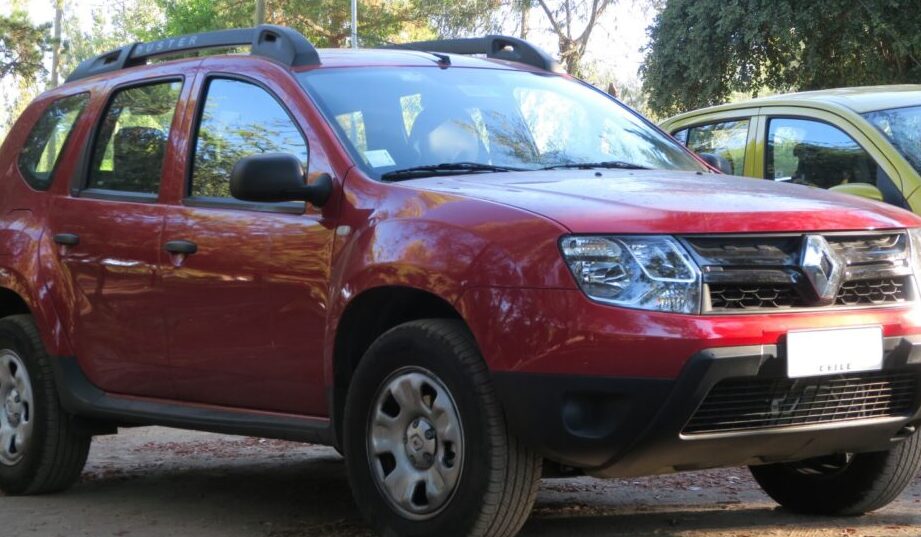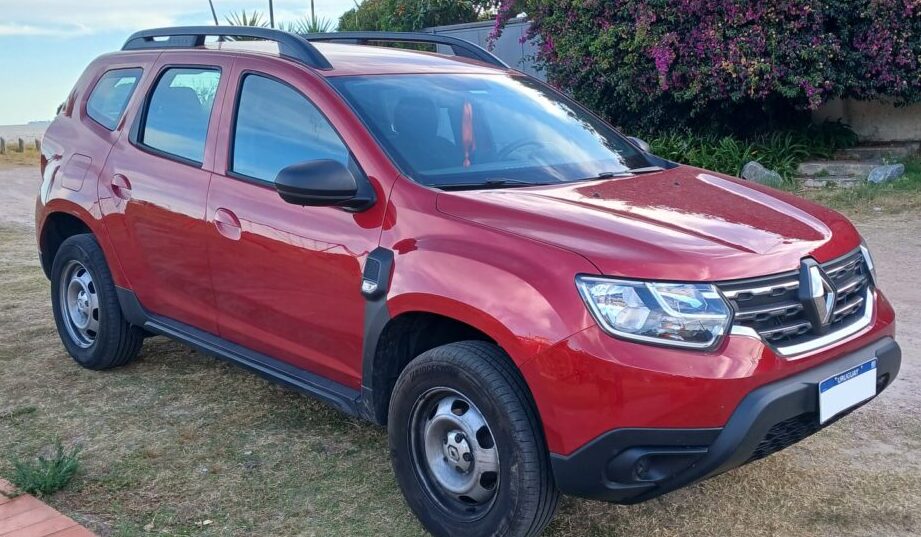
The Renault Duster II 1.6 (117 hp) 4×4, produced from May 2021 to 2022, represents a compelling entry point into the all-wheel-drive compact SUV segment. Positioned as a mid-range offering within the broader Duster II lineup, this variant aimed to provide enhanced capability and practicality for drivers needing all-weather or light off-road performance without the expense of higher-trim models. It builds upon the foundation of the second-generation Duster (introduced in 2021), which itself is based on the B0+ platform, a modified version of the original Duster’s architecture. This version was primarily marketed in Europe, Eastern Europe, and Latin America, offering a budget-friendly 4×4 option in those markets.
Technical Specifications
| Brand | Renault |
| Model | Duster |
| Generation | Duster II |
| Type (Engine) | 1.6 (117 Hp) 4×4 |
| Start of production | May, 2021 |
| End of production | 2022 |
| Powertrain Architecture | Internal Combustion engine |
| Body type | SUV |
| Seats | 5 |
| Doors | 5 |
| Fuel consumption (economy) – urban (NEDC) | 9.2 l/100 km (25.6 US mpg, 30.7 UK mpg, 10.9 km/l) |
| Fuel consumption (economy) – extra urban (NEDC) | 6.2 l/100 km (37.9 US mpg, 45.6 UK mpg, 16.1 km/l) |
| Fuel consumption (economy) – combined (NEDC) | 7.3 l/100 km (32.2 US mpg, 38.7 UK mpg, 13.7 km/l) |
| CO2 emissions (NEDC) | 168 g/km |
| Fuel Type | Petrol (Gasoline) |
| Acceleration 0 – 100 km/h | 13.1 sec |
| Acceleration 0 – 62 mph | 13.1 sec |
| Acceleration 0 – 60 mph | 12.4 sec |
| Maximum speed | 174 km/h (108.12 mph) |
| Emission standard | Euro 5 |
| Weight-to-power ratio | 11.2 kg/Hp, 89 Hp/tonne |
| Weight-to-torque ratio | 8.4 kg/Nm, 118.6 Nm/tonne |
| Power | 117 Hp @ 6000 rpm |
| Power per litre | 73.2 Hp/l |
| Torque | 156 Nm @ 4250 rpm (115.06 lb.-ft. @ 4250 rpm) |
| Engine layout | Front, Transverse |
| Engine Model/Code | H4M 736 |
| Engine displacement | 1598 cm3 (97.52 cu. in.) |
| Number of cylinders | 4 |
| Engine configuration | Inline |
| Cylinder Bore | 78 mm (3.07 in.) |
| Piston Stroke | 83.6 mm (3.29 in.) |
| Number of valves per cylinder | 4 |
| Fuel injection system | Multi-port manifold injection |
| Kerb Weight | 1315 kg (2899.08 lbs.) |
| Max. weight | 1865 kg (4111.62 lbs.) |
| Max load | 550 kg (1212.54 lbs.) |
| Trunk (boot) space – minimum | 428 l (15.11 cu. ft.) |
| Trunk (boot) space – maximum | 1720 l (60.74 cu. ft.) |
| Fuel tank capacity | 50 l (13.21 US gal | 11 UK gal) |
| Max. roof load | 80 kg (176.37 lbs.) |
| Permitted trailer load with brakes (12%) | 1500 kg (3306.93 lbs.) |
| Permitted trailer load without brakes | 695 kg (1532.21 lbs.) |
| Length | 4341 mm (170.91 in.) |
| Width | 1804 mm (71.02 in.) |
| Width including mirrors | 2052 mm (80.79 in.) |
| Height | 1682 mm (66.22 in.) |
| Wheelbase | 2673 mm (105.24 in.) |
| Front track | 1557 mm (61.3 in.) |
| Rear (Back) track | 1563 mm (61.54 in.) |
| Front overhang | 838 mm (32.99 in.) |
| Rear overhang | 827 mm (32.56 in.) |
| Ride height (ground clearance) | 210 mm (8.27 in.) |
| Minimum turning circle (turning diameter) | 10.9 m (35.76 ft.) |
| Approach angle | 31° |
| Departure angle | 33° |
| Drivetrain Architecture | The Internal combustion engine (ICE) drives the front wheels permanently, and the rear wheels are driven through an electrically or mechanically operated clutch if necessary. |
| Drive wheel | All wheel drive (4×4) |
| Number of gears and type of gearbox | 6 gears, manual transmission |
| Front suspension | Independent, type McPherson with coil spring and anti-roll bar |
| Rear suspension | Independent multi-link spring suspension with stabilizer |
| Front brakes | Ventilated discs, 280×24 mm |
| Rear brakes | Drum |
| Assisting systems | ABS (Anti-lock braking system) |
| Steering type | Steering rack and pinion |
| Power steering | Electric Steering |
| Tires size | 215/65 R16; 215/60 R17 |
Powertrain & Engine Architecture
The Renault Duster II 1.6 (117 hp) 4×4 is powered by the H4M 736 engine, a 1.6-liter inline-four cylinder gasoline engine. This engine is a well-established unit within the Renault-Nissan alliance, known for its relative simplicity and durability. It utilizes a multi-point fuel injection system, delivering fuel directly into the intake ports. The engine features four valves per cylinder, contributing to improved breathing and efficiency. The 4×4 system employs an electromagnetic clutch to engage the rear wheels when traction is lost or when the driver selects 4×4 mode. This system isn’t a full-time all-wheel-drive setup; it primarily operates in front-wheel drive to conserve fuel, engaging the rear axle as needed. The six-speed manual transmission is the only transmission option available with this engine and 4×4 configuration.
Driving Characteristics
The 117 hp output, coupled with the manual transmission, provides adequate, though not exhilarating, performance. Acceleration from 0-60 mph takes around 12.4 seconds, and the top speed is approximately 108 mph. The gear ratios are tuned for practicality and fuel economy rather than outright speed. The 4×4 system significantly enhances traction on slippery surfaces, making it a capable vehicle for navigating snow, mud, and gravel roads. Compared to the base 1.6-liter front-wheel-drive Duster, the 4×4 version feels noticeably heavier and slightly less responsive due to the added weight of the drivetrain components. It also differs significantly from higher-powered Duster variants, such as those equipped with the 1.3 TCe turbocharged engine, which offer substantially more performance.
Equipment & Trim Levels
The 1.6 (117 hp) 4×4 trim typically included standard features such as air conditioning, power windows, central locking, and a basic audio system. Safety equipment included ABS, front airbags, and seatbelt pretensioners. Higher trim levels added features like alloy wheels, a touchscreen infotainment system, rear parking sensors, and cruise control. Interior upholstery was typically cloth, with a functional and durable design. Optional extras included a rearview camera, navigation system, and upgraded audio systems.
Chassis & Braking
The Duster II utilizes a McPherson strut front suspension and an independent multi-link rear suspension, providing a comfortable ride quality, especially on uneven surfaces. The front brakes are ventilated discs, while the rear brakes are drums. This configuration is typical for vehicles in this price segment. The 4×4 version benefits from a slightly reinforced chassis to handle the increased stresses of off-road driving. Ground clearance is a generous 8.27 inches, further enhancing its off-road capability.
Market Reception & Comparison
The Renault Duster II 1.6 (117 hp) 4×4 was generally well-received by automotive critics as a practical and affordable all-wheel-drive SUV. It was praised for its ruggedness, spacious interior, and value for money. However, some reviewers noted the engine’s lack of refinement and the somewhat dated interior design. Compared to other trims, the 1.6 4×4 offered a balance between capability and fuel economy. The front-wheel-drive versions were more fuel-efficient, while the turbocharged engines provided superior performance. Reliability reports suggest the H4M engine is generally dependable, although regular maintenance is crucial.
Legacy
The Renault Duster II 1.6 (117 hp) 4×4 has established itself as a popular choice in the used car market, particularly for buyers seeking an affordable and capable all-wheel-drive vehicle. The H4M engine, while not known for its cutting-edge technology, has proven to be relatively robust and easy to maintain. Parts availability is generally good, and repair costs are reasonable. Its enduring appeal lies in its combination of practicality, affordability, and all-weather capability, making it a solid choice for those needing a versatile and dependable SUV.