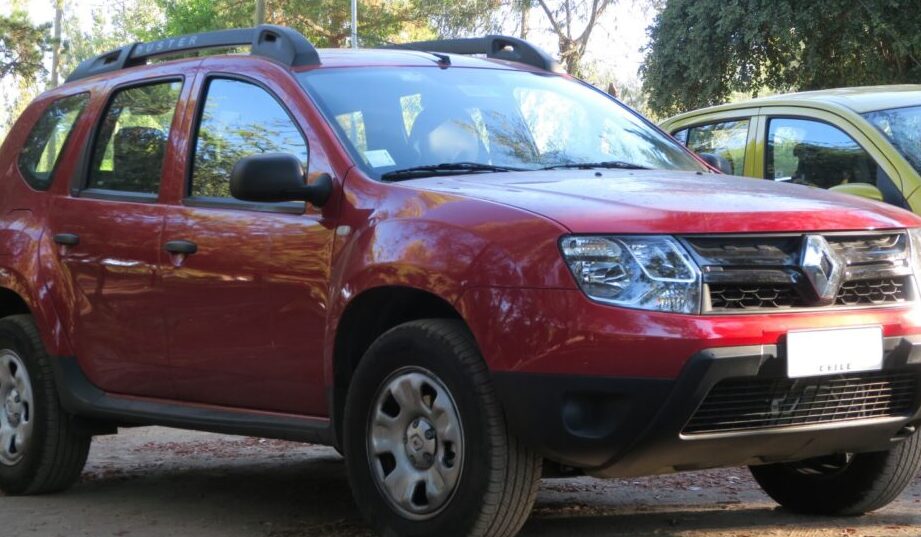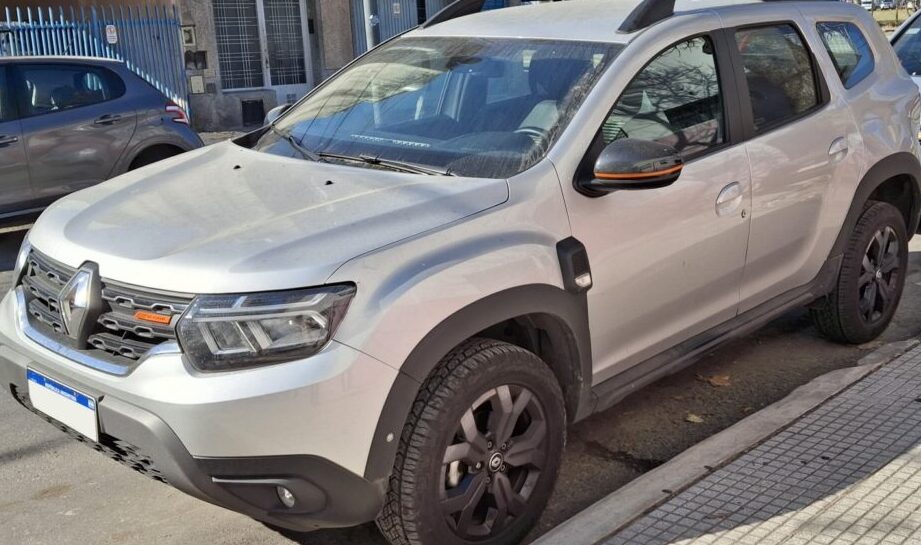
The Renault Duster II (facelift 2024) 1.3 TCe (154 Hp) 4×4 represents a significant iteration of Renault’s popular compact SUV, launched in January 2024. This variant sits within the broader Duster II range, benefiting from the facelift updates introduced for the 2024 model year. Positioned as a mid-range offering, it caters to buyers seeking a blend of practicality, off-road capability, and reasonable performance. The Duster, originally introduced in 2010, quickly gained traction in European and emerging markets due to its robust construction, affordability, and available four-wheel-drive systems. The second generation, and particularly this facelifted version, aims to refine the formula with updated styling, improved technology, and enhanced efficiency.
Technical Specifications
| Brand | Renault |
| Model | Duster |
| Generation | Duster II (facelift 2024) |
| Type (Engine) | 1.3 TCe (154 Hp) 4×4 |
| Start of production | January, 2024 |
| Powertrain Architecture | Internal Combustion engine |
| Body type | SUV |
| Seats | 5 |
| Doors | 5 |
| Fuel Type | Petrol (Gasoline) |
| Maximum speed | 215 km/h (133.59 mph) |
| Emission standard | Euro 5 |
| Weight-to-power ratio | 9.2 kg/Hp, 108.1 Hp/tonne |
| Weight-to-torque ratio | 5.7 kg/Nm, 175.6 Nm/tonne |
| Power | 154 Hp @ 5550 rpm |
| Power per litre | 115.6 Hp/l |
| Torque | 250 Nm @ 1800 rpm (184.39 lb.-ft. @ 1800 rpm) |
| Engine layout | Front, Transverse |
| Engine Model/Code | H5Ht |
| Engine displacement | 1332 cm3 (81.28 cu. in.) |
| Number of cylinders | 4 |
| Engine configuration | Inline |
| Cylinder Bore | 72.2 mm (2.84 in.) |
| Piston Stroke | 81.3 mm (3.2 in.) |
| Compression ratio | 10.5:1 |
| Number of valves per cylinder | 4 |
| Fuel injection system | Direct injection |
| Engine aspiration | Turbocharger, Intercooler |
| Valvetrain | DOHC |
| Kerb Weight | 1424 kg (3139.38 lbs.) |
| Max. weight | 1921 kg (4235.08 lbs.) |
| Max load | 497 kg (1095.7 lbs.) |
| Trunk (boot) space – minimum | 400 l (14.13 cu. ft.) |
| Trunk (boot) space – maximum | 1403 l (49.55 cu. ft.) |
| Fuel tank capacity | 50 l (13.21 US gal | 11 UK gal) |
| Max. roof load | 80 kg (176.37 lbs.) |
| Length | 4376 mm (172.28 in.) |
| Width | 1832 mm (72.13 in.) |
| Height | 1693 mm (66.65 in.) |
| Wheelbase | 2673 mm (105.24 in.) |
| Front track | 1557 mm (61.3 in.) |
| Rear (Back) track | 1560 mm (61.42 in.) |
| Front overhang | 872 mm (34.33 in.) |
| Rear overhang | 831 mm (32.72 in.) |
| Ride height (ground clearance) | 237 mm (9.33 in.) |
| Approach angle | 30° |
| Departure angle | 34.5° |
| Drivetrain Architecture | The Internal combustion engine (ICE) drives the front wheels permanently, and the rear wheels are driven through an electrically or mechanically operated clutch if necessary. |
| Drive wheel | All wheel drive (4×4) |
| Number of gears and type of gearbox | 6 gears, manual transmission |
| Front suspension | Independent, type McPherson with coil spring and anti-roll bar |
| Rear suspension | Independent multi-link spring suspension with stabilizer |
| Front brakes | Ventilated discs |
| Rear brakes | Drum |
| Assisting systems | ABS (Anti-lock braking system) |
| Steering type | Steering rack and pinion |
| Power steering | Electric Steering |
| Tires size | 215/60 R17 |
| Wheel rims size | 6.5J x 17 |
Powertrain & Engine Architecture
At the heart of the Duster II 1.3 TCe 4×4 lies the Renault-Nissan Alliance’s H5Ht 1.3-liter turbocharged inline-four cylinder engine. This engine is a member of the HR family, known for its compact design and efficiency. The engine utilizes direct fuel injection, delivering fuel directly into the combustion chamber for improved combustion control and power output. A single turbocharger, coupled with an intercooler, provides forced induction, boosting power and torque. The engine features a double overhead camshaft (DOHC) valvetrain with four valves per cylinder, optimizing gas flow for enhanced performance. The 6-speed manual transmission is standard, providing a balance between fuel economy and driver engagement. The 4×4 system employs an electronically controlled clutch to engage the rear wheels when traction is needed, offering both automatic and driver-selectable modes.
Driving Characteristics
The 154 hp and 250 Nm (184 lb-ft) of torque delivered by the 1.3 TCe engine provide adequate performance for everyday driving and light off-road excursions. While not a sports car, the Duster 4×4 offers sufficient power for overtaking maneuvers and maintaining comfortable cruising speeds on highways. The manual transmission allows for precise control, but the gear ratios are tuned more for fuel efficiency than outright acceleration. Compared to higher-output versions of the Duster, this variant prioritizes economy and usability over raw speed. The 4×4 system provides enhanced traction on slippery surfaces, making it a capable choice for those living in areas with inclement weather or needing to traverse unpaved roads. The ride quality is generally comfortable, absorbing bumps and imperfections in the road surface effectively.
Equipment & Trim Levels
The 1.3 TCe 4×4 trim typically includes standard features such as air conditioning, power windows, central locking, and a basic audio system with Bluetooth connectivity. Safety features include ABS, Electronic Stability Control (ESC), and multiple airbags. Higher trim levels add features like alloy wheels, a touchscreen infotainment system with navigation, rear parking sensors, and a rearview camera. Interior upholstery is typically cloth, with options for leather upgrades. The dashboard layout is functional and straightforward, prioritizing usability over luxury. Optional extras often include a panoramic sunroof, automatic climate control, and advanced driver-assistance systems.
Chassis & Braking
The Duster II utilizes a McPherson strut front suspension and an independent multi-link rear suspension, providing a good balance of ride comfort and handling. The front suspension incorporates a stabilizer bar to reduce body roll during cornering. The braking system consists of ventilated discs at the front and drum brakes at the rear. While the front discs provide adequate stopping power, the rear drums are a cost-saving measure that may limit braking performance under heavy loads or during repeated hard braking. The steering is electrically assisted, providing light and precise control.
Market Reception & Comparison
The Renault Duster II 1.3 TCe 4×4 has been well-received in markets where affordability and practicality are key considerations. Critics have praised its robust construction, spacious interior, and capable 4×4 system. Compared to other trims in the Duster lineup, the 1.3 TCe 4×4 offers a good compromise between performance, fuel economy, and price. The 1.5 dCi diesel variants offer superior fuel economy, while the more powerful petrol engines provide quicker acceleration. However, the 1.3 TCe 4×4 strikes a balance that appeals to a broad range of buyers. Reliability has been generally good, with few major issues reported.
Legacy
The Renault Duster II 1.3 TCe 4×4, and the Duster line in general, has established itself as a popular and reliable choice in the compact SUV segment. The 1.3 TCe engine, while not the most powerful option, has proven to be durable and relatively easy to maintain. As the model ages, it is likely to become an increasingly attractive option in the used car market, offering a compelling combination of affordability, practicality, and off-road capability. Its simple mechanical design and readily available parts should ensure its continued viability for years to come.