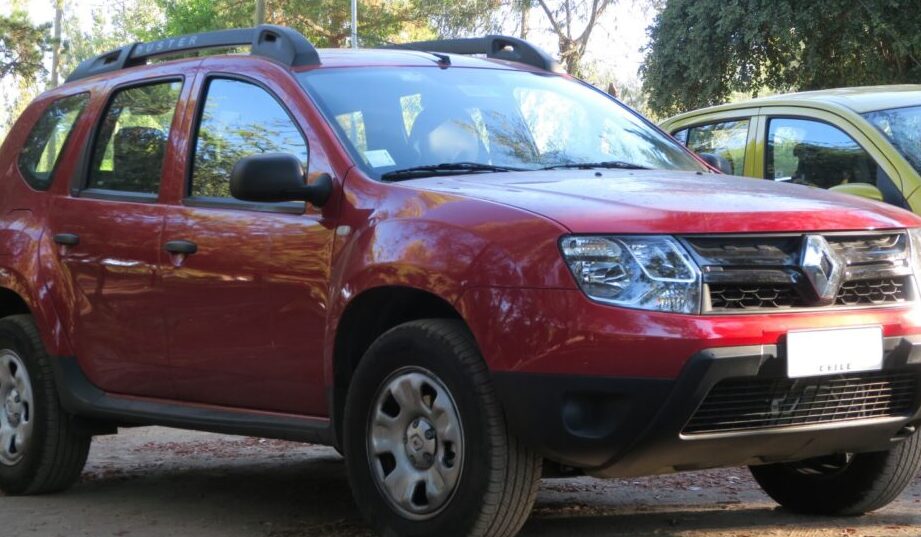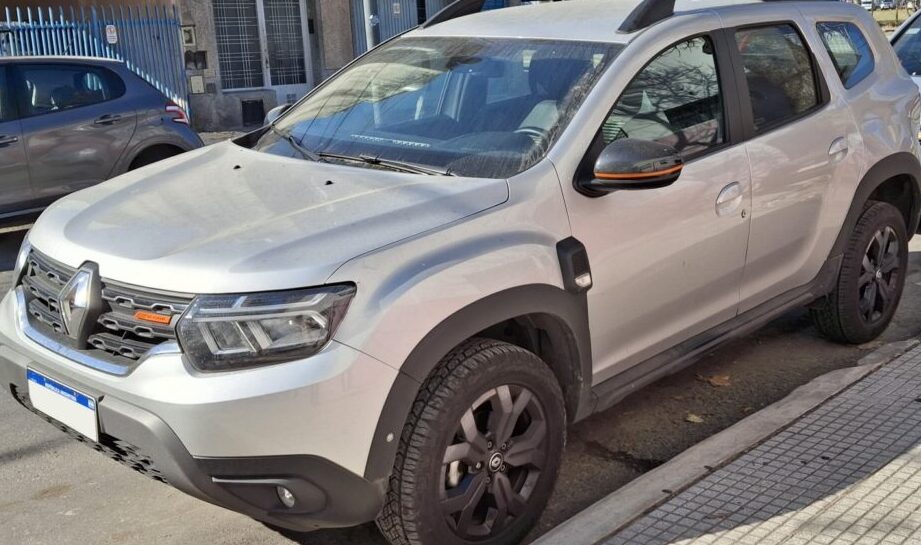
The Renault Duster II (facelift 2024) 1.3 TCe (154 Hp) X-Tronic represents a significant iteration of Renault’s popular compact SUV, launched in January 2024. This variant occupies a mid-range position within the Duster II lineup, offering a balance between performance, fuel efficiency, and affordability. It builds upon the foundation of the Duster II, which itself is based on the B0+ platform, and introduces a turbocharged engine paired with a continuously variable transmission (CVT) – a relatively new offering for the Duster model. The facelift brought updated styling, enhanced interior features, and refined powertrain options, aiming to solidify the Duster’s position as a leading contender in the competitive European and emerging market SUV segments.
| Brand | Renault |
| Model | Duster |
| Generation | Duster II (facelift 2024) |
| Type (Engine) | 1.3 TCe (154 Hp) X-Tronic |
| Start of production | January, 2024 |
| Powertrain Architecture | Internal Combustion engine |
| Body type | SUV |
| Seats | 5 |
| Doors | 5 |
| Fuel Type | Petrol (Gasoline) |
| Emission standard | Euro 5 |
| Weight-to-power ratio | 8.8 kg/Hp, 113.1 Hp/tonne |
| Weight-to-torque ratio | 5.4 kg/Nm, 183.6 Nm/tonne |
| Power | 154 Hp @ 5550 rpm |
| Power per litre | 115.6 Hp/l |
| Torque | 250 Nm @ 1800 rpm, 184.39 lb.-ft. @ 1800 rpm |
| Engine layout | Front, Transverse |
| Engine Model/Code | H5Ht |
| Engine displacement | 1332 cm3, 81.28 cu. in. |
| Number of cylinders | 4 |
| Engine configuration | Inline |
| Cylinder Bore | 72.2 mm, 2.84 in. |
| Piston Stroke | 81.3 mm, 3.2 in. |
| Compression ratio | 10.5:1 |
| Number of valves per cylinder | 4 |
| Fuel injection system | Direct injection |
| Engine aspiration | Turbocharger, Intercooler |
| Valvetrain | DOHC |
| Kerb Weight | 1362 kg, 3002.7 lbs |
| Max. weight | 1856 kg, 4091.78 lbs |
| Max load | 494 kg, 1089.08 lbs |
| Trunk (boot) space – minimum | 475 l, 16.77 cu. ft. |
| Trunk (boot) space – maximum | 1478 l, 52.2 cu. ft. |
| Fuel tank capacity | 50 l, 13.21 US gal | 11 UK gal |
| Max. roof load | 80 kg, 176.37 lbs |
| Length | 4376 mm, 172.28 in. |
| Width | 1832 mm, 72.13 in. |
| Height | 1693 mm, 66.65 in. |
| Wheelbase | 2673 mm, 105.24 in. |
| Front track | 1557 mm, 61.3 in. |
| Rear (Back) track | 1560 mm, 61.42 in. |
| Front overhang | 872 mm, 34.33 in. |
| Rear overhang | 831 mm, 32.72 in. |
| Ride height (ground clearance) | 237 mm, 9.33 in. |
| Approach angle | 30° |
| Departure angle | 34.5° |
| Drivetrain Architecture | The Internal combustion engine (ICE) drives the front wheels of the vehicle. |
| Drive wheel | Front wheel drive |
| Number of gears and type of gearbox | automatic transmission X-Tronic CVT |
| Front suspension | Independent, type McPherson with coil spring and anti-roll bar |
| Rear suspension | Semi-dependent beam with stabilizer lateral stability, Coil spring |
| Front brakes | Ventilated discs |
| Rear brakes | Drum |
| Assisting systems | ABS (Anti-lock braking system) |
| Steering type | Steering rack and pinion |
| Power steering | Electric Steering |
| Tires size | 215/60 R17 |
| Wheel rims size | 6.5J x 17 |
Powertrain & Engine Architecture
At the heart of the Duster II 1.3 TCe X-Tronic lies the H5Ht engine, a 1.3-liter turbocharged inline-four cylinder petrol engine. This engine is part of Renault’s latest generation of downsized, direct-injection powerplants. The engine utilizes a direct fuel injection system, delivering fuel directly into the combustion chamber for improved efficiency and power output. The turbocharger, coupled with an intercooler, forces more air into the engine, boosting performance. The engine features a Dual Variable Valve Timing (DVVT) system, optimizing valve timing for both intake and exhaust cycles, enhancing responsiveness and fuel economy. Paired with this engine is the X-Tronic CVT (Continuously Variable Transmission). This transmission offers seamless gear changes and contributes to improved fuel efficiency compared to traditional automatic transmissions. The CVT is designed to keep the engine operating within its optimal power band, providing smooth acceleration.
Driving Characteristics
The 154 hp output and 250 Nm (184 lb-ft) of torque provide adequate performance for everyday driving. While not a sports-oriented SUV, the 1.3 TCe offers sufficient power for overtaking and navigating varied terrain. The X-Tronic CVT, while smooth, can exhibit a slight “rubber band” feel under hard acceleration, a common characteristic of CVTs. Compared to the manual transmission versions of the Duster, the CVT prioritizes comfort and ease of use over outright performance. The CVT’s continuously variable ratios allow the engine to operate at its most efficient point, resulting in improved fuel economy. Compared to higher-output engine options in the Duster II range, such as the 1.6 SCe, the 1.3 TCe offers a more refined driving experience, particularly at highway speeds, thanks to the CVT’s ability to maintain optimal engine RPM.
Equipment & Trim Levels
The 1.3 TCe X-Tronic trim typically includes a generous array of standard features. These commonly include air conditioning, power windows, central locking, a touchscreen infotainment system with Bluetooth connectivity, and basic safety features like ABS and airbags. Higher trim levels within the 1.3 TCe range may add features such as alloy wheels, a rearview camera, parking sensors, automatic climate control, and more advanced driver-assistance systems. Interior upholstery is typically cloth, with options for leather or partial leather upgrades. The dashboard layout is functional and user-friendly, with a focus on practicality.
Chassis & Braking
The Duster II utilizes a McPherson strut front suspension and a semi-independent beam rear suspension. This setup provides a good balance between ride comfort and handling. The front suspension incorporates a stabilizer bar to reduce body roll during cornering. Braking duties are handled by ventilated discs at the front and drum brakes at the rear. ABS (Anti-lock Braking System) is standard, enhancing braking performance and stability. The Duster’s relatively high ground clearance (237mm / 9.33 inches) contributes to its off-road capability, allowing it to tackle moderately challenging terrain.
Market Reception & Comparison
The Renault Duster II 1.3 TCe X-Tronic has been generally well-received by automotive critics. Reviewers have praised its comfortable ride, spacious interior, and competitive pricing. The CVT transmission has been noted for its smoothness and contribution to fuel efficiency, although some have criticized its lack of engagement compared to a traditional automatic or manual gearbox. Compared to other trims in the Duster II lineup, the 1.3 TCe X-Tronic offers a compelling balance of performance and economy. It’s a good choice for drivers who prioritize comfort and ease of use over outright performance. Fuel economy figures typically range around 6.0-7.0 liters per 100 kilometers (39-45 mpg) in mixed driving conditions.
Legacy
The H5Ht 1.3 TCe engine and X-Tronic CVT combination represents a modern powertrain solution for the Duster II. While long-term reliability data is still emerging, Renault has a generally good reputation for building durable and dependable engines. The CVT transmission, if properly maintained, is expected to provide years of reliable service. On the used car market, the Duster II 1.3 TCe X-Tronic is expected to hold its value reasonably well, thanks to its practicality, fuel efficiency, and the Duster’s overall popularity. Regular maintenance, including timely oil changes and CVT fluid replacements, will be crucial to ensuring the longevity of this powertrain.