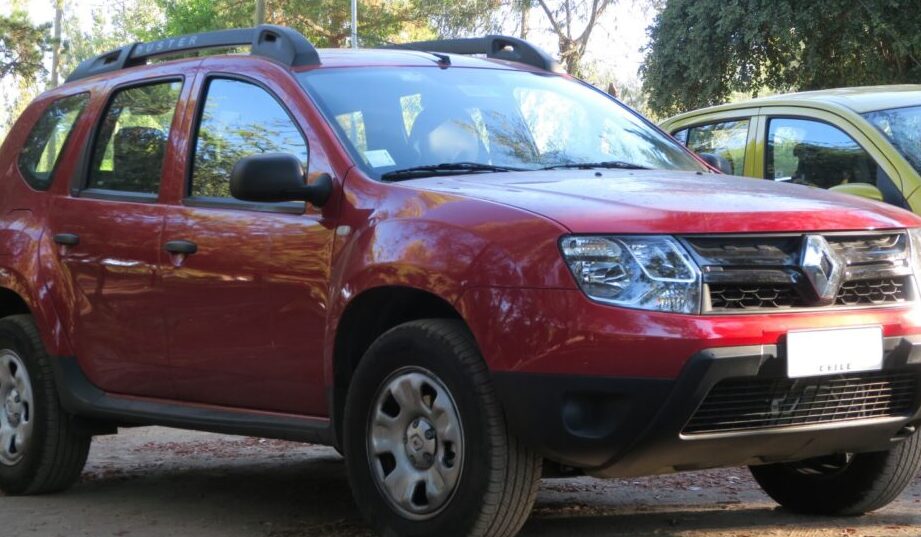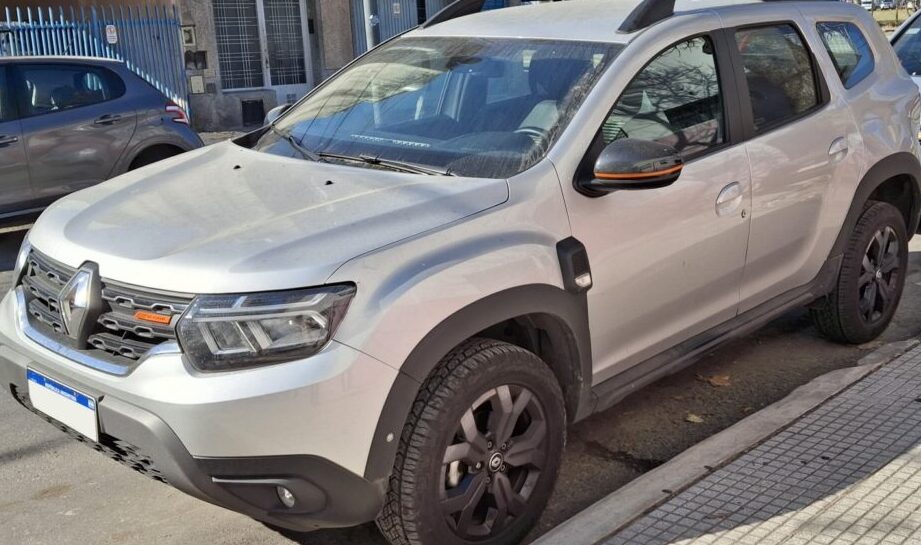
The Renault Duster II (facelift 2024) 1.6 SCe (118/120 hp) Flex represents a significant iteration of Renault’s popular compact SUV, particularly within the South American market. Introduced in January 2024, this variant builds upon the foundation of the Duster II, offering a balance of affordability, practicality, and fuel efficiency. The “Flex” designation indicates its capability to run on both gasoline and ethanol (E100), a common feature in Brazil and other Latin American countries. This specific engine and transmission combination positions itself as a mainstream offering within the Duster lineup, aimed at buyers seeking a versatile and economical vehicle for daily use and occasional off-road excursions.
Technical Specifications
| Brand | Renault |
| Model | Duster |
| Generation | Duster II (facelift 2024) |
| Type (Engine) | 1.6 SCe (118/120 Hp) Flex |
| Start of production | January, 2024 |
| Powertrain Architecture | Internal Combustion engine |
| Body type | SUV |
| Seats | 5 |
| Doors | 5 |
| Fuel consumption (economy) – urban | 8.6 l/100 km (27.4 US mpg, 32.8 UK mpg, 11.6 km/l) |
| Fuel consumption (economy) – urban (Ethanol – E100) | 12.3 l/100 km |
| Fuel consumption (economy) – extra urban | 8.1 l/100 km (29 US mpg, 34.9 UK mpg, 12.3 km/l) |
| Fuel consumption (economy) – extra urban (Ethanol – E100) | 11.8 l/100 km |
| Fuel Type | Petrol / Ethanol – E100 |
| Acceleration 0 – 100 km/h | 11.5 sec |
| Acceleration 0 – 62 mph | 11.5 sec |
| Acceleration 0 – 100 km/h (Ethanol – E100) | 11.4 sec |
| Acceleration 0 – 60 mph (Calculated) | 10.9 sec |
| Maximum speed | 172 km/h (106.88 mph) |
| Maximum speed (Ethanol – E100) | 173 km/h |
| Weight-to-power ratio | 10.6 kg/Hp, 94.3 Hp/tonne |
| Weight-to-torque ratio | 8 kg/Nm, 125.5 Nm/tonne |
| Power | 118 Hp @ 5500 rpm |
| Power per litre | 73.8 Hp/l |
| Power (Ethanol – E100) | 120 Hp @ 5500 rpm |
| Power per litre (Ethanol – E100) | 75.1 Hp/l |
| Torque | 157 Nm @ 4000 rpm (115.8 lb.-ft. @ 4000 rpm) |
| Engine layout | Front, Transverse |
| Engine Model/Code | H4M |
| Engine displacement | 1598 cm3 (97.52 cu. in.) |
| Number of cylinders | 4 |
| Engine configuration | Inline |
| Cylinder Bore | 78 mm (3.07 in.) |
| Piston Stroke | 83.6 mm (3.29 in.) |
| Number of valves per cylinder | 4 |
| Fuel injection system | Multi-port manifold injection |
| Engine aspiration | Naturally aspirated engine |
| Valvetrain | DOHC |
| Engine oil capacity | 4.2 l (4.44 US qt, 3.7 UK qt) |
| Kerb Weight | 1251 kg (2757.98 lbs.) |
| Max. weight | 1765 kg (3891.16 lbs.) |
| Max load | 514 kg (1133.18 lbs.) |
| Trunk (boot) space – minimum | 475 l (16.77 cu. ft.) |
| Trunk (boot) space – maximum | 1478 l (52.2 cu. ft.) |
| Fuel tank capacity | 46 l (12.15 US gal, 10.12 UK gal) |
| Max. roof load | 80 kg (176.37 lbs.) |
| Permitted trailer load with brakes (12%) | 1200 kg (2645.55 lbs.) |
| Permitted trailer load without brakes | 660 kg (1455.05 lbs.) |
| Permitted towbar download | 75 kg (165.35 lbs.) |
| Length | 4376 mm (172.28 in.) |
| Width | 1832 mm (72.13 in.) |
| Height | 1693 mm (66.65 in.) |
| Wheelbase | 2673 mm (105.24 in.) |
| Front track | 1557 mm (61.3 in.) |
| Rear (Back) track | 1560 mm (61.42 in.) |
| Front overhang | 872 mm (34.33 in.) |
| Rear overhang | 831 mm (32.72 in.) |
| Ride height (ground clearance) | 237 mm (9.33 in.) |
| Approach angle | 30° |
| Departure angle | 34.5° |
| Drivetrain Architecture | Front wheel drive |
| Drive wheel | Front wheel drive |
| Number of gears and type of gearbox | 5 gears, manual transmission |
| Front suspension | Independent, type McPherson with coil spring and anti-roll bar |
| Rear suspension | Semi-dependent beam with stabilizer lateral stability, Coil spring |
| Front brakes | Ventilated discs |
| Rear brakes | Drum |
| Assisting systems | ABS (Anti-lock braking system) |
| Steering type | Steering rack and pinion |
| Power steering | Electric Steering |
| Tires size | 215/65 R16 |
| Wheel rims size | 6.5J x 16 |
Powertrain & Engine Architecture
The heart of this Duster variant is the Renault H4M 1.6-liter inline-four cylinder engine. This engine is a well-established unit within the Renault-Nissan-Mitsubishi Alliance, known for its robustness and relatively simple design. The H4M utilizes a multi-point fuel injection system, delivering fuel directly into the intake ports. It features a double overhead camshaft (DOHC) valvetrain, optimizing airflow for improved efficiency and power output. The engine’s ability to run on both gasoline and ethanol is facilitated by a flex-fuel system, which automatically adjusts engine parameters based on the fuel composition. The 5-speed manual transmission is a standard offering, chosen for its cost-effectiveness and suitability for the engine’s torque characteristics. While not the most modern transmission, it provides adequate performance for everyday driving.
Driving Characteristics
The 1.6 SCe engine, producing 118 hp and 157 Nm of torque, delivers adequate performance for the Duster II. Acceleration from 0 to 100 km/h takes approximately 11.5 seconds, which is typical for a vehicle in this class. The engine feels responsive enough for city driving and highway cruising, although it may require downshifting for overtaking maneuvers. The manual transmission allows for greater driver control, but the gear ratios are tuned for fuel economy rather than outright performance. Compared to higher-output versions of the Duster, such as those equipped with a turbocharged engine, this variant offers a more relaxed and economical driving experience. The ethanol-fueled mode provides a slight power increase (120 hp) but at the cost of increased fuel consumption.
Equipment & Trim Levels
The 1.6 SCe variant typically represents the entry-level or mid-range trim of the Duster II lineup. Standard equipment generally includes air conditioning, power windows, central locking, and a basic audio system. Safety features such as ABS and dual front airbags are also standard. Higher trim levels add features like alloy wheels, a touchscreen infotainment system, rear parking sensors, and cruise control. Interior upholstery is typically cloth, with a functional and durable design. The dashboard layout is straightforward and user-friendly, prioritizing practicality over luxury.
Chassis & Braking
The Duster II utilizes a McPherson strut front suspension and a semi-independent rear beam suspension. This setup provides a comfortable ride quality, capable of absorbing bumps and irregularities in the road. The front brakes are ventilated discs, offering good stopping power, while the rear brakes are drums, a cost-saving measure common in this segment. The electric power steering provides light and easy steering, making it maneuverable in urban environments. With a ground clearance of 237 mm (9.33 inches), the Duster II offers good off-road capability for its class.
Market Reception & Comparison
The Renault Duster II 1.6 SCe Flex has been well-received in South American markets, particularly in Brazil, where it competes with other compact SUVs like the Chevrolet Tracker, Hyundai Creta, and Jeep Renegade. Critics have praised its affordability, spacious interior, and fuel efficiency. However, some have noted its relatively basic interior and lack of advanced technology compared to some competitors. The flex-fuel capability is a significant advantage in markets where ethanol is readily available and often cheaper than gasoline. Compared to the diesel or turbocharged gasoline variants of the Duster, this 1.6L version offers a lower purchase price and potentially lower maintenance costs, making it an attractive option for budget-conscious buyers.
Legacy
The H4M engine has proven to be a reliable and durable powerplant, with a long track record of service in various Renault and Nissan vehicles. While not known for exceptional performance, it is generally considered a dependable engine with relatively low maintenance requirements. The Duster II 1.6 SCe Flex continues to be a popular choice in the used car market, offering a practical and affordable option for those seeking a versatile SUV. Its flex-fuel capability adds to its appeal in regions where ethanol is a viable fuel source, ensuring its continued relevance for years to come.