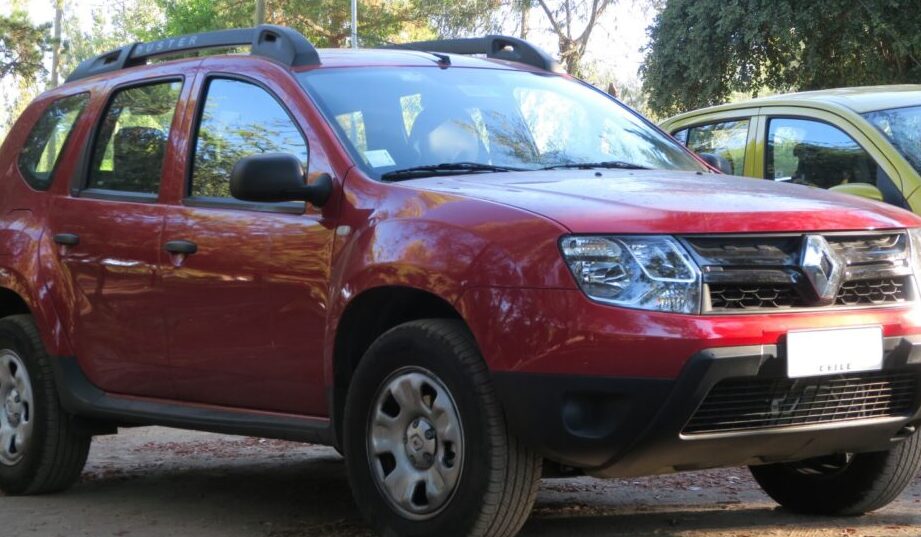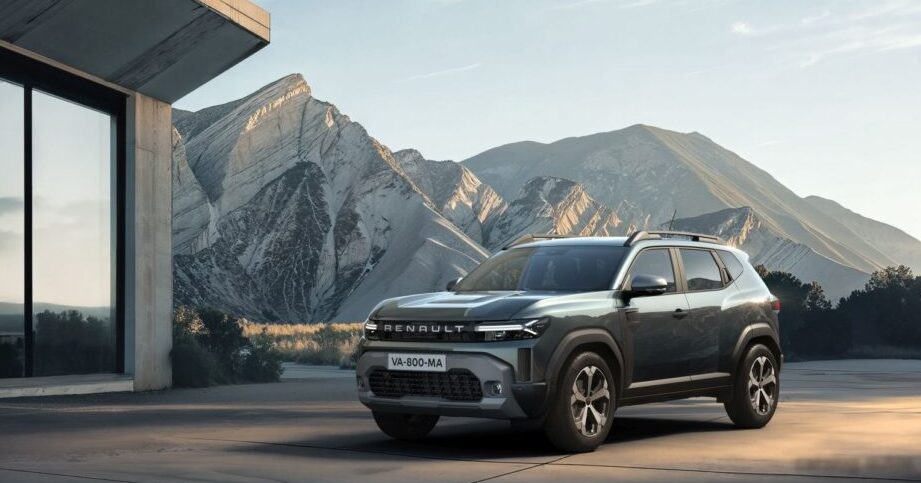
The Renault Duster III 1.0 ECO-G (91/100 hp) is a compact sport utility vehicle (SUV) introduced in 2024 as part of the third generation Duster lineup. This variant is notable for its bi-fuel capability, running on both gasoline and liquefied petroleum gas (LPG), offering a flexible and potentially cost-effective option for drivers. Positioned as an entry-level to mid-range offering within the Duster III range, it caters to buyers seeking a practical, affordable, and fuel-efficient vehicle. The Duster III builds upon the success of its predecessors, maintaining the rugged styling and spacious interior that have become hallmarks of the model, while incorporating updated technology and safety features.
Technical Specifications
| Brand | Renault |
| Model | Duster |
| Generation | Duster III |
| Type (Engine) | 1.0 ECO-G (91/100 Hp) |
| Start of production | 2024 |
| Powertrain Architecture | Internal Combustion engine |
| Body type | SUV |
| Seats | 5 |
| Doors | 5 |
| Combined fuel consumption (WLTP) | 6.5 l/100 km (36.2 US mpg, 43.5 UK mpg, 15.4 km/l) |
| Combined fuel consumption (WLTP) (LPG) | 7.9 l/100 km |
| CO2 emissions (WLTP) | 148 g/km |
| CO2 emissions (LPG) (WLTP) | 128 g/km |
| Fuel Type | Petrol / LPG |
| Acceleration 0 – 100 km/h | 14 sec |
| Acceleration 0 – 62 mph | 14 sec |
| Acceleration 0 – 100 km/h (LPG) | 13.2 sec |
| Acceleration 0 – 60 mph (Calculated) | 13.3 sec |
| Maximum speed | 163 km/h (101.28 mph) |
| Maximum speed (LPG) | 168 km/h |
| Emission standard | Euro 6 |
| Weight-to-power ratio | 14 kg/Hp, 71.3 Hp/tonne |
| Weight-to-torque ratio | 8 kg/Nm, 125.4 Nm/tonne |
| Power | 91 Hp @ 4800-5000 rpm |
| Power per litre | 91.1 Hp/l |
| Power (LPG) | 100 Hp @ 4600-5000 rpm |
| Power per litre (LPG) | 100.1 Hp/l |
| Torque | 160 Nm (118.01 lb.-ft.) |
| Torque (LPG) | 170 Nm @ 2000-3500 rpm |
| Engine layout | Front, Transverse |
| Engine Model/Code | H4Dt |
| Engine displacement | 999 cm3 (60.96 cu. in.) |
| Number of cylinders | 3 |
| Engine configuration | Inline |
| Cylinder Bore | 72.2 mm (2.84 in.) |
| Piston Stroke | 81.3 mm (3.2 in.) |
| Number of valves per cylinder | 4 |
| Fuel injection system | Multi-port manifold injection |
| Engine aspiration | Turbocharger, Intercooler |
| Valvetrain | DOHC |
| Engine oil capacity | 4.1 l (4.33 US qt | 3.61 UK qt) |
| Coolant | 5.5 l (5.81 US qt | 4.84 UK qt) |
| Kerb Weight | 1276 kg (2813.1 lbs.) |
| Max. weight | 1765 kg (3891.16 lbs.) |
| Max load | 489 kg (1078.06 lbs.) |
| Trunk (boot) space – minimum | 513 l (18.12 cu. ft.) |
| Trunk (boot) space – maximum | 1545 l (54.56 cu. ft.) |
| Fuel tank capacity | 50 l (13.21 US gal | 11 UK gal) |
| Fuel tank capacity (LPG) | 50 l |
| Max. roof load | 80 kg (176.37 lbs.) |
| Permitted trailer load with brakes (12%) | 1500 kg (3306.93 lbs.) |
| Permitted trailer load without brakes | 675 kg (1488.12 lbs.) |
| Permitted towbar download | 75 kg (165.35 lbs.) |
| Length | 4343 mm (170.98 in.) |
| Width | 1813 mm (71.38 in.) |
| Width with mirrors folded | 1921 mm (75.63 in.) |
| Width including mirrors | 2069 mm (81.46 in.) |
| Height | 1656 mm (65.2 in.) |
| Wheelbase | 2657 mm (104.61 in.) |
| Front track | 1574 mm (61.97 in.) |
| Rear (Back) track | 1556 mm (61.26 in.) |
| Front overhang | 857 mm (33.74 in.) |
| Rear overhang | 828 mm (32.6 in.) |
| Ride height (ground clearance) | 209 mm (8.23 in.) |
| Minimum turning circle | 10.86 m (35.63 ft.) |
| Drivetrain Architecture | ICE to Front Wheels |
| Drive wheel | Front wheel drive |
| Number of gears and type of gearbox | 6 gears, manual transmission |
| Front suspension | Independent, McPherson with coil spring and anti-roll bar |
| Rear suspension | Semi-independent, coil spring, Torsion |
| Front brakes | Ventilated discs |
| Rear brakes | Drum |
| Assisting systems | ABS (Anti-lock braking system) |
| Steering type | Steering rack and pinion |
| Power steering | Electric Steering |
| Tires size | 215/65 R17 |
| Wheel rims size | 17 |
Powertrain & Engine Architecture
The Renault Duster III 1.0 ECO-G is powered by the H4Dt engine, a 999cc inline three-cylinder turbocharged gasoline engine. This engine is part of Renault’s latest generation of downsized, turbocharged powerplants, designed for efficiency and reduced emissions. The engine utilizes multi-point fuel injection and a single turbocharger with an intercooler to boost power output. The LPG conversion is factory-installed, allowing seamless switching between gasoline and LPG fuel sources. When running on LPG, the engine produces 100 hp, a slight increase over the 91 hp when running on gasoline. The engine features a double overhead camshaft (DOHC) valvetrain with four valves per cylinder, optimizing gas flow for improved performance. The engine is paired with a 6-speed manual transmission, delivering power to the front wheels. The Start & Stop system further enhances fuel economy by automatically shutting off the engine when the vehicle is stationary.
Driving Characteristics
The 1.0 ECO-G powertrain delivers adequate performance for everyday driving, though it’s not designed for rapid acceleration. The 0-60 mph time of around 13.3 seconds reflects its focus on fuel efficiency rather than outright speed. The turbocharger helps to mitigate the effects of the small displacement, providing a reasonable amount of torque at lower engine speeds. The manual transmission allows for driver control and engagement, but the gear ratios are tuned for economy, meaning frequent shifting may be necessary when climbing hills or overtaking. Switching to LPG slightly improves acceleration due to the higher power output, but the difference is not dramatic. The overall driving experience is comfortable and predictable, making it well-suited for urban and highway driving.
Equipment & Trim Levels
The Duster III 1.0 ECO-G typically comes with a standard equipment list that includes air conditioning, power steering, electric front windows, a basic audio system with USB connectivity, and ABS brakes. Safety features such as driver and passenger airbags are also standard. Higher trim levels may add features like alloy wheels, a touchscreen infotainment system with smartphone integration (Apple CarPlay and Android Auto), rear parking sensors, and cruise control. Interior upholstery is typically cloth, with options for upgraded materials on higher trims. The dashboard layout is functional and straightforward, prioritizing usability over luxury.
Chassis & Braking
The Duster III utilizes a McPherson strut front suspension and a semi-independent torsion beam rear suspension. This setup provides a good balance between ride comfort and handling. The front suspension incorporates a stabilizer bar to reduce body roll during cornering. The braking system consists of ventilated discs on the front wheels and drum brakes on the rear wheels. ABS (Anti-lock Braking System) is standard, enhancing braking performance and stability in emergency situations. The vehicle’s relatively lightweight construction contributes to its agility and fuel efficiency.
Market Reception & Comparison
The Renault Duster III 1.0 ECO-G has been generally well-received in markets where it’s available, particularly for its affordability and fuel efficiency. Critics have praised its practicality and spacious interior, but some have noted its modest performance. Compared to other Duster III variants, such as those with larger gasoline engines or diesel options, the 1.0 ECO-G offers lower running costs but sacrifices some power and refinement. Its bi-fuel capability provides a unique selling point, appealing to drivers seeking to reduce their reliance on gasoline and take advantage of lower LPG prices. Fuel economy figures of around 36.2 US mpg on gasoline and comparable figures on LPG make it a competitive option in its segment.
Legacy
The Renault Duster III 1.0 ECO-G represents a continued effort by Renault to offer affordable and efficient vehicles to a broad range of customers. The H4Dt engine is expected to be a reliable unit, benefiting from Renault’s experience in developing downsized turbocharged engines. The long-term durability of the LPG conversion system will be a key factor in its overall reliability. As a used car, the 1.0 ECO-G is likely to appeal to budget-conscious buyers seeking a practical and economical SUV. Its bi-fuel capability could also make it an attractive option in regions where LPG infrastructure is well-developed.