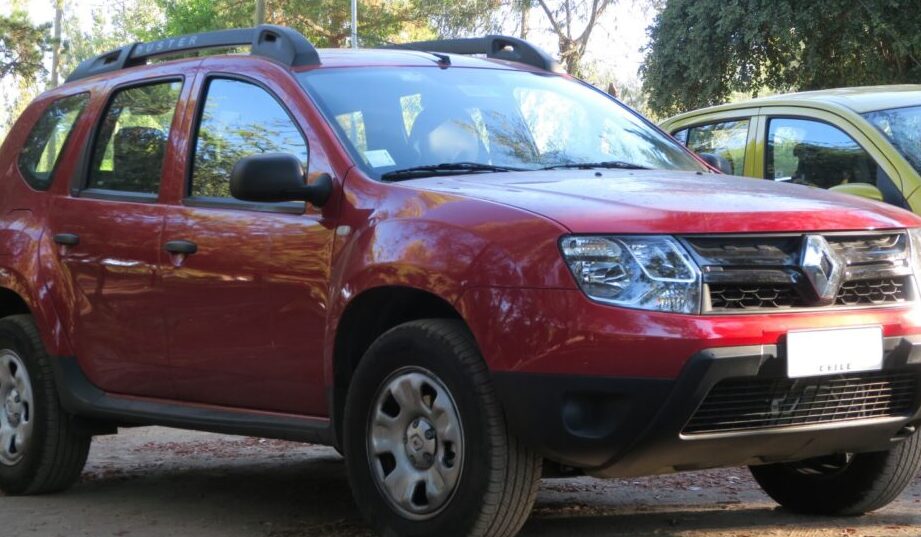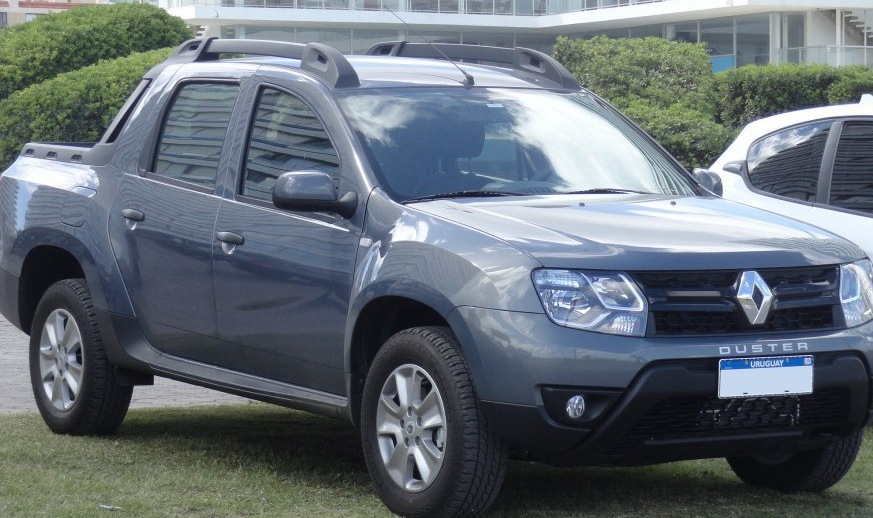
The Renault Duster Oroch 1.6 SCe 16V, producing 120 horsepower, was a compact pickup truck produced by Renault from 2015 to 2019. Specifically designed for the Latin American market, particularly Brazil, the Oroch represented Renault’s entry into the burgeoning compact truck segment. It was based on the Duster SUV platform (Dacia Logan/Sandero in other markets) and aimed to provide a practical and affordable utility vehicle for both commercial and personal use. This variant, with its 1.6-liter engine and five-speed manual transmission, occupied the entry-level position in the Oroch lineup, offering a balance of fuel efficiency and capability.
Technical Specifications
| Brand | Renault |
| Model | Duster |
| Generation | Duster Oroch |
| Type (Engine) | 1.6 SCe 16V (120 Hp) Ethanol |
| Start of production | 2015 |
| End of production | 2019 |
| Powertrain Architecture | Internal Combustion engine |
| Body type | Pick-up |
| Seats | 5 |
| Doors | 4 |
| Fuel Type | Petrol / Ethanol – E85 |
| Acceleration 0 – 100 km/h | 12.5 sec |
| Acceleration 0 – 62 mph | 12.5 sec |
| Acceleration 0 – 60 mph | 11.9 sec |
| Maximum speed | 164 km/h (101.9 mph) |
| Weight-to-power ratio | 10.8 kg/Hp, 92.6 Hp/tonne |
| Weight-to-torque ratio | 8.2 kg/Nm, 122.7 Nm/tonne |
| Power | 120 Hp @ 5500 rpm |
| Power per litre | 75.1 Hp/l |
| Torque | 159 Nm @ 4000 rpm (117.27 lb.-ft. @ 4000 rpm) |
| Engine layout | Front, Transverse |
| Engine Model/Code | H4M |
| Engine displacement | 1597 cm3 (97.45 cu. in.) |
| Number of cylinders | 4 |
| Engine configuration | Inline |
| Number of valves per cylinder | 4 |
| Fuel injection system | Multi-port manifold injection |
| Engine aspiration | Naturally aspirated engine |
| Kerb Weight | 1296 kg (2857.19 lbs) |
| Trunk (boot) space – minimum | 683 l (24.12 cu. ft.) |
| Fuel tank capacity | 50 l (13.21 US gal | 11 UK gal) |
| Length | 4700 mm (185.04 in) |
| Width | 1821 mm (71.69 in) |
| Height | 1694 mm (66.69 in) |
| Wheelbase | 2829 mm (111.38 in) |
| Ride height (ground clearance) | 206 mm (8.11 in) |
| Approach angle | 26° |
| Departure angle | 19.9° |
| Drivetrain Architecture | The Internal combustion engine (ICE) drives the front wheels of the vehicle. |
| Drive wheel | Front wheel drive |
| Number of gears and type of gearbox | 5 gears, manual transmission |
| Front suspension | Independent type McPherson |
| Rear suspension | Independent multi-link spring suspension with stabilizer |
| Front brakes | Ventilated discs |
| Rear brakes | Drum |
| Assisting systems | ABS (Anti-lock braking system) |
| Steering type | Steering rack and pinion |
| Power steering | Electric Steering |
| Tires size | 215/65 R16 |
| Wheel rims size | 16 |
Powertrain & Engine Architecture
The Renault Duster Oroch 1.6 SCe 16V utilizes the H4M engine, a 1.6-liter inline-four cylinder engine designed for flexibility in fuel options. In Brazil, it was commonly configured to run on both gasoline and ethanol (E85), with the engine control unit (ECU) automatically adjusting parameters based on fuel composition. The engine features a multi-point fuel injection system, providing adequate fuel atomization for efficient combustion. The 16-valve configuration (four valves per cylinder) contributes to improved breathing and higher-end power delivery. The engine’s relatively simple design prioritized reliability and affordability over outright performance. The five-speed manual transmission was the standard offering for this variant, chosen for its cost-effectiveness and suitability for the intended market. The transmission’s gear ratios were tuned for a balance of acceleration and fuel economy, prioritizing usability in everyday driving conditions.
Driving Characteristics
The 120 horsepower output of the 1.6-liter engine, coupled with the five-speed manual transmission, resulted in a driving experience focused on practicality rather than sportiness. Acceleration from 0-60 mph took approximately 11.9 seconds, and top speed was limited to around 102 mph. The engine provided adequate torque for typical urban and highway driving, but felt strained when fully loaded or tackling steep inclines. Compared to the higher-output 1.9-liter diesel options available in some markets, the 1.6-liter gasoline engine offered less low-end grunt but was generally smoother and quieter in operation. The manual transmission allowed for driver control, but the gear ratios weren’t particularly optimized for spirited driving. The Oroch’s suspension, tuned for comfort and durability, provided a reasonably compliant ride, even on rough roads, but didn’t offer the handling precision of more performance-oriented vehicles.
Equipment & Trim Levels
The 1.6 SCe 16V variant of the Duster Oroch typically served as the base model. Standard equipment generally included air conditioning, power steering, electric front windows, and a basic audio system with USB connectivity. Safety features included dual front airbags and ABS brakes. Interior upholstery was typically cloth, with a functional but basic dashboard layout. Optional extras included rear power windows, a more advanced audio system, alloy wheels, and fog lights. Higher trim levels, such as the Privilege, added features like leather upholstery, automatic climate control, and parking sensors.
Chassis & Braking
The Duster Oroch utilized a front-wheel-drive chassis with an independent McPherson strut suspension at the front and an independent multi-link spring suspension at the rear. This suspension setup provided a good balance of ride comfort and handling capability for a vehicle in its class. The front brakes were ventilated discs, offering adequate stopping power, while the rear brakes were drums, a cost-saving measure common in this segment. The electric power steering provided light and easy steering, making it maneuverable in urban environments. Ground clearance of 8.11 inches allowed for moderate off-road capability, making it suitable for unpaved roads and rural areas.
Market Reception & Comparison
The Renault Duster Oroch 1.6 SCe 16V was generally well-received in the Latin American market as an affordable and practical pickup truck. Critics praised its spacious cabin, comfortable ride, and fuel efficiency. However, some reviewers noted its lack of power and relatively basic interior. Compared to other compact pickups in the region, such as the Fiat Strada and Volkswagen Saveiro, the Oroch offered a more spacious cabin and a more comfortable ride, but often lacked the refinement and performance of its competitors. Fuel economy was competitive, particularly when running on ethanol, but the 1.6-liter engine’s performance was noticeably less than that of the diesel options available in some markets.
Legacy
The Renault Duster Oroch 1.6 SCe 16V has proven to be a relatively reliable vehicle, with the H4M engine known for its durability. The simplicity of the powertrain contributes to lower maintenance costs. On the used car market, these models are generally affordable and represent a good value for buyers seeking a practical and economical pickup truck. While not a performance standout, the Oroch’s blend of affordability, practicality, and durability has ensured its continued presence on roads throughout Latin America. The H4M engine, in various iterations, continues to be used in other Renault models, demonstrating its ongoing relevance in the company’s product lineup.