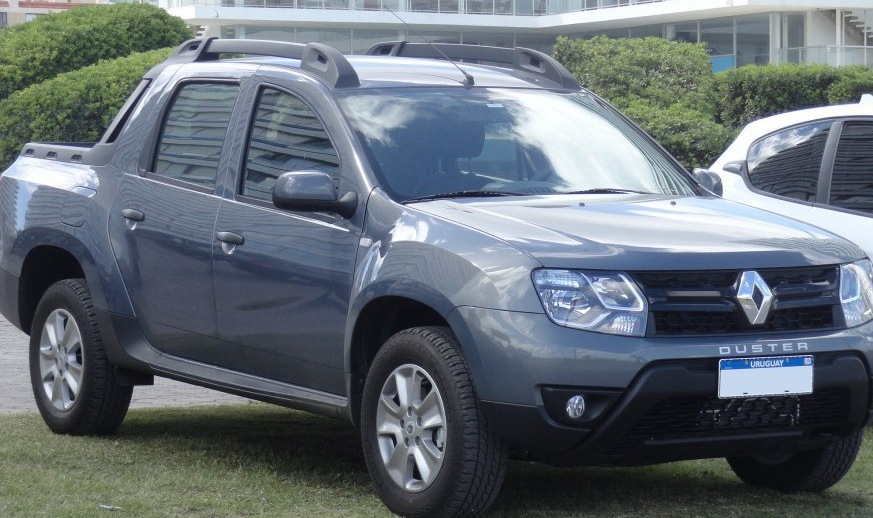
The Renault Duster Oroch 2.0 16V, produced from 2015 to 2019, represents Renault’s entry into the compact pickup truck segment, primarily targeted at the South American market. This variant, powered by the F4R 2.0-liter engine producing 143 horsepower, occupied a mid-range position within the Oroch lineup, offering a balance between utility, affordability, and performance. The Oroch itself was a significant vehicle for Renault, expanding the Duster’s appeal beyond the traditional SUV body style and catering to customers needing a small, practical truck for both work and leisure. It was built on the Duster platform, designated as the H platform, and shared many components with its SUV sibling.
Technical Specifications
| Brand | Renault |
| Model | Duster |
| Generation | Duster Oroch |
| Type (Engine) | 2.0 16V (143 Hp) |
| Start of production | 2015 |
| End of production | 2019 |
| Powertrain Architecture | Internal Combustion engine |
| Body type | Pick-up |
| Seats | 5 |
| Doors | 4 |
| CO2 emissions | 130 g/km |
| Fuel Type | Petrol (Gasoline) |
| Acceleration 0 – 100 km/h | 10.3 sec |
| Acceleration 0 – 62 mph | 10.3 sec |
| Acceleration 0 – 60 mph | 9.8 sec |
| Maximum speed | 178 km/h (110.6 mph) |
| Weight-to-power ratio | 9.5 kg/Hp, 105.5 Hp/tonne |
| Weight-to-torque ratio | 6.8 kg/Nm, 146.1 Nm/tonne |
| Power | 143 Hp @ 5750 rpm |
| Power per litre | 71.6 Hp/l |
| Torque | 198 Nm @ 4000 rpm (146.04 lb.-ft. @ 4000 rpm) |
| Engine layout | Front, Transverse |
| Engine Model/Code | F4R |
| Engine displacement | 1998 cm3 (121.93 cu. in.) |
| Number of cylinders | 4 |
| Engine configuration | Inline |
| Number of valves per cylinder | 4 |
| Fuel injection system | Multi-port manifold injection |
| Engine aspiration | Naturally aspirated engine |
| Engine oil capacity | 5.4 l (5.71 US qt | 4.75 UK qt) |
| Coolant | 4.5 l (4.76 US qt | 3.96 UK qt) |
| Kerb Weight | 1355 kg (2987.26 lbs) |
| Trunk (boot) space – minimum | 683 l (24.12 cu. ft) |
| Fuel tank capacity | 50 l (13.21 US gal | 11 UK gal) |
| Length | 4700 mm (185.04 in) |
| Width | 1821 mm (71.69 in) |
| Height | 1694 mm (66.69 in) |
| Wheelbase | 2829 mm (111.38 in) |
| Ride height (ground clearance) | 206 mm (8.11 in) |
| Approach angle | 26° |
| Departure angle | 19.9° |
| Drivetrain Architecture | The Internal combustion engine (ICE) drives the front wheels of the vehicle. |
| Drive wheel | Front wheel drive |
| Number of gears and type of gearbox | 6 gears, manual transmission |
| Front suspension | Independent type McPherson |
| Rear suspension | Independent multi-link spring suspension with stabilizer |
| Front brakes | Ventilated discs |
| Rear brakes | Drum |
| Assisting systems | ABS (Anti-lock braking system) |
| Steering type | Steering rack and pinion |
| Power steering | Electric Steering |
| Tires size | 215/65 R16 |
| Wheel rims size | 16 |
Powertrain & Engine Architecture
The heart of the Duster Oroch 2.0 16V is the Renault F4R engine, a 1.998-liter inline-four cylinder gasoline engine. This engine, a mainstay in Renault’s lineup for many years, utilizes a multi-point fuel injection system and a dual overhead camshaft (DOHC) valvetrain with four valves per cylinder. The F4R is known for its relative simplicity and durability, though it isn’t a particularly high-tech engine by modern standards. The 143 horsepower output is achieved at 5750 rpm, while peak torque of 198 Nm (146 lb-ft) arrives at 4000 rpm. The engine is transversely mounted in the front of the vehicle. Paired with the F4R is a six-speed manual transmission, providing a reasonably wide range of gears for both on-road and off-road driving. An automatic transmission option was not available for this specific engine/trim combination.
Driving Characteristics
The 2.0-liter engine and six-speed manual transmission combination in the Duster Oroch provides adequate, though not exhilarating, performance. Acceleration from 0 to 60 mph takes approximately 9.8 seconds, and the top speed is around 110.6 mph. The engine feels relatively responsive in the mid-range, making it suitable for everyday driving and light hauling. However, it can feel strained when fully loaded or when climbing steep inclines. The six-speed gearbox is well-matched to the engine’s characteristics, offering relatively short ratios for quick acceleration and a taller sixth gear for highway cruising. Compared to a potential turbocharged engine, the F4R lacks the low-end torque, requiring more frequent downshifts to maintain momentum. The manual transmission provides a more engaging driving experience than an automatic would, but it also demands more driver involvement.
Equipment & Trim Levels
The Duster Oroch 2.0 16V typically came equipped with features such as air conditioning, power windows, power door locks, and a basic audio system. Safety features included ABS brakes and dual front airbags. Higher trim levels added features like alloy wheels, fog lights, a more advanced audio system with Bluetooth connectivity, and a rear parking sensor. Interior upholstery was typically cloth, with a durable and practical design. The dashboard layout was functional and straightforward, prioritizing usability over luxury. Optional extras included a roof rack, bed liner, and upgraded audio systems.
Chassis & Braking
The Duster Oroch utilizes a McPherson strut front suspension and an independent multi-link rear suspension, providing a comfortable ride quality, even on rough roads. The suspension is tuned for a balance between on-road comfort and off-road capability. Front brakes are ventilated discs, offering good stopping power, while the rear brakes are drums, a cost-saving measure common in this segment. The electric power steering provides light and easy steering, making it maneuverable in urban environments. With a ground clearance of 206 mm (8.11 inches), the Oroch is capable of tackling moderate off-road terrain.
Market Reception & Comparison
The Renault Duster Oroch 2.0 16V was generally well-received in the South American market, praised for its practicality, affordability, and ruggedness. Critics noted that the 2.0-liter engine provided adequate performance for most tasks, but some found it lacking in refinement compared to competitors. Compared to other trims in the Oroch lineup, the 2.0-liter version offered a step up in performance over the base 1.6-liter engine, but it wasn’t as fuel-efficient. The manual transmission was seen as a positive by driving enthusiasts, but some customers preferred the convenience of an automatic. Fuel economy was rated at around 130 g/km of CO2 emissions.
Legacy
The Renault Duster Oroch 2.0 16V has proven to be a relatively reliable vehicle, with the F4R engine being known for its durability. Common maintenance items include regular oil changes, timing belt replacements, and spark plug replacements. The simple engine design makes it relatively easy and affordable to repair. On the used car market, the Oroch 2.0 16V remains a popular choice for buyers seeking a practical and affordable pickup truck. Its robust construction and readily available parts contribute to its continued appeal. While not a performance icon, the Duster Oroch 2.0 16V carved out a niche for itself as a dependable and versatile workhorse.