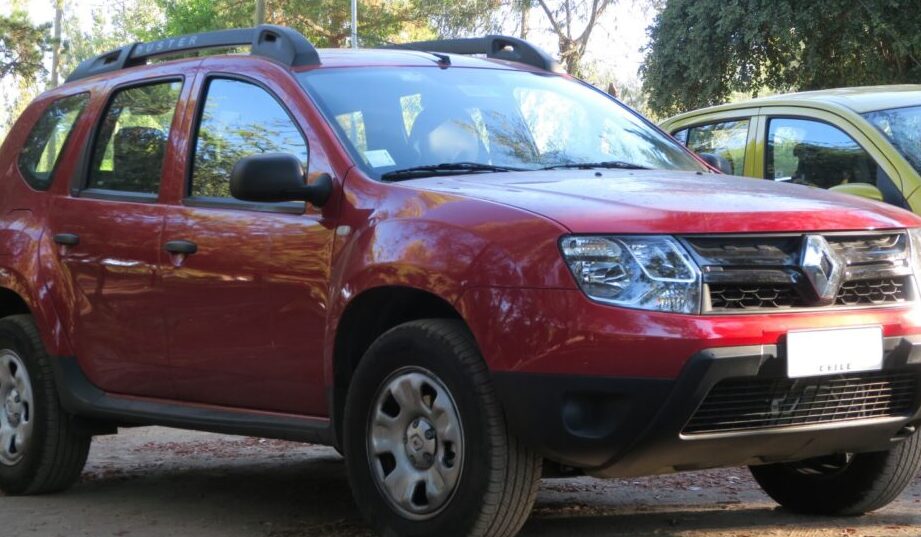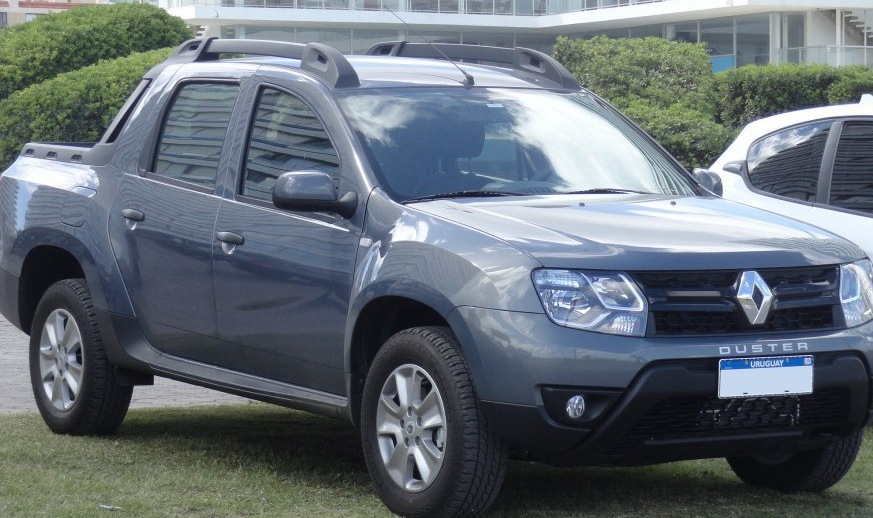
The Renault Duster Oroch 2.0 16V (148 hp) Ethanol Automatic is a compact pickup truck produced by Renault between 2015 and 2019. It represented Renault’s entry into the burgeoning small pickup segment, primarily targeted at the South American market, particularly Brazil and Argentina. The Oroch is based on the Duster compact SUV, sharing its platform and many components, but with a dedicated pickup bed extending the vehicle’s length. This variant, equipped with the 2.0-liter engine and a four-speed automatic transmission, occupied a mid-range position within the Oroch lineup, offering a balance between affordability and convenience. It aimed to appeal to buyers needing a practical vehicle for both work and leisure, capable of carrying moderate loads while providing the ease of an automatic gearbox.
Technical Specifications
| Brand | Renault |
| Model | Duster |
| Generation | Duster Oroch |
| Type (Engine) | 2.0 16V (148 Hp) Ethanol Automatic |
| Start of production | 2015 |
| End of production | 2019 |
| Powertrain Architecture | Internal Combustion engine |
| Body type | Pick-up |
| Seats | 5 |
| Doors | 4 |
| Fuel Type | Petrol / Ethanol – E85 |
| Acceleration 0 – 100 km/h | 10.4 sec |
| Acceleration 0 – 62 mph | 10.4 sec |
| Acceleration 0 – 60 mph | 9.9 sec |
| Maximum speed | 176 km/h (109.36 mph) |
| Weight-to-power ratio | 9.3 kg/Hp, 107.6 Hp/tonne |
| Weight-to-torque ratio | 6.7 kg/Nm, 149.1 Nm/tonne |
| Power | 148 Hp @ 5750 rpm |
| Power per litre | 74.1 Hp/l |
| Torque | 205 Nm @ 4000 rpm (151.2 lb.-ft. @ 4000 rpm) |
| Engine layout | Front, Transverse |
| Engine Model/Code | F4R |
| Engine displacement | 1998 cm3 (121.93 cu. in.) |
| Number of cylinders | 4 |
| Engine configuration | Inline |
| Number of valves per cylinder | 4 |
| Fuel injection system | Multi-port manifold injection |
| Engine aspiration | Naturally aspirated engine |
| Engine oil capacity | 5.4 l (5.71 US qt | 4.75 UK qt) |
| Engine oil specification | (Log in to see) |
| Coolant | 4.5 l (4.76 US qt | 3.96 UK qt) |
| Kerb Weight | 1375 kg (3031.36 lbs) |
| Trunk (boot) space – minimum | 683 l (24.12 cu. ft) |
| Fuel tank capacity | 50 l (13.21 US gal | 11 UK gal) |
| Length | 4700 mm (185.04 in) |
| Width | 1821 mm (71.69 in) |
| Height | 1694 mm (66.69 in) |
| Wheelbase | 2829 mm (111.38 in) |
| Ride height (ground clearance) | 206 mm (8.11 in) |
| Approach angle | 26° |
| Departure angle | 19.9° |
| Drivetrain Architecture | The Internal combustion engine (ICE) drives the front wheels of the vehicle. |
| Drive wheel | Front wheel drive |
| Number of gears and type of gearbox | 4 gears, automatic transmission |
| Front suspension | Independent type McPherson |
| Rear suspension | Independent multi-link spring suspension with stabilizer |
| Front brakes | Ventilated discs |
| Rear brakes | Drum |
| Assisting systems | ABS (Anti-lock braking system) |
| Steering type | Steering rack and pinion |
| Power steering | Electric Steering |
| Tires size | 215/65 R16 |
| Wheel rims size | 16 |
Powertrain & Engine Architecture
The Renault Duster Oroch 2.0 16V Automatic utilizes the F4R engine, a 1.998-liter inline-four cylinder gasoline engine. This engine is notable for its flexibility in fuel compatibility, being designed to run efficiently on both gasoline and ethanol (up to E85 blends) in markets like Brazil. The F4R employs a multi-point fuel injection system, delivering fuel directly into the intake ports. The engine features a double overhead camshaft (DOHC) valvetrain with four valves per cylinder, contributing to its relatively high output for its displacement. The automatic transmission is a conventional four-speed unit, chosen for its cost-effectiveness and suitability for the target market. While not the most modern transmission, it provided a level of convenience that appealed to many buyers. The engine’s design prioritizes durability and ease of maintenance, reflecting the practical needs of its intended users.
Driving Characteristics
The 148 hp output coupled with the four-speed automatic transmission results in a driving experience that prioritizes usability over outright performance. Acceleration from 0-60 mph takes approximately 9.9 seconds, which is adequate for everyday driving but doesn’t offer particularly brisk performance. The automatic transmission’s gear ratios are tuned for fuel efficiency and smooth operation, rather than aggressive acceleration. Compared to the manual transmission versions of the same engine, the automatic suffers a slight performance penalty due to the transmission’s inherent losses. However, the automatic provides a more relaxed driving experience, especially in urban traffic. The relatively high ground clearance and front-wheel-drive configuration provide decent capability on unpaved roads, making it suitable for rural environments.
Equipment & Trim Levels
The 2.0 16V Automatic trim of the Duster Oroch typically included features such as air conditioning, power windows, power door locks, and a basic audio system with USB connectivity. Safety equipment included ABS brakes and dual front airbags. Higher trim levels offered additional features like alloy wheels, fog lights, a more advanced audio system with Bluetooth connectivity, and a rear parking sensor. Interior upholstery was typically cloth, with a durable and practical design. The dashboard layout was functional and straightforward, prioritizing ease of use over aesthetic flair.
Chassis & Braking
The Duster Oroch utilizes a McPherson strut front suspension and an independent multi-link rear suspension, providing a reasonable balance between ride comfort and handling. The front suspension incorporates a stabilizer bar to reduce body roll during cornering. Braking duties are handled by ventilated discs at the front and drum brakes at the rear. The drum brakes on the rear were a cost-saving measure, common in this segment. The steering is a rack-and-pinion system with electric power assistance, providing light and easy steering feel.
Market Reception & Comparison
The Renault Duster Oroch was generally well-received in the South American market, praised for its practicality, affordability, and ruggedness. Critics noted that the 2.0-liter engine and automatic transmission combination offered a comfortable and convenient driving experience, although performance was not its strongest suit. Compared to the base 1.6-liter engine, the 2.0-liter provided a noticeable improvement in power and torque. Compared to the diesel options available in some markets, the 2.0-liter gasoline engine offered lower fuel economy but potentially lower maintenance costs. The Oroch competed primarily with other compact pickups like the Fiat Strada and Volkswagen Saveiro.
Legacy
The Renault Duster Oroch 2.0 16V Automatic has proven to be a relatively reliable vehicle, with the F4R engine known for its durability. The four-speed automatic transmission, while not the most sophisticated, has also demonstrated reasonable longevity. In the used car market, these models are often sought after for their practicality and affordability. Maintenance costs are generally reasonable, and parts availability is good in regions where the Oroch was widely sold. The Oroch helped establish Renault as a significant player in the compact pickup segment in South America, and its success paved the way for future Renault pickup models.