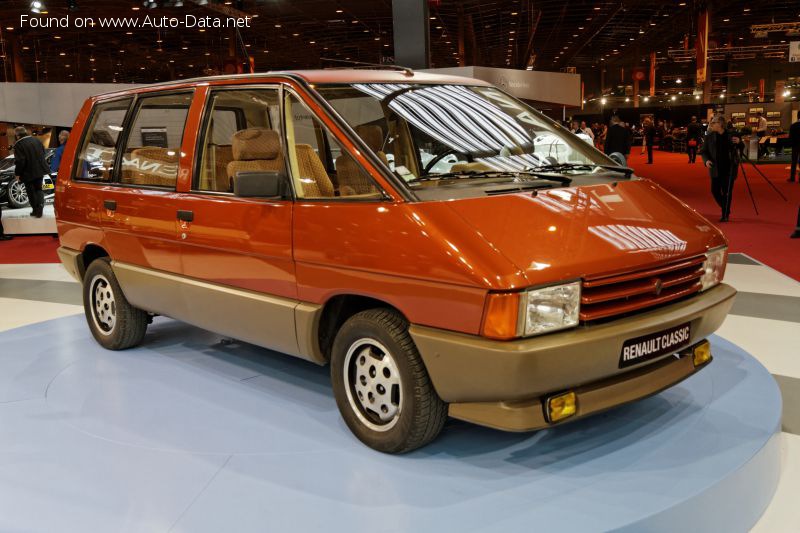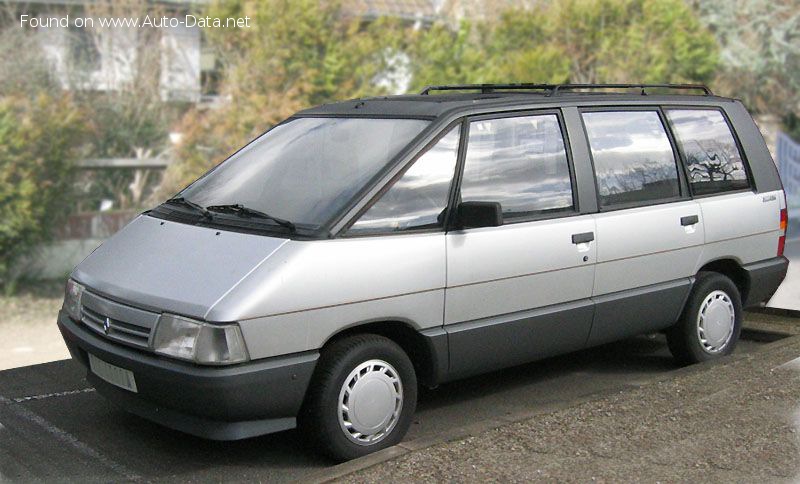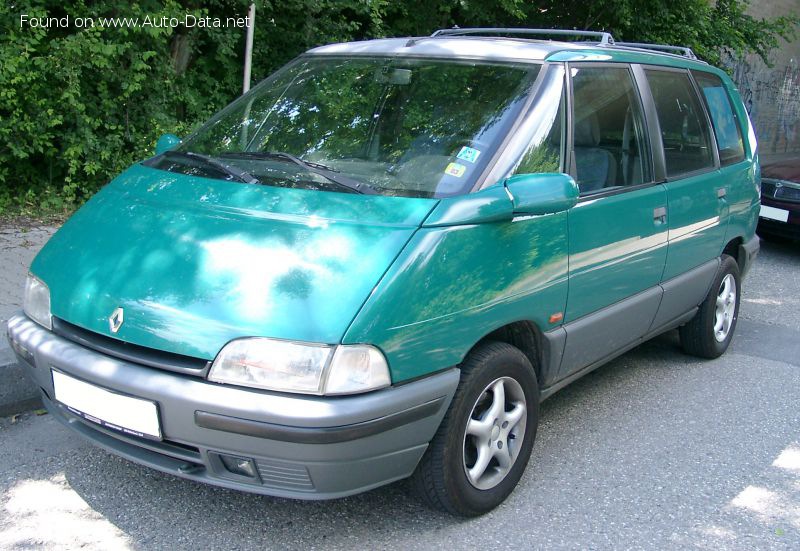
The Renault Espace II (J63) 2.8 V6 (150 Hp) represents a pivotal moment in the evolution of the modern minivan. Introduced as the second generation of Renault’s groundbreaking Espace, the J63 series, produced from 1991 to 1996, continued to define the multi-purpose vehicle (MPV) segment in Europe. This particular variant, equipped with a 2.8-liter V6 engine producing 150 horsepower, was the performance flagship of the Espace II lineup, offering a compelling blend of practicality, comfort, and driving enjoyment. While never officially sold in the United States, the Espace’s innovative design and versatile interior significantly influenced the development of MPVs globally, inspiring competitors and shaping the family car market.
The Renault Espace II (J63) 2.8 V6 (150 Hp): Engine and Performance
The heart of the Espace II 2.8 V6 is a naturally aspirated, 2.8-liter V6 gasoline engine, internally designated Z7W. This powerplant delivered 150 horsepower at 5400 rpm, a substantial output for a family vehicle of the early 1990s. Torque peaked at 165.95 lb.-ft. at 2500 rpm, providing ample low-end grunt for effortless acceleration, particularly when carrying passengers or towing. The engine utilized multi-port fuel injection, contributing to its smooth operation and reasonable fuel efficiency for its displacement and configuration.
Power was channeled to the front wheels through a five-speed manual transmission, a common configuration for European vehicles emphasizing driver involvement. The front-wheel-drive layout, combined with the engine’s longitudinal mounting, contributed to balanced handling characteristics. The Espace II 2.8 V6 could achieve a 0 to 60 mph time of 9.8 seconds and a top speed of 121.17 mph – figures that were competitive for a large MPV of the era. This performance allowed for comfortable high-speed cruising on European autobahns and confident overtaking maneuvers.
Fuel economy, while not a primary design consideration for a V6-powered minivan, was respectable. The Espace II 2.8 V6 achieved an estimated 21.8 US mpg combined, with 15.3 US mpg in urban driving and 27.4 US mpg on the open road. Its curb weight of 2958.6 lbs, relatively light for its size, aided in achieving these figures. A 77-liter (20.34 US gallon) fuel tank provided a substantial driving range, making it well-suited for long journeys.
Design and Features of the Renault Espace II (J63)
The Espace II retained the distinctive “monobox” design philosophy of the original Espace, characterized by a single-volume body where the hood, cabin, and cargo area seamlessly integrate. However, the J63 generation featured a more rounded and aerodynamic aesthetic, reflecting the design trends of the early 1990s. The vehicle measured 174.37 inches in length, 70.67 inches in width (81.1 inches including mirrors), and 66.65 inches in height, presenting a substantial yet approachable road presence. A generous 101.57-inch wheelbase contributed to a spacious interior and a comfortable ride.
The Espace II was fundamentally designed around versatility and passenger comfort. It offered five doors and seating for up to seven occupants across three rows. The rear seats were often removable or configurable, allowing for a wide range of seating and cargo arrangements. With all rear seats in place, trunk space was a modest 8.83 cubic feet, but expanded to an impressive 105.94 cubic feet with the rear seats removed or folded, transforming the Espace into a capable cargo carrier.
The suspension system comprised a double wishbone setup at the front and a semi-independent, coil spring arrangement at the rear, tuned to prioritize ride comfort. Braking duties were handled by ventilated discs at the front and solid discs at the rear, enhanced by an Anti-lock Braking System (ABS) – a significant safety feature for the time. Hydraulic rack and pinion steering provided precise and responsive control, while 195/65 R15 tires mounted on 15-inch wheels offered a balance of grip and ride quality. The turning circle of 38.06 feet provided reasonable maneuverability in urban environments.
Technical Specifications
| Category | Specification |
| General Information | |
| Brand | Renault |
| Model | Espace |
| Generation | Espace II (J63) |
| Type (Engine) | 2.8 V6 (150 Hp) |
| Production Start | 1991 |
| Production End | 1996 |
| Powertrain Architecture | Internal Combustion Engine |
| Body Type | Minivan, MPV |
| Seats | 7 |
| Doors | 5 |
| Performance Specs | |
| Fuel Consumption (Urban) | 15.3 US mpg (15.4 l/100 km) |
| Fuel Consumption (Extra Urban) | 27.4 US mpg (8.6 l/100 km) |
| Fuel Consumption (Combined) | 21.8 US mpg (10.8 l/100 km) |
| Fuel Type | Petrol (Gasoline) |
| Acceleration 0-60 mph | 9.8 seconds |
| Maximum Speed | 121.17 mph (195 km/h) |
| Weight-to-Power Ratio | 8.9 kg/Hp (111.8 Hp/tonne) |
| Weight-to-Torque Ratio | 6 kg/Nm (167.7 Nm/tonne) |
| Engine Specs | |
| Power | 150 Hp @ 5400 rpm |
| Power per liter | 52.7 Hp/l |
| Torque | 165.95 lb.-ft. @ 2500 rpm (225 Nm) |
| Engine Layout | Front, Longitudinal |
| Engine Model/Code | Z7W |
| Engine Displacement | 173.86 cu. in. (2849 cm3) |
| Number of Cylinders | 6 |
| Engine Configuration | V-engine |
| Cylinder Bore | 3.58 in. (91 mm) |
| Piston Stroke | 2.87 in. (73 mm) |
| Compression Ratio | 9.5:1 |
| Valves per Cylinder | 2 |
| Fuel Injection System | Multi-port manifold injection |
| Engine Aspiration | Naturally aspirated |
| Engine Oil Capacity | 7.4 US qt (7 l) |
| Coolant Capacity | 10.57 US qt (10 l) |
| Space, Volume and Weights | |
| Kerb Weight | 2958.6 lbs. (1342 kg) |
| Max. Weight | 4717.89 lbs. (2140 kg) |
| Max Load | 1759.29 lbs. (798 kg) |
| Trunk (boot) Space – Minimum | 8.83 cu. ft. (250 l) |
| Trunk (boot) Space – Maximum | 105.94 cu. ft. (3000 l) |
| Fuel Tank Capacity | 20.34 US gal (77 l) |
| Permitted Trailer Load (with brakes) | 3747.86 lbs. (1700 kg) |
| Permitted Trailer Load (without brakes) | 1433 lbs. (650 kg) |
| Dimensions | |
| Length | 174.37 in. (4429 mm) |
| Width | 70.67 in. (1795 mm) |
| Width (including mirrors) | 81.1 in. (2060 mm) |
| Height | 66.65 in. (1693 mm) |
| Wheelbase | 101.57 in. (2580 mm) |
| Front Track | 59.72 in. (1517 mm) |
| Rear Track | 59.37 in. (1508 mm) |
| Front Overhang | 38.35 in. (974 mm) |
| Rear Overhang | 34.45 in. (875 mm) |
| Ride Height (Ground Clearance) | 6.65 in. (169 mm) |
| Minimum Turning Circle | 38.06 ft. (11.60 m) |
| Drivetrain, Brakes and Suspension | |
| Drivetrain Architecture | Front wheel drive, Internal Combustion Engine |
| Drive Wheel | Front wheel drive |
| Gearbox Type | 5 gears, manual transmission |
| Front Suspension | Double wishbone |
| Rear Suspension | Semi-independent, coil spring |
| Front Brakes | Ventilated discs |
| Rear Brakes | Disc |
| Assisting Systems | ABS (Anti-lock braking system) |
| Steering Type | Steering rack and pinion |
| Power Steering | Hydraulic Steering |
| Tire Size | 195/65 R15 |
| Wheel Rims Size | 15 inches |
Legacy and Market Impact
The Renault Espace II (J63) solidified the MPV segment’s position in the European automotive market. Building upon the success of the original, the Espace II refined the concept of a spacious, versatile family vehicle prioritizing comfort and practicality. Its distinctive design, blending station wagon and van elements, resonated with European families seeking an alternative to traditional car types.
In Europe, the Espace II 2.8 V6 competed with emerging rivals like the Volkswagen Sharan, Ford Galaxy, and SEAT Alhambra, all offering seven-seater configurations. The Citroën Evasion/Peugeot 806 and Fiat Ulysse/Lancia Zeta also entered the market later in the Espace II’s production run. However, the Espace maintained a strong reputation for its innovative design, comfortable ride, and interior flexibility.
The 2.8 V6 variant, in particular, appealed to buyers seeking a premium driving experience, demonstrating that an MPV could be both practical and enjoyable to drive. The Espace II’s success cemented Renault’s leadership in innovative family transport solutions. Today, the Espace II is remembered as a significant milestone in MPV evolution, and its influence continues to be felt in modern vehicle design.