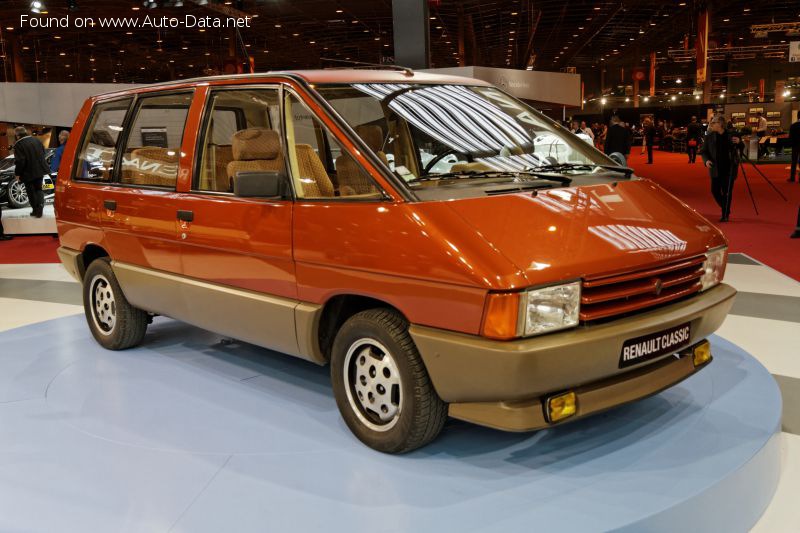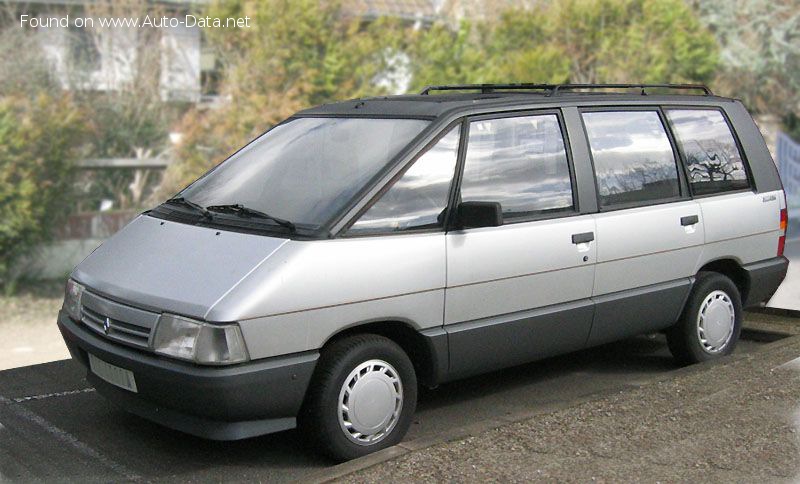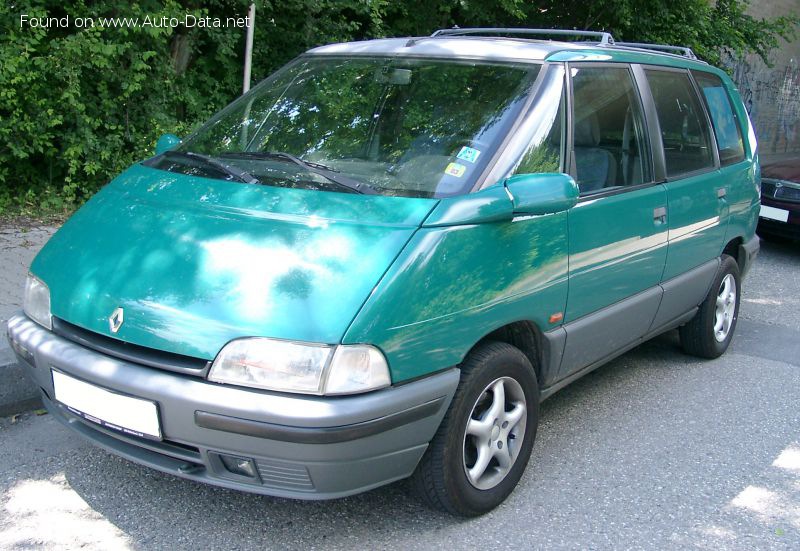
The Renault Espace IV (Phase IV, 2012) represents the final iteration of the fourth generation of Renault’s groundbreaking multi-purpose vehicle (MPV), a segment the French automaker largely pioneered in Europe. Launched in 2012, this Phase IV facelift served as a crucial update to keep the Espace competitive during its twilight years as a traditional minivan, before the market’s eventual shift towards crossover SUVs. While never officially sold in the United States, the Espace holds a significant place in automotive history across the Atlantic, renowned for its spaciousness, modular interior, and family-friendly design. This specific variant, powered by a 2.0-liter dCi diesel engine producing 130 horsepower, exemplifies the practical and efficient family transport solution that was a hallmark of European roadways.
Renault Espace IV (Phase IV, 2012): A European Minivan Icon
The Espace IV, first introduced in 2002, evolved significantly over its lifespan, with the 2012 Phase IV bringing subtle but important refinements. This model was designed to offer maximum comfort and versatility for up to seven passengers, making it a staple for large families and those requiring substantial cargo capacity. Its architecture, an internal combustion engine driving the front wheels, combined with a manual transmission, emphasized reliability and driver engagement, a common preference in its primary markets.
Engine & Performance
At the heart of this particular Renault Espace IV (Phase IV, 2012) is a robust 2.0-liter (1995 cm³) dCi (Common Rail Direct Injection) diesel engine, designated by the M9R engine code. This inline four-cylinder powerplant, featuring a Double Overhead Camshaft (DOHC) valvetrain with four valves per cylinder, was engineered for a balance of power, torque, and fuel efficiency – key attributes for a family-oriented vehicle often used for long-distance travel. The engine’s compression ratio of 16:1, coupled with a turbocharger and intercooler, ensures optimal combustion and power delivery across a broad RPM range.
The engine generates a respectable 130 horsepower at 4000 rpm, providing ample motivation for the Espace’s substantial curb weight of 4190.99 pounds. More importantly for a vehicle of this type, it delivers a healthy 236.02 lb.-ft. of torque at a low 2000 rpm. This strong low-end torque is critical for effortless acceleration, particularly when carrying a full load of passengers and luggage, and contributes to the vehicle’s impressive towing capacity of up to 4409.25 pounds with brakes.
Power is channeled to the front wheels via a smooth-shifting 6-speed manual transmission, offering the driver precise control and contributing to the Espace’s overall efficiency. In terms of acceleration, the 2.0 dCi (130 Hp) Espace can sprint from 0 to 60 mph in a calculated 11.4 seconds, with a top speed of 114.33 mph. While not a performance car, these figures are more than adequate for highway cruising and navigating urban environments. The inclusion of a particulate filter and compliance with Euro 5 emission standards underscore Renault’s commitment to environmental responsibility, a significant factor in European automotive markets.
Fuel economy was a major selling point for this diesel-powered Espace. It achieves an estimated 33.6 US mpg in urban driving, an impressive 47 US mpg on the highway, and a combined average of 41.3 US mpg. With an 83-liter (21.93 US gallons) fuel tank, the Espace offered a considerable range between fill-ups, further enhancing its appeal as a long-distance cruiser.
Design & Features
The Renault Espace IV (Phase IV, 2012) retains the distinctive “monospace” design philosophy that characterized the Espace line from its inception. As a 5-door minivan (or MPV), its exterior design prioritizes interior volume and passenger comfort. The Phase IV facelift introduced subtle updates, primarily to the front fascia, including redesigned headlights and grille, to align its aesthetics with Renault’s contemporary design language of the time. Its dimensions – a length of 183.27 inches, a width of 74.57 inches (including mirrors), and a height of 70.91 inches – create a commanding presence on the road while efficiently packaging its vast interior space.
The Espace’s wheelbase of 110.35 inches is instrumental in providing a stable ride and generous legroom for all occupants. With seating for seven across three rows, the Espace truly excels in interior modularity. The rear seats can typically be individually removed or folded, allowing for numerous configurations to balance passenger and cargo needs. Minimum trunk space starts at 10.28 cubic feet (291 liters) with all seats in place, expanding to an enormous 101 cubic feet (2860 liters) when the rear seats are removed or folded flat, transforming the minivan into a practical cargo hauler.
From a chassis perspective, the Espace features an independent McPherson-type front suspension and a semi-independent rear suspension with coil springs, a setup designed to provide a comfortable and composed ride, even over varied road surfaces. Stopping power is managed by ventilated discs at the front and disc brakes at the rear, supported by an Anti-lock Braking System (ABS) for enhanced safety. Electric power steering contributes to ease of maneuvering, especially in tight urban spaces, despite the vehicle’s substantial size. The Espace rides on 17-inch wheels fitted with 225/55 R17 tires, balancing ride comfort with adequate grip.
Technical Specifications
| General Information | |
| Brand | Renault |
| Model | Espace |
| Generation | Espace IV (Phase IV, 2012) |
| Engine Type | 2.0 dCi (130 Hp) |
| Start of Production | 2012 year |
| End of Production | 2013 year |
| Powertrain Architecture | Internal Combustion Engine |
| Body Type | Minivan, MPV |
| Seats | 7 |
| Doors | 5 |
| Performance Specifications | |
| Fuel Consumption (Urban) | 7 l/100 km (33.6 US mpg) |
| Fuel Consumption (Extra Urban) | 5 l/100 km (47 US mpg) |
| Fuel Consumption (Combined) | 5.7 l/100 km (41.3 US mpg) |
| CO2 Emissions | 150 g/km |
| Fuel Type | Diesel |
| Acceleration 0-60 mph | 11.4 sec |
| Maximum Speed | 114.33 mph (184 km/h) |
| Emission Standard | Euro 5 |
| Weight-to-Power Ratio | 14.6 kg/Hp, 68.4 Hp/tonne |
| Weight-to-Torque Ratio | 5.9 kg/Nm, 168.3 Nm/tonne |
| Engine Specifications | |
| Power | 130 Hp @ 4000 rpm |
| Power per Liter | 65.2 Hp/l |
| Torque | 236.02 lb.-ft. @ 2000 rpm (320 Nm @ 2000 rpm) |
| Engine Layout | Front, Transverse |
| Engine Model/Code | M9R |
| Engine Displacement | 2.0 Liters (1995 cm³, 121.74 cu. in.) |
| Number of Cylinders | 4 |
| Engine Configuration | Inline |
| Cylinder Bore | 3.31 in. (84 mm) |
| Piston Stroke | 3.54 in. (90 mm) |
| Compression Ratio | 16:1 |
| Number of Valves per Cylinder | 4 |
| Fuel Injection System | Diesel Commonrail |
| Engine Aspiration | Turbocharger, Intercooler |
| Valvetrain | DOHC |
| Engine Oil Capacity | 6.6 Liters (6.97 US qt) |
| Engine Systems | Particulate filter |
| Space, Volume and Weights | |
| Kerb Weight | 4190.99 lbs. (1901 kg) |
| Max. Weight | 5745.25 lbs. (2606 kg) |
| Max Load | 1554.26 lbs. (705 kg) |
| Trunk (Boot) Space – Minimum | 10.28 cu. ft. (291 l) |
| Trunk (Boot) Space – Maximum | 101 cu. ft. (2860 l) |
| Fuel Tank Capacity | 21.93 US gal (83 l) |
| Permitted Trailer Load with Brakes (12%) | 4409.25 lbs. (2000 kg) |
| Permitted Trailer Load without Brakes | 1653.47 lbs. (750 kg) |
| Dimensions | |
| Length | 183.27 in. (4655 mm) |
| Width including mirrors | 74.57 in. (1894 mm) |
| Height | 70.91 in. (1801 mm) |
| Wheelbase | 110.35 in. (2803 mm) |
| Front Overhang | 40.16 in. (1020 mm) |
| Rear Overhang | 32.76 in. (832 mm) |
| Ride Height (Ground Clearance) | 4.72 in. (120 mm) |
| Minimum Turning Circle (Turning Diameter) | 37.07 ft. (11.3 m) |
| Drivetrain, Brakes and Suspension | |
| Drivetrain Architecture | Front-wheel drive, Internal Combustion Engine |
| Drive Wheel | Front-wheel drive |
| Number of Gears and Type of Gearbox | 6 gears, manual transmission |
| Front Suspension | Independent type McPherson |
| Rear Suspension | Semi-independent, coil spring |
| Front Brakes | Ventilated discs |
| Rear Brakes | Disc |
| Assisting Systems | ABS (Anti-lock braking system) |
| Steering Type | Steering rack and pinion |
| Power Steering | Electric Steering |
| Tire Size | 225/55 R17 |
| Wheel Rims Size | 17 inches |
Legacy and Market Impact
The Renault Espace, particularly its fourth generation, holds a significant legacy in the European automotive landscape. When the original Espace launched in 1984, it was a revolutionary concept, effectively creating the European MPV segment. It offered unprecedented interior space and versatility, quickly becoming the benchmark for family vehicles across the continent. The Espace IV continued this tradition, evolving with modern safety features, refined powertrains, and a more sophisticated design.
During its production run, the Renault Espace IV (Phase IV, 2012) faced stiff competition from other European and Asian manufacturers who had entered the MPV segment. Key rivals included the Ford Galaxy and S-Max, the Volkswagen Sharan, the Citroën C8, and the Peugeot 807. Despite the increasing competition, the Espace maintained its reputation for offering a highly adaptable and comfortable cabin, especially for long journeys. Its diesel powertrains, like the 2.0 dCi (130 Hp) unit, were particularly valued for their strong torque and excellent fuel economy, essential for European drivers facing higher fuel prices.
The 2012-2013 production period marked a pivotal moment for the Espace and the MPV segment as a whole. While still a popular choice for families, market preferences were beginning to shift dramatically towards Sport Utility Vehicles (SUVs) and crossovers. The Phase IV update was a final effort to prolong the Espace’s life as a traditional minivan, but the writing was on the wall. Renault eventually recognized this trend, and the subsequent fifth-generation Espace, launched in 2015, transformed into a crossover-MPV hybrid, reflecting the changing demands of the global automotive market. The Espace IV, therefore, stands as one of the last true iterations of the classic European minivan, a testament to practical design and efficient family mobility that once dominated the roads.