The Renault Espace IV (Phase IV, 2012) represents the pinnacle of the fourth-generation Espace, a seminal vehicle in the European multi-purpose vehicle (MPV) segment. Launched in 2012, this Phase IV facelift marked the final iteration of the Espace IV, which had been in production since 2002. As a large, family-oriented minivan, the Espace has consistently been celebrated for its innovative design, exceptional interior space, and modularity, setting benchmarks for comfort and practicality in its class. While never officially sold in the United States, the Espace has been a cornerstone of Renault’s lineup, defining the premium MPV segment across Europe and other international markets. The 2012 Phase IV model, particularly with the 2.0 dCi (173 Hp) engine, focused on refining its already strong attributes, emphasizing efficiency, modern technology, and enhanced aesthetics to maintain its competitive edge in a rapidly evolving automotive landscape.
This iteration of the Espace IV solidified its reputation as a sophisticated and versatile people mover, capable of accommodating up to seven passengers with ample room for luggage. Its design philosophy, rooted in providing a comfortable and airy cabin experience, was further honed with subtle exterior tweaks and interior upgrades. The vehicle’s enduring appeal in its primary markets stemmed from its ability to blend the practicality of a minivan with the driving dynamics and features typically found in more conventional passenger cars. The 2.0 dCi engine variant, a popular choice for its balance of power and fuel economy, underscored Renault’s commitment to offering efficient diesel powertrains that met stringent European emission standards.
Engine & Performance: The 2.0 dCi Powertrain
At the heart of the Renault Espace IV (Phase IV, 2012) 2.0 dCi variant lies a robust and efficient 2.0-liter (1995 cm³) inline-four diesel engine, internally designated M9R. This powerplant delivers a healthy 173 horsepower at 4000 rpm, providing ample thrust for a vehicle of its size and purpose. The engine’s strength is further highlighted by its substantial torque output of 265.52 lb.-ft. (360 Nm), which is readily available at a low 2000 rpm. This characteristic torque delivery is crucial for a family-oriented vehicle, ensuring strong acceleration from a standstill and confident overtaking capabilities, even when fully loaded. The engine’s power per liter stands at a respectable 86.7 Hp/l, showcasing its efficient design.
Power is transmitted to the front wheels via a smooth-shifting 6-speed manual transmission, offering drivers engaging control over the vehicle’s performance. The drivetrain architecture, with the internal combustion engine driving the front wheels, is a common and efficient setup for MPVs, optimizing interior space and traction. The engine benefits from a turbocharger and intercooler, which not only boost power but also enhance fuel efficiency and reduce emissions. Fuel is delivered through a common rail diesel injection system, known for its precision and ability to atomize fuel finely, leading to better combustion and reduced particulate matter.
Performance figures for the Espace IV 2.0 dCi are commendable for an MPV, with an acceleration from 0 to 60 mph achieved in approximately 9.3 seconds (0-100 km/h in 9.8 seconds). The top speed is rated at 124.27 mph (200 km/h), demonstrating its capability for comfortable long-distance cruising on European highways. Despite its size and performance, the Espace IV (Phase IV, 2012) maintains impressive fuel economy. The combined cycle consumption is rated at an excellent 41.3 US mpg (5.7 l/100 km), with even better figures on extra-urban routes at 47 US mpg (5 l/100 km). Urban consumption stands at 33.6 US mpg (7 l/100 km). With CO2 emissions of 150 g/km, the vehicle meets the Euro 5 emission standard, reflecting Renault’s commitment to environmental responsibility during its production run from 2012 to 2014. A particulate filter is also included as part of the engine systems, further reducing harmful emissions.
Design & Features: Practicality and Comfort
The Espace IV (Phase IV, 2012) embodies the practical and elegant design philosophy that has defined the Espace lineage. As a minivan or MPV, its primary objective is to maximize interior space and versatility. Measuring 183.27 inches (4655 mm) in length, 74.57 inches (1894 mm) in width (including mirrors), and 70.91 inches (1801 mm) in height, the Espace presents a commanding yet refined presence on the road. Its generous 110.35-inch (2803 mm) wheelbase contributes significantly to both ride comfort and expansive interior room. The Phase IV facelift brought subtle but impactful updates to the exterior, typically including revised grille designs, updated lighting signatures, and new wheel options, lending a refreshed and contemporary look to the aging platform.
Inside, the Espace is designed as a true 7-seater, offering a highly flexible cabin layout. The individual seats in the second and third rows can be easily reconfigured, removed, or folded to adapt to various passenger and cargo needs. Minimum trunk space is a respectable 10.28 cubic feet (291 liters), which expands to a cavernous 101 cubic feet (2860 liters) when the rear seats are removed, making it exceptionally practical for hauling large items or accommodating extensive family luggage. The large glass area, a hallmark of the Espace, ensures an airy and bright cabin environment, enhancing the sense of space for all occupants.
Key features for this era included a focus on comfort and convenience. The vehicle typically came equipped with an electric power steering system, making maneuvering the large MPV easier in urban environments. The suspension setup, featuring an independent McPherson type at the front and a semi-independent coil spring arrangement at the rear, provided a comfortable and compliant ride characteristic of French automobiles. Safety was also a priority, with ventilated disc brakes at the front and disc brakes at the rear, complemented by an Anti-lock Braking System (ABS) as standard. The Espace rolled on 17-inch wheels, shod with 225/55 R17 tires, contributing to both ride quality and roadholding. The minimum turning circle of 37.07 feet (11.3 meters) was reasonable for its segment, aiding maneuverability.
Technical Specifications: Renault Espace IV (Phase IV, 2012) 2.0 dCi (173 Hp)
| Category | Specification |
| General Information | |
| Brand | Renault |
| Model | Espace |
| Generation | Espace IV (Phase IV, 2012) |
| Type (Engine) | 2.0 dCi (173 Hp) |
| Start of Production | 2012 year |
| End of Production | 2014 year |
| Powertrain Architecture | Internal Combustion engine |
| Body Type | Minivan, MPV |
| Seats | 7 |
| Doors | 5 |
| Performance Specs | |
| Fuel Consumption (Urban) | 7 l/100 km (33.6 US mpg) |
| Fuel Consumption (Extra Urban) | 5 l/100 km (47 US mpg) |
| Fuel Consumption (Combined) | 5.7 l/100 km (41.3 US mpg) |
| CO2 Emissions | 150 g/km |
| Fuel Type | Diesel |
| Acceleration 0 – 60 mph | 9.3 sec |
| Acceleration 0 – 100 km/h | 9.8 sec |
| Maximum Speed | 200 km/h (124.27 mph) |
| Emission Standard | Euro 5 |
| Weight-to-Power Ratio | 11 kg/Hp (91 Hp/tonne) |
| Weight-to-Torque Ratio | 5.3 kg/Nm (189.4 Nm/tonne) |
| Engine Specs | |
| Power | 173 Hp @ 4000 rpm |
| Power per Liter | 86.7 Hp/l |
| Torque | 360 Nm @ 2000 rpm (265.52 lb.-ft. @ 2000 rpm) |
| Engine Layout | Front, Transverse |
| Engine Model/Code | M9R |
| Engine Displacement | 1995 cm³ (2.0 Liters / 121.74 cu. in.) |
| Number of Cylinders | 4 |
| Engine Configuration | Inline |
| Cylinder Bore | 84 mm (3.31 in.) |
| Piston Stroke | 90 mm (3.54 in.) |
| Compression Ratio | 16:1 |
| Fuel Injection System | Diesel Commonrail |
| Engine Aspiration | Turbocharger, Intercooler |
| Engine Oil Capacity | 6.6 l (6.97 US qt) |
| Engine Systems | Particulate filter |
| Space, Volume and Weights | |
| Kerb Weight | 1901 kg (4190.99 lbs.) |
| Max. Weight | 2605 kg (5743.04 lbs.) |
| Max Load | 704 kg (1552.05 lbs.) |
| Trunk (boot) Space – Minimum | 291 l (10.28 cu. ft.) |
| Trunk (boot) Space – Maximum | 2860 l (101 cu. ft.) |
| Fuel Tank Capacity | 83 l (21.93 US gal) |
| Permitted Trailer Load with Brakes (12%) | 2000 kg (4409.25 lbs.) |
| Permitted Trailer Load without Brakes | 750 kg (1653.47 lbs.) |
| Dimensions | |
| Length | 4655 mm (183.27 in.) |
| Width including Mirrors | 1894 mm (74.57 in.) |
| Height | 1801 mm (70.91 in.) |
| Wheelbase | 2803 mm (110.35 in.) |
| Front Overhang | 1020 mm (40.16 in.) |
| Rear Overhang | 832 mm (32.76 in.) |
| Ride Height (Ground Clearance) | 120 mm (4.72 in.) |
| Minimum Turning Circle (Turning Diameter) | 11.3 m (37.07 ft.) |
| Drivetrain, Brakes and Suspension Specs | |
| Drivetrain Architecture | The Internal combustion engine (ICE) drives the front wheels of the vehicle. |
| Drive Wheel | Front wheel drive |
| Number of Gears and Type of Gearbox | 6 gears, manual transmission |
| Front Suspension | Independent type McPherson |
| Rear Suspension | Semi-independent, coil spring |
| Front Brakes | Ventilated discs |
| Rear Brakes | Disc |
| Assisting Systems | ABS (Anti-lock braking system) |
| Steering Type | Steering rack and pinion |
| Power Steering | Electric Steering |
| Tires Size | 225/55 R17 |
| Wheel Rims Size | 17 |
Legacy and Market Impact of the Renault Espace IV (Phase IV, 2012)
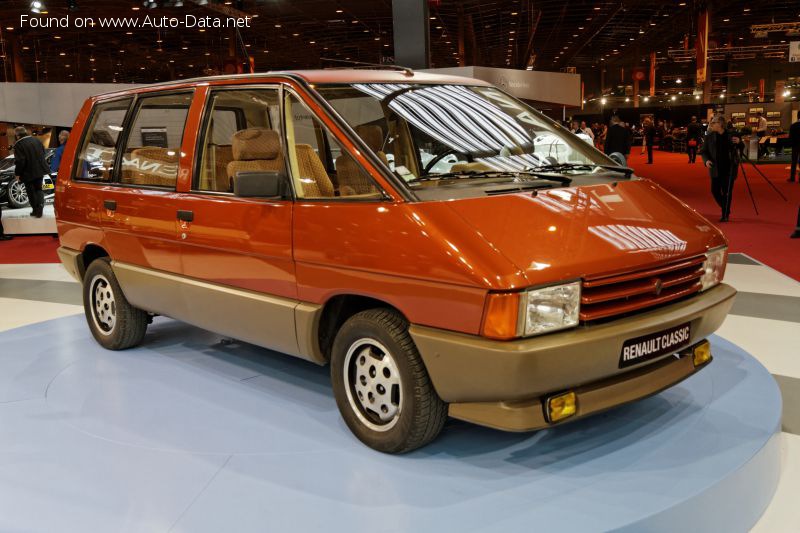
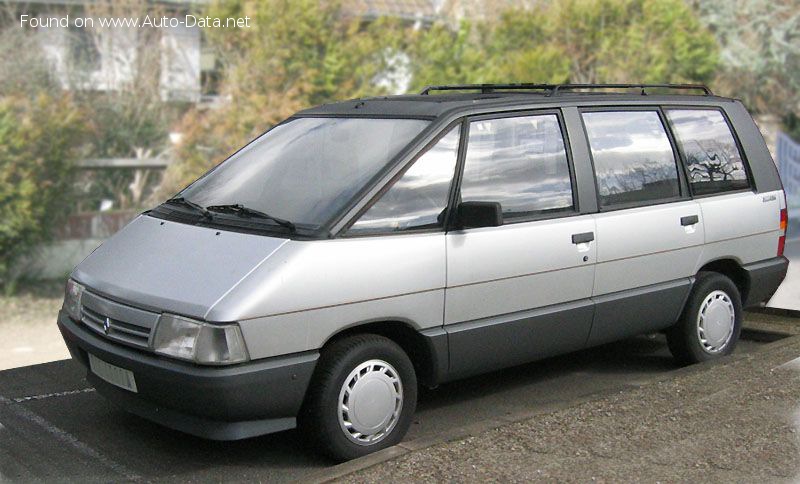
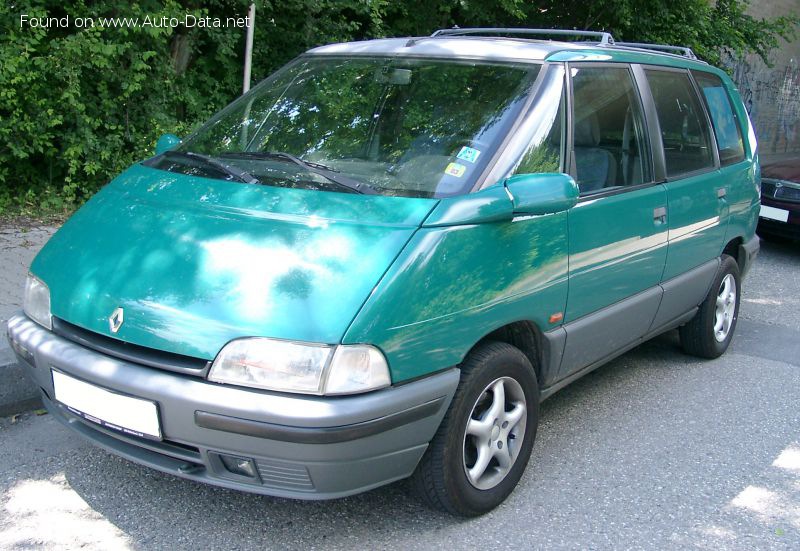
The Renault Espace holds a unique and revered place in automotive history, particularly in Europe. The original Espace, launched in 1984, is widely credited with pioneering the modern MPV segment, inspiring a generation of family vehicles designed around maximizing interior flexibility and passenger comfort. The fourth generation, introduced in 2002, continued this legacy by pushing boundaries in design, technology, and perceived quality. The Renault Espace IV (Phase IV, 2012), as the final facelift of this successful generation, represented a mature and highly refined iteration of the concept. It was a testament to Renault’s commitment to the MPV segment, even as consumer tastes began to shift towards SUVs.
In its primary European markets, the Espace IV (Phase IV, 2012) competed against a strong field of rivals, including the Ford Galaxy, Volkswagen Sharan, SEAT Alhambra, Citroën C8, Peugeot 807, and the Chrysler Voyager (which was also sold in Europe). What set the Espace apart was often its distinctly French approach to design – prioritizing light, space, and a unique, almost lounge-like interior ambiance. Its innovative cabin layout, with individual removable seats and a central digital instrument display, offered a departure from conventional automotive interiors, appealing to families who valued versatility and a distinct sense of style.
The 2.0 dCi (173 Hp) engine variant was particularly impactful, offering a compelling blend of strong performance and exceptional fuel economy that was highly valued by European consumers facing high fuel prices. Its Euro 5 compliance also ensured its relevance in increasingly environmentally conscious markets. The Espace’s reputation for long-distance comfort, robust build quality, and comprehensive safety features made it a popular choice for large families and those requiring significant cargo capacity.
While the Espace IV ultimately concluded its production run in 2014, making way for a fifth-generation model that adopted a more crossover-like aesthetic, the Phase IV facelift remains a significant chapter in its story. It served as a final, polished expression of the traditional large MPV, showcasing how a segment pioneer could evolve and adapt without losing its core identity. The Espace IV (Phase IV, 2012) is remembered as a capable, comfortable, and efficient family vehicle that continued to uphold the legacy of innovation and practicality established by its predecessors, solidifying its place as an icon of European automotive design and engineering.