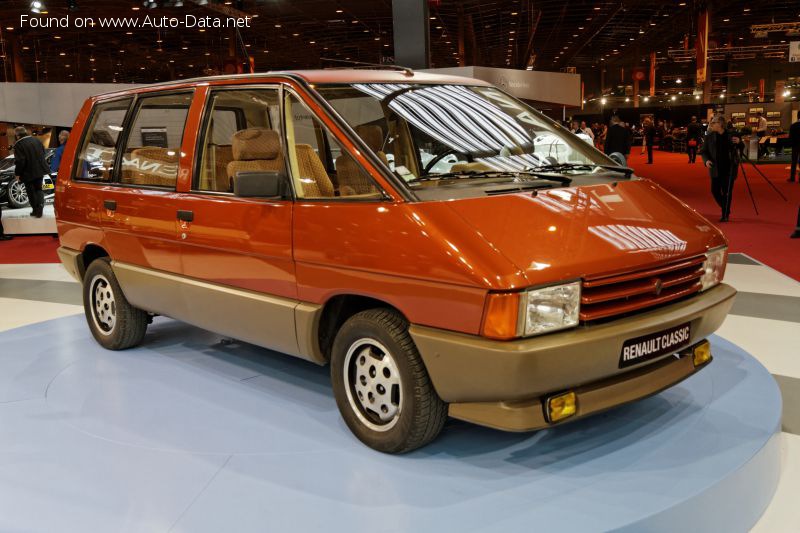
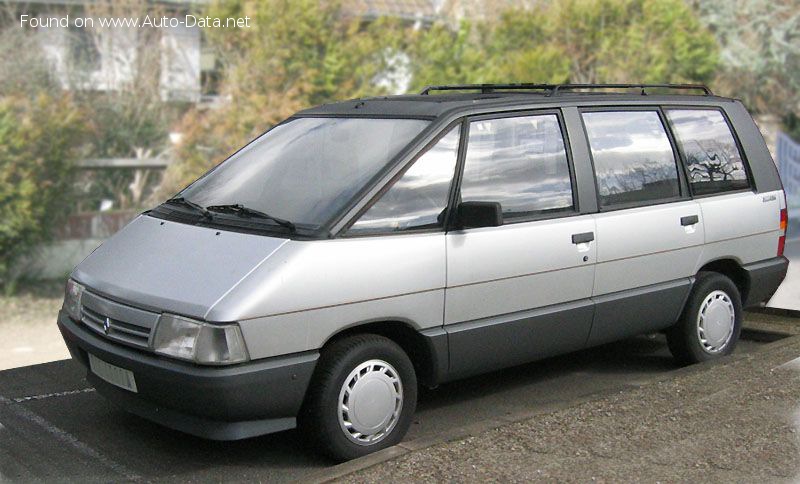
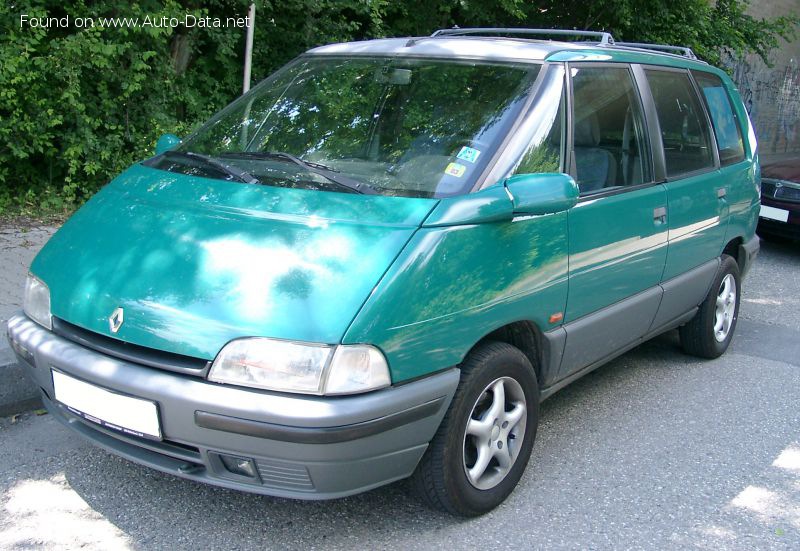
The Renault Espace IV (Phase IV, 2012) 2.0 TCe (170 Hp) represents a significant chapter in the history of European multi-purpose vehicles (MPVs), commonly known as minivans in the United States. First introduced in 1984, the Renault Espace pioneered the MPV segment in Europe, offering a unique blend of spaciousness, versatility, and comfort. This Phase IV iteration, produced between 2012 and 2013, was a late-stage refinement of the fourth-generation Espace, which debuted in 2002. While never officially sold in North America, the Espace IV was a mainstay of Renault’s European lineup, catering to families seeking a practical and stylish vehicle. The 2.0 TCe model, equipped with a turbocharged gasoline engine, continued the Espace’s tradition of combining functionality with distinctive French design.
Engine & Performance of the Renault Espace IV (Phase IV, 2012)
The Renault Espace IV (Phase IV, 2012) is powered by a 2.0-liter TCe (Turbo Control efficiency) inline-four cylinder engine, internally designated as the F4R. This engine features a turbocharger and intercooler, designed to deliver a balance of power and fuel economy suitable for a family vehicle. It produces 170 horsepower at 5000 revolutions per minute (rpm) and 199.14 lb.-ft. of torque at 3250 rpm. The readily available torque at lower engine speeds provides effortless acceleration, even when the vehicle is fully occupied with passengers and luggage.
The engine utilizes a Double Overhead Camshaft (DOHC) valvetrain with four valves per cylinder, optimizing breathing and power delivery. Fuel is delivered through a multi-port manifold injection system. With a compression ratio of 9.8:1, the engine is designed for use with gasoline fuel. Power is transferred to the front wheels via a 6-speed manual transmission, providing the driver with direct control.
Performance figures indicate a 0 to 60 mph acceleration time of 9.2 seconds and a top speed of 127.38 mph. Fuel economy is rated at 27.7 US mpg combined, with 20.8 US mpg in urban driving and 34.1 US mpg on the open road. The vehicle also complies with the Euro 5 emission standard, reflecting its adherence to contemporary environmental regulations.
Design & Features
The Renault Espace IV (Phase IV, 2012) maintains the distinctive and futuristic design language established with the fourth generation. As a minivan or MPV, its primary focus is maximizing interior space and versatility. It features a 5-door configuration and offers seating for up to seven passengers, making it well-suited for larger families or those needing flexible seating arrangements.
The Espace measures 183.27 inches in length, 74.57 inches in width (including mirrors), and 70.91 inches in height. Its 110.35-inch wheelbase contributes to both interior spaciousness and ride comfort. The interior offers a minimum of 10.28 cubic feet of trunk space, expandable to a substantial 101 cubic feet with the rear seats folded or removed. This modularity was a key selling point, allowing for various passenger and cargo configurations.
Standard features include 17-inch wheels with 225/55 R17 tires, balancing grip and ride comfort. The suspension system employs an independent McPherson strut setup at the front and a semi-independent coil spring arrangement at the rear, tuned for a smooth and comfortable ride. Braking is provided by ventilated discs at the front and solid discs at the rear, enhanced by an Anti-lock Braking System (ABS). Electric power steering offers light and precise control, aiding maneuverability. The minimum turning circle is 37.07 feet, surprisingly agile for a vehicle of its size.
Technical Specifications
| Category | Specification |
| Brand | Renault |
| Model | Espace IV (Phase IV, 2012) |
| Type (Engine) | 2.0 TCe (170 Hp) |
| Start of Production | 2012 |
| End of Production | 2013 |
| Powertrain Architecture | Internal Combustion engine |
| Body type | Minivan, MPV |
| Seats | 7 |
| Doors | 5 |
| Fuel consumption (urban) | 11.3 l/100 km |
| Fuel consumption (extra urban) | 6.9 l/100 km |
| Fuel consumption (combined) | 8.5 l/100 km |
| CO2 emissions | 198 g/km |
| Fuel Type | Petrol (Gasoline) |
| Acceleration 0 – 60 mph | 9.2 sec |
| Maximum speed | 205 km/h (127.38 mph) |
| Emission standard | Euro 5 |
| Weight-to-power ratio | 10.2 kg/Hp |
| Weight-to-torque ratio | 6.4 kg/Nm |
| Power | 170 Hp @ 5000 rpm |
| Power per liter | 85.1 Hp/l |
| Torque | 270 Nm @ 3250 rpm (199.14 lb.-ft. @ 3250 rpm) |
| Engine layout | Front, Transverse |
| Engine Model/Code | F4R |
| Engine displacement | 1998 cm3 (121.93 cu. in.) |
| Number of cylinders | 4 |
| Engine configuration | Inline |
| Cylinder Bore | 82.7 mm (3.26 in.) |
| Piston Stroke | 93 mm (3.66 in.) |
| Compression ratio | 9.8:1 |
| Number of valves per cylinder | 4 |
| Fuel injection system | Multi-port manifold injection |
| Engine aspiration | Turbocharger, Intercooler |
| Valvetrain | DOHC |
| Engine oil capacity | 5.4 l (5.71 US qt) |
| Coolant | 9.3 l (9.83 US qt) |
| Kerb Weight | 1732 kg (3818.41 lbs.) |
| Max. weight | 2539 kg (5597.54 lbs.) |
| Max load | 807 kg (1779.13 lbs.) |
| Trunk (boot) space – minimum | 291 l (10.28 cu. ft.) |
| Trunk (boot) space – maximum | 2860 l (101 cu. ft.) |
| Fuel tank capacity | 83 l (21.93 US gal) |
| Permitted trailer load with brakes (12%) | 2000 kg (4409.25 lbs.) |
| Permitted trailer load without brakes | 750 kg (1653.47 lbs.) |
| Length | 4655 mm (183.27 in.) |
| Width including mirrors | 1894 mm (74.57 in.) |
| Height | 1801 mm (70.91 in.) |
| Wheelbase | 2803 mm (110.35 in.) |
| Front suspension | Independent type McPherson |
| Rear suspension | Semi-independent, coil spring |
| Front brakes | Ventilated discs |
| Rear brakes | Disc |
| Assisting systems | ABS (Anti-lock braking system) |
| Steering type | Steering rack and pinion |
| Power steering | Electric Steering |
| Tires size | 225/55 R17 |
Legacy and Market Impact
The Renault Espace has a lasting legacy as a pioneer in the European automotive market. The original Espace, launched in 1984, essentially created the European MPV segment, setting a standard for family vehicles prioritizing interior space and flexibility. The fourth generation, particularly the Phase IV model from 2012, continued this tradition, though it faced increasing competition.
In the early 2010s, the European MPV market was competitive, with the Espace facing rivals like the Ford S-Max, Volkswagen Sharan, Citroën C8, and Peugeot 807. The Espace stood out with its distinctive styling, comfortable ride, and versatile interior, often including individual removable seats and a panoramic sunroof. Its reputation for comfort on long journeys made it popular with European families.
However, by the time the Phase IV model was available, the automotive industry was witnessing the rise of the SUV. Consumers began to favor vehicles offering a higher driving position and rugged styling. Despite this trend, the Espace IV remained a strong choice for those prioritizing passenger and cargo space. The 2012 Espace IV (Phase IV) demonstrated Renault’s commitment to maintaining a competitive MPV until its eventual replacement. While the traditional MPV segment eventually declined in favor of crossovers and SUVs, the Renault Espace, especially this fourth generation, secured its place in history as a successful and influential family car in Europe.