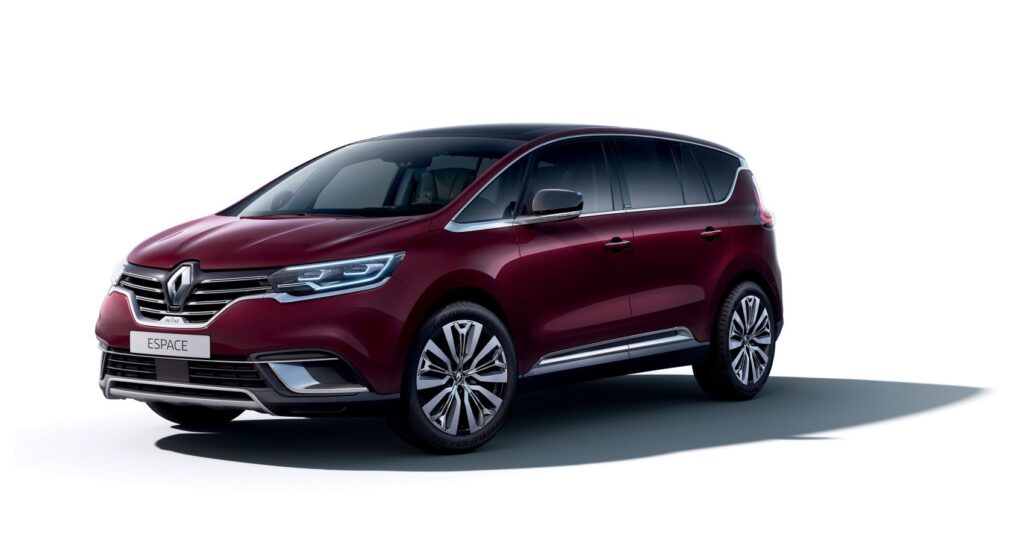
The Renault Espace V (Phase II, 2020) represents a significant evolution in the lineage of a vehicle that pioneered the European multi-purpose vehicle (MPV) segment. Launched in October 2020 as a refreshed version of the fifth-generation Espace, this model continued Renault’s bold reinterpretation of the family hauler, blending traditional minivan practicality with the contemporary appeal of a crossover. This particular variant, powered by the 2.0 Blue dCi (160 Hp) diesel engine paired with an EDC automatic transmission and offering a 7-seat configuration, was produced until January 2022, serving as a cornerstone of Renault’s premium family vehicle offerings in its primary European market.
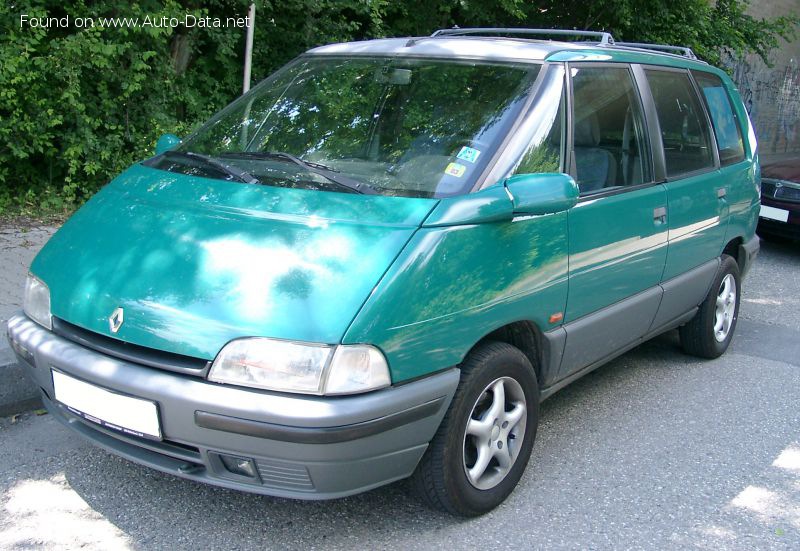
Unlike its predecessors, which were quintessential minivans, the fifth-generation Espace, first introduced in 2015, adopted a more dynamic, SUV-inspired design. The Phase II refresh further refined this concept, introducing updated styling cues and technological enhancements to keep it competitive in a rapidly shifting market where SUVs increasingly dominated buyer preferences. While never officially imported into the United States, the Espace holds a significant place in automotive history, especially in Europe, for its innovative approach to family transport and its enduring legacy as a comfortable, spacious, and versatile vehicle.
Engine & Performance
At the heart of this particular Renault Espace V (Phase II, 2020) is a robust 2.0-liter (1997 cm³) Blue dCi inline-four diesel engine, designated by the M9R 650 code. This powerplant is engineered for efficiency and strong, accessible torque, making it ideal for long-distance cruising and hauling families. It delivers a respectable 160 horsepower at 3750 rpm, providing ample power for daily driving and highway merges. More notably, the engine produces a substantial 265.52 pound-feet (360 Nm) of torque, available from a low 1500 rpm. This characteristic low-end torque is a hallmark of modern diesel engines, ensuring brisk acceleration from a standstill and confident overtaking maneuvers without needing to rev the engine excessively.
The engine’s design incorporates a common rail fuel injection system, a turbocharger, and an intercooler, all working in concert to optimize power delivery and fuel efficiency. It features four valves per cylinder, contributing to efficient combustion and lower emissions. To meet stringent European environmental standards, specifically Euro 6 d-TEMP, the Espace is equipped with a particulate filter and utilizes an AdBlue (Diesel Exhaust Fluid) system, housed in a 5.81 US gallon (22 liter) tank, to reduce nitrogen oxide emissions.
Power is channeled to the front wheels via a sophisticated 6-speed EDC (Efficient Dual Clutch) automatic transmission. This type of gearbox offers the best of both worlds: the smooth, seamless shifts of a traditional automatic with the direct, engaging feel and efficiency of a manual. The combination of the torquey diesel engine and the quick-shifting EDC transmission results in a 0 to 60 mph acceleration time of approximately 10 seconds, with a top speed of 124.27 mph (200 km/h).
Fuel economy is a strong suit for this diesel Espace. It achieves an impressive combined rating of 46.1 US mpg (5.1 l/100 km), with urban consumption at 41.3 US mpg (5.7 l/100 km) and extra-urban at 49 US mpg (4.8 l/100 km). These figures highlight the vehicle’s efficiency, especially on longer journeys, which is a key consideration for European families. The CO2 emissions are rated at 135 g/km, reflecting its compliance with contemporary environmental regulations.
Design & Features
The fifth-generation Renault Espace, and particularly its Phase II refresh, marked a radical departure from its traditional minivan roots. While still offering the spaciousness and versatility expected of a family vehicle, its design language firmly positioned it as a crossover, blending the practicality of an MPV with the stylish presence of an SUV. The body type is officially classified as a Minivan/Crossover, featuring five doors and a highly adaptable seven-seat configuration.
Visually, the Phase II refresh brought subtle yet impactful changes, including updated front and rear fascias, revised lighting signatures, and new wheel designs. The Espace boasts sleek lines, a prominent grille adorned with the Renault diamond logo, and a sophisticated stance. Its dimensions – 191.3 inches (4859 mm) in length, 74.33 inches (1888 mm) in width (83.78 inches or 2128 mm including mirrors), and a height ranging from 65.98 to 67.36 inches (1676-1711 mm) – give it a substantial road presence. The generous 113.54-inch (2884 mm) wheelbase contributes significantly to both interior space and ride comfort.
Inside, the Espace prioritizes comfort, modularity, and technology. The 7-seat layout is highly versatile, allowing for various seating and cargo configurations. The minimum trunk space is a generous 25.39 cubic feet (719 liters), which can expand to an enormous 71.87 cubic feet (2035 liters) with the rear seats folded, making it exceptionally practical for families, luggage, or even light cargo. The cabin is designed with premium materials and finishes, aiming to provide a refined environment. Modern features likely include a large touchscreen infotainment system, digital instrument cluster, multi-zone climate control, and connectivity options, all standard for a vehicle of this segment and era.
Safety features are comprehensive, as expected from a contemporary European vehicle. Beyond the foundational Anti-lock Braking System (ABS), it would typically incorporate a suite of advanced driver-assistance systems (ADAS) such as electronic stability control, multiple airbags, blind-spot monitoring, adaptive cruise control, and lane-keeping assist. The vehicle is equipped with ventilated disc brakes (320 mm) at the front and solid disc brakes (290 mm) at the rear, ensuring strong stopping power. The front suspension utilizes an independent McPherson strut setup, providing a good balance of ride comfort and handling. Electric power steering enhances maneuverability, particularly in urban environments, contributing to a minimum turning circle of 39.04 feet (11.9 meters).
Technical Specifications
| Category | Specification |
| General Information | Brand |
| Renault | |
| Model | |
| Espace | |
| Generation | |
| Espace V (Phase II, 2020) | |
| Type (Engine) | |
| 2.0 Blue dCi (160 Hp) EDC 7 Seat | |
| Start of Production | |
| October, 2020 | |
| End of Production | |
| January, 2022 | |
| Powertrain Architecture | |
| Internal Combustion Engine | |
| Body Type | |
| Minivan, Crossover | |
| Seats | |
| 7 | |
| Doors | |
| 5 | |
| Performance Specs | Fuel Consumption (Urban) |
| 5.7 l/100 km (41.3 US mpg) | |
| Fuel Consumption (Extra Urban) | |
| 4.8 l/100 km (49 US mpg) | |
| Fuel Consumption (Combined) | |
| 5.1 l/100 km (46.1 US mpg) | |
| CO2 Emissions | |
| 135 g/km | |
| Fuel Type | |
| Diesel | |
| Acceleration 0-62 mph (0-100 km/h) | |
| 10.5 sec | |
| Acceleration 0-60 mph (Calculated) | |
| 10 sec | |
| Maximum Speed | |
| 124.27 mph (200 km/h) | |
| Emission Standard | |
| Euro 6 d-TEMP | |
| Weight-to-Power Ratio | |
| 11.4 kg/Hp, 88.1 Hp/tonne | |
| Weight-to-Torque Ratio | |
| 5 kg/Nm, 198.2 Nm/tonne | |
| Engine Specs | Power |
| 160 Hp @ 3750 rpm | |
| Power per Liter | |
| 80.1 Hp/l | |
| Torque | |
| 360 Nm (265.52 lb-ft) @ 1500 rpm | |
| Engine Layout | |
| Front, Transverse | |
| Engine Model/Code | |
| M9R 650 | |
| Engine Displacement | |
| 1997 cm³ (2.0 Liters, 121.86 cu. in.) | |
| Number of Cylinders | |
| 4 | |
| Engine Configuration | |
| Inline | |
| Cylinder Bore | |
| 85 mm (3.35 in.) | |
| Piston Stroke | |
| 88 mm (3.46 in.) | |
| Number of Valves per Cylinder | |
| 4 | |
| Fuel Injection System | |
| Diesel Commonrail | |
| Engine Aspiration | |
| Turbocharger, Intercooler | |
| Engine Systems | |
| Particulate filter |
Legacy and Market Impact
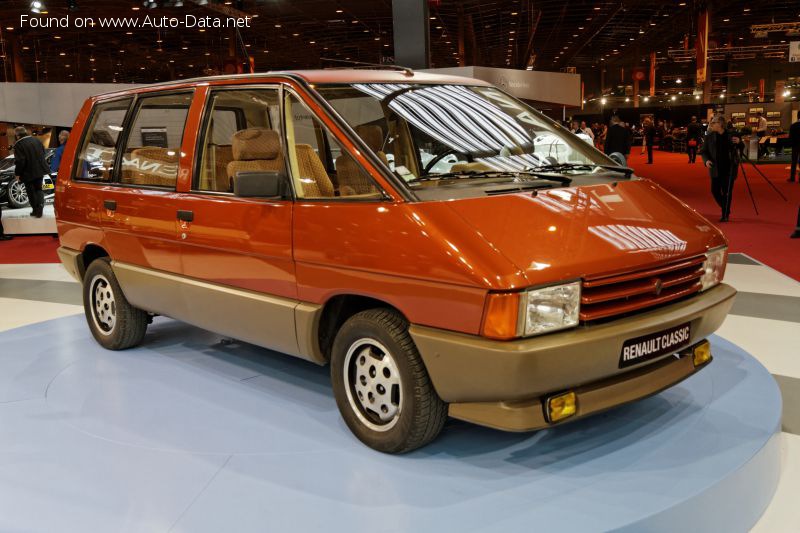
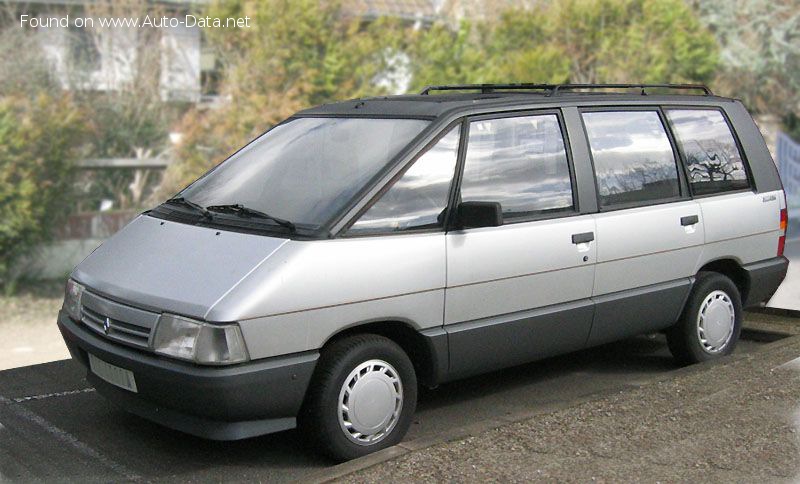
The Renault Espace holds a legendary status in European automotive history, having essentially created the modern minivan segment when it debuted in 1984. For decades, the Espace was synonymous with family travel, known for its innovative packaging, spacious interior, and comfortable ride. The fifth-generation Espace, and particularly the Phase II refresh from 2020, marked a pivotal moment in its legacy, as Renault bravely attempted to reinvent the model for a new era dominated by SUVs.
In its primary European market, the Espace V (Phase II, 2020) faced a challenging landscape. While it retained its core values of practicality and comfort, its crossover transformation aimed to appeal to buyers who had largely shifted away from traditional minivans. Competitors in this evolving segment included other versatile family vehicles such as the Ford Galaxy and S-Max, Volkswagen Sharan and Touran, and to some extent, larger crossovers like the Peugeot 5008, Citroën C5 Aircross, and even premium offerings from brands like Kia (Sorento) and Hyundai (Santa Fe) that offered 7-seat options. The Espace sought to differentiate itself with its distinct styling, a more upscale interior ambiance, and a focus on driver engagement, a contrast to the purely utilitarian image of some rivals.
The reputation of the Espace has always been centered around its ability to transport families in comfort and style. The 2.0 Blue dCi (160 Hp) variant reinforced this, offering excellent fuel economy and robust performance for long-distance journeys, a critical factor for European consumers. Its compliance with the Euro 6 d-TEMP emission standards also highlighted Renault’s commitment to environmental responsibility, a growing concern in the European market.
Despite its innovative design and strong attributes, the Espace V, like many vehicles in the shrinking European MPV segment, ultimately succumbed to the overwhelming popularity of SUVs. The specific production run of this Phase II variant, from late 2020 to early 2022, represents one of the final chapters for the Espace as a dedicated multi-purpose vehicle. However, its historical significance as a pioneer and its attempt to adapt to changing market tastes will forever be remembered. The Espace demonstrated Renault’s willingness to take risks and innovate, leaving behind a legacy of comfort, versatility, and a unique blend of minivan practicality with crossover aesthetics that influenced the broader automotive industry. Its impact, though primarily European, showcased how a brand could evolve a beloved nameplate to meet contemporary demands, even if the ultimate market forces proved too strong.