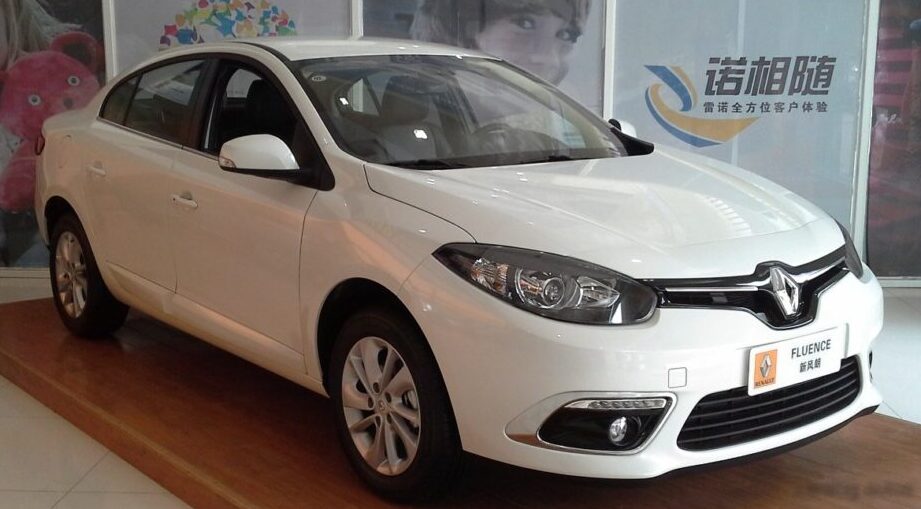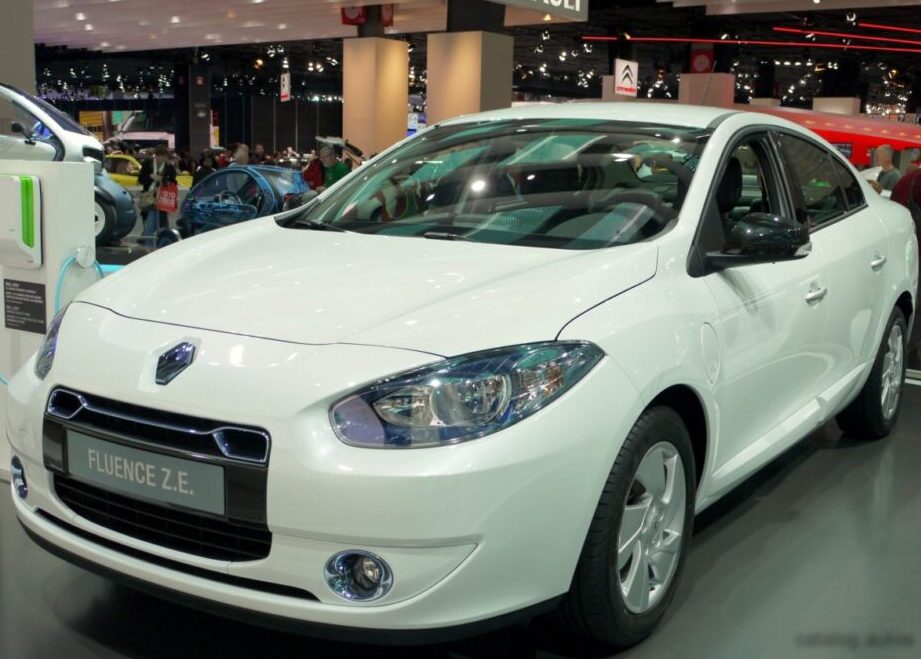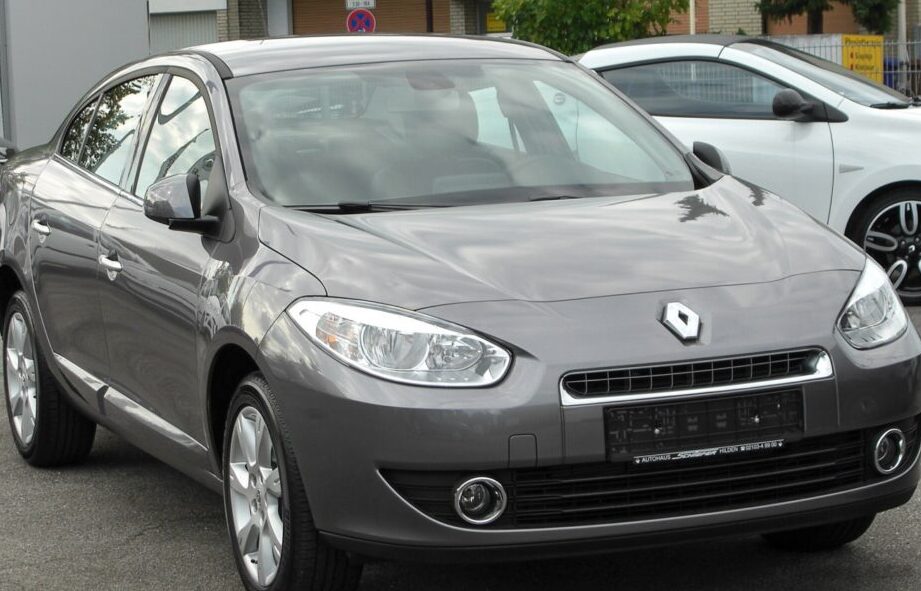
The Renault Fluence 1.6 16V, producing 110 horsepower, was a key variant of the Fluence compact sedan produced between November 2009 and October 2012. Positioned as a mainstream offering within the Fluence range, it aimed to provide a balance of affordability, fuel efficiency, and practicality for family buyers. The Fluence itself was Renault’s replacement for the Megane Sedan in many markets, particularly outside of Europe, and was built upon the shared ‘X98’ platform, also known internally as the ‘Fluence’ platform. This platform was a derivative of the third-generation Renault Megane, adapted for sedan body style and targeted towards emerging markets and regions where sedans remained highly popular.
Technical Specifications
| Brand | Renault |
| Model | Fluence |
| Generation | Fluence |
| Type (Engine) | 1.6 16V (110 Hp) |
| Start of production | November, 2009 |
| End of production | October, 2012 |
| Powertrain Architecture | Internal Combustion engine |
| Body type | Sedan |
| Seats | 5 |
| Doors | 4 |
| Fuel consumption (urban) | 8.8 l/100 km (26.7 US mpg, 32.1 UK mpg, 11.4 km/l) |
| Fuel consumption (extra urban) | 5.4 l/100 km (43.6 US mpg, 52.3 UK mpg, 18.5 km/l) |
| Fuel consumption (combined) | 6.7 l/100 km (35.1 US mpg, 42.2 UK mpg, 14.9 km/l) |
| Fuel Type | Petrol (Gasoline) |
| Acceleration 0 – 100 km/h | 11.7 sec |
| Acceleration 0 – 62 mph | 11.7 sec |
| Acceleration 0 – 60 mph | 11.1 sec |
| Maximum speed | 185 km/h (114.95 mph) |
| Emission standard | Euro 5 |
| Weight-to-power ratio | 11.1 kg/Hp, 89.8 Hp/tonne |
| Weight-to-torque ratio | 8.1 kg/Nm, 123.3 Nm/tonne |
| Power | 110 Hp @ 6000 rpm |
| Power per litre | 68.8 Hp/l |
| Torque | 151 Nm @ 4250 rpm (111.37 lb.-ft. @ 4250 rpm) |
| Engine layout | Front, Transverse |
| Engine Model/Code | K4M |
| Engine displacement | 1598 cm3 (97.52 cu. in.) |
| Number of cylinders | 4 |
| Engine configuration | Inline |
| Fuel injection system | Multi-port manifold injection |
| Engine aspiration | Naturally aspirated engine |
| Valvetrain | DOHC |
| Engine oil capacity | 4.8 l (5.07 US qt | 4.22 UK qt) |
| Coolant capacity | 5.3 l (5.6 US qt | 4.66 UK qt) |
| Kerb Weight | 1225 kg (2700.66 lbs.) |
| Max. weight | 1725 kg (3802.97 lbs.) |
| Max load | 500 kg (1102.31 lbs.) |
| Fuel tank capacity | 60 l (15.85 US gal | 13.2 UK gal) |
| Length | 4620 mm (181.89 in.) |
| Width | 1809 mm (71.22 in.) |
| Height | 1479 mm (58.23 in.) |
| Wheelbase | 2702 mm (106.38 in.) |
| Drivetrain Architecture | The Internal combustion engine (ICE) drives the front wheels of the vehicle. |
| Drive wheel | Front wheel drive |
| Number of gears and type of gearbox | 5 gears, manual transmission |
| Front suspension | Independent type McPherson |
| Rear suspension | Elastic beam |
| Front brakes | Ventilated discs |
| Rear brakes | Disc |
| Assisting systems | ABS (Anti-lock braking system) |
| Steering type | Steering rack and pinion |
| Power steering | Electric Steering |
| Tires size | 205/65 R15; 205/60 R16; 205/55 R17 |
| Wheel rims size | 15; 16; 17 |
Powertrain & Engine Architecture
The Renault Fluence 1.6 16V was powered by the K4M engine, a 1.6-liter inline-four cylinder gasoline engine. This engine had been a mainstay in Renault’s lineup for many years, known for its relative simplicity and durability. The K4M featured a multi-point fuel injection system and a double overhead camshaft (DOHC) valvetrain, operating four valves per cylinder. This configuration helped to optimize breathing and contribute to the engine’s 110 horsepower output at 6000 rpm and 151 Nm (111 lb-ft) of torque at 4250 rpm. The engine was transversely mounted in the front of the vehicle. The five-speed manual transmission was the standard gearbox for this variant, providing a relatively conventional driving experience. While an automatic transmission was offered in some markets with the Fluence, it wasn’t commonly paired with the 1.6-liter engine.
Driving Characteristics
The 1.6-liter Fluence offered modest performance. Acceleration from 0 to 60 mph took around 11.1 seconds, and top speed was limited to 115 mph. The five-speed manual transmission provided adequate control, but the engine lacked the punch of higher-output variants. The gear ratios were tuned for fuel efficiency rather than outright acceleration. In real-world driving, the 1.6L Fluence felt adequate for everyday commuting and highway cruising, but struggled when fully loaded or attempting quick overtaking maneuvers. Compared to the more powerful 1.9 dCi diesel or the 2.0-liter gasoline engines available in other Fluence models, the 1.6L felt noticeably less responsive.
Equipment & Trim Levels
The 1.6 16V Fluence typically came with a reasonable level of standard equipment, positioning it as a well-rounded mid-range option. Standard features generally included power windows, central locking, air conditioning, and an audio system with MP3 compatibility. Higher trim levels added features like alloy wheels, fog lights, a trip computer, and upgraded interior trim. Interior upholstery was typically cloth, with options for different colors and patterns. Safety features included ABS brakes and driver/passenger airbags. Optional extras could include a sunroof, parking sensors, and a more advanced audio system.
Chassis & Braking
The Fluence utilized a McPherson strut independent suspension at the front and an elastic beam (torsion beam) suspension at the rear. This setup provided a comfortable ride quality, prioritizing passenger comfort over sporty handling. The front brakes were ventilated discs, while the rear brakes were solid discs. The steering was a rack-and-pinion system with electric power assistance. Tire sizes varied depending on the trim level, ranging from 205/65 R15 to 205/55 R17. The suspension was tuned to provide a stable and predictable driving experience, suitable for a wide range of road conditions.
Market Reception & Comparison
The Renault Fluence 1.6 16V was generally well-received as a practical and affordable family sedan. Critics praised its spacious interior, comfortable ride, and reasonable fuel economy. However, some reviewers noted its lack of dynamic flair and the engine’s modest performance. Compared to competitors like the Toyota Corolla, Honda Civic, and Hyundai Elantra, the Fluence offered a competitive price point and a generous amount of standard equipment. Fuel economy was comparable to other 1.6-liter gasoline engines in its class, averaging around 35 mpg in combined driving. Reliability was generally considered good, although some owners reported minor issues with the electrical system.
Legacy
The Renault Fluence 1.6 16V remains a relatively common sight on used car markets, particularly in regions where it was originally sold. The K4M engine is known for its durability and relatively low maintenance costs, making it a popular choice for budget-conscious buyers. While not a performance standout, the 1.6L Fluence offers a reliable and practical transportation solution. Parts availability is generally good, and the car’s simple mechanical design makes it relatively easy to repair. The Fluence, in general, didn’t achieve the same iconic status as some of Renault’s other models, but it served as a solid and dependable sedan for many years.