
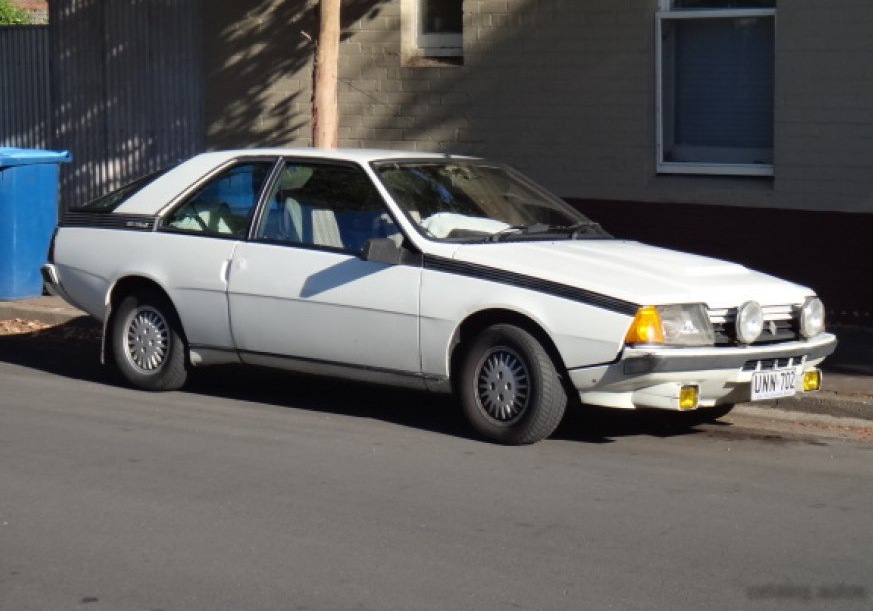
The Renault Fuego 1.6 Turbo, produced between 1983 and 1985, represented a performance-oriented variant within the Fuego range. Positioned as a step up from the base models, it aimed to deliver a more engaging driving experience while maintaining the Fuego’s distinctive coupe styling. The Fuego itself, Renault’s attempt to replace the aging Renault Alpine, was a front-wheel-drive coupe built on a stretched Renault 9/11 platform. The 1.6 Turbo, designated internally as the 1365, was a key offering during the Fuego’s relatively short production run, offering a blend of performance and affordability that appealed to a specific segment of the European market.
Technical Specifications
| Brand | Renault |
| Model | Fuego |
| Generation | Fuego (136) |
| Type (Engine) | 1.6 Turbo (1365) (132 Hp) |
| Start of production | 1983 |
| End of production | 1985 |
| Powertrain Architecture | Internal Combustion engine |
| Body type | Coupe |
| Seats | 4 |
| Doors | 3 |
| Fuel Type | Petrol (Gasoline) |
| Power | 132 Hp |
| Engine Model/Code | A5L 750 |
| Engine aspiration | Turbocharger |
| Engine oil capacity | 4.5 l (4.76 US qt | 3.96 UK qt) |
| Coolant capacity | 6.3 l (6.66 US qt | 5.54 UK qt) |
| Fuel tank capacity | 57 l (15.06 US gal | 12.54 UK gal) |
Powertrain & Engine Architecture
The heart of the Fuego 1.6 Turbo was the A5L 750 engine, a 1.6-liter inline-four cylinder powerplant. This engine was notable for its single overhead camshaft (SOHC) valvetrain and, crucially, a Garrett T2 turbocharger. The turbocharger significantly boosted power output compared to the naturally aspirated versions of the 1.6-liter engine. Fuel delivery was managed by Bosch K-Jetronic mechanical fuel injection, a system known for its reliability and relatively precise metering, though it lacked the sophistication of later electronic fuel injection systems. The turbocharger increased the compression ratio to 8.8:1. The engine produced 132 horsepower at 5800 rpm and 144 lb-ft of torque at 3600 rpm. The transmission was a three-speed automatic, a somewhat dated design even for the early 1980s, but it was chosen to broaden the Fuego’s appeal to drivers seeking convenience over outright performance. The automatic transmission was a Renault-designed unit, known for its smooth operation but not particularly quick shifts.
Driving Characteristics
The Fuego 1.6 Turbo, with its automatic transmission, offered a different driving experience than the five-speed manual versions. While the manual transmission allowed for more driver control and quicker acceleration, the automatic provided a more relaxed and comfortable ride. The three-speed automatic’s gear ratios were geared towards cruising, meaning that initial acceleration felt adequate but not particularly brisk. The turbocharger did provide a noticeable surge of power once boost came on, typically around 2500-3000 rpm, but the automatic transmission sometimes hesitated during kickdown, diminishing the immediacy of the turbo’s effect. Compared to the base 1.6-liter Fuego, the Turbo offered a substantial performance improvement, and it was noticeably quicker than the 1.4-liter models. However, it didn’t match the performance of the later, more powerful Fuego GTX models equipped with the 2.0-liter engine. The front-wheel-drive layout, while common for the era, could exhibit torque steer under hard acceleration.
Equipment & Trim Levels
The 1.6 Turbo trim generally sat in the mid-range of the Fuego lineup. Standard equipment included cloth upholstery, a basic AM/FM radio, and power steering. The interior featured a relatively simple dashboard layout with analog gauges. Optional extras included upgraded stereo systems, sunroofs, and metallic paint finishes. The interior trim was generally functional rather than luxurious, reflecting the Fuego’s price point. The seats offered reasonable comfort for longer journeys, and the rear seats, while cramped, provided some limited passenger space. The 1.6 Turbo often featured a unique badge on the rear, distinguishing it from the lower-spec models.
Chassis & Braking
The Fuego’s chassis utilized a MacPherson strut front suspension and a twist-beam rear axle. The suspension was tuned for a balance between comfort and handling, providing a reasonably compliant ride on most road surfaces. The front brakes were ventilated discs, while the rear brakes were drums. This configuration was typical for cars in this class during the early 1980s. Stabilizer bars were fitted to both the front and rear axles to reduce body roll during cornering. The steering was rack-and-pinion, providing reasonably precise steering feel. The Fuego’s relatively lightweight construction helped to offset the limitations of the suspension and braking systems.
Market Reception & Comparison
The Renault Fuego 1.6 Turbo was generally well-received by automotive critics, who praised its stylish design and improved performance compared to the base models. However, the three-speed automatic transmission was often criticized for being outdated and lacking responsiveness. Fuel economy was reasonable for a turbocharged coupe of the era, averaging around 25-30 mpg. Compared to other coupes available at the time, such as the Ford Capri and Opel Manta, the Fuego offered a more modern and sophisticated design. The 1.6 Turbo was positioned as a competitor to the more affordable sports coupes, offering a blend of style, performance, and practicality. Reliability was generally good, although the K-Jetronic fuel injection system could require occasional maintenance.
Legacy
The Renault Fuego, and specifically the 1.6 Turbo variant, holds a nostalgic appeal for many enthusiasts. The A5L 750 engine, while not particularly powerful by modern standards, was a robust and reliable unit when properly maintained. The turbocharger added a layer of excitement to the driving experience, and the Fuego’s distinctive styling continues to turn heads. Today, well-maintained examples of the Fuego 1.6 Turbo are becoming increasingly collectible. Parts availability can be a challenge, as the Fuego has been out of production for several decades, but a dedicated community of owners and enthusiasts helps to keep these cars on the road. The Fuego represents a unique chapter in Renault’s history, a bold attempt to create a stylish and affordable coupe for the European market.
