
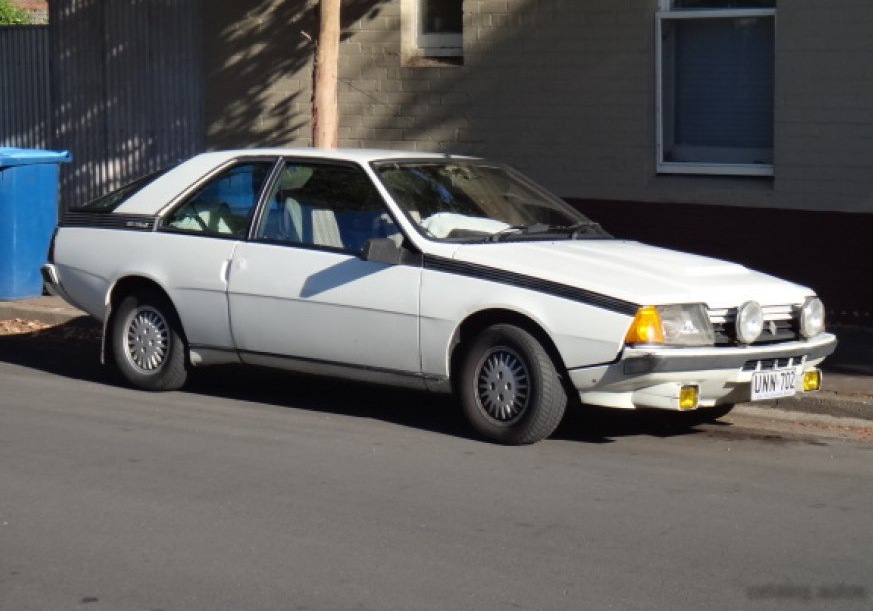
The Renault Fuego, specifically the 2.0 TX/GTX (1363) variant producing 110 horsepower, was a coupe produced between 1980 and 1985. It represented Renault’s attempt to create a stylish, affordable sports coupe for the European market, and later, for export to other regions. The Fuego was built on a unique platform, not shared with other Renault models, and was notable for its distinctive hatchback design and relatively advanced features for its time. This 2.0 TX/GTX model sat in the mid-range of the Fuego lineup, offering a balance between performance and affordability, positioned above the base models and below the more potent Turbo variants.
Technical Specifications
| Brand | Renault |
| Model | Fuego |
| Generation | Fuego (136) |
| Type (Engine) | 2.0 TX/GTX (1363) (110 Hp) |
| Start of production | 1980 |
| End of production | 1985 |
| Powertrain Architecture | Internal Combustion engine |
| Body type | Coupe |
| Seats | 4 |
| Doors | 3 |
| Fuel Type | Petrol (Gasoline) |
| Power | 110 Hp |
| Engine layout | Front, Longitudinal |
| Engine Model/Code | 829 710 |
| Number of cylinders | 4 |
| Engine configuration | Inline |
| Number of valves per cylinder | 2 |
| Fuel injection system | Carburettor |
| Engine aspiration | Naturally aspirated engine |
| Engine oil capacity | 5.3 l (5.6 US qt | 4.66 UK qt) |
| Coolant capacity | 8 l (8.45 US qt | 7.04 UK qt) |
| Fuel tank capacity | 57 l (15.06 US gal | 12.54 UK gal) |
| Drivetrain Architecture | Front wheel drive |
| Number of gears and type of gearbox | 5 gears, manual transmission |
| Tires size | 185/65 R14 |
| Wheel rims size | 14 |
Powertrain & Engine Architecture
The heart of the Fuego 2.0 TX/GTX was the 829 710 engine, a 1995cc inline-four cylinder unit. This engine utilized a single overhead camshaft (SOHC) valvetrain with two valves per cylinder. Crucially, this variant employed a Solex C35 PHH carburetor for fuel delivery, a relatively common setup for European cars of the era, but increasingly outdated as fuel injection became more prevalent. The carburetor, while simpler and less expensive than fuel injection, offered less precise fuel metering and contributed to slightly lower fuel economy and higher emissions compared to injected counterparts. The engine’s longitudinal front-engine layout was somewhat unusual for front-wheel-drive cars, contributing to the Fuego’s balanced handling. The five-speed manual transmission was a Renault-designed unit, known for its relatively light shift action, though not particularly robust. The engine produced 110 horsepower at 5800 rpm and approximately 138 lb-ft of torque at 3500 rpm.
Driving Characteristics
The Fuego 2.0 TX/GTX offered a reasonably engaging driving experience for its time. The 110 horsepower engine, while not overwhelming, provided adequate acceleration for everyday driving and even some spirited runs. The five-speed manual transmission allowed drivers to keep the engine in its optimal power band. However, compared to the later Turbo models, the 2.0 TX/GTX felt noticeably slower. The gear ratios were fairly well-spaced, providing decent acceleration in each gear, but the lack of a limited-slip differential meant that traction could be an issue when accelerating hard out of corners. The steering was light and precise, contributing to the car’s nimble feel. The suspension, while comfortable, wasn’t particularly sporty, resulting in some body roll during aggressive cornering. Overall, the 2.0 TX/GTX was a comfortable and capable coupe, but it lacked the outright performance of its turbocharged siblings.
Equipment & Trim Levels
The 2.0 TX/GTX trim level offered a good level of standard equipment. Interior features typically included cloth upholstery, a basic instrument cluster, and a four-speaker stereo system. Power steering was standard, a welcome feature for a car of this era. Optional extras included a sunroof, upgraded stereo systems, and metallic paint finishes. The dashboard layout was functional but somewhat dated, even by 1980s standards. The interior space was adequate for a coupe, but rear seat legroom was limited. The GTX designation generally indicated a slightly higher level of trim than the base TX model, often including additional chrome trim and upgraded interior materials.
Chassis & Braking
The Fuego utilized a MacPherson strut front suspension and a twist-beam rear suspension. The front suspension provided a comfortable ride and decent handling, while the rear suspension was simpler and less sophisticated. Braking was initially accomplished with disc brakes at the front and drum brakes at the rear. Later models saw the introduction of rear disc brakes on some trims. The braking system was adequate for normal driving, but lacked the stopping power of more modern systems. The steering was a rack-and-pinion system, providing precise and responsive steering feel. Stabilizer bars were fitted to both the front and rear axles to reduce body roll.
Market Reception & Comparison
The Renault Fuego 2.0 TX/GTX was generally well-received by automotive critics. It was praised for its stylish design, comfortable ride, and relatively affordable price. However, it was also criticized for its somewhat lackluster performance compared to other sports coupes on the market, and for the carburetor’s impact on fuel economy and emissions. Compared to the Fuego Turbo, the 2.0 TX/GTX offered significantly less power and acceleration, but it was also more affordable to purchase and maintain. The Turbo models were aimed at enthusiasts seeking a more thrilling driving experience, while the 2.0 TX/GTX appealed to buyers looking for a stylish and comfortable coupe for everyday use. Against competitors like the Ford Capri and Opel Manta, the Fuego offered a more modern design and a slightly more refined interior.
Legacy
The Renault Fuego, while not a massive sales success, remains a fondly remembered coupe from the 1980s. The 2.0 TX/GTX variant, in particular, is considered a reliable and relatively affordable classic car. The engine, while not particularly powerful, is known for its durability and relatively simple maintenance requirements. However, finding parts can be challenging, as the Fuego is no longer in production. Rust is a common issue with these cars, particularly in regions with harsh winters. Today, the Fuego 2.0 TX/GTX represents an affordable entry point into classic French motoring, offering a unique blend of style, comfort, and reliability. Its carburetor-fed engine and manual transmission provide a driving experience that is distinctly different from modern cars, appealing to enthusiasts who appreciate a more analog feel.
