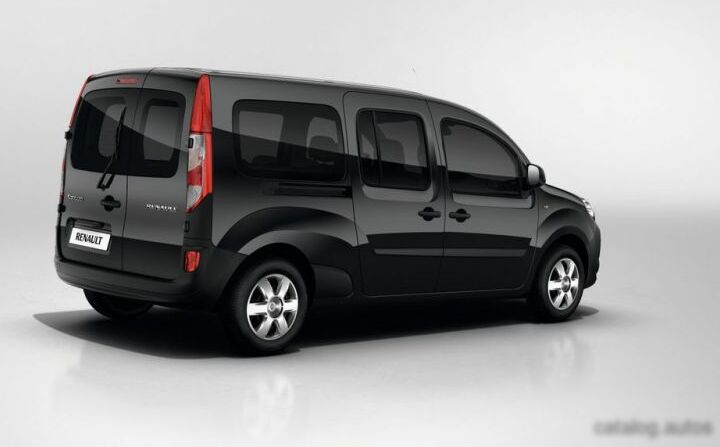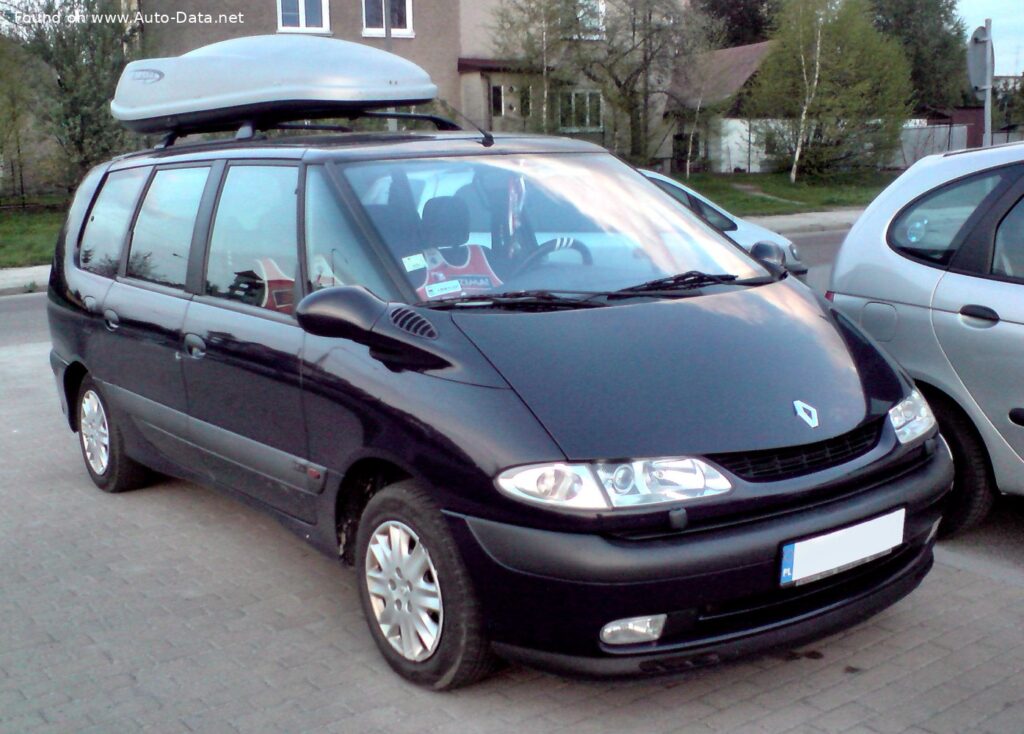
The Renault Grand Espace III, specifically the Phase II model produced between 2000 and 2002, represents a significant evolution in the Espace lineage. As a large, seven-seat minivan (or Multi-Purpose Vehicle – MPV as it’s known in Europe), the Grand Espace III was designed to cater to families needing substantial space and versatility. While the Espace was never officially sold in the United States, it was a hugely popular vehicle in Europe, competing with models like the Volkswagen Sharan and Ford Galaxy. The Phase II updates brought refinements to the engine range, styling, and interior, solidifying its position as a leading MPV in the European market.
Renault Grand Espace III: A Detailed Overview
The Grand Espace III, designated as the JE series, built upon the success of its predecessors, offering increased interior space and improved comfort. The “Grand” designation signifies the extended wheelbase version, providing seating for up to seven passengers. This model year saw the introduction of the 2.2 dCi 16V engine, a diesel powerplant designed for efficiency and reasonable performance. The Espace’s innovative design, particularly its modular seating arrangement, allowed for a high degree of customization to suit various needs, from carrying passengers to hauling cargo.
Engine & Performance
The heart of the 2000-2002 Renault Grand Espace III 2.2 dCi 16V is a 2.2-liter inline four-cylinder diesel engine, identified by the code G9T. This engine produces 129 horsepower at 4000 rpm and 290 Nm (213.89 lb.-ft.) of torque at 1750 rpm. The engine utilizes a diesel commonrail fuel injection system and is turbocharged, contributing to its relatively efficient operation. Power per liter is rated at 59 hp/l. Performance figures include a 0-100 km/h (0-62 mph) acceleration time of 12.4 seconds, and a 0-60 mph time of 11.8 seconds. The top speed is electronically limited to 185 km/h (114.95 mph). The engine’s 22:1 compression ratio is typical for a diesel engine of this era, maximizing combustion efficiency. The engine is transversely mounted at the front of the vehicle, driving the front wheels through a five-speed manual transmission.
Design & Features
The Renault Grand Espace III Phase II maintains the distinctive MPV silhouette of the series, characterized by its tall roofline and spacious interior. The body style is a five-door minivan, designed for easy access and maximum practicality. A key feature of the Espace is its modular seating system, allowing the second and third-row seats to be folded, removed, or reconfigured to create a variety of seating and cargo arrangements. The trunk space is remarkably versatile, ranging from a minimum of 520 liters (18.36 cu. ft.) with all seats in place to a maximum of 3075 liters (108.59 cu. ft.) with the rear seats folded. Safety features for this era included ABS (Anti-lock Braking System), though modern safety technologies like airbags and stability control were less prevalent than in contemporary vehicles. The vehicle’s dimensions are substantial, measuring 4787 mm (188.46 in.) in length, 1810 mm (71.26 in.) in width, and 1775 mm (69.88 in.) in height. Hydraulic power steering provides ease of maneuverability.
Technical Specifications
| Brand | Renault |
| Model | Espace |
| Generation | Grand Espace III (JE, Phase II, 2000) |
| Type (Engine) | 2.2 dCi 16V (129 Hp) |
| Start of production | 2000 |
| End of production | 2002 |
| Powertrain Architecture | Internal Combustion engine |
| Body type | Minivan, MPV |
| Seats | 7 |
| Doors | 5 |
| Fuel consumption (urban) | 8.8 l/100 km (26.7 US mpg, 32.1 UK mpg, 11.4 km/l) |
| Fuel consumption (extra urban) | 6.1 l/100 km (38.6 US mpg, 46.3 UK mpg, 16.4 km/l) |
| Fuel consumption (combined) | 7.1 l/100 km (33.1 US mpg, 39.8 UK mpg, 14.1 km/l) |
| CO2 emissions | 189 g/km |
| Fuel Type | Diesel |
| Acceleration 0 – 100 km/h | 12.4 sec |
| Acceleration 0 – 62 mph | 12.4 sec |
| Acceleration 0 – 60 mph | 11.8 sec |
| Maximum speed | 185 km/h (114.95 mph) |
| Emission standard | Euro 3 |
| Weight-to-power ratio | 13.8 kg/Hp, 72.6 Hp/tonne |
| Weight-to-torque ratio | 6.1 kg/Nm, 163.2 Nm/tonne |
| Power | 129 Hp @ 4000 rpm |
| Power per litre | 59 Hp/l |
| Torque | 290 Nm @ 1750 rpm (213.89 lb.-ft. @ 1750 rpm) |
| Engine layout | Front, Transverse |
| Engine Model/Code | G9T |
| Engine displacement | 2188 cm3 (133.52 cu. in.) |
| Number of cylinders | 4 |
| Engine configuration | Inline |
| Cylinder Bore | 87 mm (3.43 in.) |
| Piston Stroke | 92 mm (3.62 in.) |
| Compression ratio | 22:1 |
| Number of valves per cylinder | 3 |
| Fuel injection system | Diesel Commonrail |
| Engine aspiration | Turbocharger |
| Valvetrain | DOHC |
| Engine oil capacity | 7.6 l (8.03 US qt | 6.69 UK qt) |
| Coolant | 7.5 l (7.93 US qt | 6.6 UK qt) |
| Kerb Weight | 1777 kg (3917.61 lbs.) |
| Max. weight | 2510 kg (5533.6 lbs.) |
| Max load | 733 kg (1615.99 lbs.) |
| Trunk (boot) space – minimum | 520 l (18.36 cu. ft.) |
| Trunk (boot) space – maximum | 3075 l (108.59 cu. ft.) |
| Fuel tank capacity | 78 l (20.61 US gal | 17.16 UK gal) |
| Max. roof load | 80 kg (176.37 lbs.) |
| Permitted trailer load with brakes (12%) | 2000 kg (4409.25 lbs.) |
| Permitted trailer load without brakes | 750 kg (1653.47 lbs.) |
| Length | 4787 mm (188.46 in.) |
| Width | 1810 mm (71.26 in.) |
| Width including mirrors | 2070 mm (81.5 in.) |
| Height | 1775 mm (69.88 in.) |
| Wheelbase | 2874 mm (113.15 in.) |
| Front track | 1534 mm (60.39 in.) |
| Rear (Back) track | 1540 mm (60.63 in.) |
| Front overhang | 929 mm (36.57 in.) |
| Rear overhang | 984 mm (38.74 in.) |
| Ride height (ground clearance) | 110 mm (4.33 in.) |
| Minimum turning circle (turning diameter) | 11.5 m (37.73 ft.) |
| Drive wheel | Front wheel drive |
| Number of gears and type of gearbox | 5 gears, manual transmission |
| Front suspension | Independent, type McPherson with coil spring and anti-roll bar |
| Rear suspension | Semi-independent, coil spring |
| Front brakes | Ventilated discs |
| Rear brakes | Drum |
| Assisting systems | ABS (Anti-lock braking system) |
| Steering type | Steering rack and pinion |
| Power steering | Hydraulic Steering |
| Tires size | 225/55 R16 |
| Wheel rims size | 16 |