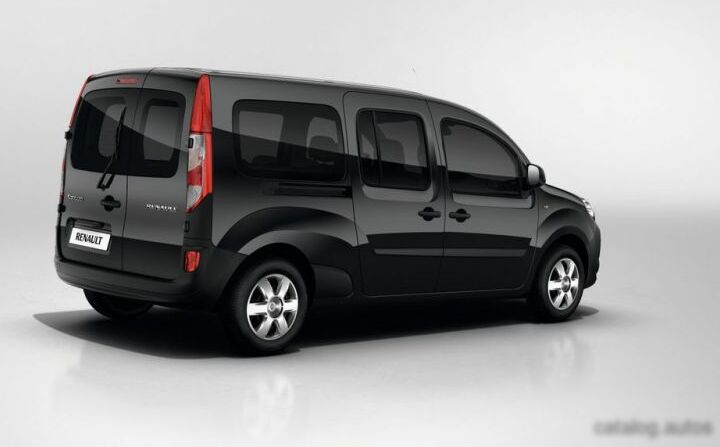
The Renault Grand Espace IV 2.2 dCi (150 Hp), produced between 2002 and 2006, represents a significant iteration in Renault’s long-running Espace line of multi-purpose vehicles (MPVs). Positioned as a large family vehicle, the Grand Espace IV offered seven-seat capacity and a focus on practicality and comfort. While the Espace was primarily a European model, it gained recognition for its innovative design and spacious interior, setting a benchmark in the MPV segment. This generation specifically aimed to refine the formula with improved engine options and enhanced features, catering to the demands of growing families.
Renault Grand Espace IV: An Overview
The Grand Espace IV built upon the success of its predecessors, offering a larger and more versatile package. It distinguished itself from standard MPVs with its emphasis on a comfortable ride and a relatively sophisticated interior for its time. The “Grand” designation signifies the extended wheelbase and seven-seat configuration, providing increased space for passengers and luggage. The 2.2 dCi engine variant, equipped with a turbo-diesel engine, was a popular choice in European markets due to its balance of performance and fuel efficiency.
Engine & Performance
The heart of the Grand Espace IV 2.2 dCi is a 2.2-liter inline-four cylinder diesel engine, designated the G9T. This engine produces 150 horsepower at 4000 rpm and 320 Nm (236.02 lb.-ft.) of torque at 1750 rpm. The engine utilizes a diesel commonrail fuel injection system and is equipped with a turbocharger and intercooler to enhance power and efficiency. Power is delivered to the front wheels via a six-speed manual transmission. Performance figures include a 0-100 km/h (0-62 mph) acceleration time of 11.5 seconds and a maximum speed of 188 km/h (116.82 mph). The engine’s relatively high compression ratio of 18:1 contributes to its efficiency, while adhering to Euro 3 emission standards. The weight-to-power ratio is 12.7 kg/Hp, and the weight-to-torque ratio is 5.9 kg/Nm, indicating a reasonable balance between weight and performance.
Design & Features
The Renault Grand Espace IV is a five-door minivan characterized by its flowing lines and spacious interior. Its design prioritized practicality and comfort, with a focus on maximizing passenger space. The extended wheelbase of the “Grand” version provides ample legroom in all three rows of seats. The interior features a modular seating arrangement, allowing for flexible configuration to accommodate varying passenger and cargo needs. Trunk space ranges from a minimum of 456 liters (16.1 cu. ft.) with all seats in place to a maximum of 3050 liters (107.71 cu. ft.) with the rear seats folded down. Safety features for the era included ABS (Anti-lock Braking System) and ventilated disc brakes on the front wheels, with disc brakes on the rear. The vehicle’s drag coefficient of 0.35 contributes to its aerodynamic efficiency. Other notable features include a fuel tank capacity of 83 liters (21.93 US gal) and a maximum roof load capacity of 80 kg (176.37 lbs).
Technical Specifications
| Brand | Renault |
| Model | Espace |
| Generation | Grand Espace IV |
| Type (Engine) | 2.2 dCi (150 Hp) |
| Start of production | 2002 |
| End of production | 2006 |
| Powertrain Architecture | Internal Combustion engine |
| Body type | Minivan, MPV |
| Seats | 7 |
| Doors | 5 |
| Fuel consumption (urban) | 10.5 l/100 km (22.4 US mpg, 26.9 UK mpg, 9.5 km/l) |
| Fuel consumption (extra urban) | 6.5 l/100 km (36.2 US mpg, 43.5 UK mpg, 15.4 km/l) |
| Fuel consumption (combined) | 7.9 l/100 km (29.8 US mpg, 35.8 UK mpg, 12.7 km/l) |
| CO2 emissions | 211 g/km |
| Fuel Type | Diesel |
| Acceleration 0 – 100 km/h | 11.5 sec |
| Acceleration 0 – 62 mph | 11.5 sec |
| Acceleration 0 – 60 mph | 10.9 sec |
| Maximum speed | 188 km/h (116.82 mph) |
| Emission standard | Euro 3 |
| Weight-to-power ratio | 12.7 kg/Hp |
| Weight-to-torque ratio | 5.9 kg/Nm |
| Power | 150 Hp @ 4000 rpm |
| Torque | 320 Nm @ 1750 rpm (236.02 lb.-ft. @ 1750 rpm) |
| Engine layout | Front, Transverse |
| Engine Model/Code | G9T |
| Engine displacement | 2188 cm3 (133.52 cu. in.) |
| Number of cylinders | 4 |
| Engine configuration | Inline |
| Cylinder Bore | 87 mm (3.43 in.) |
| Piston Stroke | 92 mm (3.62 in.) |
| Compression ratio | 18:1 |
| Number of valves per cylinder | 4 |
| Fuel injection system | Diesel Commonrail |
| Engine aspiration | Turbocharger, Intercooler |
| Valvetrain | OHC |
| Engine oil capacity | 6.3 l (6.66 US qt | 5.54 UK qt) |
| Coolant | 9.1 l (9.62 US qt | 8.01 UK qt) |
| Kerb Weight | 1900 kg (4188.78 lbs.) |
| Max. weight | 2605 kg (5743.04 lbs.) |
| Max load | 705 kg (1554.26 lbs.) |
| Trunk (boot) space – minimum | 456 l (16.1 cu. ft.) |
| Trunk (boot) space – maximum | 3050 l (107.71 cu. ft.) |
| Fuel tank capacity | 83 l (21.93 US gal | 18.26 UK gal) |
| Max. roof load | 80 kg (176.37 lbs.) |
| Permitted trailer load with brakes (12%) | 2000 kg (4409.25 lbs.) |
| Permitted trailer load without brakes | 750 kg (1653.47 lbs.) |
| Length | 4861 mm (191.38 in.) |
| Width | 1860 mm (73.23 in.) |
| Width including mirrors | 2104 mm (82.83 in.) |
| Height | 1746-1798 mm (68.74 – 70.79 in.) |
| Wheelbase | 2868 mm (112.91 in.) |
| Front track | 1574 mm (61.97 in.) |
| Rear (Back) track | 1556 mm (61.26 in.) |
| Front overhang | 1026 mm (40.39 in.) |
| Rear overhang | 967 mm (38.07 in.) |
| Ride height (ground clearance) | 120 mm (4.72 in.) |
| Drag coefficient (Cd) | 0.35 |
| Minimum turning circle (turning diameter) | 11.4 m (37.4 ft.) |
| Drivetrain Architecture | Front wheel drive |
| Number of gears and type of gearbox | 6 gears, manual transmission |
| Front suspension | Independent type McPherson |
| Rear suspension | Trailing arm |
| Front brakes | Ventilated discs |
| Rear brakes | Disc |
| Assisting systems | ABS (Anti-lock braking system) |
| Steering type | Steering rack and pinion |
| Tires size | 225/55 R17 |
| Wheel rims size | 17 |
The Renault Grand Espace IV 2.2 dCi remains a popular choice for families seeking a spacious, comfortable, and relatively efficient MPV, particularly in the used car market. Its blend of practicality, features, and diesel engine technology made it a competitive offering in its segment.