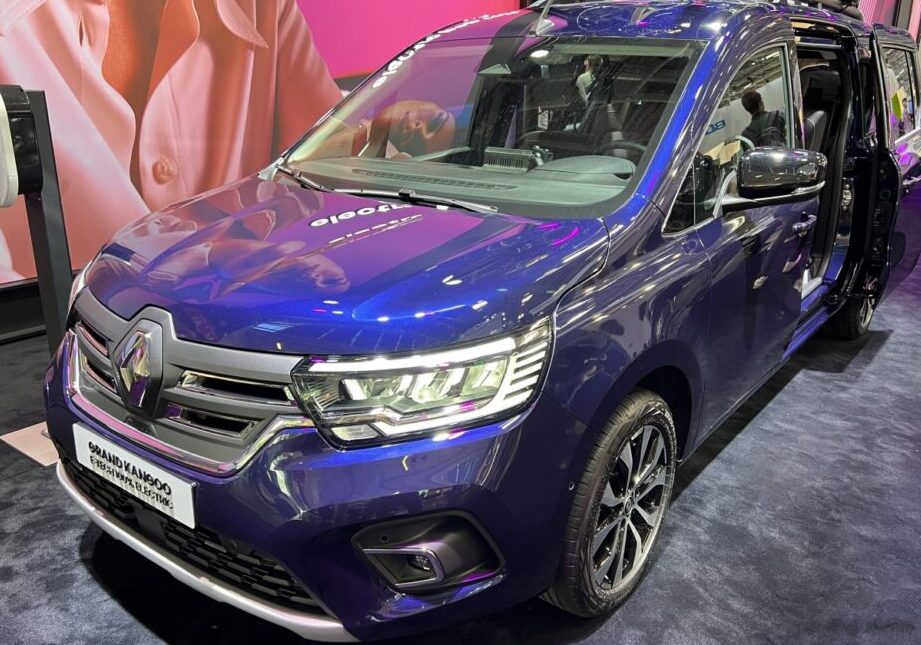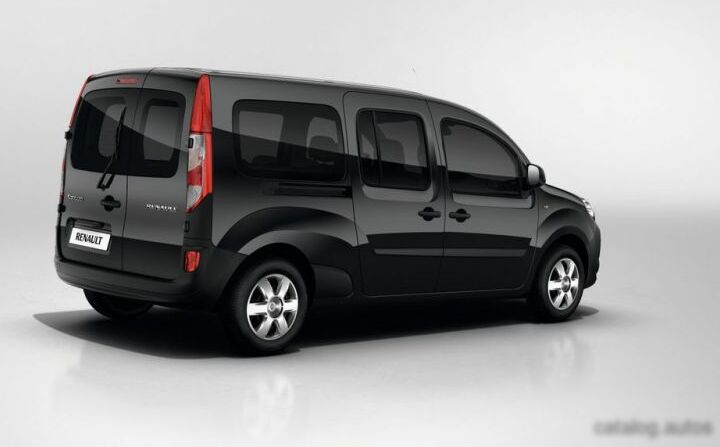
The Renault Grand Kangoo II, particularly the facelifted version introduced in 2013, represented a significant evolution of Renault’s popular leisure activity vehicle (LAV). This generation, sold from 2008 to 2018, offered increased practicality, improved safety features, and a wider range of engine options compared to its predecessor. The 1.5 Energy dCi variant, producing 110 horsepower, occupied a crucial mid-range position in the Kangoo lineup, balancing fuel efficiency with adequate performance for both urban and highway driving. It was primarily marketed in Europe, where compact vans and MPVs are highly sought after for their versatility and practicality.
Technical Specifications
| Brand | Renault |
| Model | Kangoo |
| Generation | Grand Kangoo II (facelift 2013) |
| Type (Engine) | 1.5 Energy dCi (110 Hp) start&stop |
| Start of production | 2013 |
| End of production | 2018 |
| Powertrain Architecture | Internal Combustion engine |
| Body type | Minivan |
| Seats | 7 |
| Doors | 5 |
| Fuel consumption (urban) | 4.9 l/100 km (48 US mpg, 57.6 UK mpg, 20.4 km/l) |
| Fuel consumption (extra urban) | 4.3 l/100 km (54.7 US mpg, 65.7 UK mpg, 23.3 km/l) |
| Fuel consumption (combined) | 4.5 l/100 km (52.3 US mpg, 62.8 UK mpg, 22.2 km/l) |
| CO2 emissions | 119 g/km |
| Fuel Type | Diesel |
| Acceleration 0 – 100 km/h | 12.3 sec |
| Acceleration 0 – 62 mph | 12.3 sec |
| Acceleration 0 – 60 mph | 11.7 sec |
| Maximum speed | 170 km/h (105.63 mph) |
| Emission standard | Euro 5 |
| Weight-to-power ratio | 13 kg/Hp, 76.9 Hp/tonne |
| Weight-to-torque ratio | 6 kg/Nm, 167.8 Nm/tonne |
| Power | 110 Hp @ 4000 rpm |
| Power per litre | 75.3 Hp/l |
| Torque | 240 Nm @ 1750 rpm (177.01 lb.-ft. @ 1750 rpm) |
| Engine layout | Front, Transverse |
| Engine Model/Code | K9K |
| Engine displacement | 1461 cm3 (89.16 cu. in.) |
| Number of cylinders | 4 |
| Engine configuration | Inline |
| Number of valves per cylinder | 2 |
| Fuel injection system | Diesel Commonrail |
| Engine aspiration | Turbocharger, Intercooler |
| Engine oil capacity | 4.5 l (4.76 US qt | 3.96 UK qt) |
| Coolant capacity | 7.2 l (7.61 US qt | 6.34 UK qt) |
| Kerb Weight | 1430-1625 kg (3152.61 – 3582.51 lbs.) |
| Max. weight | 2200 kg (4850.17 lbs.) |
| Max load | 575-770 kg (1267.66 – 1697.56 lbs.) |
| Trunk (boot) space – minimum | 300 l (10.59 cu. ft.) |
| Trunk (boot) space – maximum | 930 l (32.84 cu. ft.) |
| Fuel tank capacity | 60 l (15.85 US gal | 13.2 UK gal) |
| Permitted trailer load with brakes (12%) | 1050 kg (2314.85 lbs.) |
| Permitted trailer load without brakes | 715 kg (1576.31 lbs.) |
| Length | 4666 mm (183.7 in.) |
| Width | 1829 mm (72.01 in.) |
| Width including mirrors | 2138 mm (84.17 in.) |
| Height | 1802 mm (70.94 in.) |
| Wheelbase | 3081 mm (121.3 in.) |
| Front track | 1521 mm (59.88 in.) |
| Rear track | 1533 mm (60.35 in.) |
| Front overhang | 875 mm (34.45 in.) |
| Rear overhang | 710 mm (27.95 in.) |
| Ride height (ground clearance) | 164-148 mm (6.46 – 5.83 in.) |
| Minimum turning circle | 11.9 m (39.04 ft.) |
| Drivetrain | Front wheel drive |
| Number of gears and type of gearbox | 6 gears, manual transmission |
| Front suspension | Independent type McPherson |
| Rear suspension | Torsion |
| Front brakes | Ventilated discs |
| Rear brakes | Disc |
| Assisting systems | ABS (Anti-lock braking system) |
| Steering type | Steering rack and pinion |
| Power steering | Electric Steering |
| Tires size | 195/65 R15 |
| Wheel rims size | 15 |
Positioning and Market Role
The 1.5 dCi 110 Hp engine represented a sweet spot in the Grand Kangoo II range. Below it sat lower-powered diesel options (typically around 75 or 90 horsepower) geared towards maximizing fuel economy and appealing to budget-conscious buyers. Above it were more powerful diesel variants, and occasionally petrol engines, aimed at customers needing extra performance or preferring a gasoline powertrain. The 110 Hp version struck a balance, offering reasonable performance for carrying passengers and cargo, while still delivering excellent fuel economy thanks to Renault’s ‘Energy’ diesel technology, which incorporated start&stop functionality and optimized combustion processes. This trim level was popular with families, small business owners, and individuals requiring a versatile vehicle for both work and leisure.
Engine and Technology
The K9K 1.5-liter diesel engine was a mainstay of the Renault-Nissan alliance, known for its robustness and efficiency. The 110 horsepower version featured a turbocharger with an intercooler, enhancing power output and torque delivery. The common-rail direct injection system ensured precise fuel metering, contributing to both performance and reduced emissions. The inclusion of a diesel particulate filter (DPF) was crucial for meeting stringent Euro 5 emission standards. The start&stop system automatically shut off the engine when the vehicle was stationary (e.g., at traffic lights) to further reduce fuel consumption and emissions. The six-speed manual transmission provided a good balance between fuel efficiency and driver control.
Comparison with Siblings
Compared to the lower-powered 1.5 dCi variants, the 110 Hp version offered noticeably improved acceleration and overtaking capability. While the 90 Hp model was adequate for urban driving, the 110 Hp engine made longer journeys and highway driving significantly more comfortable. In contrast to the more powerful diesel options (typically around 130 or 150 horsepower), the 110 Hp version was more affordable to purchase and operate. It also generally exhibited slightly better fuel economy. Maintenance costs were generally comparable across the 1.5 dCi range, although the turbocharger in the 110 Hp version could potentially require attention over the long term. The petrol engine options, while offering a different driving experience, typically suffered from higher fuel consumption and lower torque compared to the 1.5 dCi 110 Hp.
Practical Considerations and Legacy
The Renault Grand Kangoo II 1.5 Energy dCi (110 Hp) start&stop proved to be a popular and reliable vehicle. Its spacious interior, versatile seating configurations, and practical features made it a favorite among families and commercial users. The combination of fuel efficiency, reasonable performance, and affordability ensured its continued success in the European market. While production ended in 2018, the Grand Kangoo II remains a common sight on roads today, testament to its enduring practicality and build quality. The vehicle’s design and engineering principles continue to influence Renault’s current generation of light commercial vehicles and passenger vans.