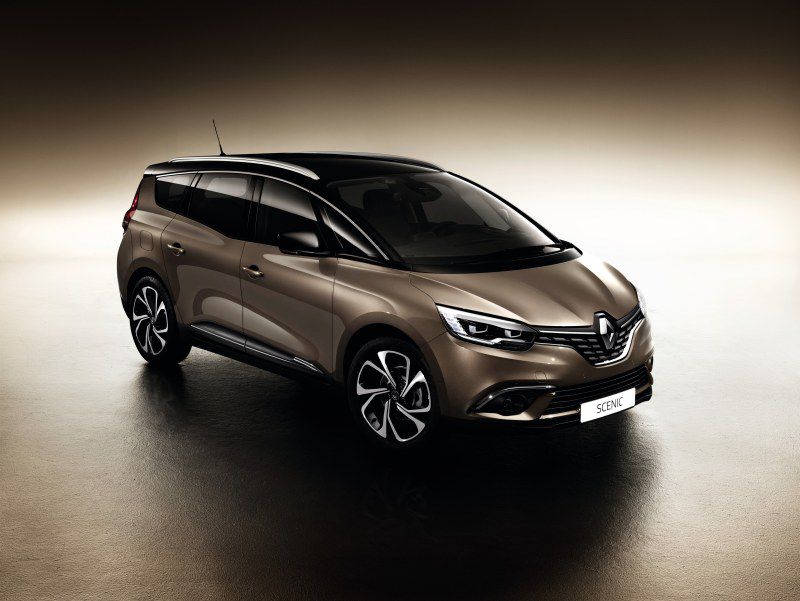
The Renault Grand Scenic IV (Phase I) 1.3 TCe (115 Hp) FAP 7 Seat is a compact minivan produced by the French automaker Renault from September 2018 to October 2020. Representing the fourth generation of the Scenic line, the Grand Scenic IV aimed to provide a practical and stylish family vehicle, particularly popular in the European market. It distinguished itself with a focus on interior space, technology, and fuel efficiency, competing with vehicles like the Citroën Grand C4 SpaceTourer and Volkswagen Touran. While not officially sold in the United States, understanding its specifications provides insight into the European compact MPV segment.
Renault Grand Scenic IV: Overview and Market Position
The Grand Scenic IV, as part of the broader Scenic range, was designed to cater to families needing flexible seating and ample cargo space. The “Grand” designation signifies the availability of seven seats, a key feature differentiating it from the standard five-seat Scenic IV. Renault positioned the Grand Scenic as a more premium offering within its lineup, emphasizing design and technology. The Phase I models, produced between 2018 and 2020, represent the initial iteration of the fourth generation, later followed by a Phase II update with styling and equipment revisions. The 1.3 TCe (115 Hp) engine option was a common choice, balancing performance with fuel economy for everyday driving.
Engine & Performance
The Renault Grand Scenic IV 1.3 TCe (115 Hp) is powered by a 1.3-liter, inline-four cylinder gasoline engine. This engine, designated H5H, utilizes direct fuel injection and a turbocharger with an intercooler to achieve a balance of power and efficiency. It produces 115 horsepower at 4500 rpm and 220 Nm (162.26 lb.-ft.) of torque at 1500 rpm. The engine’s power-to-liter ratio is 86.3 Hp/l. Power is delivered to the front wheels via a six-speed manual transmission. Performance figures include a 0-100 km/h (0-62 mph) acceleration time of 11.8 seconds and a top speed of 190 km/h (118.06 mph). The inclusion of a particulate filter (FAP) demonstrates Renault’s commitment to meeting Euro 6 emission standards, reducing particulate matter emissions. The weight-to-power ratio is 13.9 kg/Hp, and the weight-to-torque ratio is 7.3 kg/Nm.
Design & Features
The Grand Scenic IV features a distinctive exterior design characterized by flowing lines and a sculpted profile. Its minivan body style prioritizes interior space and practicality. The vehicle offers five doors and seating for up to seven passengers. Key design elements include a prominent front grille, C-shaped LED daytime running lights, and a contrasting roof color option. Inside, the Grand Scenic IV boasts a modern and spacious cabin. A key feature is the configurable interior, allowing the rear seats to be folded flat or removed entirely to maximize cargo capacity. The minimum trunk space is 189 liters (6.67 cu. ft.), expanding significantly with the rear seats folded. Safety features included in the Phase I models typically encompass ABS (Anti-lock Braking System), electronic stability control, and multiple airbags. The vehicle’s dimensions are 4634 mm (182.44 in.) in length, 1866 mm (73.46 in.) in width, and 1660-1655 mm (65.35 – 65.16 in.) in height. Ride height (ground clearance) is 117 mm (4.61 in.).
Technical Specifications
| Brand | Renault |
| Model | Scenic |
| Generation | Grand Scenic IV (Phase I) |
| Type | 1.3 TCe (115 Hp) FAP 7 Seat |
| Start of production | September, 2018 |
| End of production | October, 2020 |
| Powertrain Architecture | Internal Combustion engine |
| Body type | Minivan |
| Seats | 7 |
| Doors | 5 |
| Fuel consumption (urban) | 7.6 l/100 km (30.9 US mpg, 37.2 UK mpg, 13.2 km/l) |
| Fuel consumption (combined) | 6 l/100 km (39.2 US mpg, 47.1 UK mpg, 16.7 km/l) |
| CO2 emissions | 136 g/km |
| Fuel Type | Petrol (Gasoline) |
| Acceleration 0 – 100 km/h | 11.8 sec |
| Acceleration 0 – 62 mph | 11.8 sec |
| Acceleration 0 – 60 mph | 11.2 sec |
| Maximum speed | 190 km/h (118.06 mph) |
| Emission standard | Euro 6 |
| Weight-to-power ratio | 13.9 kg/Hp |
| Weight-to-torque ratio | 7.3 kg/Nm |
| Power | 115 Hp @ 4500 rpm |
| Power per litre | 86.3 Hp/l |
| Torque | 220 Nm @ 1500 rpm (162.26 lb.-ft. @ 1500 rpm) |
| Engine layout | Front, Transverse |
| Engine Model/Code | H5H |
| Engine displacement | 1332 cm3 (81.28 cu. in.) |
| Number of cylinders | 4 |
| Engine configuration | Inline |
| Number of valves per cylinder | 4 |
| Fuel injection system | Direct injection |
| Engine aspiration | Turbocharger, Intercooler |
| Engine oil capacity | 5.5 l (5.81 US qt | 4.84 UK qt) |
| Coolant | 6.5 l (6.87 US qt | 5.72 UK qt) |
| Kerb Weight | 1604 kg (3536.21 lbs.) |
| Max. weight | 2217 kg (4887.65 lbs.) |
| Max load | 613 kg (1351.43 lbs.) |
| Trunk (boot) space – minimum | 189 l (6.67 cu. ft.) |
| Fuel tank capacity | 53 l (14 US gal | 11.66 UK gal) |
| Max. roof load | 80 kg (176.37 lbs.) |
| Permitted trailer load with brakes (12%) | 1800 kg (3968.32 lbs.) |
| Permitted trailer load without brakes | 750 kg (1653.47 lbs.) |
| Length | 4634 mm (182.44 in.) |
| Width | 1866 mm (73.46 in.) |
| Width including mirrors | 2128 mm (83.78 in.) |
| Height | 1660-1655 mm (65.35 – 65.16 in.) |
| Wheelbase | 2804 mm (110.39 in.) |
| Front track | 1602 mm (63.07 in.) |
| Rear (Back) track | 1596 mm (62.83 in.) |
| Front overhang | 931 mm (36.65 in.) |
| Rear overhang | 899 mm (35.39 in.) |
| Ride height (ground clearance) | 117 mm (4.61 in.) |
| Minimum turning circle (turning diameter) | 11.39 m (37.37 ft.) |
| Drivetrain Architecture | Front wheel drive |
| Number of gears and type of gearbox | 6 gears, manual transmission |
| Front suspension | Independent type McPherson |
| Rear suspension | Semi-independent, coil spring |
| Front brakes | Ventilated discs, 320 mm |
| Rear brakes | Disc, 290 mm |
| Assisting systems | ABS (Anti-lock braking system) |
| Steering type | Steering rack and pinion |
| Power steering | Electric Steering |
| Tires size | 195/55 R20 |
| Wheel rims size | 20 |
The Renault Grand Scenic IV (Phase I) 1.3 TCe (115 Hp) FAP 7 Seat represents a well-rounded package for families seeking a practical, comfortable, and relatively efficient minivan. While not available in the US market, its specifications highlight the features and technologies prevalent in the European compact MPV segment during its production run.