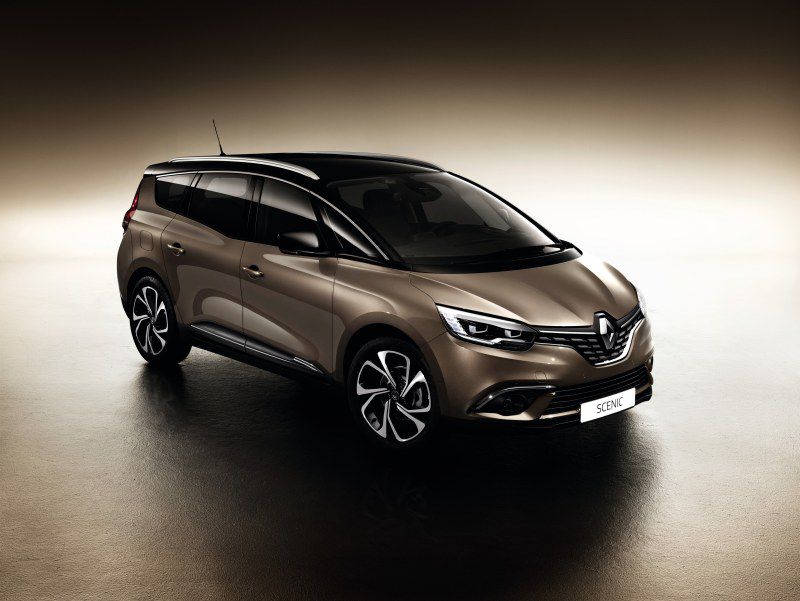
The Renault Grand Scenic IV (Phase I) 1.3 TCe (160 Hp) FAP is a five-seater minivan produced by the French automaker Renault between 2018 and 2020. Representing the fourth generation of the Scenic line, the Grand Scenic IV aimed to blend practicality, comfort, and modern technology within the compact MPV (Multi-Purpose Vehicle) segment. While the Scenic line wasn’t directly sold in the United States, it was a popular choice in Europe, competing with vehicles like the Citroën C4 Picasso and Volkswagen Touran, offering a spacious and versatile alternative to traditional hatchbacks and SUVs.
Renault Grand Scenic IV: Overview and Market Position
The Grand Scenic IV, and specifically the 1.3 TCe variant, was designed to appeal to families seeking a vehicle capable of handling everyday life with ease. The “Grand” designation indicates a longer wheelbase and seven-seat configuration was available, though the 1.3 TCe model was primarily offered as a five-seater. The Phase I designation refers to the initial production run, with subsequent updates (Phase II) introducing styling and technology revisions. The 1.3 TCe engine represented Renault’s move towards smaller, turbocharged gasoline engines, prioritizing fuel efficiency and reduced emissions while maintaining adequate performance.
Engine & Performance
The heart of the Grand Scenic IV 1.3 TCe is a 1.3-liter, inline-four cylinder gasoline engine, designated H5H by Renault. This engine produces 160 horsepower at 5500 rpm and 260 Nm (191.77 lb.-ft.) of torque at 1750 rpm. The engine utilizes direct fuel injection and is coupled with a turbocharger and intercooler to enhance power and efficiency. Power delivery is managed through a six-speed manual transmission, driving the front wheels. Acceleration from 0 to 100 km/h (0-62 mph) takes 10.2 seconds, while 0-60 mph is achieved in approximately 9.7 seconds. The vehicle boasts a maximum speed of 207 km/h (128.62 mph). The inclusion of a particulate filter (FAP) demonstrates Renault’s commitment to meeting stringent Euro 6 emission standards. The engine’s power-to-weight ratio is 9.9 kg/Hp, and the torque-to-weight ratio is 6.1 kg/Nm, contributing to a reasonably responsive driving experience.
Design & Features
The Renault Grand Scenic IV Phase I features a distinctive exterior design characterized by flowing lines and a sculpted profile. The minivan body style prioritizes interior space and practicality. Key design elements include a prominent front grille, C-shaped LED daytime running lights, and a sloping roofline. Inside, the cabin is designed with a focus on comfort and functionality. The dashboard features a vertically oriented touchscreen infotainment system, providing access to navigation, entertainment, and vehicle settings. The rear seats offer ample legroom and can be folded down to increase cargo capacity. The Grand Scenic IV prioritizes safety, incorporating features such as ABS (Anti-lock Braking System), electronic stability control, and multiple airbags. The trunk offers a minimum capacity of 718 liters (25.36 cu. ft.) with the rear seats in place, expanding significantly when folded. The vehicle’s dimensions – 4634 mm (182.44 in.) in length, 1866 mm (73.46 in.) in width, and 1660-1655 mm (65.35 – 65.16 in.) in height – position it within the upper end of the compact MPV segment.
Technical Specifications
| Brand | Renault |
| Model | Scenic |
| Generation | Grand Scenic IV (Phase I) |
| Type (Engine) | 1.3 TCe (160 Hp) FAP |
| Start of production | September, 2018 |
| End of production | October, 2020 |
| Powertrain Architecture | Internal Combustion engine |
| Body type | Minivan |
| Seats | 5 |
| Doors | 5 |
| Fuel consumption (urban) | 7.6 l/100 km (30.9 US mpg, 37.2 UK mpg, 13.2 km/l) |
| Fuel consumption (combined) | 6 l/100 km (39.2 US mpg, 47.1 UK mpg, 16.7 km/l) |
| CO2 emissions | 136 g/km |
| Fuel Type | Petrol (Gasoline) |
| Acceleration 0 – 100 km/h | 10.2 sec |
| Acceleration 0 – 62 mph | 10.2 sec |
| Acceleration 0 – 60 mph | 9.7 sec |
| Maximum speed | 207 km/h (128.62 mph) |
| Emission standard | Euro 6 |
| Weight-to-power ratio | 9.9 kg/Hp |
| Weight-to-torque ratio | 6.1 kg/Nm |
| Power | 160 Hp @ 5500 rpm |
| Torque | 260 Nm @ 1750 rpm (191.77 lb.-ft. @ 1750 rpm) |
| Engine layout | Front, Transverse |
| Engine Model/Code | H5H |
| Engine displacement | 1332 cm3 (81.28 cu. in.) |
| Number of cylinders | 4 |
| Engine configuration | Inline |
| Number of valves per cylinder | 4 |
| Fuel injection system | Direct injection |
| Engine aspiration | Turbocharger, Intercooler |
| Engine oil capacity | 5.5 l (5.81 US qt | 4.84 UK qt) |
| Coolant | 6.5 l (6.87 US qt | 5.72 UK qt) |
| Kerb Weight | 1579 kg (3481.1 lbs.) |
| Max. weight | 2144 kg (4726.71 lbs.) |
| Max load | 565 kg (1245.61 lbs.) |
| Trunk (boot) space – minimum | 718 l (25.36 cu. ft.) |
| Fuel tank capacity | 53 l (14 US gal | 11.66 UK gal) |
| Max. roof load | 80 kg (176.37 lbs.) |
| Permitted trailer load with brakes (12%) | 1800 kg (3968.32 lbs.) |
| Permitted trailer load without brakes | 745 kg (1642.44 lbs.) |
| Length | 4634 mm (182.44 in.) |
| Width | 1866 mm (73.46 in.) |
| Width including mirrors | 2128 mm (83.78 in.) |
| Height | 1660-1655 mm (65.35 – 65.16 in.) |
| Wheelbase | 2804 mm (110.39 in.) |
| Front track | 1602 mm (63.07 in.) |
| Rear (Back) track | 1596 mm (62.83 in.) |
| Front overhang | 931 mm (36.65 in.) |
| Rear overhang | 899 mm (35.39 in.) |
| Ride height (ground clearance) | 117 mm (4.61 in.) |
| Minimum turning circle (turning diameter) | 11.39 m (37.37 ft.) |
| Drivetrain Architecture | Front wheel drive |
| Number of gears and type of gearbox | 6 gears, manual transmission |
| Front suspension | Independent type McPherson |
| Rear suspension | Semi-independent, coil spring |
| Front brakes | Ventilated discs, 320 mm |
| Rear brakes | Disc, 290 mm |
| Tires size | 195/55 R20 |
| Wheel rims size | 20 |
The Renault Grand Scenic IV (Phase I) 1.3 TCe (160 Hp) FAP offered a compelling package for families in the European market, combining practicality, efficiency, and a reasonable level of performance. While not sold in the US, it represents a significant example of Renault’s approach to the compact MPV segment during the late 2010s.