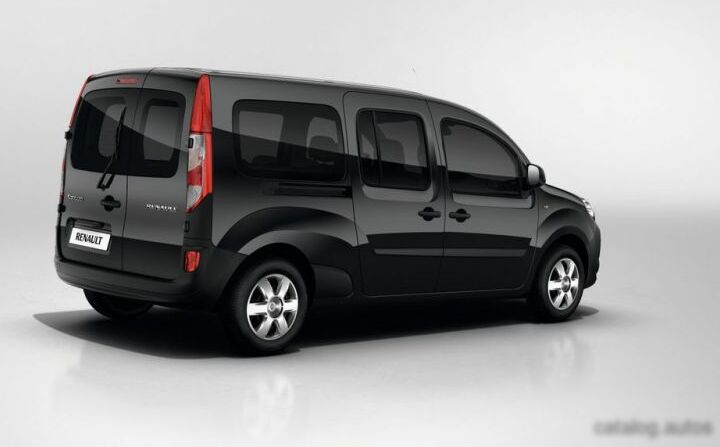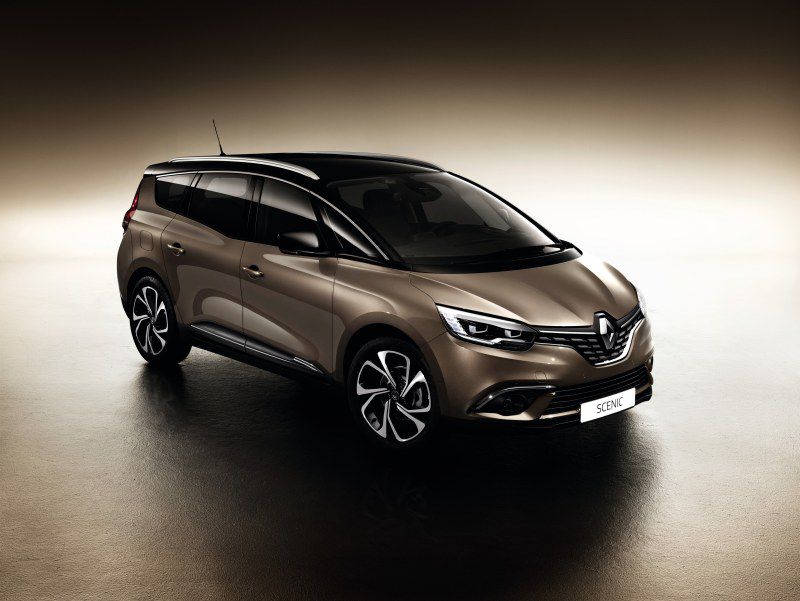
The Renault Grand Scenic IV (Phase I) 1.5 Energy dCi (110 Hp) is a compact minivan produced by the French automaker Renault from 2016 to 2018. Representing the fourth generation of the Scenic line, the Grand Scenic IV offered increased practicality and technology compared to its predecessors. While not officially sold in the United States, the Scenic has been a popular choice in Europe for families seeking a versatile and fuel-efficient vehicle. The Grand Scenic, in particular, distinguishes itself with its seven-seat configuration (though the version detailed here is a five-seater) and spacious interior, catering to larger families or those requiring significant cargo capacity. This model, powered by a 1.5-liter diesel engine, focused on providing a balance between performance and economy, aligning with European market preferences for efficient motoring.
Renault Grand Scenic IV: An Overview
The Grand Scenic IV marked a significant departure in design for the Scenic range, adopting a more crossover-inspired aesthetic. It aimed to blend the practicality of a minivan with the styling cues of an SUV, appealing to a broader customer base. The Phase I models, produced between 2016 and 2018, established the core features and design language of the fourth-generation Scenic. The 1.5 Energy dCi variant, equipped with a 110 horsepower diesel engine, was a common offering, prioritizing fuel efficiency and reasonable performance for everyday driving. It competed with other European compact MPVs like the Citroën C4 Picasso and Volkswagen Touran.
Engine & Performance
The Renault Grand Scenic IV 1.5 Energy dCi is powered by a 1.5-liter inline-four cylinder diesel engine, designated K9K. This engine produces 110 horsepower at 4,000 rpm and 260 Nm (191.77 lb.-ft.) of torque at 1,750 rpm. The engine utilizes a turbocharger and intercooler to enhance performance and efficiency. Power is delivered to the front wheels via a six-speed manual transmission. Acceleration from 0 to 100 km/h (0-62 mph) takes 12.6 seconds, with a top speed of 183 km/h (113.71 mph). The engine’s design prioritizes fuel economy, achieving combined fuel consumption of 4.0 liters per 100 kilometers (58.8 US mpg or 70.6 UK mpg), and CO2 emissions of 104 g/km, meeting Euro 6 emission standards. The weight-to-power ratio is 13.7 kg/Hp, and the weight-to-torque ratio is 5.8 kg/Nm, indicating a reasonable balance between weight and engine output.
Design & Features
The Grand Scenic IV features a distinctive exterior design characterized by its sculpted lines and bold front fascia. The Phase I models showcased a prominent grille and C-shaped LED daytime running lights, contributing to a modern and recognizable appearance. As a five-door minivan, it offers easy access to the cabin. Inside, the Grand Scenic IV prioritizes practicality and comfort. The interior boasts a spacious cabin with a focus on modularity, allowing for flexible seating arrangements. The rear seats can be folded down to create a larger cargo area, with a minimum capacity of 718 liters (25.36 cu. ft.) and a maximum capacity of 1901 liters (67.13 cu. ft.) when all rear seats are folded. Standard features included air conditioning, power windows, and a basic audio system. Higher trim levels offered features such as a touchscreen infotainment system, navigation, and advanced driver-assistance systems (ADAS) like automatic emergency braking and lane departure warning. Safety features were a key consideration, with the Grand Scenic IV equipped with ABS, electronic stability control, and multiple airbags.
Technical Specifications
| Brand | Renault |
| Model | Scenic |
| Generation | Grand Scenic IV (Phase I) |
| Type (Engine) | 1.5 Energy dCi (110 Hp) |
| Start of production | 2016 |
| End of production | 2018 |
| Powertrain Architecture | Internal Combustion engine |
| Body type | Minivan |
| Seats | 5 |
| Doors | 5 |
| Fuel consumption (urban) | 4.2 l/100 km (56 US mpg, 67.3 UK mpg, 23.8 km/l) |
| Fuel consumption (extra urban) | 3.9 l/100 km (60.3 US mpg, 72.4 UK mpg, 25.6 km/l) |
| Fuel consumption (combined) | 4 l/100 km (58.8 US mpg, 70.6 UK mpg, 25 km/l) |
| CO2 emissions | 104 g/km |
| Fuel Type | Diesel |
| Acceleration 0 – 100 km/h | 12.6 sec |
| Acceleration 0 – 62 mph | 12.6 sec |
| Acceleration 0 – 60 mph | 12 sec |
| Maximum speed | 183 km/h (113.71 mph) |
| Emission standard | Euro 6 |
| Weight-to-power ratio | 13.7 kg/Hp |
| Weight-to-torque ratio | 5.8 kg/Nm |
| Power | 110 Hp @ 4000 rpm |
| Torque | 260 Nm @ 1750 rpm (191.77 lb.-ft. @ 1750 rpm) |
| Engine layout | Front, Transverse |
| Engine Model/Code | K9K |
| Engine displacement | 1461 cm3 (89.16 cu. in.) |
| Number of cylinders | 4 |
| Engine configuration | Inline |
| Cylinder Bore | 76 mm (2.99 in.) |
| Piston Stroke | 80.5 mm (3.17 in.) |
| Number of valves per cylinder | 2 |
| Fuel injection system | Diesel Commonrail |
| Engine aspiration | Turbocharger, Intercooler |
| Engine oil capacity | 4.8 l (5.07 US qt | 4.22 UK qt) |
| Coolant | 6 l (6.34 US qt | 5.28 UK qt) |
| Kerb Weight | 1503 kg (3313.55 lbs.) |
| Max. weight | 2200 kg (4850.17 lbs.) |
| Max load | 697 kg (1536.62 lbs.) |
| Trunk (boot) space – minimum | 718 l (25.36 cu. ft.) |
| Trunk (boot) space – maximum | 1901 l (67.13 cu. ft.) |
| Fuel tank capacity | 53 l (14 US gal | 11.66 UK gal) |
| Max. roof load | 80 kg (176.37 lbs.) |
| Permitted trailer load with brakes (12%) | 1850 kg (4078.55 lbs.) |
| Permitted trailer load without brakes | 750 kg (1653.47 lbs.) |
| Permitted towbar download | 75 kg (165.35 lbs.) |
| Length | 4635 mm (182.48 in.) |
| Width | 1866 mm (73.46 in.) |
| Width including mirrors | 2128 mm (83.78 in.) |
| Height | 1660 mm (65.35 in.) |
| Wheelbase | 2804 mm (110.39 in.) |
| Front track | 1602 mm (63.07 in.) |
| Rear (Back) track | 1596 mm (62.83 in.) |
| Number of gears and type of gearbox | 6 gears, manual transmission |
The Renault Grand Scenic IV (Phase I) 1.5 Energy dCi (110 Hp) represented a compelling option for European families seeking a practical, efficient, and stylish minivan. Its blend of spaciousness, fuel economy, and modern features solidified its position within a competitive segment.