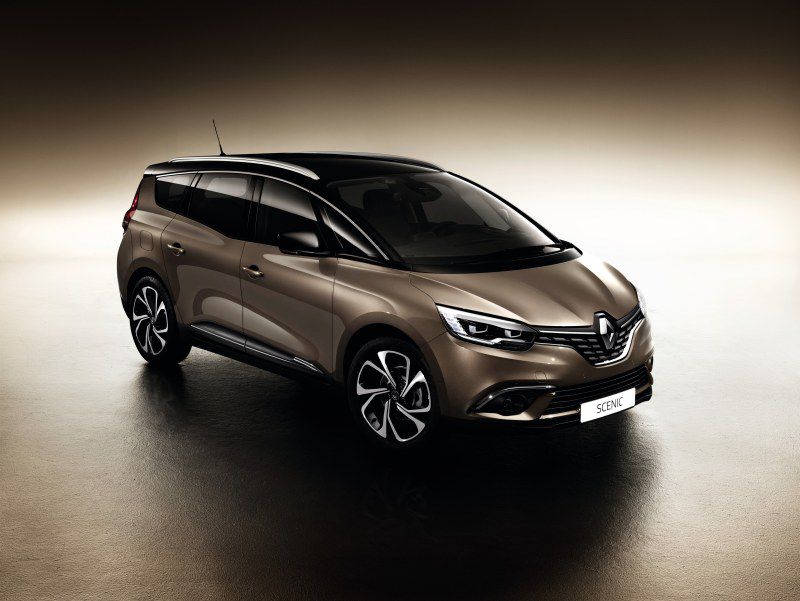
The Renault Grand Scenic IV, specifically the Phase I model produced between 2016 and 2018, represents the fourth generation of Renault’s popular multi-purpose vehicle (MPV). Positioned as a competitor to vehicles like the Citroën Grand C4 Picasso and Volkswagen Touran, the Grand Scenic IV aimed to offer a blend of practicality, comfort, and modern technology within the compact MPV segment. This iteration, equipped with the 1.6 Energy dCi engine producing 160 horsepower, was primarily marketed in Europe, where the demand for seven-seat family vehicles remained strong. While not officially sold in the United States, understanding its specifications provides insight into the European automotive landscape of the mid-2010s.
Renault Grand Scenic IV: Overview and Market Position
The Grand Scenic IV marked a significant departure from its predecessors in terms of styling and interior design. Renault focused on creating a more premium feel, incorporating higher-quality materials and a more sophisticated dashboard layout. The Phase I models, like the 1.6 Energy dCi variant, were characterized by their distinctive exterior styling, featuring sculpted lines and a prominent front grille. The seven-seat configuration offered versatility for families, while the advanced technology package aimed to enhance the driving experience and safety.
Engine & Performance
The heart of the Grand Scenic IV 1.6 Energy dCi is a 1.6-liter inline-four cylinder diesel engine, designated R9M by Renault. This engine produces 160 horsepower at 4000 rpm and a substantial 380 Nm (280.27 lb.-ft.) of torque at 1750 rpm. The high torque output, typical of diesel engines, provides strong acceleration and effortless cruising. Power is delivered to the front wheels via a six-speed Efficient Dual Clutch (EDC) automatic transmission. This transmission offers smooth and quick gear changes, contributing to both performance and fuel efficiency. Acceleration from 0 to 100 km/h (0-62 mph) takes 10.9 seconds, while 0 to 60 mph is achieved in a calculated 10.4 seconds. The vehicle boasts a maximum speed of 200 km/h (124.27 mph). Fuel economy is a strong point, with combined cycle figures of 4.7 l/100 km (50 US mpg, 60.1 UK mpg), and CO2 emissions of 122 g/km, meeting Euro 6 emission standards.
Design & Features
The Renault Grand Scenic IV Phase I is a five-door minivan designed to accommodate up to seven passengers. Its dimensions – 4635 mm (182.48 in) in length, 1866 mm (73.46 in) in width, and 1655 mm (65.16 in) in height – position it within the compact MPV category. The interior is a key highlight, offering a spacious and flexible cabin. The seven seats can be configured in various arrangements to maximize passenger space or cargo capacity. With all seats in place, trunk space is 189 liters (6.67 cu. ft.), expanding to a generous 1737 liters (61.34 cu. ft.) with the rear seats folded down. Safety features included ABS (Anti-lock Braking System), and the vehicle’s construction adhered to European safety standards. The Grand Scenic IV also featured an electric power steering system for ease of maneuverability. The vehicle’s design prioritized practicality and family-oriented features, making it a popular choice for those needing a versatile and comfortable vehicle.
Technical Specifications
| Brand | Renault |
| Model | Scenic |
| Generation | Grand Scenic IV (Phase I) |
| Type (Engine) | 1.6 Energy dCi (160 Hp) EDC 7 Seat |
| Start of production | 2016 |
| End of production | 2018 |
| Powertrain Architecture | Internal Combustion engine |
| Body type | Minivan |
| Seats | 7 |
| Doors | 5 |
| Fuel consumption (urban) | 5.3 l/100 km (44.4 US mpg, 53.3 UK mpg, 18.9 km/l) |
| Fuel consumption (extra urban) | 4.4 l/100 km (53.5 US mpg, 64.2 UK mpg, 22.7 km/l) |
| Fuel consumption (combined) | 4.7 l/100 km (50 US mpg, 60.1 UK mpg, 21.3 km/l) |
| CO2 emissions | 122 g/km |
| Fuel Type | Diesel |
| Acceleration 0 – 100 km/h | 10.9 sec |
| Acceleration 0 – 62 mph | 10.9 sec |
| Acceleration 0 – 60 mph | 10.4 sec |
| Maximum speed | 200 km/h (124.27 mph) |
| Emission standard | Euro 6 |
| Weight-to-power ratio | 10.4 kg/Hp |
| Weight-to-torque ratio | 4.4 kg/Nm |
| Power | 160 Hp @ 4000 rpm |
| Torque | 380 Nm @ 1750 rpm (280.27 lb.-ft. @ 1750 rpm) |
| Engine layout | Front, Transverse |
| Engine Model/Code | R9M |
| Engine displacement | 1600 cm3 (97.64 cu. in.) |
| Number of cylinders | 4 |
| Engine configuration | Inline |
| Cylinder Bore | 80 mm (3.15 in.) |
| Piston Stroke | 79.5 mm (3.13 in.) |
| Number of valves per cylinder | 4 |
| Fuel injection system | Diesel Commonrail |
| Engine aspiration | Turbocharger, Intercooler |
| Engine oil capacity | 6.2 l (6.55 US qt | 5.46 UK qt) |
| Coolant | 7 l (7.4 US qt | 6.16 UK qt) |
| Kerb Weight | 1660 kg (3659.67 lbs.) |
| Max. weight | 2378 kg (5242.59 lbs.) |
| Max load | 718 kg (1582.92 lbs.) |
| Trunk (boot) space – minimum | 189 l (6.67 cu. ft.) |
| Trunk (boot) space – maximum | 1737 l (61.34 cu. ft.) |
| Fuel tank capacity | 53 l (14 US gal | 11.66 UK gal) |
| Max. roof load | 80 kg (176.37 lbs.) |
| Permitted trailer load with brakes (12%) | 1850 kg (4078.55 lbs.) |
| Permitted trailer load without brakes | 750 kg (1653.47 lbs.) |
| Permitted towbar download | 75 kg (165.35 lbs.) |
| Length | 4635 mm (182.48 in.) |
| Width | 1866 mm (73.46 in.) |
| Width including mirrors | 2128 mm (83.78 in.) |
| Height | 1655 mm (65.16 in.) |
| Wheelbase | 2804 mm (110.39 in.) |
| Front track | 1602 mm (63.07 in.) |
| Rear (Back) track | 1596 mm (62.83 in.) |
| Front overhang | 931 mm (36.65 in.) |
| Rear overhang | 899 mm (35.39 in.) |
| Ride height (ground clearance) | 159 mm (6.26 in.) |
| Minimum turning circle (turning diameter) | 11.39 m (37.37 ft.) |
| Drivetrain Architecture | Front wheel drive |
| Number of gears and type of gearbox | 6 gears, automatic transmission EDC |
| Front suspension | Independent type McPherson |
| Rear suspension | Semi-independent, coil spring |
| Front brakes | Ventilated discs, 320 mm |
| Rear brakes | Disc, 290 mm |
| Tires size | 195/55 R20 95H |
| Wheel rims size | 20 |
The Renault Grand Scenic IV Phase I 1.6 Energy dCi offered a compelling package for European families seeking a practical, comfortable, and fuel-efficient MPV. Its blend of spaciousness, technology, and refined diesel power made it a popular choice in a competitive segment.