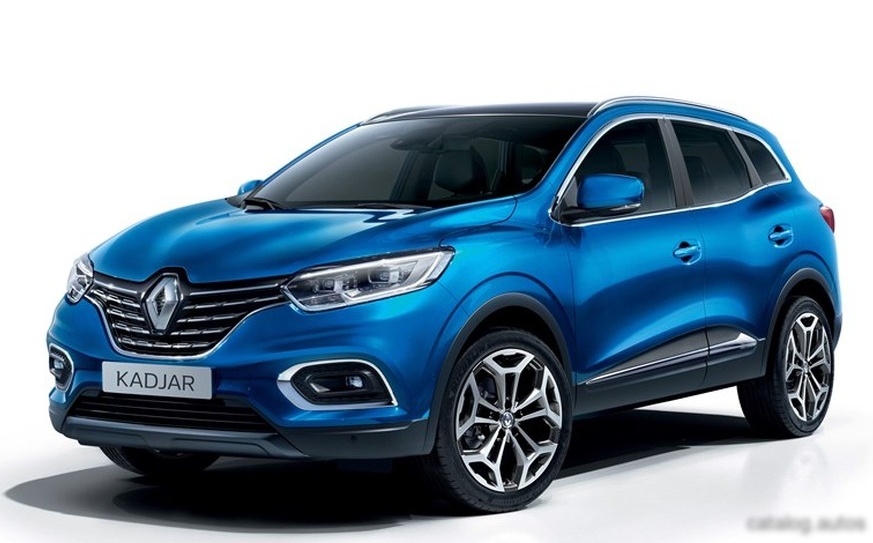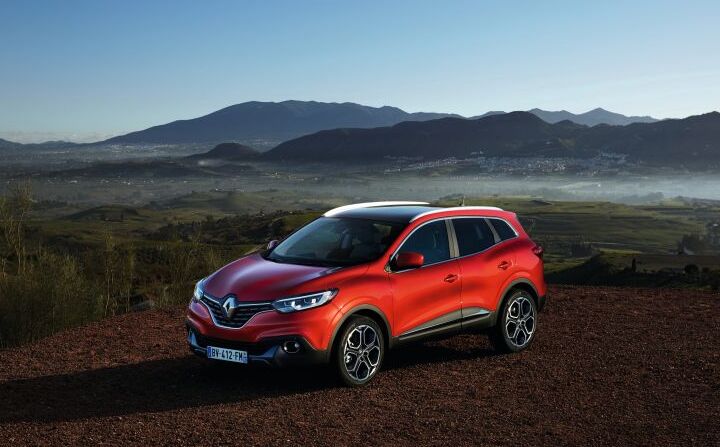
The Renault Kadjar 1.2 Energy TCe (130 hp) was a popular crossover SUV produced by the French manufacturer Renault from 2015 to 2018. Positioned as a mid-range offering within the Kadjar lineup, it aimed to provide a balance between fuel efficiency, practicality, and affordability. The Kadjar, as a whole, represented Renault’s entry into the increasingly competitive compact SUV segment, sharing its platform – the CMF-CD – with the Nissan Qashqai. This variant, powered by the 1.2-liter turbocharged gasoline engine, was a key component of the Kadjar’s sales success in European markets.
Technical Specifications
| Brand | Renault |
| Model | Kadjar |
| Generation | Kadjar |
| Type (Engine) | 1.2 Energy TCe (130 Hp) |
| Start of production | 2015 |
| End of production | 2018 |
| Powertrain Architecture | Internal Combustion engine |
| Body type | Crossover |
| Seats | 5 |
| Doors | 5 |
| Fuel consumption (urban) | 6.8 – 7.0 l/100 km (34.6 – 33.6 US mpg) |
| Fuel consumption (extra urban) | 4.9 – 5.1 l/100 km (48 – 46.1 US mpg) |
| Fuel consumption (combined) | 5.6 – 5.8 l/100 km (42 – 40.6 US mpg) |
| CO2 emissions | 126 – 130 g/km |
| Fuel Type | Petrol (Gasoline) |
| Acceleration 0 – 100 km/h | 10.1 sec |
| Acceleration 0 – 62 mph | 10.1 sec |
| Acceleration 0 – 60 mph | 9.6 sec |
| Maximum speed | 192 km/h (119.3 mph) |
| Emission standard | Euro 6 |
| Weight-to-power ratio | 10 kg/Hp |
| Weight-to-torque ratio | 6.4 kg/Nm |
| Power | 130 Hp @ 5500 rpm |
| Torque | 205 Nm @ 2000 rpm (151.2 lb.-ft. @ 2000 rpm) |
| Engine layout | Front, Transverse |
| Engine Model/Code | H5F |
| Engine displacement | 1197 cm3 (73.05 cu. in.) |
| Number of cylinders | 4 |
| Engine configuration | Inline |
| Cylinder Bore | 72.2 mm (2.84 in.) |
| Piston Stroke | 73.1 mm (2.88 in.) |
| Number of valves per cylinder | 4 |
| Fuel injection system | Direct injection |
| Engine aspiration | Turbocharger, Intercooler |
| Engine oil capacity | 4.6 l (4.86 US qt | 4.05 UK qt) |
| Coolant | 6.7 l (7.08 US qt | 5.9 UK qt) |
| Kerb Weight | 1306-1320 kg (2879.24 – 2910.1 lbs.) |
| Max. weight | 1853-1866 kg (4085.17 – 4113.83 lbs.) |
| Max load | 546-547 kg (1203.72 – 1205.93 lbs.) |
| Trunk (boot) space – minimum | 409 l (14.44 cu. ft.) |
| Trunk (boot) space – maximum | 1478 l (52.2 cu. ft.) |
| Fuel tank capacity | 55 l (14.53 US gal | 12.1 UK gal) |
| Max. roof load | 75 kg (165.35 lbs.) |
| Permitted trailer load with brakes (12%) | 1500 kg (3306.93 lbs.) |
| Permitted trailer load without brakes | 690-695 kg (1521.19 – 1532.21 lbs.) |
| Length | 4449 mm (175.16 in.) |
| Width | 1836 mm (72.28 in.) |
| Width including mirrors | 2058 mm (81.02 in.) |
| Height | 1607 mm (63.27 in.) |
| Wheelbase | 2646 mm (104.17 in.) |
| Front track | 1556 mm (61.26 in.) |
| Rear (Back) track | 1542 mm (60.71 in.) |
| Ride height (ground clearance) | 200 mm (7.87 in.) |
| Minimum turning circle (turning diameter) | 10.72 m (35.17 ft.) |
| Approach angle | 18° |
| Departure angle | 28° |
| Drivetrain Architecture | The Internal combustion engine (ICE) drives the front wheels of the vehicle. |
| Drive wheel | Front wheel drive |
| Number of gears and type of gearbox | 6 gears, manual transmission |
| Front brakes | Ventilated discs |
| Rear brakes | Disc |
| Assisting systems | ABS (Anti-lock braking system) |
| Steering type | Steering rack and pinion |
| Power steering | Electric Steering |
| Tires size | 215/65 R16; 215/60 R17; 225/45 R19 |
| Wheel rims size | 16; 17; 19 |
INTRODUCTION
The Renault Kadjar 1.2 Energy TCe (130 hp) was introduced in 2015 as part of the initial Kadjar range. Built on the Common Module Family (CMF) platform, specifically the CMF-CD variant developed jointly with Nissan, the Kadjar aimed to provide a comfortable and practical crossover experience. This particular engine and power output served as a popular choice for buyers seeking a balance between performance and fuel economy. It slotted into the lineup between the lower-powered 1.2 TCe 115 hp version and the more potent 1.6 dCi diesel options. The Kadjar was primarily marketed in Europe, where the demand for compact SUVs was rapidly growing.
Powertrain & Engine Architecture
At the heart of the Kadjar 1.2 TCe (130 hp) lies the H5F engine, a 1.2-liter inline-four cylinder gasoline engine. This engine utilizes direct fuel injection and is equipped with a turbocharger and intercooler to boost power and efficiency. The engine’s architecture is relatively compact, contributing to the Kadjar’s overall packaging. The 130 horsepower output is achieved at 5500 rpm, while peak torque of 205 Nm (151.2 lb.-ft.) is delivered at 2000 rpm. This provides a reasonable level of responsiveness for everyday driving. The engine is paired with a six-speed manual transmission, which was the standard offering for this variant. The transmission’s gear ratios are tuned to prioritize fuel efficiency and smooth operation, rather than outright performance.
Driving Characteristics
The Kadjar 1.2 TCe (130 hp) offers a comfortable and composed driving experience. While not particularly sporty, the engine provides adequate power for most driving situations. Acceleration from 0 to 60 mph takes around 9.6 seconds, and the top speed is 119.3 mph. The turbocharger does result in some turbo lag at lower engine speeds, but once the boost comes on, the engine pulls reasonably well. The six-speed manual transmission is smooth and precise, allowing drivers to make the most of the available power. Compared to the higher-output dCi diesel versions, the 1.2 TCe feels less powerful, particularly when fully loaded or tackling steep inclines. However, it offers a quieter and more refined driving experience than the diesel options.
Equipment & Trim Levels
The Kadjar 1.2 TCe (130 hp) was typically offered in several trim levels, including Expression, Dynamique, and Signature. Standard equipment on the base Expression trim included air conditioning, electric front windows, a basic audio system, and stability control. The Dynamique trim added features such as alloy wheels, cruise control, rear parking sensors, and a touchscreen infotainment system. The top-of-the-line Signature trim included leather upholstery, a panoramic sunroof, and a more advanced infotainment system with navigation. Optional extras included a hands-free parking assist system, a rearview camera, and a premium audio system.
Chassis & Braking
The Kadjar’s chassis is comprised of MacPherson strut suspension at the front and a semi-independent torsion beam suspension at the rear. This setup provides a good balance between ride comfort and handling. The Kadjar 1.2 TCe (130 hp) features ventilated disc brakes at the front and solid disc brakes at the rear. Anti-lock Braking System (ABS) is standard, providing enhanced braking performance and stability. The steering is electrically assisted, offering a light and precise feel. The Kadjar’s suspension is tuned for comfort, resulting in a relatively soft ride quality. However, it still provides adequate body control in corners.
Market Reception & Comparison
The Renault Kadjar 1.2 TCe (130 hp) was generally well-received by automotive critics. It was praised for its comfortable ride, spacious interior, and fuel efficiency. However, some critics noted that the engine could feel underpowered at times, particularly when fully loaded. Compared to its rivals, such as the Nissan Qashqai and Hyundai Tucson, the Kadjar offered a competitive package in terms of price, features, and fuel economy. The 1.2 TCe engine offered a good balance between performance and efficiency, making it a popular choice for buyers who primarily used their vehicles for commuting and everyday driving. The diesel variants offered better fuel economy, but at a higher initial cost.
Legacy
The Renault Kadjar 1.2 Energy TCe (130 hp) has proven to be a relatively reliable vehicle in the used car market. The 1.2 TCe engine is generally considered to be durable, although regular maintenance is essential. Common issues include turbocharger failure and problems with the direct fuel injection system. However, these issues are not widespread. The Kadjar’s spacious interior and comfortable ride continue to make it a popular choice for families and individuals seeking a practical and affordable crossover SUV. As of today, well-maintained examples of the Kadjar 1.2 TCe (130 hp) can still be found for reasonable prices, offering a good value proposition for budget-conscious buyers.