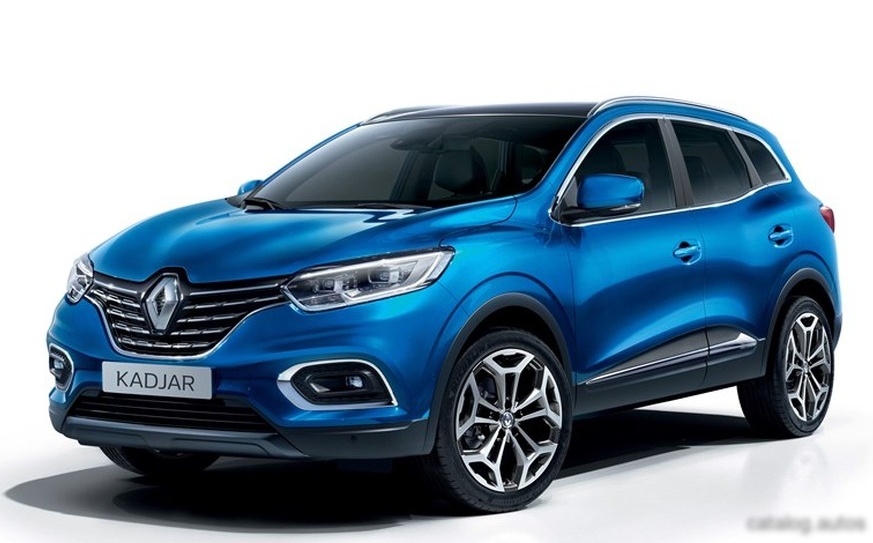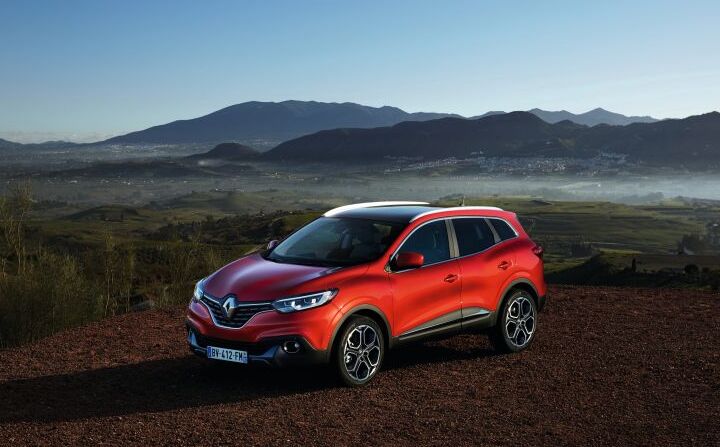
The Renault Kadjar 1.5 Energy dCi (110 hp) Eco was a front-wheel-drive compact crossover SUV produced by Renault from 2015 to 2018. Positioned as an entry-level offering within the Kadjar range, it aimed to provide fuel efficiency and affordability within the increasingly popular crossover segment. The Kadjar itself was Renault’s entry into a market segment dominated by the Nissan Qashqai and Peugeot 3008, and was developed in collaboration with Nissan, sharing a platform with the Nissan X-Trail. This particular variant, with its 1.5-liter diesel engine and Eco designation, focused on maximizing fuel economy and minimizing emissions, appealing to buyers prioritizing practicality and running costs.
Technical Specifications
| Brand | Renault |
| Model | Kadjar |
| Generation | Kadjar |
| Type (Engine) | 1.5 Energy dCi (110 Hp) Eco |
| Start of production | 2015 |
| End of production | 2018 |
| Powertrain Architecture | Internal Combustion engine |
| Body type | Crossover |
| Seats | 5 |
| Doors | 5 |
| Fuel consumption (urban) | 4.1 – 4.2 l/100 km (57.4 – 56 US mpg) |
| Fuel consumption (extra urban) | 3.6 – 3.8 l/100 km (65.3 – 61.9 US mpg) |
| Fuel consumption (combined) | 3.8 – 3.9 l/100 km (61.9 – 60.3 US mpg) |
| CO2 emissions | 99 – 103 g/km |
| Fuel Type | Diesel |
| Acceleration 0 – 100 km/h | 11.9 sec |
| Acceleration 0 – 62 mph | 11.9 sec |
| Acceleration 0 – 60 mph | 11.3 sec |
| Maximum speed | 182 km/h (113.09 mph) |
| Emission standard | Euro 6 |
| Weight-to-power ratio | 12.5 kg/Hp |
| Weight-to-torque ratio | 5.3 kg/Nm |
| Power | 110 Hp @ 4000 rpm |
| Torque | 260 Nm @ 1750 rpm (191.77 lb.-ft. @ 1750 rpm) |
| Engine layout | Front, Transverse |
| Engine Model/Code | K9K |
| Engine displacement | 1461 cm3 (89.16 cu. in.) |
| Number of cylinders | 4 |
| Engine configuration | Inline |
| Cylinder Bore | 76 mm (2.99 in.) |
| Piston Stroke | 80.5 mm (3.17 in.) |
| Number of valves per cylinder | 2 |
| Fuel injection system | Diesel Commonrail |
| Engine aspiration | Turbocharger, Intercooler |
| Engine oil capacity | 4.8 l (5.07 US qt | 4.22 UK qt) |
| Coolant capacity | 6.4 l (6.76 US qt | 5.63 UK qt) |
| Kerb Weight | 1380-1394 kg (3042.38 – 3073.24 lbs.) |
| Max. weight | 1916-1924 kg (4224.06 – 4241.69 lbs.) |
| Max load | 530-536 kg (1168.45 – 1181.68 lbs.) |
| Trunk (boot) space – minimum | 409 l (14.44 cu. ft.) |
| Trunk (boot) space – maximum | 1478 l (52.2 cu. ft.) |
| Fuel tank capacity | 55 l (14.53 US gal | 12.1 UK gal) |
| Max. roof load | 75 kg (165.35 lbs.) |
| Permitted trailer load with brakes (12%) | 1350 kg (2976.24 lbs.) |
| Permitted trailer load without brakes | 725-730 kg (1598.35 – 1609.37 lbs.) |
| Length | 4449 mm (175.16 in.) |
| Width | 1836 mm (72.28 in.) |
| Width including mirrors | 2058 mm (81.02 in.) |
| Height | 1607 mm (63.27 in.) |
| Wheelbase | 2646 mm (104.17 in.) |
| Front track | 1556 mm (61.26 in.) |
| Rear track | 1542 mm (60.71 in.) |
| Ride height (ground clearance) | 200 mm (7.87 in.) |
| Minimum turning circle | 10.72 m (35.17 ft.) |
| Front brakes | Ventilated discs |
| Rear brakes | Disc |
| Number of gears | 6 |
| Type of gearbox | Manual transmission |
Powertrain & Engine Architecture
The Kadjar 1.5 Energy dCi (110 hp) Eco utilized the K9K engine, a 1.5-liter inline-four cylinder diesel engine. This engine was a mainstay in Renault-Nissan vehicles for many years, known for its relatively simple design and fuel efficiency. The ‘Energy’ designation signified Renault’s efforts to improve fuel economy and reduce emissions. The engine featured a turbocharger with an intercooler to boost power output, and employed a diesel common rail direct injection system for precise fuel delivery. The common rail system, operating at high pressure, allowed for finer atomization of the fuel, resulting in more complete combustion and reduced particulate matter. The engine produced 110 horsepower at 4000 rpm and 260 Nm (191.77 lb-ft) of torque at 1750 rpm. This torque figure, available at relatively low engine speeds, provided good drivability in everyday conditions. The engine was paired with a six-speed manual transmission, chosen to further enhance fuel economy.
Driving Characteristics
The 110 hp diesel engine, coupled with the six-speed manual transmission, provided adequate, though not exhilarating, performance. Acceleration from 0-60 mph took around 11.3 seconds, and top speed was 113 mph. The focus was clearly on fuel efficiency rather than outright speed. The engine felt responsive at lower revs thanks to the turbocharger, making it suitable for city driving and highway cruising. However, when fully loaded or tackling steep inclines, the engine could feel strained, requiring frequent downshifts. The manual transmission offered precise gear changes, but the gear ratios were optimized for economy, meaning the engine often needed to be worked harder to maintain speed. Compared to the more powerful 1.6 dCi variants, the 1.5 dCi felt noticeably slower, but it offered a more relaxed and economical driving experience.
Equipment & Trim Levels
The ‘Eco’ trim level of the Kadjar 1.5 dCi typically included standard features such as air conditioning, a basic audio system with USB connectivity, electric front windows, and remote central locking. Safety features included ABS, ESP (Electronic Stability Program), and multiple airbags. Higher trim levels, available as options, added features like alloy wheels, rear parking sensors, a touchscreen infotainment system with navigation, and automatic climate control. Interior upholstery was typically cloth, with a functional and durable design. The dashboard layout was straightforward and user-friendly, prioritizing practicality over luxury.
Chassis & Braking
The Kadjar utilized a MacPherson strut front suspension and a semi-independent torsion beam rear suspension. This setup provided a comfortable ride quality, suitable for everyday driving. The torsion beam rear suspension was a cost-effective solution, but it didn’t offer the same level of sophistication as a fully independent rear suspension. Braking duties were handled by ventilated discs at the front and solid discs at the rear. ABS (Anti-lock Braking System) was standard, providing enhanced braking performance in emergency situations. The steering was electrically assisted, offering light and precise control.
Market Reception & Comparison
The Renault Kadjar 1.5 Energy dCi (110 hp) Eco was generally well-received by critics for its fuel efficiency and affordability. It was seen as a practical and sensible choice for buyers prioritizing running costs. However, some reviewers criticized its lack of outright performance compared to rivals. Compared to the higher-powered Kadjar variants, the 1.5 dCi offered significantly better fuel economy, but at the expense of acceleration and overall driving enjoyment. The Nissan Qashqai, a key competitor, offered a similar engine and trim level, often at a slightly higher price point. The Peugeot 3008, while more stylish, was typically more expensive.
Legacy
The K9K engine, used in the Kadjar 1.5 dCi, has proven to be a relatively reliable unit, although like all diesel engines, it can be susceptible to issues with the diesel particulate filter (DPF) if not driven on longer journeys regularly. The Kadjar itself has established a solid reputation for practicality and reliability in the used car market. The 1.5 dCi Eco variant remains a popular choice for buyers seeking a fuel-efficient and affordable crossover SUV. While not the most exciting vehicle to drive, its combination of practicality, economy, and reliability has ensured its continued appeal in the used car market.