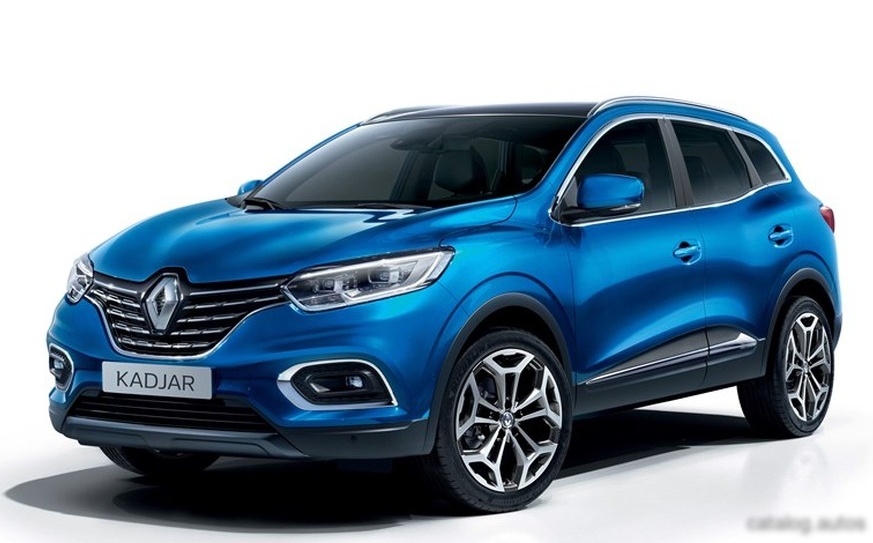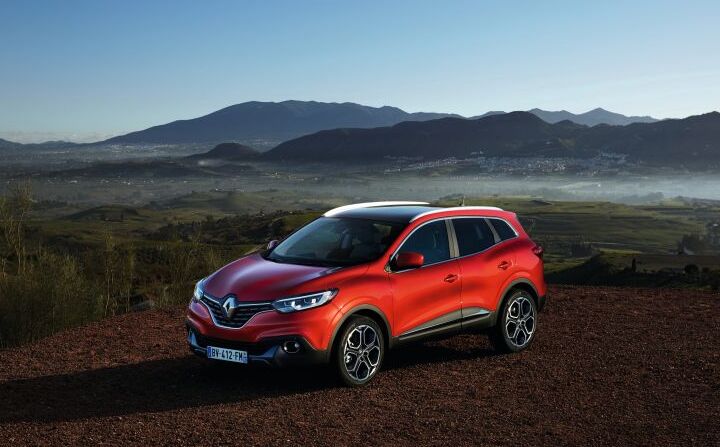
The Renault Kadjar 1.6 Energy dCi (130 hp) was a popular crossover SUV produced by the French manufacturer Renault from 2015 to 2018. Positioned as a mid-range offering within the Kadjar lineup, it aimed to provide a balance of fuel efficiency, practicality, and affordability in the competitive European C-segment crossover market. The Kadjar, sharing its platform with the Nissan Qashqai, represented Renault’s entry into a rapidly growing segment, offering a more stylish and refined alternative to traditional compact hatchbacks and estates. This specific 1.6-liter diesel variant was a key component of the Kadjar’s sales success, appealing to buyers seeking low running costs and reasonable performance.
Technical Specifications
| Brand | Renault |
| Model | Kadjar |
| Generation | Kadjar |
| Type (Engine) | 1.6 Energy dCi (130 Hp) |
| Start of production | 2015 |
| End of production | 2018 |
| Powertrain Architecture | Internal Combustion engine |
| Body type | Crossover |
| Seats | 5 |
| Doors | 5 |
| Fuel consumption (urban) | 5.0 – 5.1 l/100 km (47 – 46.1 US mpg) |
| Fuel consumption (extra urban) | 3.9 – 4.1 l/100 km (60.3 – 57.4 US mpg) |
| Fuel consumption (combined) | 4.3 – 4.5 l/100 km (54.7 – 52.3 US mpg) |
| CO2 emissions | 113 – 117 g/km |
| Fuel Type | Diesel |
| Acceleration 0 – 100 km/h | 9.9 sec |
| Acceleration 0 – 62 mph | 9.9 sec |
| Acceleration 0 – 60 mph | 9.4 sec |
| Maximum speed | 190 km/h (118.06 mph) |
| Emission standard | Euro 6 |
| Weight-to-power ratio | 10.9 kg/Hp |
| Weight-to-torque ratio | 4.4 kg/Nm |
| Power | 130 Hp @ 4000 rpm |
| Torque | 320 Nm @ 1750 rpm (236.02 lb.-ft. @ 1750 rpm) |
| Engine layout | Front, Transverse |
| Engine Model/Code | R9M |
| Engine displacement | 1598 cm3 (97.52 cu. in.) |
| Number of cylinders | 4 |
| Engine configuration | Inline |
| Cylinder Bore | 80 mm (3.15 in.) |
| Piston Stroke | 79.5 mm (3.13 in.) |
| Number of valves per cylinder | 4 |
| Fuel injection system | Diesel Commonrail |
| Engine aspiration | Turbocharger, Intercooler |
| Engine oil capacity | 6.2 l (6.55 US qt | 5.46 UK qt) |
| Coolant | 7.6 l (8.03 US qt | 6.69 UK qt) |
| Kerb Weight | 1415-1429 kg (3119.54 – 3150.41 lbs.) |
| Max. weight | 1964-1972 kg (4329.88 – 4347.52 lbs.) |
| Max load | 543-549 kg (1197.11 – 1210.34 lbs.) |
| Trunk (boot) space – minimum | 409 l (14.44 cu. ft.) |
| Trunk (boot) space – maximum | 1478 l (52.2 cu. ft.) |
| Fuel tank capacity | 55 l (14.53 US gal | 12.1 UK gal) |
| Max. roof load | 75 kg (165.35 lbs.) |
| Permitted trailer load with brakes (12%) | 1800 kg (3968.32 lbs.) |
| Permitted trailer load without brakes | 745-750 kg (1642.44 – 1653.47 lbs.) |
| Length | 4449 mm (175.16 in.) |
| Width | 1836 mm (72.28 in.) |
| Width including mirrors | 2058 mm (81.02 in.) |
| Height | 1607 mm (63.27 in.) |
| Wheelbase | 2646 mm (104.17 in.) |
| Front track | 1556 mm (61.26 in.) |
| Rear (Back) track | 1542 mm (60.71 in.) |
| Ride height (ground clearance) | 200 mm (7.87 in.) |
| Minimum turning circle | 10.72 m (35.17 ft.) |
| Front brakes | Ventilated discs |
| Rear brakes | Disc |
| Steering type | Steering rack and pinion |
| Power steering | Electric Steering |
| Tires size | 215/60 R16; 215/60 R17; 225/45 R19 |
| Wheel rims size | 16; 17; 19 |
Powertrain & Engine Architecture
The Renault Kadjar 1.6 Energy dCi utilized the R9M engine family, a 1.6-liter inline-four cylinder diesel engine. This engine was a key part of Renault’s downsizing strategy, offering a good balance of power and fuel economy. The R9M featured a turbocharger with an intercooler to boost power output and improve efficiency. It employed a common-rail direct fuel injection system, delivering fuel directly into the combustion chamber at high pressure for optimized combustion. The engine also incorporated four valves per cylinder, enhancing breathing and contributing to its power delivery. The 130 horsepower output was achieved at 4000 rpm, while peak torque of 320 Nm (236 lb-ft) was available from just 1750 rpm, providing strong low-end and mid-range acceleration. The engine was typically paired with a six-speed automatic transmission, although a six-speed manual was also available. The automatic transmission was a conventional torque-converter type, prioritizing smooth shifts and ease of use over outright performance.
Driving Characteristics
The Kadjar 1.6 dCi with the automatic transmission offered a comfortable and relaxed driving experience. While not particularly sporty, the engine provided sufficient power for everyday driving and highway cruising. Acceleration from 0-60 mph took around 9.4 seconds, which was adequate for most situations. The automatic transmission generally shifted smoothly, although it could occasionally feel hesitant during quick overtaking maneuvers. Compared to the more powerful 1.6 dCi 160 hp variant, the 130 hp version felt noticeably less responsive, particularly when fully loaded. However, the lower power output also contributed to improved fuel economy. The gear ratios were tuned for efficiency, prioritizing fuel savings over rapid acceleration. The steering was light and easy to use, making it well-suited for urban driving.
Equipment & Trim Levels
The Kadjar 1.6 dCi was available in several trim levels, including Expression, Dynamique Nav, and Signature Nav. Even the base Expression trim included features such as air conditioning, Bluetooth connectivity, and a touchscreen infotainment system. Dynamique Nav added navigation, rear parking sensors, and alloy wheels. The top-of-the-line Signature Nav trim offered features like leather upholstery, a panoramic sunroof, and a more advanced infotainment system. Interior upholstery typically consisted of cloth or a combination of cloth and leatherette, depending on the trim level. Dashboard configuration was generally consistent across all trims, with a focus on practicality and ease of use. Optional extras included metallic paint, a hands-free parking system, and a safety pack with advanced driver-assistance systems.
Chassis & Braking
The Kadjar utilized a MacPherson strut front suspension and a multi-link rear suspension, providing a comfortable ride and decent handling. The suspension was tuned to prioritize comfort over sporty handling, resulting in a relatively soft and forgiving ride quality. Braking systems consisted of ventilated discs on the front wheels and solid discs on the rear. Anti-lock Braking System (ABS) and Electronic Stability Control (ESC) were standard features, enhancing safety and stability. The Kadjar’s weight-to-power ratio of 10.9 kg/Hp indicated a reasonable balance between power and weight. Stabilizer bars were fitted to both the front and rear axles to reduce body roll during cornering.
Market Reception & Comparison
The Renault Kadjar 1.6 dCi was generally well-received by automotive critics. It was praised for its fuel efficiency, comfortable ride, and spacious interior. However, some critics noted that the engine could feel underpowered, particularly when fully loaded or driving uphill. Compared to the petrol-powered Kadjar variants, the 1.6 dCi offered significantly better fuel economy, making it a popular choice for drivers covering long distances. Against rivals like the Nissan Qashqai and Peugeot 3008, the Kadjar offered a competitive package in terms of price, features, and fuel efficiency. The 1.6 dCi’s reliability was generally considered good, although some owners reported minor issues with the diesel particulate filter (DPF).
Legacy
The Renault Kadjar 1.6 Energy dCi remains a relatively common sight on used car markets. The R9M engine, while generally reliable, requires regular maintenance, including timely DPF regeneration to prevent issues. The automatic transmission, if properly maintained, is known to be durable. The Kadjar’s blend of practicality, fuel efficiency, and affordability continues to appeal to buyers seeking a versatile and economical crossover SUV. Its success helped establish Renault as a major player in the European C-segment crossover market, paving the way for future models like the Austral.