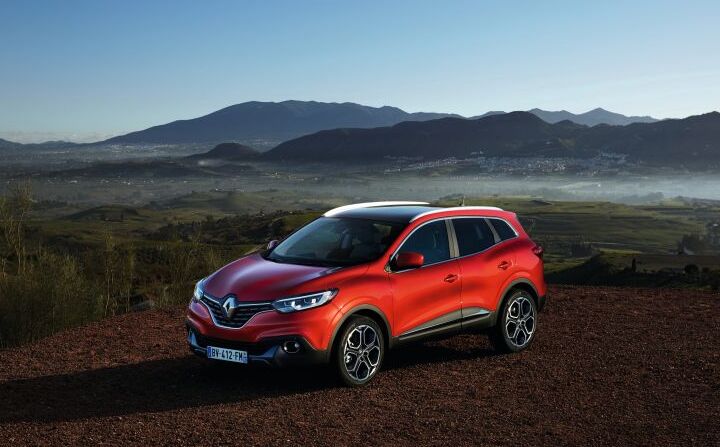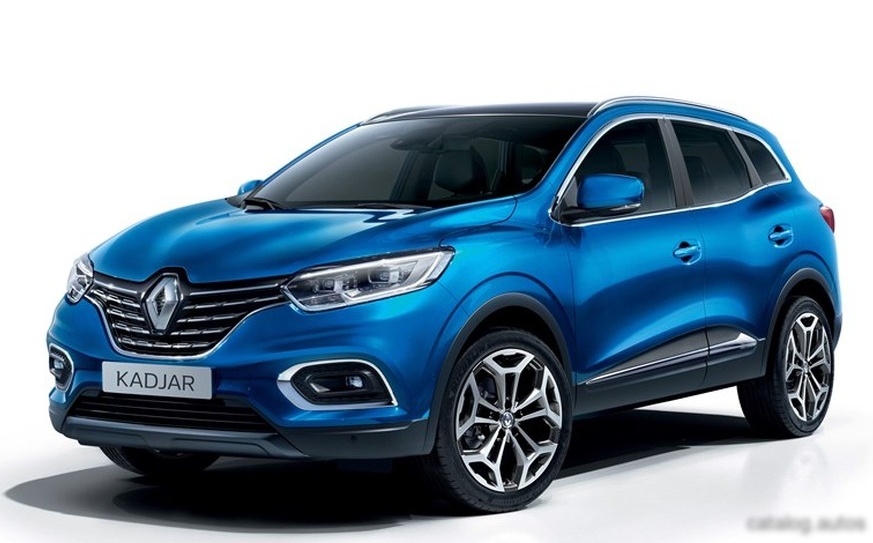
The Renault Kadjar, a compact SUV produced by the French manufacturer Renault, first appeared in 2015 as a collaborative effort with Nissan, sharing its platform with the Nissan Qashqai. The facelifted version, introduced in 2018, brought updated styling, enhanced technology, and revised engine options. The 1.3 TCe 140 hp variant, positioned as a mid-range offering, became a popular choice for buyers seeking a balance between fuel efficiency and performance. Production of this specific configuration ran from 2018 through the end of the Kadjar’s lifecycle, serving primarily the European market where compact SUVs were experiencing significant growth. This model aimed to appeal to families and individuals desiring a practical and stylish vehicle for everyday use.
Technical Specifications
| Brand | Renault |
| Model | Kadjar |
| Generation | Kadjar (facelift 2018) |
| Type (Engine) | 1.3 TCe (140 Hp) |
| Start of production | 2018 |
| Powertrain Architecture | Internal Combustion engine |
| Body type | SUV |
| Seats | 5 |
| Doors | 5 |
| Combined fuel consumption (WLTP) | 6.4-6.6 l/100 km (36.8 – 35.6 US mpg, 44.1 – 42.8 UK mpg, 15.6 – 15.2 km/l) |
| CO2 emissions (WLTP) | 144-150 g/km |
| Fuel Type | Petrol (Gasoline) |
| Acceleration 0 – 100 km/h | 10.4 sec |
| Acceleration 0 – 62 mph | 10.4 sec |
| Acceleration 0 – 60 mph | 9.9 sec |
| Maximum speed | 203 km/h (126.14 mph) |
| Emission standard | Euro 6d |
| Weight-to-power ratio | 10.3 kg/Hp, 97.1 Hp/tonne |
| Weight-to-torque ratio | 6 kg/Nm, 166.4 Nm/tonne |
| Power | 140 Hp @ 5000 rpm |
| Power per litre | 105.1 Hp/l |
| Torque | 240 Nm @ 1600 rpm (177.01 lb.-ft. @ 1600 rpm) |
| Engine layout | Front, Transverse |
| Engine Model/Code | H5H B4 |
| Engine displacement | 1332 cm3 (81.28 cu. in.) |
| Number of cylinders | 4 |
| Engine configuration | Inline |
| Cylinder Bore | 72.2 mm (2.84 in.) |
| Piston Stroke | 81.4 mm (3.2 in.) |
| Number of valves per cylinder | 4 |
| Fuel injection system | Direct injection |
| Engine aspiration | Turbocharger, Intercooler |
| Engine oil capacity | 5.5 l (5.81 US qt | 4.84 UK qt) |
| Kerb Weight | 1442 kg (3179.07 lbs.) |
| Max. weight | 1889 kg (4164.53 lbs.) |
| Max load | 447 kg (985.47 lbs.) |
| Trunk (boot) space – minimum | 472 l (16.67 cu. ft.) |
| Trunk (boot) space – maximum | 1478 l (52.2 cu. ft.) |
| Fuel tank capacity | 55 l (14.53 US gal | 12.1 UK gal) |
| Permitted trailer load with brakes (12%) | 1500 kg (3306.93 lbs.) |
| Permitted trailer load without brakes | 700 kg (1543.24 lbs.) |
| Length | 4489 mm (176.73 in.) |
| Width | 1836 mm (72.28 in.) |
| Width including mirrors | 2058 mm (81.02 in.) |
| Height | 1613 mm (63.5 in.) |
| Wheelbase | 2646 mm (104.17 in.) |
| Front track | 1556 mm (61.26 in.) |
| Rear (Back) track | 1542 mm (60.71 in.) |
| Front overhang | 913 mm (35.94 in.) |
| Rear overhang | 930 mm (36.61 in.) |
| Ride height (ground clearance) | 200 mm (7.87 in.) |
| Minimum turning circle (turning diameter) | 10.7 m (35.1 ft.) |
| Approach angle | 17.0° |
| Departure angle | 25.0° |
| Drivetrain Architecture | The Internal combustion engine (ICE) drives the front wheels of the vehicle. |
| Drive wheel | Front wheel drive |
| Number of gears and type of gearbox | 6 gears, manual transmission |
| Front suspension | Independent type McPherson |
| Rear suspension | Semi-independent, coil spring |
| Front brakes | Ventilated discs |
| Rear brakes | Disc |
| Assisting systems | ABS (Anti-lock braking system) |
| Steering type | Steering rack and pinion |
| Power steering | Electric Steering |
| Tires size | 215/60 R17 |
| Wheel rims size | 17 |
Powertrain & Engine Architecture
The heart of the Kadjar 1.3 TCe 140 is the H5H B4 engine, a 1.3-liter turbocharged inline-four cylinder gasoline engine. This engine is part of Renault’s latest generation of downsized, direct-injection powerplants. Direct injection allows for precise fuel delivery, improving efficiency and reducing emissions. The turbocharger, coupled with an intercooler, provides a boost in power and torque, mitigating the typical power deficit associated with smaller displacement engines. The engine utilizes a variable valve timing system to optimize performance across the rev range. The 6-speed manual transmission was standard for this variant, offering drivers full control over gear selection. The transmission’s gear ratios were tuned to provide a balance between acceleration and fuel economy, with a relatively long final drive ratio prioritizing efficiency at highway speeds.
Driving Characteristics
The 1.3 TCe 140 hp Kadjar delivers adequate performance for everyday driving. Acceleration from 0-60 mph takes approximately 9.9 seconds, making it competitive within its class. While not a particularly sporty vehicle, the engine provides sufficient torque (177 lb-ft) at low to mid-range RPMs, making it easy to navigate city traffic and execute overtaking maneuvers. Compared to higher-output Kadjar variants, such as those equipped with more powerful engines, the 1.3 TCe feels less eager to accelerate. However, it offers a smoother and more refined driving experience, particularly at cruising speeds. The manual transmission, while engaging, requires more driver involvement than the optional automatic transmission available on other Kadjar trims.
Equipment & Trim Levels
The 1.3 TCe 140 Kadjar typically came equipped with a respectable level of standard features. These included air conditioning, a touchscreen infotainment system with Bluetooth connectivity, alloy wheels, and a suite of safety features such as ABS, electronic stability control, and multiple airbags. Higher trim levels offered additional features like automatic climate control, a larger touchscreen display, navigation system, parking sensors, and a rearview camera. Interior upholstery was typically cloth, with options for leather upgrades. The dashboard layout was functional and modern, with a focus on ergonomics and ease of use.
Chassis & Braking
The Kadjar’s chassis features an independent McPherson strut suspension at the front and a semi-independent coil spring suspension at the rear. This setup provides a comfortable ride quality, absorbing bumps and imperfections in the road surface effectively. The steering is electrically assisted, offering light and precise control. Braking duties are handled by ventilated discs at the front and solid discs at the rear, providing adequate stopping power for the vehicle’s weight. ABS (Anti-lock Braking System) is standard, enhancing safety during emergency braking situations.
Market Reception & Comparison
The Renault Kadjar 1.3 TCe 140 was generally well-received by automotive critics. It was praised for its fuel efficiency, comfortable ride, and practical interior. However, some reviewers noted that the engine could feel strained when fully loaded or driving uphill. Compared to other Kadjar trims, the 1.3 TCe offered a more affordable entry point into the model range, making it attractive to budget-conscious buyers. Its fuel economy was competitive with similar compact SUVs, and its reliability proved to be generally good, although some owners reported minor issues with the infotainment system.
Legacy
The Renault Kadjar, including the 1.3 TCe 140 variant, has established itself as a popular choice in the used car market. Its combination of practicality, fuel efficiency, and affordability continues to appeal to buyers seeking a reliable and versatile compact SUV. The H5H engine, while not without its quirks, has proven to be relatively durable, and parts availability remains good. The Kadjar’s overall build quality and comfortable ride contribute to its enduring appeal, making it a solid option for those seeking a well-rounded and dependable vehicle.