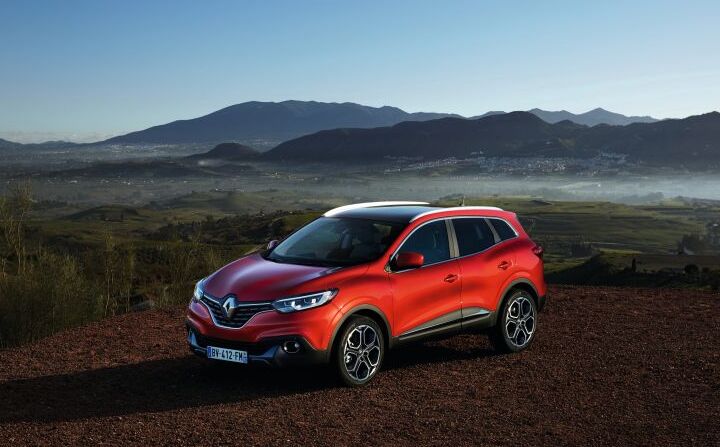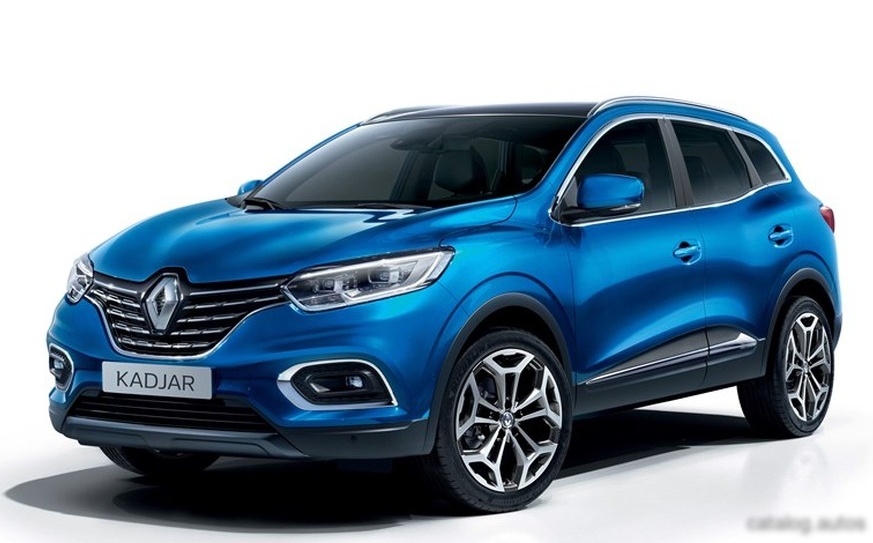
The Renault Kadjar, a compact SUV produced by the French manufacturer Renault, was introduced in 2015 as a collaborative effort with Nissan, sharing its platform with the Nissan Qashqai. The facelifted version, launched in 2018, brought updated styling, enhanced technology, and revised engine options. The 1.3 TCe (140 hp) EDC variant, equipped with a seven-speed dual-clutch transmission, represented a mid-range offering within the Kadjar lineup, positioned between the lower-powered 1.2 TCe and the more potent 1.6 dCi diesel models. Production of this specific configuration ran from 2018 through the end of the Kadjar’s lifecycle, catering to buyers seeking a balance of fuel efficiency, performance, and modern convenience features.
Technical Specifications
| Brand | Renault |
| Model | Kadjar |
| Generation | Kadjar (facelift 2018) |
| Type (Engine) | 1.3 TCe (140 Hp) EDC |
| Start of production | 2018 |
| Powertrain Architecture | Internal Combustion engine |
| Body type | SUV |
| Seats | 5 |
| Doors | 5 |
| Combined fuel consumption (WLTP) | 6.5-6.8 l/100 km (36.2 – 34.6 US mpg, 43.5 – 41.5 UK mpg, 15.4 – 14.7 km/l) |
| CO2 emissions (WLTP) | 147-154 g/km |
| Fuel Type | Petrol (Gasoline) |
| Acceleration 0 – 100 km/h | 9.6 sec |
| Acceleration 0 – 62 mph | 9.6 sec |
| Acceleration 0 – 60 mph | 9.1 sec |
| Maximum speed | 203 km/h (126.14 mph) |
| Emission standard | Euro 6d |
| Weight-to-power ratio | 10.5 kg/Hp, 95.2 Hp/tonne |
| Weight-to-torque ratio | 6.1 kg/Nm, 163.2 Nm/tonne |
| Power | 140 Hp @ 5000 rpm |
| Power per litre | 105.1 Hp/l |
| Torque | 240 Nm @ 1600 rpm (177.01 lb.-ft. @ 1600 rpm) |
| Engine layout | Front, Transverse |
| Engine Model/Code | H5H E4 |
| Engine displacement | 1332 cm3 (81.28 cu. in.) |
| Number of cylinders | 4 |
| Engine configuration | Inline |
| Cylinder Bore | 72.2 mm (2.84 in.) |
| Piston Stroke | 81.4 mm (3.2 in.) |
| Number of valves per cylinder | 4 |
| Fuel injection system | Direct injection |
| Engine aspiration | Turbocharger, Intercooler |
| Engine oil capacity | 5.5 l (5.81 US qt | 4.84 UK qt) |
| Kerb Weight | 1471 kg (3243 lbs.) |
| Max. weight | 1918 kg (4228.47 lbs.) |
| Max load | 447 kg (985.47 lbs.) |
| Trunk (boot) space – minimum | 472 l (16.67 cu. ft.) |
| Trunk (boot) space – maximum | 1478 l (52.2 cu. ft.) |
| Fuel tank capacity | 55 l (14.53 US gal | 12.1 UK gal) |
| Permitted trailer load with brakes (12%) | 1500 kg (3306.93 lbs.) |
| Permitted trailer load without brakes | 715 kg (1576.31 lbs.) |
| Length | 4489 mm (176.73 in.) |
| Width | 1836 mm (72.28 in.) |
| Width including mirrors | 2058 mm (81.02 in.) |
| Height | 1613 mm (63.5 in.) |
| Wheelbase | 2646 mm (104.17 in.) |
| Front track | 1556 mm (61.26 in.) |
| Rear (Back) track | 1542 mm (60.71 in.) |
| Front overhang | 913 mm (35.94 in.) |
| Rear overhang | 930 mm (36.61 in.) |
| Ride height (ground clearance) | 200 mm (7.87 in.) |
| Minimum turning circle (turning diameter) | 10.7 m (35.1 ft.) |
| Drivetrain Architecture | The Internal combustion engine (ICE) drives the front wheels of the vehicle. |
| Drive wheel | Front wheel drive |
| Number of gears and type of gearbox | 7 gears, automatic transmission EDC |
| Front suspension | Independent type McPherson |
| Rear suspension | Semi-independent, coil spring |
| Front brakes | Ventilated discs |
| Rear brakes | Disc |
| Assisting systems | ABS (Anti-lock braking system) |
| Steering type | Steering rack and pinion |
| Power steering | Electric Steering |
| Tires size | 215/60 R17 |
| Wheel rims size | 17 |
Powertrain & Engine Architecture
The heart of the Kadjar 1.3 TCe EDC is the H5H E4 engine, a 1.3-liter turbocharged inline-four cylinder gasoline engine. This engine is part of Renault’s latest generation of downsized, direct-injection powerplants. It utilizes a single-scroll turbocharger with an integrated exhaust manifold, contributing to improved responsiveness and reduced turbo lag. Direct fuel injection, operating at pressures up to 250 bar, ensures precise fuel delivery and optimized combustion. The engine features variable valve timing on both intake and exhaust sides, further enhancing efficiency and performance. The seven-speed Efficient Dual Clutch (EDC) automatic transmission provides smooth and rapid gear changes, contributing to a more engaging driving experience. This transmission is known for its efficiency and responsiveness compared to traditional torque-converter automatics.
Driving Characteristics
The 140 hp output and 240 Nm (177 lb-ft) of torque provide adequate performance for everyday driving. Acceleration from 0 to 60 mph takes approximately 9.1 seconds, and the top speed is around 126 mph. While not a particularly sporty setup, the 1.3 TCe EDC offers sufficient power for overtaking and merging onto highways. The EDC transmission contributes to a more dynamic feel than a traditional automatic, with quick shifts and a generally smooth operation. Compared to the higher-output 1.6 dCi diesel, the 1.3 TCe feels less powerful, especially at lower engine speeds. However, it offers a more refined and quieter driving experience. The gear ratios are tuned for a balance of fuel economy and drivability, with taller gearing in higher gears to reduce engine revs during cruising.
Equipment & Trim Levels
The 1.3 TCe EDC Kadjar typically came equipped with a generous level of standard features. These included air conditioning, a touchscreen infotainment system with Bluetooth connectivity, cruise control, and rear parking sensors. Higher trim levels added features such as a larger touchscreen, navigation system, automatic climate control, leather upholstery, and a panoramic sunroof. Safety features such as ABS, electronic stability control, and multiple airbags were standard across the range. Optional extras included a hands-free parking assist system, a 360-degree camera, and adaptive cruise control.
Chassis & Braking
The Kadjar utilizes a McPherson strut front suspension and a semi-independent coil spring rear suspension. This setup provides a comfortable ride quality, absorbing bumps and imperfections in the road surface effectively. The front brakes are ventilated discs, while the rear brakes are solid discs. ABS (Anti-lock Braking System) is standard, providing enhanced braking performance and stability in emergency situations. The Kadjar’s steering is electrically assisted, offering a light and precise feel. The suspension tuning is geared towards comfort rather than outright handling prowess, making it a suitable choice for everyday commuting and long-distance journeys.
Market Reception & Comparison
The Renault Kadjar 1.3 TCe EDC was generally well-received by automotive critics. It was praised for its comfortable ride, spacious interior, and fuel-efficient engine. However, some reviewers noted that the engine could feel strained when fully loaded or driving uphill. Compared to the 1.2 TCe, the 1.3 TCe offered a noticeable improvement in performance. Against the 1.6 dCi diesel, it offered a more refined driving experience but lacked the diesel’s superior fuel economy and low-end torque. Fuel economy figures of 6.5-6.8 l/100km (36.2-34.6 US mpg) were competitive within the compact SUV segment.
Legacy
The Renault Kadjar, including the 1.3 TCe EDC variant, has proven to be a relatively reliable vehicle in the used car market. The 1.3 TCe engine, while not without its quirks, has generally demonstrated good durability. The EDC transmission, if properly maintained, is also known to be reliable. Common issues reported by owners include occasional software glitches with the infotainment system and wear and tear on suspension components. Today, the Kadjar 1.3 TCe EDC represents a good value proposition for buyers seeking a comfortable, practical, and fuel-efficient compact SUV.