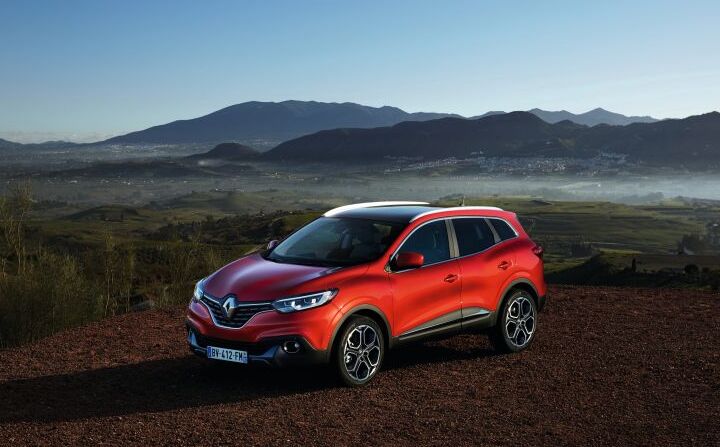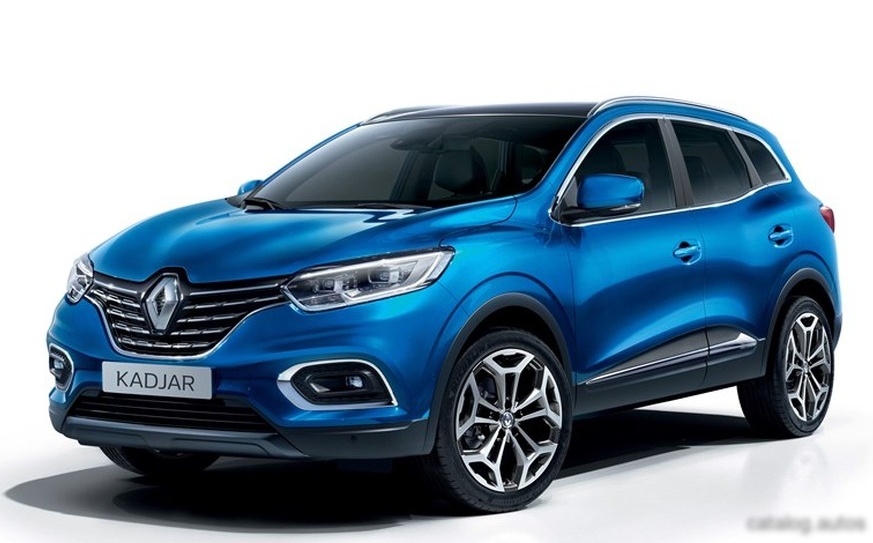
The Renault Kadjar, a compact SUV produced by the French manufacturer Renault, first appeared in 2015 as a collaborative effort with Nissan, sharing its platform with the Nissan Qashqai. The Kadjar underwent a significant facelift in 2018, bringing updated styling, enhanced technology, and revised engine options. The 1.3 TCe 159 horsepower variant with the Efficient Dual Clutch (EDC) automatic transmission, introduced with this facelift, represented a mid-range offering within the Kadjar lineup, positioned between the lower-powered 1.3 TCe 140 hp model and the more potent 1.6 dCi diesel options. Production of this specific configuration ran from 2018 through the end of the Kadjar’s lifecycle, catering to buyers seeking a balance of fuel efficiency, performance, and convenience.
Technical Specifications
| Brand | Renault |
| Model | Kadjar |
| Generation | Kadjar (facelift 2018) |
| Type (Engine) | 1.3 TCe (159 Hp) EDC |
| Start of production | 2018 |
| Powertrain Architecture | Internal Combustion engine |
| Body type | SUV |
| Seats | 5 |
| Doors | 5 |
| Fuel Type | Petrol (Gasoline) |
| Acceleration 0 – 100 km/h | 9.3 sec |
| Acceleration 0 – 62 mph | 9.3 sec |
| Acceleration 0 – 60 mph | 8.8 sec |
| Maximum speed | 210 km/h (130.49 mph) |
| Emission standard | Euro 6d |
| Weight-to-power ratio | 9.3 kg/Hp, 108.1 Hp/tonne |
| Weight-to-torque ratio | 5.4 kg/Nm, 183.5 Nm/tonne |
| Power | 159 Hp @ 5500 rpm |
| Power per litre | 119.4 Hp/l |
| Torque | 270 Nm @ 1800 rpm (199.14 lb.-ft. @ 1800 rpm) |
| Engine layout | Front, Transverse |
| Engine Model/Code | H5H |
| Engine displacement | 1332 cm3 (81.28 cu. in.) |
| Number of cylinders | 4 |
| Engine configuration | Inline |
| Cylinder Bore | 72.2 mm (2.84 in.) |
| Piston Stroke | 81.4 mm (3.2 in.) |
| Number of valves per cylinder | 4 |
| Fuel injection system | Direct injection |
| Engine aspiration | Turbocharger, Intercooler |
| Engine oil capacity | 5.5 l (5.81 US qt | 4.84 UK qt) |
| Kerb Weight | 1471 kg (3243 lbs.) |
| Max. weight | 1918 kg (4228.47 lbs.) |
| Max load | 447 kg (985.47 lbs.) |
| Trunk (boot) space – minimum | 472 l (16.67 cu. ft.) |
| Trunk (boot) space – maximum | 1478 l (52.2 cu. ft.) |
| Fuel tank capacity | 55 l (14.53 US gal | 12.1 UK gal) |
| Permitted trailer load with brakes (12%) | 1500 kg (3306.93 lbs.) |
| Permitted trailer load without brakes | 715 kg (1576.31 lbs.) |
| Length | 4489 mm (176.73 in.) |
| Width | 1836 mm (72.28 in.) |
| Width including mirrors | 2058 mm (81.02 in.) |
| Height | 1613 mm (63.5 in.) |
| Wheelbase | 2646 mm (104.17 in.) |
| Front track | 1556 mm (61.26 in.) |
| Rear (Back) track | 1542 mm (60.71 in.) |
| Front overhang | 913 mm (35.94 in.) |
| Rear overhang | 930 mm (36.61 in.) |
| Ride height (ground clearance) | 200 mm (7.87 in.) |
| Minimum turning circle (turning diameter) | 10.7 m (35.1 ft.) |
| Drivetrain Architecture | The Internal combustion engine (ICE) drives the front wheels of the vehicle. |
| Drive wheel | Front wheel drive |
| Number of gears and type of gearbox | 7 gears, automatic transmission EDC |
| Front suspension | Independent type McPherson |
| Rear suspension | Semi-independent, coil spring |
| Front brakes | Ventilated discs |
| Rear brakes | Disc |
| Assisting systems | ABS (Anti-lock braking system) |
| Steering type | Steering rack and pinion |
| Power steering | Electric Steering |
| Tires size | 215/60 R17 |
| Wheel rims size | 17 |
Powertrain & Engine Architecture
The heart of the Kadjar 1.3 TCe EDC is the Renault H5H engine, a 1.3-liter turbocharged inline-four cylinder gasoline engine. This engine is part of the Alliance’s (Renault-Nissan-Mitsubishi) modular engine family. It features direct fuel injection, optimizing combustion efficiency and power delivery. The turbocharger, coupled with an intercooler, provides increased air density for improved performance. The engine produces 159 horsepower at 5500 rpm and 270 Nm (199 lb-ft) of torque from as low as 1800 rpm, offering a broad torque curve suitable for everyday driving. The EDC (Efficient Dual Clutch) 7-speed automatic transmission is a key component, providing quick and smooth gear changes. This transmission utilizes two separate clutches for odd and even gears, allowing for pre-selection of the next gear and minimizing interruption in power delivery.
Driving Characteristics
The 1.3 TCe EDC Kadjar delivers a comfortable and refined driving experience. While not a performance-oriented variant, the 159 hp engine provides adequate power for most driving situations, with a 0-60 mph time of around 8.8 seconds. The EDC transmission contributes to responsive acceleration, and the broad torque band makes overtaking maneuvers relatively effortless. Compared to the lower-powered 140 hp version, the 1.3 TCe 159 hp offers noticeably improved acceleration and overall responsiveness. However, it doesn’t match the punch of the diesel models. The automatic transmission prioritizes fuel efficiency, and the gear ratios are tuned for relaxed cruising. The Kadjar’s suspension setup provides a comfortable ride, absorbing bumps and imperfections in the road surface effectively.
Equipment & Trim Levels
The 1.3 TCe EDC Kadjar typically came equipped with a generous level of standard features. These included air conditioning, a touchscreen infotainment system with Bluetooth connectivity, cruise control, and automatic headlights. Higher trim levels, such as the Signature Nav, added features like a larger touchscreen with navigation, parking sensors, a rearview camera, and upgraded interior upholstery. Optional extras included a panoramic sunroof, leather seats, and advanced driver-assistance systems like adaptive cruise control and lane departure warning.
Chassis & Braking
The Kadjar’s chassis features an independent McPherson strut suspension at the front and a semi-independent coil spring setup at the rear. This configuration provides a good balance between ride comfort and handling. The steering is electrically assisted, offering light and precise control. Braking duties are handled by ventilated discs at the front and solid discs at the rear, providing adequate stopping power. Anti-lock Braking System (ABS) is standard, enhancing safety and stability during emergency braking situations.
Market Reception & Comparison
The Renault Kadjar 1.3 TCe EDC was generally well-received by automotive critics. It was praised for its comfortable ride, refined engine, and smooth-shifting transmission. Fuel economy was also a strong point, with combined cycle figures typically around 40-45 mpg. Compared to competitors like the Nissan Qashqai, Peugeot 3008, and Kia Sportage, the Kadjar offered a compelling package with a focus on comfort and practicality. The 1.3 TCe EDC variant offered a good compromise between performance and efficiency, making it a popular choice for buyers seeking a versatile and economical SUV.
Legacy
The Renault Kadjar, and specifically the 1.3 TCe EDC variant, has proven to be a relatively reliable vehicle in the used car market. The H5H engine, while not without its minor issues, is generally considered durable and dependable. Regular maintenance, including oil changes and timing belt replacements (where applicable), is crucial for ensuring long-term reliability. The EDC transmission, if properly maintained, is also known to be robust. Today, the Kadjar 1.3 TCe EDC represents a good value proposition for buyers seeking a comfortable, practical, and fuel-efficient compact SUV.