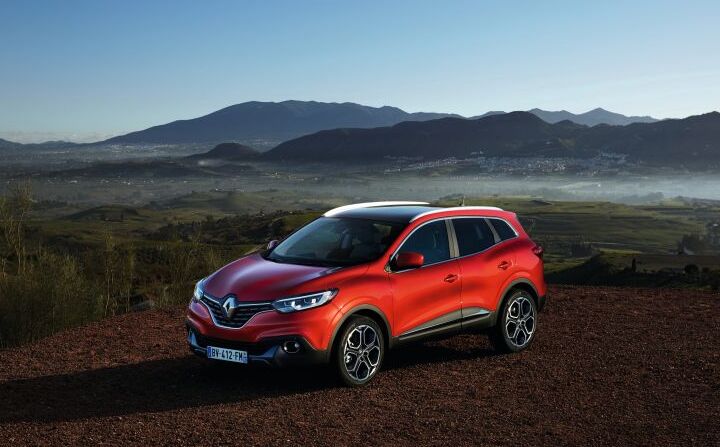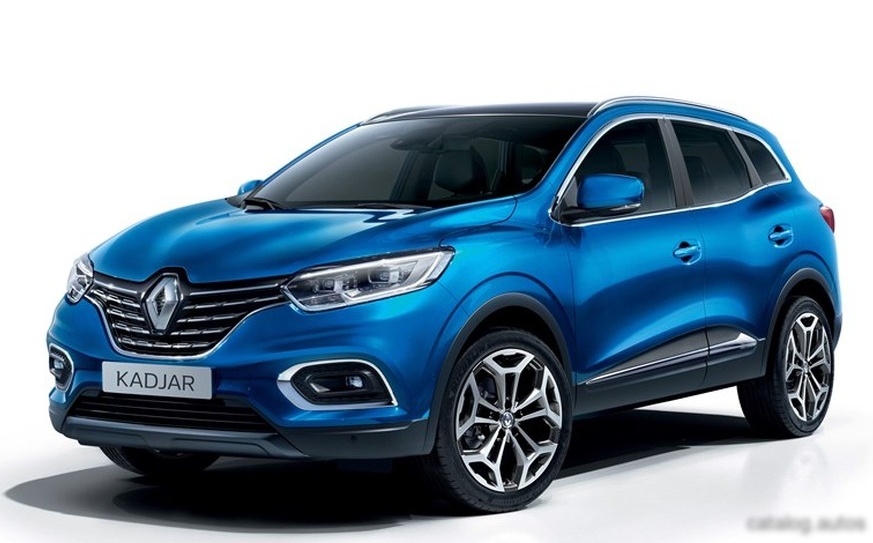
The Renault Kadjar, a compact SUV produced by the French manufacturer Renault, first appeared in 2015 as a collaborative effort with Nissan, sharing its platform with the Nissan Qashqai. The facelifted version, introduced in 2018, brought updated styling, enhanced technology, and revised engine options. Among these, the 1.5 Blue dCi variant producing 116 horsepower represented a significant offering in many European markets, positioned as a fuel-efficient and practical choice for families and commuters. Production of this specific configuration ran from 2018 through the end of the Kadjar’s first generation.
Technical Specifications
| Brand | Renault |
| Model | Kadjar |
| Generation | Kadjar (facelift 2018) |
| Type (Engine) | 1.5 Blue dCi (116 Hp) |
| Start of production | 2018 |
| Powertrain Architecture | Internal Combustion engine |
| Body type | SUV |
| Seats | 5 |
| Doors | 5 |
| Combined fuel consumption (WLTP) | 4.7-5 l/100 km (50 – 47 US mpg, 60.1 – 56.5 UK mpg, 21.3 – 20 km/l) |
| CO2 emissions (WLTP) | 131-137 g/km |
| Fuel Type | Diesel |
| Acceleration 0 – 100 km/h | 11.7 sec |
| Acceleration 0 – 62 mph | 11.7 sec |
| Acceleration 0 – 60 mph | 11.1 sec |
| Maximum speed | 189 km/h (117.44 mph) |
| Emission standard | Euro 6d |
| Weight-to-power ratio | 13.2 kg/Hp, 75.8 Hp/tonne |
| Weight-to-torque ratio | 5.9 kg/Nm, 169.8 Nm/tonne |
| Power | 116 Hp @ 3750 rpm |
| Power per litre | 79.4 Hp/l |
| Torque | 260 Nm @ 2000 rpm (191.77 lb.-ft. @ 2000 rpm) |
| Engine layout | Front, Transverse |
| Engine Model/Code | K9K U8 |
| Engine displacement | 1461 cm3 (89.16 cu. in.) |
| Number of cylinders | 4 |
| Engine configuration | Inline |
| Cylinder Bore | 76 mm (2.99 in.) |
| Piston Stroke | 80.5 mm (3.17 in.) |
| Number of valves per cylinder | 2 |
| Fuel injection system | Diesel Commonrail |
| Engine aspiration | Turbocharger, Intercooler |
| Engine oil capacity | 5.7 l (6.02 US qt | 5.02 UK qt) |
| Kerb Weight | 1531 kg (3375.28 lbs.) |
| Max. weight | 1978 kg (4360.74 lbs.) |
| Max load | 447 kg (985.47 lbs.) |
| Trunk (boot) space – minimum | 472 l (16.67 cu. ft.) |
| Trunk (boot) space – maximum | 1478 l (52.2 cu. ft.) |
| Fuel tank capacity | 55 l (14.53 US gal | 12.1 UK gal) |
| Permitted trailer load with brakes (12%) | 1350 kg (2976.24 lbs.) |
| Permitted trailer load without brakes | 750 kg (1653.47 lbs.) |
| Length | 4489 mm (176.73 in.) |
| Width | 1836 mm (72.28 in.) |
| Width including mirrors | 2058 mm (81.02 in.) |
| Height | 1613 mm (63.5 in.) |
| Wheelbase | 2646 mm (104.17 in.) |
| Front track | 1556 mm (61.26 in.) |
| Rear (Back) track | 1542 mm (60.71 in.) |
| Front overhang | 913 mm (35.94 in.) |
| Rear overhang | 930 mm (36.61 in.) |
| Ride height (ground clearance) | 200 mm (7.87 in.) |
| Minimum turning circle (turning diameter) | 10.7 m (35.1 ft.) |
| Approach angle | 17.0° |
| Departure angle | 25.0° |
| Drivetrain Architecture | The Internal combustion engine (ICE) drives the front wheels of the vehicle. |
| Drive wheel | Front wheel drive |
| Number of gears and type of gearbox | 6 gears, manual transmission |
| Front suspension | Independent type McPherson |
| Rear suspension | Semi-independent, coil spring |
| Front brakes | Ventilated discs |
| Rear brakes | Disc |
| Assisting systems | ABS (Anti-lock braking system) |
| Steering type | Steering rack and pinion |
| Power steering | Electric Steering |
| Tires size | 215/60 R17 |
| Wheel rims size | 17 |
INTRODUCTION
The 2018 Renault Kadjar 1.5 Blue dCi 116 hp was a key model in Renault’s European SUV lineup. Positioned as an entry-level to mid-range offering, it aimed to provide a balance of affordability, fuel efficiency, and practicality. The Kadjar, built on the Common Module Family (CMF) C/D platform – also known as the 1HX0/A3 platform – shared many components with the Nissan Qashqai, benefiting from the economies of scale achieved through the Renault-Nissan Alliance. The facelift in 2018 brought a more modern aesthetic and updated interior, enhancing the Kadjar’s appeal in a competitive segment.
Powertrain & Engine Architecture
At the heart of this Kadjar variant lies the Renault K9K U8 engine, a 1.5-liter inline-four cylinder diesel engine. This engine is part of Renault’s ‘Blue dCi’ family, emphasizing its focus on reduced emissions and improved fuel economy. The K9K utilizes a common-rail direct fuel injection system, delivering fuel at extremely high pressure for optimized combustion. A turbocharger with an intercooler further enhances performance by forcing more air into the cylinders. The engine features two valves per cylinder (SOHC) and is known for its relatively simple, robust design. The 116 horsepower output is achieved at 3750 rpm, while peak torque of 260 Nm (191.77 lb-ft) is available from 2000 rpm. This engine was typically paired with a six-speed manual transmission, although a six-speed Efficient Dual Clutch (EDC) automatic transmission was also available as an option. The EDC transmission offered smoother shifts and improved fuel efficiency compared to traditional automatic gearboxes.
Driving Characteristics
The 1.5 Blue dCi 116 hp Kadjar offered a comfortable and practical driving experience, prioritizing fuel economy over outright performance. Acceleration from 0-100 km/h (0-62 mph) took around 11.7 seconds, which is typical for a diesel-powered compact SUV in this class. The engine provided adequate power for everyday driving, including highway cruising and navigating urban environments. The six-speed manual transmission allowed for precise gear selection, while the optional EDC automatic offered a more relaxed driving experience. Compared to higher-output Kadjar variants, such as those with the 1.6 dCi engine, the 1.5 Blue dCi felt less responsive, particularly during overtaking maneuvers. However, the lower power output also translated to improved fuel efficiency, making it an attractive option for drivers prioritizing economy. The gear ratios were tuned for maximizing fuel efficiency, resulting in a slightly less engaging driving experience than the more performance-oriented trims.
Equipment & Trim Levels
The 1.5 Blue dCi 116 hp Kadjar typically came equipped with a respectable level of standard features. Base models often included air conditioning, a basic infotainment system with Bluetooth connectivity, electric front windows, and steel wheels with wheel covers. Higher trim levels, such as the ‘Signature’ or ‘S Edition’ offered upgrades like alloy wheels, a larger touchscreen infotainment system with navigation, rear parking sensors, cruise control, and automatic climate control. Interior upholstery was typically cloth, with options for leather or partial leather seats on higher trims. Optional extras included a panoramic sunroof, a hands-free parking system, and a suite of advanced driver-assistance systems (ADAS) such as lane departure warning and emergency braking.
Chassis & Braking
The Kadjar’s chassis was designed to provide a comfortable ride and predictable handling. The front suspension utilized an independent McPherson strut setup, while the rear suspension employed a semi-independent coil spring arrangement. This configuration offered a good balance between ride comfort and handling stability. Braking duties were handled by ventilated discs at the front and solid discs at the rear. Anti-lock Braking System (ABS) was standard, providing enhanced braking performance in emergency situations. The Kadjar’s weight-to-power ratio of 13.2 kg/Hp contributed to its stable and predictable handling characteristics. Stabilizer bars were fitted to both the front and rear axles to reduce body roll during cornering.
Market Reception & Comparison
The Renault Kadjar 1.5 Blue dCi 116 hp was generally well-received by automotive critics as a practical and fuel-efficient SUV. Reviewers praised its comfortable ride, spacious interior, and competitive pricing. However, some criticized its relatively modest performance compared to rivals. Compared to other Kadjar trims, the 1.5 Blue dCi offered the best fuel economy, making it a popular choice for drivers covering long distances. The 1.6 dCi variants provided more power but at the expense of fuel efficiency. The petrol-powered Kadjars offered a different driving experience, with quicker acceleration but higher running costs. In terms of reliability, the K9K engine proved to be generally robust, although some owners reported issues with the diesel particulate filter (DPF) system, particularly on vehicles used primarily for short journeys.
Legacy
The Renault Kadjar 1.5 Blue dCi 116 hp remains a relatively common sight on European roads today. The K9K engine has a reputation for being durable and relatively easy to maintain, although regular servicing is essential to ensure its longevity. On the used car market, these Kadjars represent a good value proposition for buyers seeking a practical and fuel-efficient SUV. The availability of spare parts is generally good, and the relatively simple mechanical design makes it accessible to independent mechanics. While newer SUVs offer more advanced technology and features, the 2018 Kadjar 1.5 Blue dCi continues to provide a reliable and affordable transportation solution.