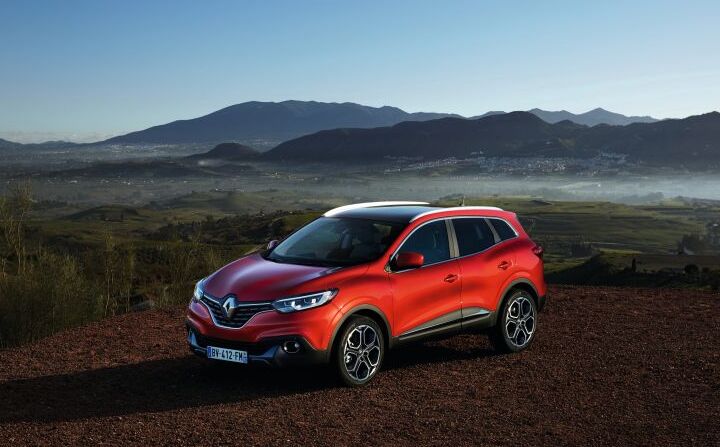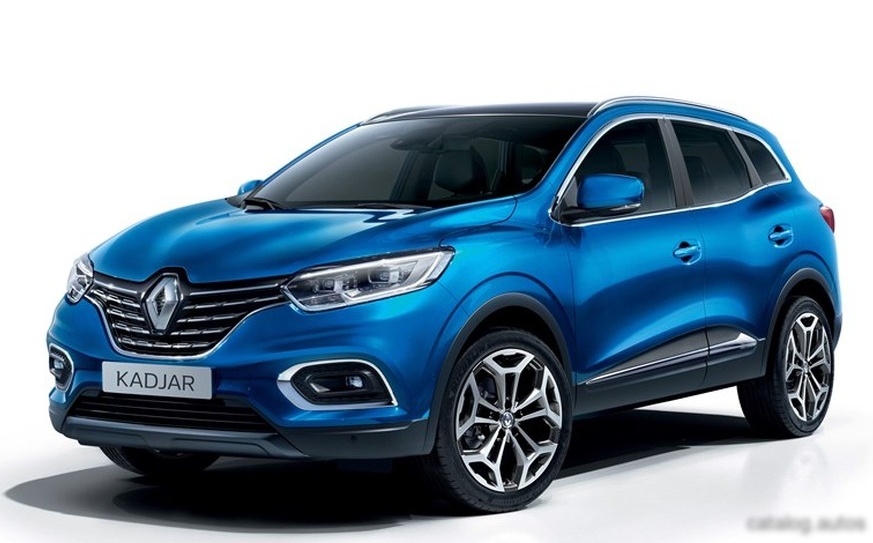
The Renault Kadjar, a compact SUV produced by the French manufacturer Renault, was introduced in 2015 as a collaborative effort with Nissan, sharing its platform with the Nissan Qashqai. The facelifted version, launched in 2018, brought updated styling, enhanced technology, and refined engine options. This article focuses on the 1.7 Blue dCi variant, producing 150 horsepower and equipped with a four-wheel-drive (4WD) system, a popular configuration in European markets seeking a blend of efficiency, practicality, and all-weather capability. Production of this specific variant ran from 2018 through the end of the Kadjar’s production run, serving as a mid-range offering within the broader Kadjar lineup.
Technical Specifications
| Brand | Renault |
| Model | Kadjar |
| Generation | Kadjar (facelift 2018) |
| Type (Engine) | 1.7 Blue dCi (150 Hp) 4WD |
| Start of production | 2018 |
| Powertrain Architecture | Internal Combustion engine |
| Body type | SUV |
| Seats | 5 |
| Doors | 5 |
| Combined fuel consumption (WLTP) | 5.9 l/100 km (39.9 US mpg, 47.9 UK mpg, 16.9 km/l) |
| CO2 emissions (WLTP) | 155 g/km |
| Fuel Type | Diesel |
| Emission standard | Euro 6d |
| Weight-to-power ratio | 11.3 kg/Hp, 88.7 Hp/tonne |
| Weight-to-torque ratio | 5 kg/Nm, 200.9 Nm/tonne |
| Power | 150 Hp @ 4000 rpm |
| Power per litre | 85.8 Hp/l |
| Torque | 340 Nm @ 1750 rpm (250.77 lb.-ft. @ 1750 rpm) |
| Engine layout | Front, Transverse |
| Engine Model/Code | R9N |
| Engine displacement | 1749 cm3 (106.73 cu. in.) |
| Number of cylinders | 4 |
| Engine configuration | Inline |
| Cylinder Bore | 80 mm (3.15 in.) |
| Piston Stroke | 87 mm (3.43 in.) |
| Number of valves per cylinder | 4 |
| Fuel injection system | Diesel Commonrail |
| Engine aspiration | Turbocharger, Intercooler |
| Kerb Weight | 1692 kg (3730.22 lbs.) |
| Max. weight | 2139 kg (4715.69 lbs.) |
| Max load | 447 kg (985.47 lbs.) |
| Trunk (boot) space – minimum | 472 l (16.67 cu. ft.) |
| Trunk (boot) space – maximum | 1478 l (52.2 cu. ft.) |
| Fuel tank capacity | 55 l (14.53 US gal, 12.1 UK gal) |
| Permitted trailer load with brakes (12%) | 1800 kg (3968.32 lbs.) |
| Permitted trailer load without brakes | 750 kg (1653.47 lbs.) |
| Length | 4489 mm (176.73 in.) |
| Width | 1836 mm (72.28 in.) |
| Width including mirrors | 2058 mm (81.02 in.) |
| Height | 1613 mm (63.5 in.) |
| Wheelbase | 2646 mm (104.17 in.) |
| Front track | 1556 mm (61.26 in.) |
| Rear (Back) track | 1542 mm (60.71 in.) |
| Front overhang | 913 mm (35.94 in.) |
| Rear overhang | 930 mm (36.61 in.) |
| Ride height (ground clearance) | 200 mm (7.87 in.) |
| Minimum turning circle (turning diameter) | 10.7 m (35.1 ft.) |
| Approach angle | 17.0° |
| Departure angle | 25.0° |
| Drive wheel | All wheel drive (4×4) |
| Number of gears and type of gearbox | 6 gears, manual transmission |
| Front suspension | Independent type McPherson |
| Rear suspension | Independent multi-link suspension |
| Front brakes | Ventilated discs |
| Rear brakes | Disc |
| Assisting systems | ABS (Anti-lock braking system) |
| Steering type | Steering rack and pinion |
| Power steering | Electric Steering |
| Tires size | 215/60 R17 |
| Wheel rims size | 17 |
INTRODUCTION
The Renault Kadjar 1.7 Blue dCi 4WD, introduced with the 2018 facelift, represented a significant offering in the competitive European compact SUV segment. Built on the Common Module Family (CMF) C/D platform – also known as the 1HX0/A3 platform – it aimed to provide a practical, comfortable, and efficient vehicle for families and individuals alike. The 1.7 Blue dCi engine, part of Renault’s dCi (Direct Common-rail Injection) family, was specifically chosen for its balance of power and fuel economy. The addition of four-wheel drive broadened the Kadjar’s appeal to customers in regions with challenging weather conditions or those seeking added stability and traction. This variant positioned itself as a mid-range option, offering more performance and capability than the base models while remaining more accessible than the higher-specification trims.
Powertrain & Engine Architecture
The heart of the Kadjar 1.7 Blue dCi 4WD is the R9N engine, a 1.7-liter inline-four cylinder diesel engine. This engine utilizes a common-rail direct injection system, delivering fuel directly into the combustion chamber at extremely high pressure for optimized combustion. The engine is turbocharged with an intercooler, enhancing power output and efficiency. The 1.7L engine produces 150 horsepower at 4000 rpm and 340 Nm (250.77 lb-ft) of torque at 1750 rpm. The engine also incorporates a diesel particulate filter (DPF) to reduce harmful emissions, meeting stringent Euro 6d emission standards. The 4WD system is typically an on-demand system, primarily driving the front wheels under normal conditions and engaging the rear wheels when slip is detected. The transmission is a six-speed manual gearbox, chosen for its efficiency and driver engagement. While an automatic transmission was available on other Kadjar variants, it wasn’t offered with this specific engine and 4WD combination.
Driving Characteristics
The Kadjar 1.7 Blue dCi 4WD offers a composed and comfortable driving experience. The 150 horsepower engine provides adequate power for everyday driving and highway cruising, although it isn’t particularly sporty. The 340 Nm of torque, available from a low 1750 rpm, provides good responsiveness and makes overtaking relatively effortless. The six-speed manual transmission allows for precise gear selection, and the gear ratios are well-matched to the engine’s characteristics. Compared to the higher-output 1.6 dCi engine, the 1.7L feels less urgent in acceleration, but it compensates with improved fuel economy. The 4WD system provides enhanced grip and stability, particularly on slippery surfaces, making it a confident performer in adverse weather conditions. The steering is light and precise, and the suspension effectively absorbs bumps and imperfections in the road, providing a comfortable ride.
Equipment & Trim Levels
The Kadjar 1.7 Blue dCi 4WD typically came equipped with a respectable level of standard features. These included air conditioning, a touchscreen infotainment system with Bluetooth connectivity, cruise control, and rear parking sensors. Higher trim levels added features such as automatic climate control, a larger touchscreen display with navigation, front parking sensors, a reversing camera, and leather upholstery. Safety features included ABS, electronic stability control, and multiple airbags. Optional extras included a panoramic sunroof, keyless entry, and a premium audio system. Interior upholstery was typically cloth, with higher trims offering partial leather or full leather options. The dashboard layout was functional and user-friendly, with a focus on practicality and ease of use.
Chassis & Braking
The Kadjar’s chassis features an independent McPherson strut suspension at the front and an independent multi-link suspension at the rear, providing a good balance of ride comfort and handling. The suspension setup is tuned for comfort, prioritizing a smooth ride over sporty handling. The braking system consists of ventilated discs at the front and solid discs at the rear, providing adequate stopping power. ABS (Anti-lock Braking System) is standard, enhancing braking performance and stability. The Kadjar 1.7 Blue dCi 4WD’s weight of approximately 1692 kg (3730.22 lbs) is relatively moderate for its class, contributing to its manageable handling characteristics.
Market Reception & Comparison
The Renault Kadjar 1.7 Blue dCi 4WD was generally well-received by automotive critics. It was praised for its comfortable ride, spacious interior, and fuel-efficient engine. The 4WD system was also appreciated for its added capability and security. However, some critics noted that the engine could feel underpowered at times, particularly when fully loaded or driving uphill. Compared to other trims in the Kadjar lineup, the 1.7 Blue dCi 4WD offered a compelling balance of performance, efficiency, and price. It was a more practical and economical choice than the higher-output 1.6 dCi variants, while offering more capability than the base-model engines. Fuel economy was a strong point, with the Kadjar achieving around 5.9 l/100 km (39.9 US mpg) in combined driving.
Legacy
The Renault Kadjar 1.7 Blue dCi 4WD has proven to be a relatively reliable vehicle, with the R9N engine generally considered robust and durable. However, like all diesel engines, it’s important to ensure regular maintenance, including oil changes and DPF servicing. In the used car market, the Kadjar 1.7 Blue dCi 4WD remains a popular choice for buyers seeking a practical, efficient, and capable compact SUV. Its combination of affordability, fuel economy, and all-weather capability makes it a compelling option for those looking for a versatile family vehicle. While newer SUVs offer more advanced technology and features, the Kadjar 1.7 Blue dCi 4WD continues to represent a solid and dependable choice.