Technical Specifications
| Brand | Renault |
| Model | Kangoo |
| Generation | Kangoo I Express (FC) |
| Type (Engine) | 1.4i (75 Hp) Automatic |
| Start of production | 1999 year |
| End of production | 2003 year |
| Powertrain Architecture | Internal Combustion engine |
| Body type | Minivan |
| Seats | 2 |
| Doors | 3 |
| Fuel consumption (economy) – urban | 10.3 l/100 km (22.8 US mpg, 27.4 UK mpg, 9.7 km/l) |
| Fuel consumption (economy) – extra urban | 6.5 l/100 km (36.2 US mpg, 43.5 UK mpg, 15.4 km/l) |
| Fuel consumption (economy) – combined | 7.9 l/100 km (29.8 US mpg, 35.8 UK mpg, 12.7 km/l) |
| CO2 emissions | 188 g/km |
| Fuel Type | Petrol (Gasoline) |
| Acceleration 0 – 100 km/h | 16.9 sec |
| Acceleration 0 – 62 mph | 16.9 sec |
| Acceleration 0 – 60 mph | 16.1 sec |
| Maximum speed | 147 km/h (91.34 mph) |
| Weight-to-power ratio | 15 kg/Hp, 66.7 Hp/tonne |
| Weight-to-torque ratio | 9.9 kg/Nm, 101.3 Nm/tonne |
| Power | 75 Hp @ 5500 rpm |
| Power per litre | 54 Hp/l |
| Torque | 114 Nm @ 4250 rpm (84.08 lb.-ft. @ 4250 rpm) |
| Engine layout | Front, Transverse |
| Engine Model/Code | E7J |
| Engine displacement | 1390 cm3 (84.82 cu. in.) |
| Number of cylinders | 4 |
| Engine configuration | Inline |
| Cylinder Bore | 75.8 mm (2.98 in.) |
| Piston Stroke | 77 mm (3.03 in.) |
| Compression ratio | 9.5:1 |
| Number of valves per cylinder | 2 |
| Fuel injection system | Multi-port manifold injection |
| Engine aspiration | Naturally aspirated engine |
| Valvetrain | OHC |
| Engine oil capacity | 3.8 l (4.02 US qt | 3.34 UK qt) |
| Coolant | 5.7 l (6.02 US qt | 5.02 UK qt) |
| Kerb Weight | 1125 kg (2480.2 lbs.) |
| Max. weight | 1670 kg (3681.72 lbs.) |
| Max load | 545 kg (1201.52 lbs.) |
| Trunk (boot) space – maximum | 2750 l (97.12 cu. ft.) |
| Fuel tank capacity | 50 l (13.21 US gal | 11 UK gal) |
| Max. roof load | 100 kg (220.46 lbs.) |
| Permitted trailer load with brakes (12%) | 565 kg (1245.61 lbs.) |
| Permitted trailer load without brakes | 525 kg (1157.43 lbs.) |
| Permitted towbar download | 75 kg (165.35 lbs.) |
| Length | 3995 mm (157.28 in.) |
| Width | 1663 mm (65.47 in.) |
| Width including mirrors | 2015 mm (79.33 in.) |
| Height | 1827 mm (71.93 in.) |
| Wheelbase | 2600 mm (102.36 in.) |
| Front track | 1405 mm (55.31 in.) |
| Rear (Back) track | 1415 mm (55.71 in.) |
| Front overhang | 692 mm (27.24 in.) |
| Rear overhang | 703 mm (27.68 in.) |
| Minimum turning circle | 10.95 m (35.93 ft.) |
| Drivetrain Architecture | The Internal combustion engine (ICE) drives the front wheels of the vehicle. |
| Drive wheel | Front wheel drive |
| Number of gears and type of gearbox | 4 gears, automatic transmission |
| Front suspension | Spring Strut |
| Rear suspension | Trailing arm |
| Front brakes | Ventilated discs |
| Rear brakes | Drum |
| Assisting systems | ABS (Anti-lock braking system) |
| Steering type | Steering rack and pinion |
| Power steering | Hydraulic Steering |
| Tires size | 165/70 R14 T |
| Wheel rims size | 5.5J x 14 |
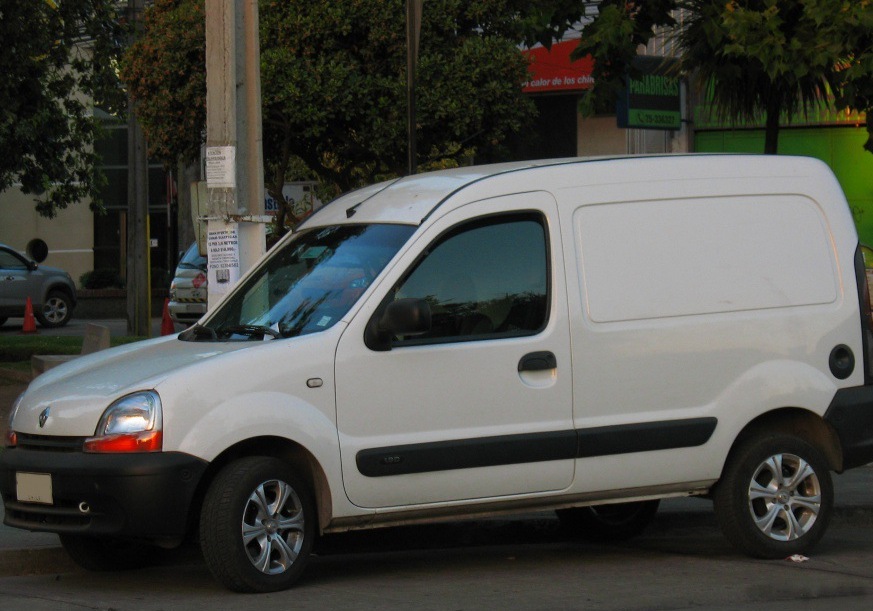
The Renault Kangoo I Express, specifically the FC generation produced between 1999 and 2003, represented Renault’s entry into the compact van market, offering a practical and affordable solution for small businesses and tradespeople. The 1.4i variant, equipped with a 75 horsepower engine and a four-speed automatic transmission, was positioned as a more accessible option within the Kangoo range, prioritizing ease of use over outright performance. This model served as a workhorse, particularly popular in Europe where compact vans are a staple for urban deliveries and service applications.
Powertrain & Engine Architecture
The Kangoo 1.4i Automatic utilized the Renault E7J engine, a 1.4-liter inline-four cylinder petrol engine. This engine, a mainstay in Renault’s lineup during the 1990s and early 2000s, featured a single overhead camshaft (SOHC) valvetrain with two valves per cylinder. Fuel delivery was managed by a multi-point fuel injection system, providing adequate, though not exceptional, combustion efficiency. The E7J engine was known for its relative simplicity and durability, making it a cost-effective choice for Renault. Paired with this engine was a four-speed automatic transmission, a DP0 gearbox, designed for smooth, if not particularly rapid, gear changes. This transmission prioritized comfort and ease of driving over sporty performance.
Driving Characteristics
The 1.4i Automatic Kangoo was not designed for speed. With only 75 horsepower, acceleration was leisurely, taking approximately 16.9 seconds to reach 62 mph. The automatic transmission, while convenient, further dampened performance, with noticeable delays in downshifting. However, the engine provided sufficient torque for typical urban and suburban driving, and the automatic transmission made it particularly user-friendly in stop-and-go traffic. The gear ratios were optimized for fuel economy rather than outright acceleration. Compared to the manual transmission versions of the same engine, the automatic suffered a slight performance penalty, but offered a more relaxed driving experience. Higher-output versions, such as the 1.6-liter engine, provided significantly more power but came at a higher price point.
Equipment & Trim Levels
The Kangoo Express 1.4i Automatic typically came with a basic level of equipment, reflecting its positioning as a commercial vehicle. Standard features included power steering, a driver’s airbag, and basic instrumentation. The interior was functional and durable, with hard-wearing plastic trim and cloth upholstery. Optional extras included air conditioning, a radio/cassette player, and upgraded interior trim. The Kangoo Express prioritized practicality over luxury, with a focus on providing a robust and reliable work vehicle.
Chassis & Braking
The Kangoo I Express featured a simple yet effective chassis design. The front suspension utilized a MacPherson strut setup, while the rear employed a trailing arm configuration. This setup provided a reasonable balance between ride comfort and handling. Braking duties were handled by ventilated discs at the front and drum brakes at the rear. ABS (Anti-lock Braking System) was included as standard, enhancing safety. The suspension was tuned for carrying loads, providing a stable and controlled ride even when the vehicle was fully laden. The relatively lightweight construction of the Kangoo helped to offset the modest engine power.
Market Reception & Comparison
The Renault Kangoo 1.4i Automatic was generally well-received as a practical and affordable van. Critics praised its spacious interior, fuel efficiency (around 30 mpg combined), and ease of use. However, the engine’s lack of power and the automatic transmission’s sluggishness were common criticisms. Compared to other vans in its class, such as the Citroën Berlingo and Peugeot Partner, the Kangoo offered a competitive package, particularly in terms of price. The 1.9 diesel variants offered superior fuel economy and torque, but at a higher initial cost. The 1.4i Automatic appealed to buyers who prioritized convenience and affordability over performance.
Legacy
The Renault Kangoo I Express 1.4i Automatic, while not a performance icon, proved to be a reliable and durable workhorse. The E7J engine, despite its age, is known for its longevity when properly maintained. Today, these vans are relatively common on the used car market, often found with high mileage but still in serviceable condition. The automatic transmission, while not the most sophisticated, has generally proven to be reliable. The Kangoo I Express laid the foundation for the continued success of the Kangoo line, establishing it as a popular choice for small businesses and tradespeople seeking a practical and affordable van.