Technical Specifications
| Brand | Renault |
| Model | Kangoo |
| Generation | Kangoo I Express (FC) |
| Type (Engine) | 1.6i 16V (95 Hp) |
| Start of production | 1999 |
| End of production | 2003 |
| Powertrain Architecture | Internal Combustion engine |
| Body type | Minivan |
| Seats | 2 |
| Doors | 3 |
| Fuel consumption (urban) | 9.8 l/100 km (24 US mpg, 28.8 UK mpg, 10.2 km/l) |
| Fuel consumption (extra urban) | 6.1 l/100 km (38.6 US mpg, 46.3 UK mpg, 16.4 km/l) |
| Fuel consumption (combined) | 7.5 l/100 km (31.4 US mpg, 37.7 UK mpg, 13.3 km/l) |
| CO2 emissions | 177 g/km |
| Fuel Type | Petrol (Gasoline) |
| Acceleration 0 – 100 km/h | 10.7 sec |
| Acceleration 0 – 62 mph | 10.7 sec |
| Acceleration 0 – 60 mph | 10.2 sec |
| Maximum speed | 160 km/h (99.42 mph) |
| Weight-to-power ratio | 11.9 kg/Hp, 83.7 Hp/tonne |
| Weight-to-torque ratio | 7.7 kg/Nm, 130.4 Nm/tonne |
| Power | 95 Hp @ 5500 rpm |
| Power per litre | 59.4 Hp/l |
| Torque | 148 Nm @ 3750 rpm (109.16 lb.-ft. @ 3750 rpm) |
| Engine layout | Front, Transverse |
| Engine Model/Code | K4M |
| Engine displacement | 1598 cm3 (97.52 cu. in.) |
| Number of cylinders | 4 |
| Engine configuration | Inline |
| Cylinder Bore | 79.5 mm (3.13 in.) |
| Piston Stroke | 80.5 mm (3.17 in.) |
| Number of valves per cylinder | 4 |
| Fuel injection system | Multi-port manifold injection |
| Engine aspiration | Naturally aspirated engine |
| Valvetrain | DOHC |
| Engine oil capacity | 4.9 l (5.18 US qt | 4.31 UK qt) |
| Coolant | 6 l (6.34 US qt | 5.28 UK qt) |
| Kerb Weight | 1135 kg (2502.25 lbs.) |
| Max. weight | 1610 kg (3549.44 lbs.) |
| Max load | 475 kg (1047.2 lbs.) |
| Trunk (boot) space – maximum | 2750 l (97.12 cu. ft.) |
| Fuel tank capacity | 50 l (13.21 US gal | 11 UK gal) |
| Max. roof load | 100 kg (220.46 lbs.) |
| Permitted trailer load with brakes (12%) | 890 kg (1962.11 lbs.) |
| Permitted trailer load without brakes | 530 kg (1168.45 lbs.) |
| Permitted towbar download | 75 kg (165.35 lbs.) |
| Length | 3995 mm (157.28 in.) |
| Width | 1663 mm (65.47 in.) |
| Width including mirrors | 2015 mm (79.33 in.) |
| Height | 1827 mm (71.93 in.) |
| Wheelbase | 2600 mm (102.36 in.) |
| Front track | 1405 mm (55.31 in.) |
| Rear (Back) track | 1415 mm (55.71 in.) |
| Front overhang | 692 mm (27.24 in.) |
| Rear overhang | 703 mm (27.68 in.) |
| Minimum turning circle (turning diameter) | 10.95 m (35.93 ft.) |
| Drivetrain Architecture | The Internal combustion engine (ICE) drives the front wheels of the vehicle. |
| Drive wheel | Front wheel drive |
| Number of gears and type of gearbox | 5 gears, manual transmission |
| Front suspension | Spring Strut |
| Rear suspension | Trailing arm |
| Front brakes | Ventilated discs |
| Rear brakes | Drum |
| Assisting systems | ABS (Anti-lock braking system) |
| Steering type | Steering rack and pinion |
| Power steering | Hydraulic Steering |
| Tires size | 175/65 R14 T |
| Wheel rims size | 14 |
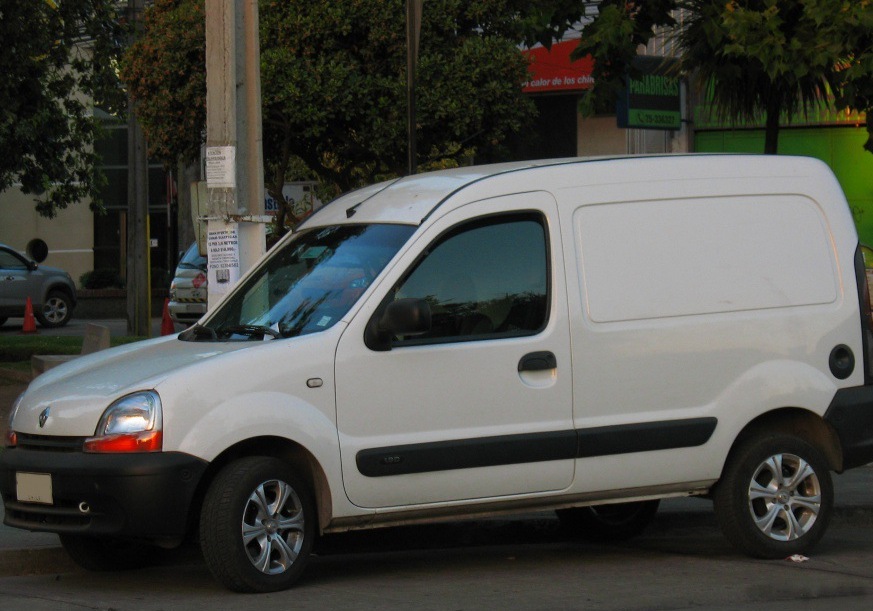
The Renault Kangoo I Express, specifically the 1.6i 16V variant producing 95 horsepower, was a popular choice in the European light commercial vehicle (LCV) market from 1999 to 2003. Positioned as a versatile and practical van, the Kangoo Express catered to businesses and individuals needing a compact, efficient, and affordable cargo solution. This particular engine and transmission combination represented a mid-range offering within the Kangoo I lineup, slotting between the base 1.4-liter engine and the more powerful (but less common) 1.9-liter diesel options. The Kangoo I generation (FC) shared its platform with the first generation Renault Scenic and Mégane, known internally as the X0/A3 platform, benefiting from shared engineering and componentry.
Powertrain & Engine Architecture
The heart of this Kangoo Express variant is the Renault K4M engine, a 1.6-liter inline-four cylinder gasoline engine. This engine, a mainstay in Renault’s lineup for many years, features a double overhead camshaft (DOHC) valvetrain with four valves per cylinder, contributing to its relatively good breathing and power output for its displacement. The K4M utilizes multi-point fuel injection, delivering fuel directly into the intake ports. This system, common for the era, provided a balance between efficiency and performance. The 95 horsepower output was achieved at 5500 rpm, while peak torque of 148 Nm (109.16 lb-ft) arrived at 3750 rpm. The engine’s transverse mounting and front-wheel-drive configuration were typical for European compact vans. The standard transmission was a five-speed manual, although an optional four-speed automatic transmission was available, impacting performance and fuel economy.
Driving Characteristics
The 1.6i 16V Kangoo Express with the five-speed manual transmission offered adequate, though not exhilarating, performance. Acceleration from 0-100 km/h (0-62 mph) took around 10.7 seconds. The engine felt reasonably responsive in everyday driving situations, particularly when keeping the revs above 3000 rpm. The automatic transmission, while offering convenience, noticeably dulled acceleration and increased fuel consumption. Gear ratios were geared towards maximizing fuel efficiency rather than outright speed. The Kangoo’s relatively light weight (around 1135 kg or 2502 lbs) helped mitigate the effects of the modest horsepower output. Handling was typical for a van – stable and predictable, but not particularly sporty.
Equipment & Trim Levels
The Kangoo Express 1.6i 16V typically came with a basic, but functional, level of equipment. Standard features included power steering, a driver’s airbag, and a basic audio system. The interior was primarily focused on practicality, with durable plastic trim and hard-wearing upholstery. Optional extras included air conditioning, central locking, electric windows, and upgraded audio systems. The trim level often dictated the availability of these options. The Kangoo Express was designed with a focus on cargo space, offering a generous 2750 liters (97.12 cu. ft.) with the rear seats folded or removed.
Chassis & Braking
The Kangoo I Express utilized a relatively simple chassis design. Front suspension consisted of MacPherson struts, while the rear employed a trailing arm setup. This configuration provided a comfortable ride, although it wasn’t particularly sophisticated. Braking was handled by ventilated discs at the front and drum brakes at the rear. Anti-lock Braking System (ABS) was standard, enhancing safety. The steering was a rack-and-pinion system with hydraulic power assistance, providing reasonable steering feel and maneuverability.
Market Reception & Comparison
The Renault Kangoo I Express 1.6i 16V was generally well-received by critics as a practical and affordable LCV. It was praised for its spacious interior, fuel efficiency (particularly with the manual transmission), and reliability. Compared to the base 1.4-liter engine, the 1.6i 16V offered a noticeable improvement in performance, making it a more suitable choice for those regularly carrying loads or driving on highways. However, the 1.9-liter diesel variants offered superior fuel economy and torque, making them popular with high-mileage users. The automatic transmission version was often criticized for its sluggish performance and reduced fuel efficiency.
Legacy
The Renault Kangoo I generation, and specifically the 1.6i 16V variant, established the Kangoo as a popular choice in the European LCV market. The K4M engine proved to be a durable and reliable unit, and many examples are still on the road today. While not known for being particularly exciting, the Kangoo I Express 1.6i 16V offered a compelling combination of practicality, affordability, and reliability, making it a valuable workhorse for businesses and individuals alike. On the used car market, these models are generally affordable and represent a good value for those seeking a basic, dependable van.