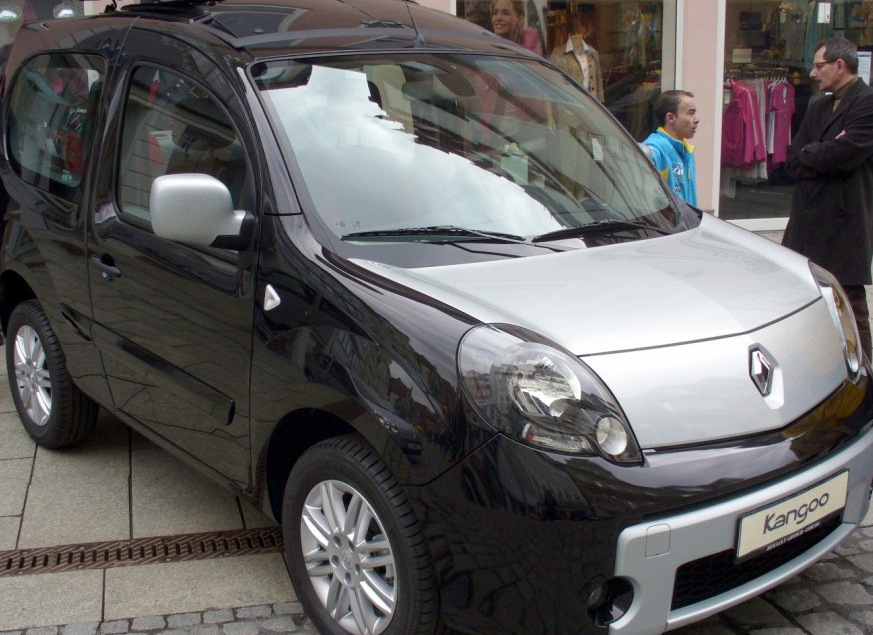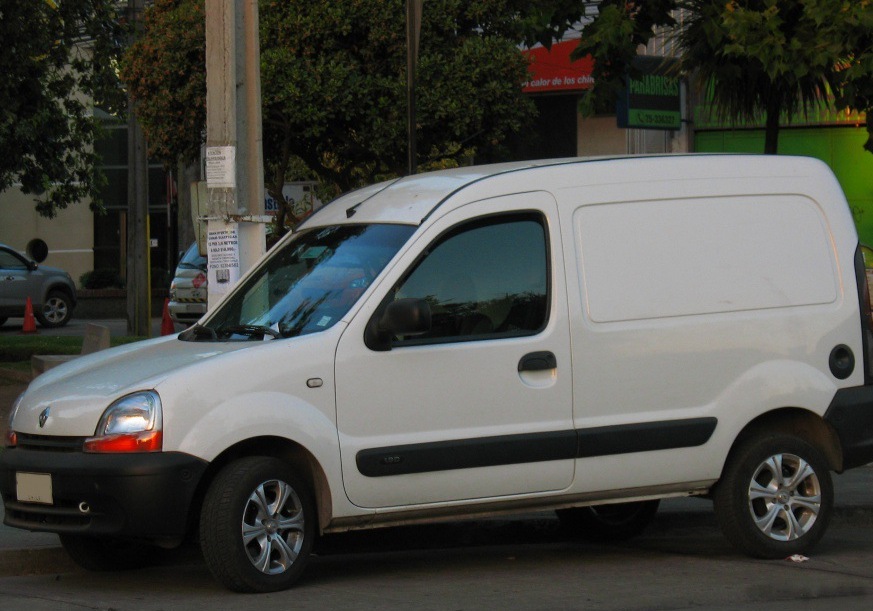
The Renault Kangoo I Express, specifically the 1.9 D variant producing 55 horsepower, was a popular choice in the European commercial vehicle market from 1999 to 2003. Positioned as an entry-level workhorse within the Kangoo range (chassis code FC), it prioritized practicality and fuel efficiency over outright performance. This generation Kangoo, built on the shared Renault and Nissan B-platform, aimed to provide a compact, versatile van solution for small businesses and tradespeople. The “Express” designation denoted the panel van configuration, differing from the passenger-oriented Kangoo Leisure models.
Technical Specifications
| Brand | Renault |
| Model | Kangoo |
| Generation | Kangoo I Express (FC) |
| Type (Engine) | 1.9 D (55 Hp) |
| Start of production | 1999 year |
| End of production | 2003 year |
| Powertrain Architecture | Internal Combustion engine |
| Body type | Minivan |
| Seats | 2 |
| Doors | 3 |
| Fuel consumption (urban) | 8.1 l/100 km (29 US mpg, 34.9 UK mpg, 12.3 km/l) |
| Fuel consumption (extra urban) | 5.3 l/100 km (44.4 US mpg, 53.3 UK mpg, 18.9 km/l) |
| Fuel consumption (combined) | 6.3 l/100 km (37.3 US mpg, 44.8 UK mpg, 15.9 km/l) |
| CO2 emissions | 168 g/km |
| Fuel Type | Diesel |
| Acceleration 0 – 100 km/h | 20.6 sec |
| Acceleration 0 – 62 mph | 20.6 sec |
| Acceleration 0 – 60 mph | 19.6 sec |
| Maximum speed | 134 km/h (83.26 mph) |
| Weight-to-power ratio | 20.6 kg/Hp, 48.5 Hp/tonne |
| Weight-to-torque ratio | 9.5 kg/Nm, 105.7 Nm/tonne |
| Power | 55 Hp @ 4000 rpm |
| Power per litre | 29.4 Hp/l |
| Torque | 120 Nm @ 2250 rpm (88.51 lb.-ft. @ 2250 rpm) |
| Engine layout | Front, Transverse |
| Engine Model/Code | F8Q |
| Engine displacement | 1870 cm3 (114.11 cu. in.) |
| Number of cylinders | 4 |
| Engine configuration | Inline |
| Cylinder Bore | 80 mm (3.15 in.) |
| Piston Stroke | 93 mm (3.66 in.) |
| Compression ratio | 21.5:1 |
| Number of valves per cylinder | 2 |
| Fuel injection system | Precombustion chamber injection |
| Engine aspiration | Naturally aspirated engine |
| Valvetrain | OHC |
| Engine oil capacity | 5 l (5.28 US qt | 4.4 UK qt) |
| Coolant | 5.5 l (5.81 US qt | 4.84 UK qt) |
| Kerb Weight | 1135 kg (2502.25 lbs.) |
| Max. weight | 1680 kg (3703.77 lbs.) |
| Max load | 545 kg (1201.52 lbs.) |
| Trunk (boot) space – maximum | 2750 l (97.12 cu. ft.) |
| Fuel tank capacity | 50 l (13.21 US gal | 11 UK gal) |
| Max. roof load | 100 kg (220.46 lbs.) |
| Permitted trailer load with brakes (12%) | 820 kg (1807.79 lbs.) |
| Permitted trailer load without brakes | 530 kg (1168.45 lbs.) |
| Permitted towbar download | 75 kg (165.35 lbs.) |
| Length | 3995 mm (157.28 in.) |
| Width | 1663 mm (65.47 in.) |
| Width including mirrors | 2015 mm (79.33 in.) |
| Height | 1827 mm (71.93 in.) |
| Wheelbase | 2600 mm (102.36 in.) |
| Front track | 1405 mm (55.31 in.) |
| Rear (Back) track | 1415 mm (55.71 in.) |
| Front overhang | 692 mm (27.24 in.) |
| Rear overhang | 703 mm (27.68 in.) |
| Minimum turning circle | 10.95 m (35.93 ft.) |
| Drivetrain Architecture | The Internal combustion engine (ICE) drives the front wheels of the vehicle. |
| Drive wheel | Front wheel drive |
| Number of gears and type of gearbox | 5 gears, manual transmission |
| Front suspension | Spring Strut |
| Rear suspension | Trailing arm |
| Front brakes | Ventilated discs |
| Rear brakes | Drum |
| Steering type | Steering rack and pinion |
| Power steering | Hydraulic Steering |
| Tires size | 165/70 R14 T |
| Wheel rims size | 5.5J x 14 |
Powertrain & Engine Architecture
The heart of the Kangoo 1.9 D was the F8Q engine, a naturally aspirated, inline-four cylinder diesel. This engine, a staple in Renault’s lineup for many years, utilized a precombustion chamber injection system. This older technology, while less refined than direct injection, was known for its robustness and relatively simple maintenance. The F8Q featured an overhead camshaft (OHC) valvetrain with two valves per cylinder. The 1870cc displacement produced 55 horsepower at 4000 rpm and 120 Nm (88.51 lb-ft) of torque at 2250 rpm. The engine was transversely mounted, driving the front wheels. The standard transmission was a five-speed manual gearbox, optimized for fuel economy rather than rapid acceleration. An automatic transmission was not offered with this engine.
Driving Characteristics
The 1.9 D engine in the Kangoo Express delivered modest performance. Acceleration was slow, with a 0-60 mph time around 19.6 seconds, and a top speed of approximately 83 mph. The focus was on providing sufficient power for carrying loads and navigating urban environments. The manual gearbox, while not sporty, offered precise shifts. The gear ratios were tall, prioritizing fuel efficiency at cruising speeds. Compared to the later 1.9 dCi variants, the 1.9 D felt significantly underpowered, but it offered a simpler, more durable powertrain. The 1.9 dCi, with its turbocharging and direct injection, provided a substantial performance boost, but at the cost of increased complexity.
Equipment & Trim Levels
The Kangoo I Express 1.9 D was typically sparsely equipped, reflecting its commercial vehicle status. Standard features included a driver’s airbag, basic instrumentation, and a durable plastic interior. The interior trim was utilitarian, with hard-wearing materials designed for frequent use. Optional extras included power steering (often standard in later years), a radio/cassette player, and upgraded seating. The “Express” trim level focused on maximizing cargo space, with minimal attention paid to luxury or comfort features.
Chassis & Braking
The Kangoo I Express featured a simple yet effective chassis. Front suspension utilized a MacPherson strut setup, while the rear employed a trailing arm configuration. This provided a reasonable balance between ride comfort and load-carrying capacity. Braking was accomplished via ventilated discs on the front wheels and drum brakes on the rear. Hydraulic power steering was often included, making maneuvering in tight spaces easier. The tires were typically 165/70 R14, chosen for durability and fuel efficiency.
Market Reception & Comparison
The Renault Kangoo I Express 1.9 D was well-received in the European market as a practical and affordable light commercial vehicle. Critics praised its fuel economy, spacious cargo area, and robust construction. However, the engine’s lack of power was a common criticism. Compared to competitors like the Citroën Berlingo and Peugeot Partner, the Kangoo offered a similar level of practicality, but the 1.9 D engine was generally considered less refined and less powerful than some of the alternatives. The 1.9 dCi versions of the Kangoo offered a significant improvement in performance and refinement, but came at a higher price point.
Legacy
The F8Q 1.9 D engine, while now outdated, proved to be remarkably durable. Many examples are still on the road today, testament to its robust design and relatively simple mechanics. The Kangoo I Express 1.9 D remains a popular choice for those seeking a basic, reliable, and affordable work van. Parts availability is generally good, and maintenance costs are relatively low. However, potential buyers should be aware of the engine’s age and the possibility of wear and tear. The Kangoo I Express laid the foundation for the continued success of the Kangoo range, establishing it as a leading player in the European light commercial vehicle market.