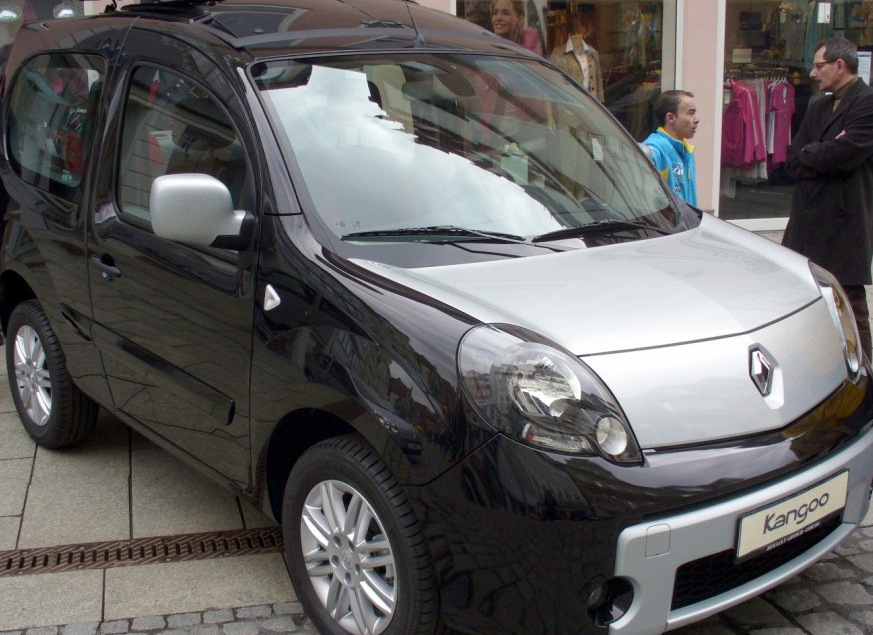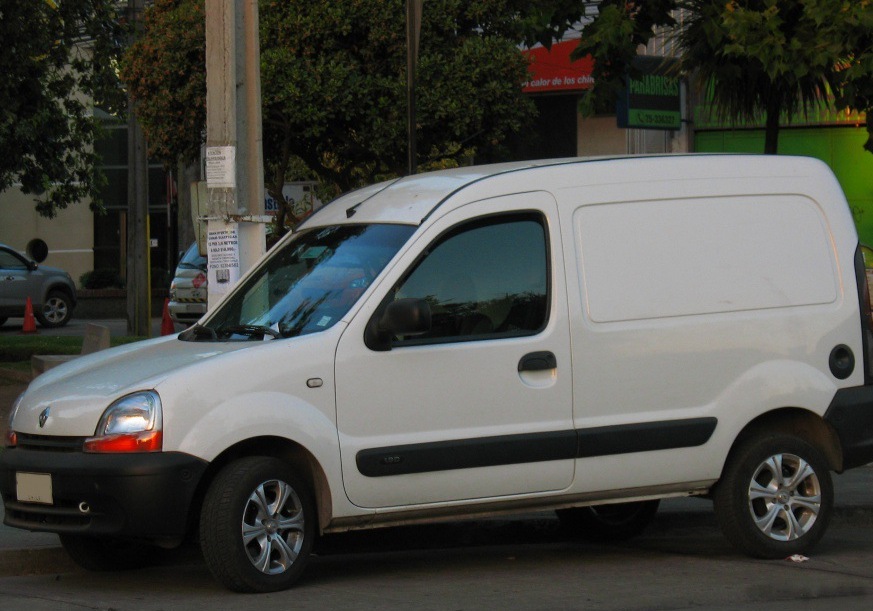
The Renault Kangoo I Express FC 1.9 D, produced from 1999 to 2002, represents a utilitarian and economical offering within the first generation Kangoo range. Positioned as a commercial vehicle, the “Express” designation denotes a panel van configuration geared towards businesses and tradespeople. This variant, powered by the 1.9-liter diesel engine producing 65 horsepower, served as an entry-level option, prioritizing fuel efficiency and low running costs over outright performance. It was a key component of Renault’s light commercial vehicle strategy in Europe, offering a compact and practical solution for urban deliveries and service applications.
Technical Specifications
| Brand | Renault |
| Model | Kangoo |
| Generation | Kangoo I Express (FC) |
| Type (Engine) | 1.9 D (65 Hp) |
| Start of production | 1999 year |
| End of production | 2002 year |
| Powertrain Architecture | Internal Combustion engine |
| Body type | Minivan |
| Seats | 2 |
| Doors | 3 |
| Fuel consumption (economy) – urban | 8.4 l/100 km (28 US mpg, 33.6 UK mpg, 11.9 km/l) |
| Fuel consumption (economy) – extra urban | 5.9 l/100 km (39.9 US mpg, 47.9 UK mpg, 16.9 km/l) |
| Fuel consumption (economy) – combined | 6.8 l/100 km (34.6 US mpg, 41.5 UK mpg, 14.7 km/l) |
| CO2 emissions | 181 g/km |
| Fuel Type | Diesel |
| Acceleration 0 – 100 km/h | 20.2 sec |
| Acceleration 0 – 62 mph | 20.2 sec |
| Acceleration 0 – 60 mph | 19.2 sec |
| Maximum speed | 145 km/h (90.1 mph) |
| Weight-to-power ratio | 17.5 kg/Hp, 57 Hp/tonne |
| Weight-to-torque ratio | 9.5 kg/Nm, 105.3 Nm/tonne |
| Power | 65 Hp @ 4500 rpm |
| Power per litre | 34.8 Hp/l |
| Torque | 120 Nm @ 2250 rpm (88.51 lb.-ft. @ 2250 rpm) |
| Engine layout | Front, Transverse |
| Engine Model/Code | F8Q |
| Engine displacement | 1870 cm3 (114.11 cu. in.) |
| Number of cylinders | 4 |
| Engine configuration | Inline |
| Cylinder Bore | 80 mm (3.15 in.) |
| Piston Stroke | 93 mm (3.66 in.) |
| Compression ratio | 21.5:1 |
| Number of valves per cylinder | 2 |
| Fuel injection system | Precombustion chamber injection |
| Engine aspiration | Naturally aspirated engine |
| Valvetrain | OHC |
| Engine oil capacity | 5 l (5.28 US qt | 4.4 UK qt) |
| Coolant | 5.5 l (5.81 US qt | 4.84 UK qt) |
| Kerb Weight | 1140 kg (2513.27 lbs.) |
| Max. weight | 1690 kg (3725.81 lbs.) |
| Max load | 550 kg (1212.54 lbs.) |
| Trunk (boot) space – maximum | 2750 l (97.12 cu. ft.) |
| Fuel tank capacity | 50 l (13.21 US gal | 11 UK gal) |
| Max. roof load | 100 kg (220.46 lbs.) |
| Permitted trailer load with brakes (12%) | 810 kg (1785.74 lbs.) |
| Permitted trailer load without brakes | 530 kg (1168.45 lbs.) |
| Permitted towbar download | 75 kg (165.35 lbs.) |
| Length | 3995 mm (157.28 in.) |
| Width | 1663 mm (65.47 in.) |
| Width including mirrors | 2015 mm (79.33 in.) |
| Height | 1827 mm (71.93 in.) |
| Wheelbase | 2600 mm (102.36 in.) |
| Front track | 1405 mm (55.31 in.) |
| Rear (Back) track | 1415 mm (55.71 in.) |
| Front overhang | 692 mm (27.24 in.) |
| Rear overhang | 703 mm (27.68 in.) |
| Minimum turning circle | 10.95 m (35.93 ft.) |
| Drivetrain Architecture | The Internal combustion engine (ICE) drives the front wheels of the vehicle. |
| Drive wheel | Front wheel drive |
| Number of gears and type of gearbox | 5 gears, manual transmission |
| Front suspension | Spring Strut |
| Rear suspension | Trailing arm |
| Front brakes | Ventilated discs |
| Rear brakes | Drum |
| Steering type | Steering rack and pinion |
| Power steering | Hydraulic Steering |
| Tires size | 165/70 R14 T |
| Wheel rims size | 5.5J x 14 |
Powertrain & Engine Architecture
The heart of the Kangoo I Express 1.9 D is the F8Q engine, a 1.9-liter inline-four diesel. This engine, a mainstay of Renault’s and Peugeot’s light commercial vehicle lineups for many years, utilizes a precombustion chamber injection system. This older technology, while less refined than direct injection, offered reliability and acceptable fuel economy. The engine’s naturally aspirated configuration and relatively low compression ratio (21.5:1) contributed to its durability but limited its power output. The single overhead camshaft (OHC) valvetrain operates two valves per cylinder. The 65 horsepower and 120 Nm (88.51 lb-ft) of torque were delivered at 4500 and 2250 rpm respectively. The engine is transversely mounted, driving the front wheels. The standard transmission was a five-speed manual gearbox, optimized for fuel efficiency and load-hauling capability rather than sporty acceleration.
Driving Characteristics
The 1.9 D-powered Kangoo Express was not designed for speed. Acceleration was leisurely, with a 0-60 mph time hovering around 19.2 seconds. The focus was on providing sufficient torque for carrying loads and navigating urban environments. The manual gearbox, while not particularly precise, allowed drivers to make the most of the available power. The gear ratios were spaced to prioritize low-end grunt, making it suitable for stop-and-go traffic and hauling moderate loads. Compared to higher-powered Kangoo variants, such as those with gasoline engines, the 1.9 D felt significantly slower, but it offered a substantial advantage in fuel economy.
Equipment & Trim Levels
As a commercial vehicle, the Kangoo I Express 1.9 D was typically sparsely equipped. Standard features included a driver’s airbag, basic instrumentation, and a durable interior designed for practicality. The interior trim was utilitarian, with hard-wearing plastics and vinyl upholstery. Options were limited but could include power steering, upgraded audio systems, and additional security features. The emphasis was on providing a functional and affordable work vehicle.
Chassis & Braking
The Kangoo I Express featured a simple yet effective chassis design. The front suspension utilized a MacPherson strut setup, while the rear employed a trailing arm configuration. This setup provided a reasonable balance between ride comfort and load-carrying capacity. The braking system consisted of ventilated discs at the front and drum brakes at the rear. Hydraulic power steering was often included, making maneuvering in tight spaces easier. The tires were typically 165/70 R14, chosen for durability and fuel efficiency.
Market Reception & Comparison
The Renault Kangoo I Express 1.9 D was well-received in the European market as a cost-effective and reliable light commercial vehicle. Critics praised its fuel economy and practicality, but noted its lack of refinement and limited performance. Compared to gasoline-powered Kangoo variants, the 1.9 D offered significantly better fuel economy, making it a popular choice for businesses with high mileage requirements. However, it lacked the responsiveness and overall driving experience of its petrol counterparts. Against competitors like the Citroën Berlingo and Peugeot Partner, the Kangoo offered a similar level of practicality and affordability.
Legacy
The F8Q engine, while now outdated, proved to be remarkably durable and reliable. Many examples of the Kangoo I Express 1.9 D remain on the road today, testament to the engine’s longevity. In the used car market, these vehicles are valued for their simplicity, low running costs, and practicality. While not a collector’s item, the Kangoo I Express 1.9 D represents a significant chapter in Renault’s history as a provider of affordable and dependable commercial vehicles. Its enduring presence is a reflection of its robust engineering and functional design.