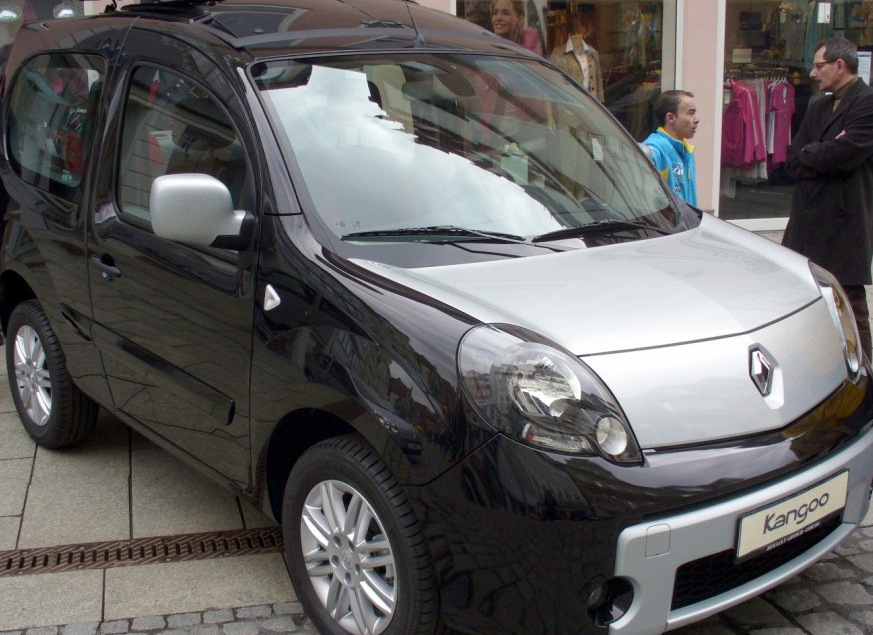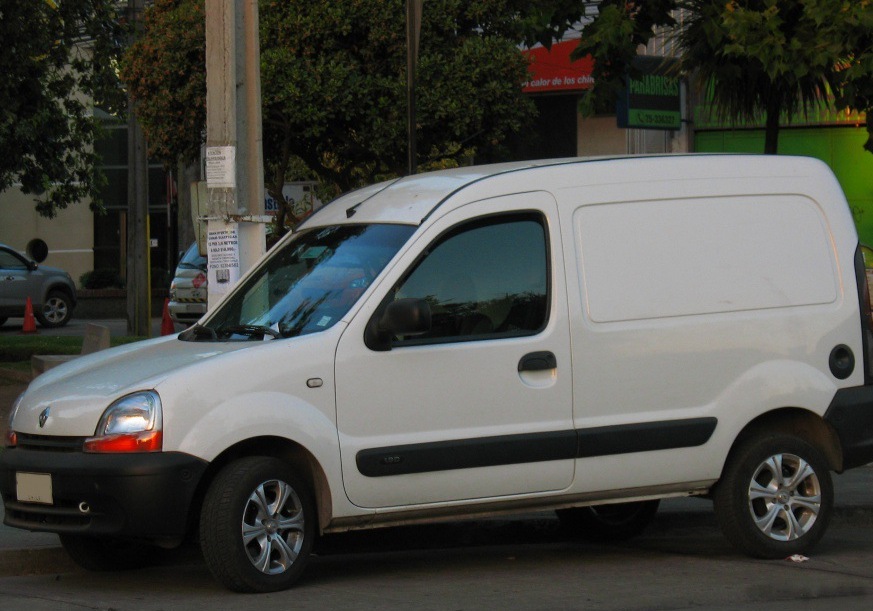
The Renault Kangoo I Express (FC) 1.9 dTi, producing 80 horsepower, was a commercially-oriented panel van sold primarily in Europe from 2001 to 2002. Positioned as a workhorse vehicle, it formed part of the first generation Kangoo (K1) range, built on the shared Renault-Nissan B platform. This variant catered to businesses and tradespeople needing a compact, efficient, and relatively low-cost delivery vehicle. It represented a diesel-powered alternative within the Kangoo lineup, offering a balance between fuel economy and practicality, though sacrificing some performance compared to gasoline-powered models.
Technical Specifications
| Brand | Renault |
| Model | Kangoo |
| Generation | Kangoo I Express (FC) |
| Type (Engine) | 1.9 dTi (80 Hp) |
| Start of production | 2001 |
| End of production | 2002 |
| Powertrain Architecture | Internal Combustion engine |
| Body type | Minivan |
| Seats | 2 |
| Doors | 3 |
| Fuel consumption (urban) | 7.2 l/100 km (32.7 US mpg, 39.2 UK mpg, 13.9 km/l) |
| Fuel consumption (extra urban) | 5 l/100 km (47 US mpg, 56.5 UK mpg, 20 km/l) |
| Fuel consumption (combined) | 5.8 l/100 km (40.6 US mpg, 48.7 UK mpg, 17.2 km/l) |
| CO2 emissions | 152 g/km |
| Fuel Type | Diesel |
| Acceleration 0 – 100 km/h | 13.5 sec |
| Acceleration 0 – 62 mph | 13.5 sec |
| Acceleration 0 – 60 mph | 12.8 sec |
| Maximum speed | 160 km/h (99.42 mph) |
| Weight-to-power ratio | 14.3 kg/Hp, 69.9 Hp/tonne |
| Weight-to-torque ratio | 7.2 kg/Nm, 139.7 Nm/tonne |
| Power | 80 Hp @ 4500 rpm |
| Power per litre | 42.8 Hp/l |
| Torque | 160 Nm @ 2000 rpm (118.01 lb.-ft. @ 2000 rpm) |
| Engine layout | Front, Transverse |
| Engine Model/Code | F9Q Turbo |
| Engine displacement | 1870 cm3 (114.11 cu. in.) |
| Number of cylinders | 4 |
| Engine configuration | Inline |
| Cylinder Bore | 80 mm (3.15 in.) |
| Piston Stroke | 93 mm (3.66 in.) |
| Compression ratio | 18.3:1 |
| Number of valves per cylinder | 2 |
| Fuel injection system | Diesel Commonrail |
| Engine aspiration | Turbocharger, Intercooler |
| Valvetrain | OHC |
| Engine oil capacity | 5.2 l (5.49 US qt | 4.58 UK qt) |
| Coolant | 7.4 l (7.82 US qt | 6.51 UK qt) |
| Kerb Weight | 1145 kg (2524.29 lbs.) |
| Max. weight | 1695 kg (3736.84 lbs.) |
| Max load | 550 kg (1212.54 lbs.) |
| Trunk (boot) space – maximum | 2750 l (97.12 cu. ft.) |
| Fuel tank capacity | 50 l (13.21 US gal | 11 UK gal) |
| Max. roof load | 100 kg (220.46 lbs.) |
| Permitted trailer load with brakes (12%) | 805 kg (1774.72 lbs.) |
| Permitted trailer load without brakes | 535 kg (1179.47 lbs.) |
| Permitted towbar download | 75 kg (165.35 lbs.) |
| Length | 3995 mm (157.28 in.) |
| Width | 1663 mm (65.47 in.) |
| Width including mirrors | 2015 mm (79.33 in.) |
| Height | 1827 mm (71.93 in.) |
| Wheelbase | 2600 mm (102.36 in.) |
| Front track | 1405 mm (55.31 in.) |
| Rear (Back) track | 1415 mm (55.71 in.) |
| Front overhang | 692 mm (27.24 in.) |
| Rear overhang | 703 mm (27.68 in.) |
| Minimum turning circle | 10.95 m (35.93 ft.) |
| Drivetrain Architecture | Front wheel drive |
| Drive wheel | Front wheel drive |
| Number of gears and type of gearbox | 5 gears, manual transmission |
| Front suspension | Spring Strut |
| Rear suspension | Trailing arm |
| Front brakes | Ventilated discs |
| Rear brakes | Drum |
| Assisting systems | ABS (Anti-lock braking system) |
| Steering type | Steering rack and pinion |
| Power steering | Hydraulic Steering |
| Tires size | 165/70 R14 T |
| Wheel rims size | 5.5J x 14 |
INTRODUCTION
The Renault Kangoo I Express (FC) 1.9 dTi, launched in 2001 and continuing through 2002, was a key variant within the first generation of the Kangoo light commercial vehicle. Built on the X0/B platform, it offered a practical and economical solution for small businesses and delivery services. The “Express” designation signified the panel van configuration, prioritizing cargo space over passenger comfort. This 80 horsepower diesel version aimed to provide a balance between fuel efficiency and acceptable performance for urban and regional deliveries.
Powertrain & Engine Architecture
The heart of the Kangoo 1.9 dTi was the F9Q engine, a 1.9-liter inline-four cylinder diesel. This engine, a common sight in Renault and partner vehicles of the era, utilized a turbocharger with an intercooler to boost power output to 80 horsepower at 4500 rpm and 160 Nm (118 lb-ft) of torque at 2000 rpm. The F9Q featured a single overhead camshaft (OHC) valvetrain with two valves per cylinder. Crucially, this version employed a diesel common rail direct injection system, a relatively advanced technology for its time, improving fuel atomization and reducing emissions compared to older indirect injection systems. The engine’s robust construction and relatively simple design contributed to its reputation for durability. The 1.9 dTi was typically paired with a five-speed manual transmission, although an automatic transmission was available as an option, albeit less common. The automatic gearbox was a four-speed unit, designed for ease of use in stop-and-go traffic.
Driving Characteristics
The 1.9 dTi engine, while providing adequate power for its intended purpose, wasn’t known for its blistering acceleration. The 0-60 mph time was around 12.8 seconds, and top speed was limited to 99.42 mph. The focus was on torque delivery, making it suitable for carrying loads. The five-speed manual transmission allowed drivers to keep the engine in its optimal power band. The automatic transmission, while convenient, noticeably dulled performance, with slower gear changes and a tendency to hunt for gears on inclines. Handling was typical for a small van – competent but not sporty. The suspension was tuned for comfort and load-carrying capacity, resulting in a slightly softer ride than some of its competitors. The steering was light and easy to use, making it maneuverable in urban environments.
Equipment & Trim Levels
The Kangoo I Express 1.9 dTi was a utilitarian vehicle, and as such, its standard equipment list was relatively basic. It typically included power steering, a driver’s airbag, and a basic audio system. The interior was primarily focused on functionality, with durable plastic trim and hard-wearing seat upholstery. Optional extras included air conditioning, electric windows, and a passenger airbag. Trim levels were limited, with the emphasis on providing a cost-effective work vehicle. The interior layout prioritized cargo space, with a flat load floor and minimal obstructions.
Chassis & Braking
The Kangoo I Express featured a front-wheel-drive layout with a MacPherson strut suspension at the front and a trailing arm suspension at the rear. The rear brakes were typically drum brakes, while the front brakes were ventilated discs. ABS (Anti-lock Braking System) was standard, enhancing safety during emergency braking. The chassis was designed to handle a substantial payload, with a maximum load capacity of 550 kg (1212.54 lbs). The steering was a rack and pinion system, providing precise and responsive control.
Market Reception & Comparison
The Kangoo 1.9 dTi was generally well-received in the commercial vehicle market. Critics praised its fuel efficiency, practicality, and relatively low running costs. Compared to the gasoline-powered Kangoo variants, the 1.9 dTi offered significantly better fuel economy, making it a popular choice for businesses that covered high mileage. However, it was criticized for its lack of performance, particularly when equipped with the automatic transmission. Compared to competitors like the Citroën Berlingo and Peugeot Partner, the Kangoo offered a similar level of practicality and economy, but its styling was often considered less appealing. The 1.9 dTi was positioned as a mid-range option within the Kangoo lineup, offering a balance between price and performance.
Legacy
The Renault Kangoo I 1.9 dTi, while superseded by later generations, remains a relatively common sight on European roads today. The F9Q engine, despite its age, is known for its durability and reliability, provided it is properly maintained. Parts availability is generally good, and the relatively simple mechanical design makes it relatively easy to repair. In the used car market, these Kangoos are valued for their practicality and affordability, making them a popular choice for small businesses and tradespeople on a budget. However, potential buyers should be aware of the potential for age-related issues, such as corrosion and wear and tear on suspension components.