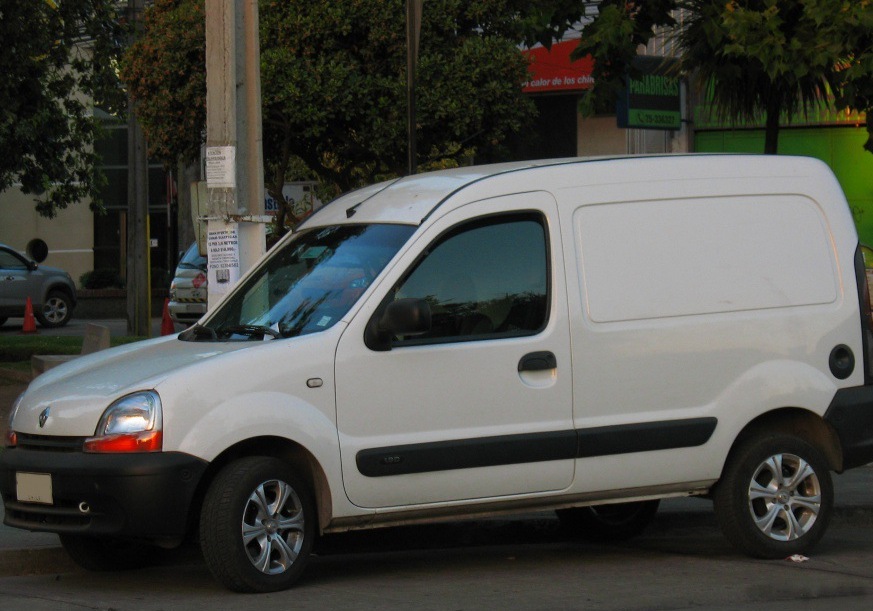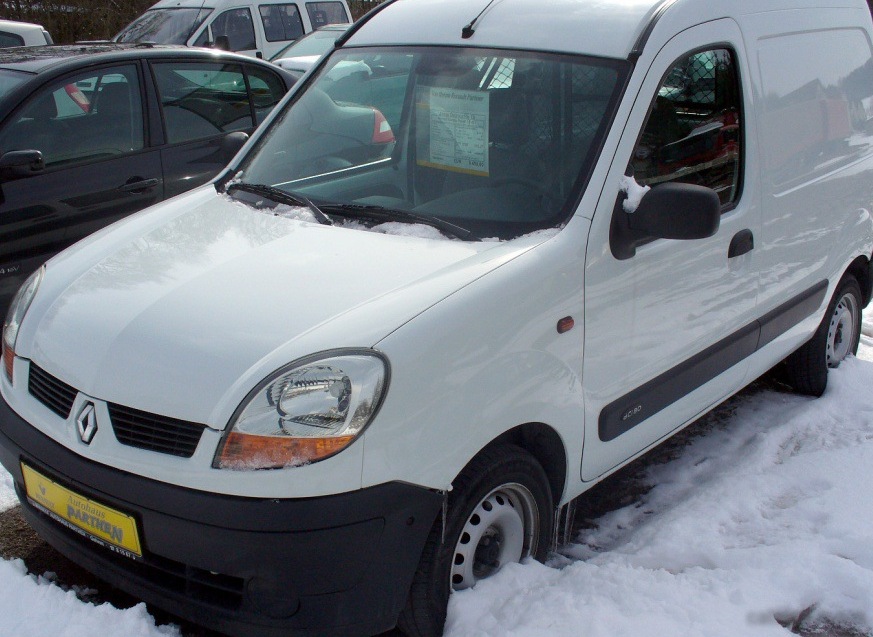
The Renault Kangoo I Express, specifically the facelifted version produced from 2003 to 2005, represented a practical and affordable light commercial vehicle option in the European market. This variant, equipped with the 1.2-liter 16V engine producing 75 horsepower, was positioned as an entry-level offering within the Kangoo range, aimed at businesses and individuals requiring a compact and economical van for urban deliveries and light-duty tasks. The “Express” designation denoted a more basic, commercially-focused trim level compared to the passenger-oriented Kangoo Leisure models. This generation Kangoo (FC) built upon the success of the original, offering improved refinement and a slightly updated aesthetic.
Technical Specifications
| Brand | Renault |
| Model | Kangoo |
| Generation | Kangoo I Express (FC, facelift 2003) |
| Type (Engine) | 1.2 16V (75 Hp) |
| Start of production | 2003 |
| End of production | 2005 |
| Powertrain Architecture | Internal Combustion engine |
| Body type | Minivan |
| Seats | 2 |
| Doors | 3/4 |
| Fuel consumption (urban) | 9 l/100 km (26.1 US mpg, 31.4 UK mpg, 11.1 km/l) |
| Fuel consumption (extra urban) | 5.9 l/100 km (39.9 US mpg, 47.9 UK mpg, 16.9 km/l) |
| Fuel consumption (combined) | 7 l/100 km (33.6 US mpg, 40.4 UK mpg, 14.3 km/l) |
| CO2 emissions | 165 g/km |
| Fuel Type | Petrol (Gasoline) |
| Acceleration 0 – 100 km/h | 14.2 sec |
| Acceleration 0 – 62 mph | 14.2 sec |
| Acceleration 0 – 60 mph | 13.5 sec |
| Maximum speed | 148 km/h (91.96 mph) |
| Emission standard | Euro 4 |
| Weight-to-power ratio | 13.9 kg/Hp, 72 Hp/tonne |
| Weight-to-torque ratio | 9.9 kg/Nm, 100.9 Nm/tonne |
| Power | 75 Hp @ 5500 rpm |
| Power per litre | 65.3 Hp/l |
| Torque | 105 Nm @ 3500 rpm (77.44 lb.-ft. @ 3500 rpm) |
| Engine layout | Front, Transverse |
| Engine Model/Code | D4F |
| Engine displacement | 1149 cm3 (70.12 cu. in.) |
| Number of cylinders | 4 |
| Engine configuration | Inline |
| Cylinder Bore | 69 mm (2.72 in.) |
| Piston Stroke | 76.8 mm (3.02 in.) |
| Compression ratio | 9.6:1 |
| Number of valves per cylinder | 4 |
| Fuel injection system | Multi-port manifold injection |
| Engine aspiration | Naturally aspirated engine |
| Engine oil capacity | 4 l (4.23 US qt | 3.52 UK qt) |
| Kerb Weight | 1041 kg (2295.01 lbs.) |
| Max. weight | 1645 kg (3626.6 lbs.) |
| Max load | 604 kg (1331.59 lbs.) |
| Trunk (boot) space – maximum | 3000 l (105.94 cu. ft.) |
| Fuel tank capacity | 50 l (13.21 US gal | 11 UK gal) |
| Max. roof load | 100 kg (220.46 lbs.) |
| Permitted trailer load with brakes (12%) | 755 kg (1664.49 lbs.) |
| Permitted trailer load without brakes | 520 kg (1146.4 lbs.) |
| Permitted towbar download | 75 kg (165.35 lbs.) |
| Length | 4035 mm (158.86 in.) |
| Width | 1672 mm (65.83 in.) |
| Width including mirrors | 2031 mm (79.96 in.) |
| Height | 1835 mm (72.24 in.) |
| Wheelbase | 2605 mm (102.56 in.) |
| Front track | 1405 mm (55.31 in.) |
| Rear (Back) track | 1410 mm (55.51 in.) |
| Front overhang | 730 mm (28.74 in.) |
| Rear overhang | 700 mm (27.56 in.) |
| Minimum turning circle | 10.79 m (35.4 ft.) |
| Drivetrain | Front wheel drive |
| Number of gears and type of gearbox | 5 gears, manual transmission |
| Front suspension | Independent type McPherson |
| Rear suspension | Coil spring |
| Front brakes | Ventilated discs |
| Rear brakes | Drum |
| Steering type | Steering rack and pinion |
| Tires size | 175/65 R14 |
| Wheel rims size | 5.5J x 14 |
Powertrain & Engine Architecture
The heart of this Kangoo Express variant is the Renault D4F engine, a 1.2-liter inline-four cylinder petrol engine. This engine utilizes a single overhead camshaft (SOHC) design with four valves per cylinder (16V), contributing to its relatively efficient operation. Fuel delivery is managed by a multi-point fuel injection system, providing precise fuel metering for improved combustion and reduced emissions. The D4F engine is known for its simplicity and robustness, though it doesn’t offer particularly high performance. The 75 horsepower output is achieved at 5500 rpm, while peak torque of 105 Nm (77.44 lb-ft) arrives at 3500 rpm. The engine’s relatively low compression ratio of 9.6:1 reflects its design for use with standard unleaded gasoline. The five-speed manual transmission was the standard offering, providing adequate gear spacing for everyday driving.
Driving Characteristics
The 1.2-liter engine in the Kangoo Express delivers modest performance. Acceleration is leisurely, with a 0-60 mph time of around 13.5 seconds. The van is best suited for urban environments and shorter journeys where outright speed isn’t a priority. The gear ratios in the five-speed manual transmission are geared towards economy, meaning the engine can feel strained when fully loaded or climbing hills. Compared to higher-output versions of the Kangoo, such as those equipped with the 1.6-liter engine, this variant feels significantly less powerful. However, the lighter engine weight contributes to nimble handling in city traffic. The focus is on practicality and fuel efficiency rather than driving excitement.
Equipment & Trim Levels
As an “Express” model, the Kangoo I was typically equipped with basic, functional features. Standard equipment generally included a driver’s airbag, central locking, and power steering. The interior was utilitarian, with durable plastic trim and cloth upholstery. The dashboard layout was straightforward and focused on functionality. Optional extras could include a passenger airbag, air conditioning, and upgraded audio systems. The cargo area was the primary focus, offering a generous 3000 liters of space with the rear seats folded or removed. The van’s design prioritized maximizing cargo capacity and ease of loading.
Chassis & Braking
The Kangoo I Express utilized a front-wheel-drive layout with an independent McPherson strut suspension at the front and a coil spring suspension at the rear. This setup provided a reasonable balance between ride comfort and handling. The front brakes were ventilated discs, offering adequate stopping power, while the rear brakes were drums, a cost-saving measure common in this class of vehicle. The steering was rack and pinion, providing precise and responsive control. The van’s relatively lightweight construction helped to minimize body roll and improve handling.
Market Reception & Comparison
The Renault Kangoo I Express 1.2 16V was generally well-received as a practical and economical light commercial vehicle. Critics praised its spacious interior, fuel efficiency, and low running costs. However, the engine’s lack of power was a common criticism, particularly when the van was fully loaded. Compared to other vans in its class, such as the Citroën Berlingo and Peugeot Partner, the Kangoo offered a competitive package in terms of price and practicality. The 1.2-liter engine was often seen as a compromise, offering lower purchase price and running costs at the expense of performance.
Legacy
The Renault Kangoo I, and specifically the 1.2 16V variant, established a strong reputation for reliability and durability. The D4F engine, while not known for its performance, proved to be a robust and long-lasting unit. Today, these vans are still found on the roads, often with high mileage, testament to their inherent reliability. In the used car market, the 1.2-liter models are typically more affordable than higher-spec versions, making them an attractive option for budget-conscious buyers. However, potential buyers should be aware of the engine’s limited power and the potential for age-related wear and tear.