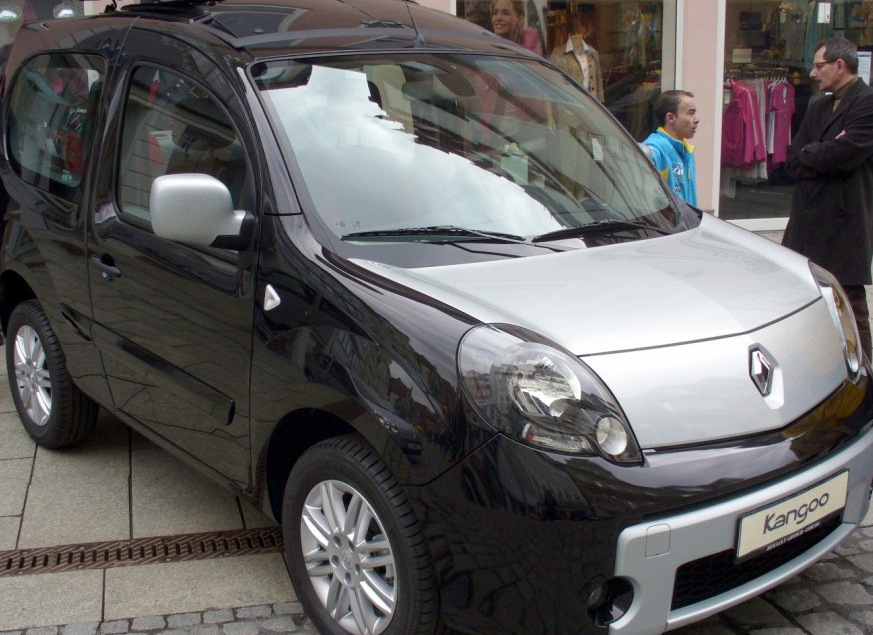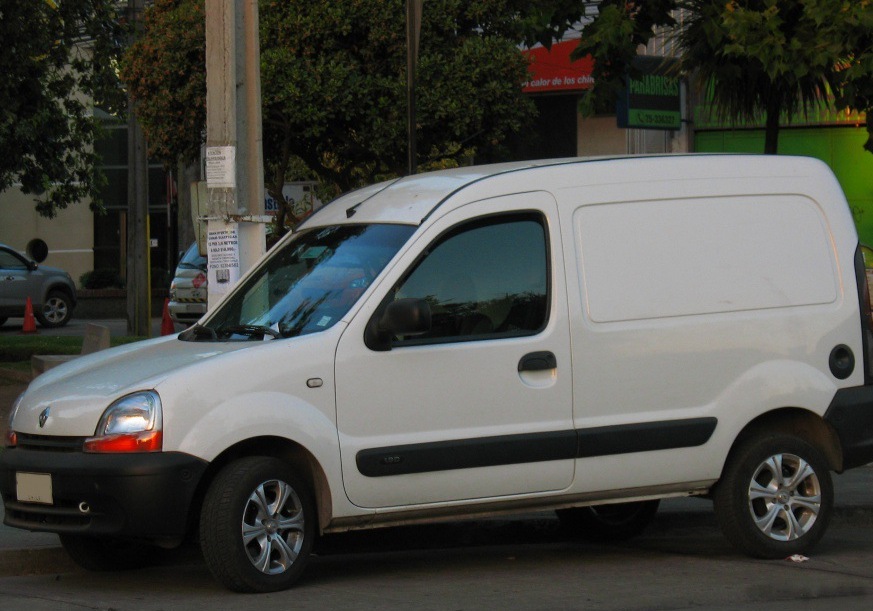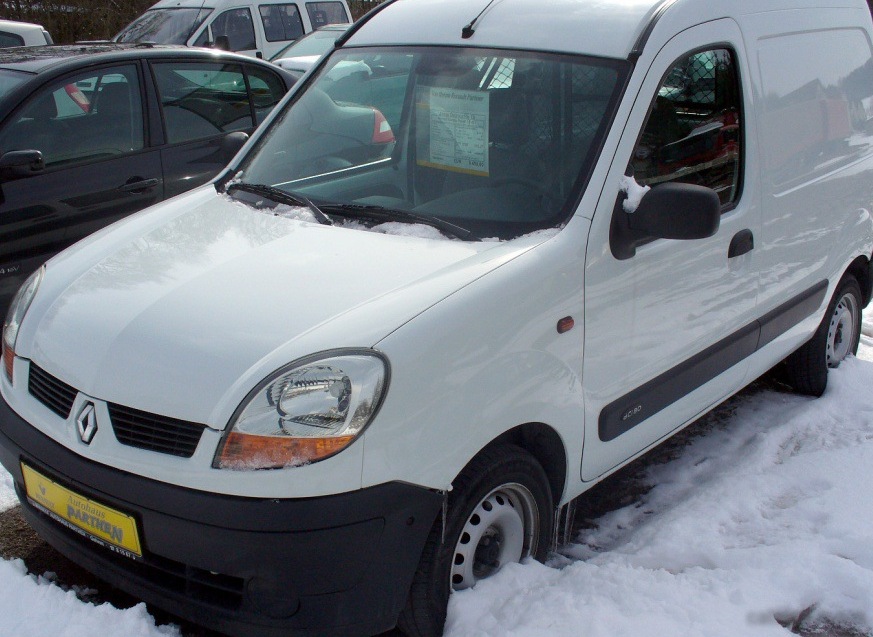
The Renault Kangoo I Express, specifically the facelifted version produced from 2003 to 2005, offered a practical and affordable light commercial vehicle solution in the European market. This variant, equipped with the 1.9 D engine producing 65 horsepower, represented an entry-level option within the Kangoo Express range, prioritizing fuel efficiency and durability over outright performance. It was positioned as a workhorse for small businesses and tradespeople needing a compact van for deliveries and transport. The Kangoo I, built on the shared Renault-Nissan B platform, aimed to provide a versatile alternative to larger, more expensive vans.
Technical Specifications
| Brand | Renault |
| Model | Kangoo |
| Generation | Kangoo I Express (FC, facelift 2003) |
| Type (Engine) | 1.9 D (65 Hp) |
| Start of production | 2003 |
| End of production | 2005 |
| Powertrain Architecture | Internal Combustion engine |
| Body type | Minivan |
| Seats | 5 |
| Doors | 3/4 |
| Fuel consumption (combined) | 7.3 l/100 km (32.2 US mpg, 38.7 UK mpg, 13.7 km/l) |
| Fuel Type | Diesel |
| Weight-to-power ratio | 16.3 kg/Hp, 61.3 Hp/tonne |
| Weight-to-torque ratio | 8.8 kg/Nm, 113.2 Nm/tonne |
| Power | 65 Hp @ 4500 rpm |
| Power per litre | 34.8 Hp/l |
| Torque | 120 Nm @ 2250 rpm (88.51 lb.-ft. @ 2250 rpm) |
| Engine layout | Front, Transverse |
| Engine Model/Code | F8Q |
| Engine displacement | 1870 cm3 (114.11 cu. in.) |
| Number of cylinders | 4 |
| Engine configuration | Inline |
| Cylinder Bore | 80 mm (3.15 in.) |
| Piston Stroke | 93 mm (3.66 in.) |
| Number of valves per cylinder | 2 |
| Fuel injection system | Diesel Commonrail |
| Engine aspiration | Turbocharger, Intercooler |
| Engine oil capacity | 4.6 l (4.86 US qt | 4.05 UK qt) |
| Kerb Weight | 1060 kg (2336.9 lbs.) |
| Max. weight | 1680 kg (3703.77 lbs.) |
| Max load | 620 kg (1366.87 lbs.) |
| Trunk (boot) space – maximum | 3000 l (105.94 cu. ft.) |
| Fuel tank capacity | 50 l (13.21 US gal | 11 UK gal) |
| Max. roof load | 100 kg (220.46 lbs.) |
| Permitted trailer load with brakes (12%) | 820 kg (1807.79 lbs.) |
| Permitted trailer load without brakes | 530 kg (1168.45 lbs.) |
| Permitted towbar download | 75 kg (165.35 lbs.) |
| Length | 4035 mm (158.86 in.) |
| Width | 1672 mm (65.83 in.) |
| Width including mirrors | 2031 mm (79.96 in.) |
| Height | 1835 mm (72.24 in.) |
| Wheelbase | 2605 mm (102.56 in.) |
| Front track | 1405 mm (55.31 in.) |
| Rear (Back) track | 1410 mm (55.51 in.) |
| Front overhang | 730 mm (28.74 in.) |
| Rear overhang | 700 mm (27.56 in.) |
| Minimum turning circle (turning diameter) | 10.95 m (35.93 ft.) |
| Drivetrain Architecture | The Internal combustion engine (ICE) drives the front wheels of the vehicle. |
| Drive wheel | Front wheel drive |
| Number of gears and type of gearbox | 5 gears, manual transmission |
| Front suspension | Spring Strut |
| Rear suspension | Trailing arm |
| Front brakes | Ventilated discs |
| Rear brakes | Drum |
| Assisting systems | ABS (Anti-lock braking system) |
| Steering type | Steering rack and pinion |
| Power steering | Hydraulic Steering |
| Tires size | 175/65 R14 |
| Wheel rims size | 14 |
Powertrain & Engine Architecture
The heart of this Kangoo Express variant is the Renault F8Q engine, a 1.9-liter inline-four diesel. This engine, a mainstay in Renault’s lineup for many years, is known for its robustness and relatively simple mechanical design. The 2003 facelift brought with it a common rail direct injection system, improving fuel efficiency and reducing noise compared to earlier iterations of the F8Q. The engine utilizes a single overhead camshaft (SOHC) valvetrain with two valves per cylinder. The turbocharger and intercooler combination were added to boost power output to 65 horsepower and 120 Nm of torque. This engine is front-mounted and transversely positioned, driving the front wheels. The five-speed manual transmission was the standard offering for this trim level, chosen for its cost-effectiveness and suitability for commercial applications.
Driving Characteristics
The 1.9 D with 65 hp in the Kangoo Express wasn’t designed for speed. Acceleration was modest, and overtaking required careful planning. The engine’s torque peak at 2250 rpm provided adequate pulling power for everyday driving and carrying moderate loads. The five-speed manual transmission was well-matched to the engine’s characteristics, allowing drivers to keep the engine in its optimal power band. Compared to the more powerful petrol versions of the Kangoo, or even the later common-rail diesels, this variant felt noticeably slower. However, its strength lay in its fuel economy and ability to handle consistent, low-speed work. The gear ratios were geared towards maximizing fuel efficiency rather than performance.
Equipment & Trim Levels
The 1.9 D Kangoo Express was typically offered in a basic trim level, reflecting its position as an entry-level work van. Standard equipment included a driver’s airbag, power steering, and a basic audio system. The interior was functional and durable, with hard-wearing plastic trim and cloth upholstery. Options included air conditioning, electric windows, and a passenger airbag. The van’s cargo area was the primary focus, offering a generous 3000 liters of space with the rear seats folded or removed. The dashboard layout was simple and straightforward, prioritizing practicality over aesthetics.
Chassis & Braking
The Kangoo I Express utilized a relatively simple chassis design. Front suspension consisted of MacPherson struts, while the rear employed a trailing arm setup. This configuration provided a reasonable balance between ride comfort and load-carrying capacity. Braking was handled by ventilated discs on the front wheels and drum brakes on the rear. ABS (Anti-lock Braking System) was standard, enhancing safety during emergency braking. The steering was a hydraulic rack and pinion system, providing light and precise control. Stabilizer bars were fitted to reduce body roll during cornering.
Market Reception & Comparison
The 1.9 D Kangoo Express was well-received by businesses and tradespeople seeking a cost-effective and reliable light commercial vehicle. Critics praised its fuel economy and durability, but noted its lack of performance. Compared to the petrol-powered Kangoo variants, the 1.9 D offered significantly better fuel efficiency, making it a more economical choice for high-mileage users. Against competitors like the Citroën Berlingo and Peugeot Partner, the Kangoo offered a similar level of practicality and affordability. The 1.9 D was often seen as a more sensible choice than the higher-powered versions for those prioritizing running costs over driving excitement.
Legacy
The Renault Kangoo I, and particularly the 1.9 D variant, established a strong reputation for reliability and affordability. The F8Q engine, while not known for its refinement, proved to be remarkably durable and capable of high mileage with proper maintenance. Today, these vans are still found on the roads, often serving as dependable workhorses for small businesses. The 1.9 D version, while not the most desirable among enthusiasts, remains a popular choice for those seeking a simple, economical, and practical light commercial vehicle. Parts availability is generally good, and the relatively straightforward mechanical design makes it accessible for DIY repairs.