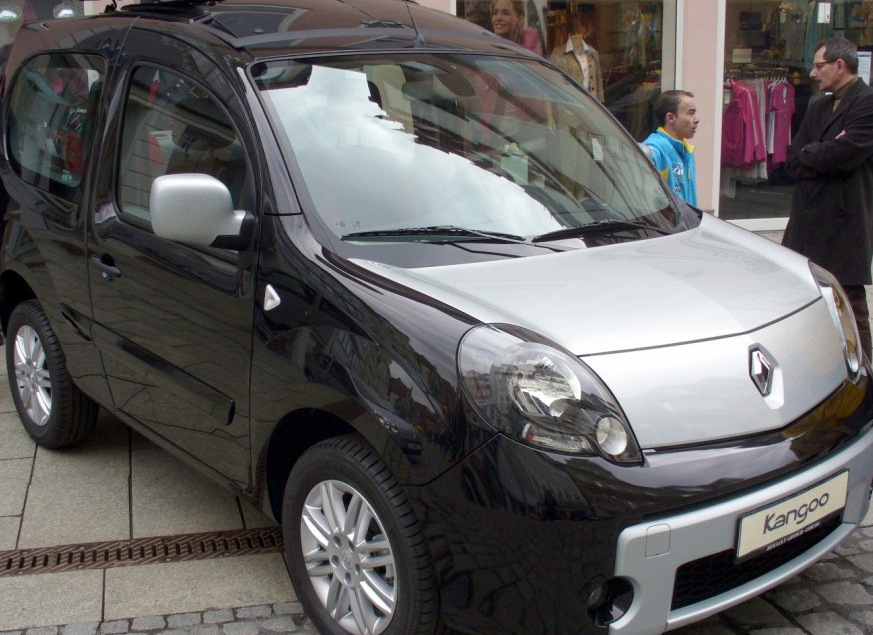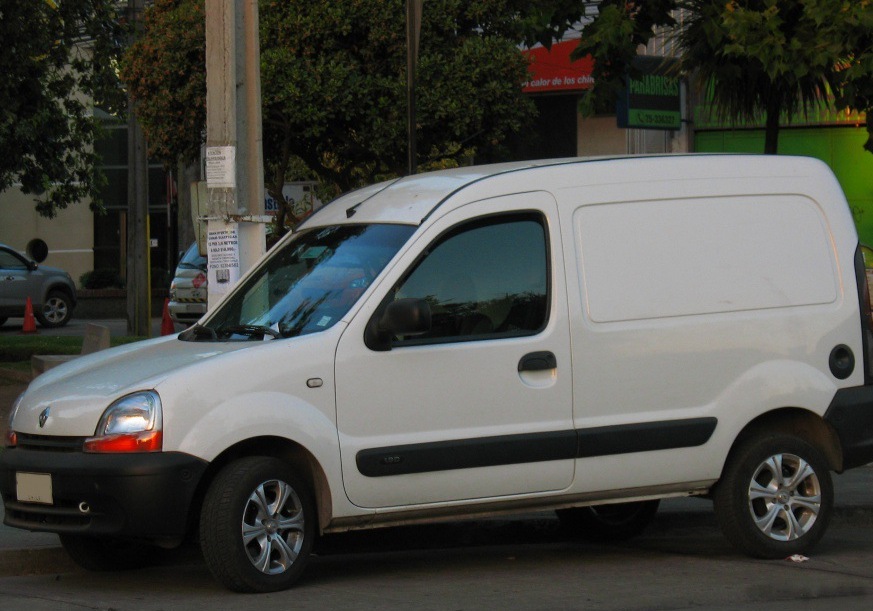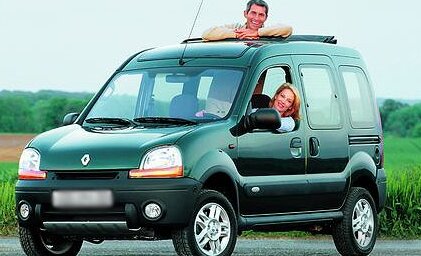
The Renault Kangoo I, specifically the 1.4i variant producing 75 horsepower, was a popular choice in the European light commercial vehicle and multi-purpose vehicle (MPV) segment from 2000 to 2001. Falling within the first generation (KC) of the Kangoo, this model served as an entry-level option, appealing to buyers seeking a practical and affordable vehicle for both work and family use. It was positioned below the more powerful 1.6i and diesel variants in the Kangoo lineup. The Kangoo I was a significant departure for Renault, moving away from traditional van-like designs towards a more car-derived MPV aesthetic, offering improved comfort and practicality.
Technical Specifications
| Brand | Renault |
| Model | Kangoo |
| Generation | Kangoo I (KC) |
| Type (Engine) | 1.4i (75 Hp) |
| Start of production | 2000 year |
| End of production | 2001 year |
| Powertrain Architecture | Internal Combustion engine |
| Body type | Minivan |
| Seats | 5 |
| Doors | 4 |
| Fuel consumption (urban) | 9.5 l/100 km (24.8 US mpg, 29.7 UK mpg, 10.5 km/l) |
| Fuel consumption (extra urban) | 6.3 l/100 km (37.3 US mpg, 44.8 UK mpg, 15.9 km/l) |
| Fuel consumption (combined) | 7.5 l/100 km (31.4 US mpg, 37.7 UK mpg, 13.3 km/l) |
| CO2 emissions | 177 g/km |
| Fuel Type | Petrol (Gasoline) |
| Acceleration 0 – 100 km/h | 14.9 sec |
| Acceleration 0 – 62 mph | 14.9 sec |
| Acceleration 0 – 60 mph | 14.2 sec |
| Maximum speed | 153 km/h (95.07 mph) |
| Weight-to-power ratio | 15.2 kg/Hp, 65.8 Hp/tonne |
| Weight-to-torque ratio | 10 kg/Nm, 100 Nm/tonne |
| Power | 75 Hp @ 5500 rpm |
| Power per litre | 54 Hp/l |
| Torque | 114 Nm @ 4250 rpm (84.08 lb.-ft. @ 4250 rpm) |
| Engine layout | Front, Transverse |
| Engine Model/Code | E7J |
| Engine displacement | 1390 cm3 (84.82 cu. in.) |
| Number of cylinders | 4 |
| Engine configuration | Inline |
| Cylinder Bore | 75.8 mm (2.98 in.) |
| Piston Stroke | 77 mm (3.03 in.) |
| Compression ratio | 9.5:1 |
| Number of valves per cylinder | 2 |
| Fuel injection system | Multi-port manifold injection |
| Engine aspiration | Naturally aspirated engine |
| Engine oil capacity | 3.8 l (4.02 US qt | 3.34 UK qt) |
| Coolant | 5.7 l (6.02 US qt | 5.02 UK qt) |
| Kerb Weight | 1140 kg (2513.27 lbs.) |
| Max. weight | 1645 kg (3626.6 lbs.) |
| Max load | 505 kg (1113.33 lbs.) |
| Trunk (boot) space – minimum | 650 l (22.95 cu. ft.) |
| Trunk (boot) space – maximum | 2600 l (91.82 cu. ft.) |
| Fuel tank capacity | 50 l (13.21 US gal | 11 UK gal) |
| Max. roof load | 100 kg (220.46 lbs.) |
| Permitted trailer load with brakes (12%) | 950 kg (2094.39 lbs.) |
| Permitted trailer load without brakes | 570 kg (1256.63 lbs.) |
| Permitted towbar download | 75 kg (165.35 lbs.) |
| Length | 3995 mm (157.28 in.) |
| Width | 1663 mm (65.47 in.) |
| Width including mirrors | 2015 mm (79.33 in.) |
| Height | 1827 mm (71.93 in.) |
| Wheelbase | 2600 mm (102.36 in.) |
| Front track | 1405 mm (55.31 in.) |
| Rear (Back) track | 1415 mm (55.71 in.) |
| Front overhang | 692 mm (27.24 in.) |
| Rear overhang | 703 mm (27.68 in.) |
| Minimum turning circle | 10.95 m (35.93 ft.) |
| Drivetrain Architecture | The Internal combustion engine (ICE) drives the front wheels of the vehicle. |
| Drive wheel | Front wheel drive |
| Number of gears and type of gearbox | 5 gears, manual transmission |
| Front suspension | Spring Strut |
| Rear suspension | Trailing arm |
| Front brakes | Ventilated discs |
| Rear brakes | Drum |
| Assisting systems | ABS (Anti-lock braking system) |
| Steering type | Steering rack and pinion |
| Power steering | Hydraulic Steering |
| Tires size | 165/70 R14 |
| Wheel rims size | 5.5J x 14 |
Powertrain & Engine Architecture
The 1.4i Kangoo utilized the Renault E7J engine, a naturally aspirated, inline-four cylinder petrol engine. This engine, common in various Renault and Peugeot models of the era, featured a single overhead camshaft (SOHC) design with two valves per cylinder. Fuel delivery was managed by a multi-port fuel injection system, providing adequate, though not exceptional, performance. The E7J engine was known for its relative simplicity and durability, but it wasn’t a powerhouse. The 75 horsepower output was achieved at 5500 rpm, with a torque figure of 114 Nm (84.08 lb-ft) available at 4250 rpm. The engine’s 9.5:1 compression ratio was typical for the time, balancing efficiency and performance. The Kangoo 1.4i was typically paired with a five-speed manual transmission, although a four-speed automatic transmission was also offered, albeit less commonly. The automatic transmission, while providing convenience, did impact fuel economy and acceleration.
Driving Characteristics
The 1.4i Kangoo with the manual transmission offered acceptable, if uninspiring, performance. Acceleration from 0-100 km/h (0-62 mph) took around 14.9 seconds, and top speed was limited to 153 km/h (95 mph). The automatic version was noticeably slower. The engine felt strained when fully loaded or climbing hills, requiring frequent downshifts. The gear ratios in the manual transmission were reasonably well-spaced, but the engine lacked the low-end torque to make overtaking effortless. The Kangoo’s suspension prioritized comfort over sporty handling, resulting in a somewhat soft and wallowy ride, particularly when cornering. Steering was light and easy, making it maneuverable in urban environments.
Equipment & Trim Levels
The 1.4i Kangoo typically came with a basic level of equipment. Standard features included power steering, central locking, and a driver’s airbag. Interior upholstery was typically a durable cloth material. Optional extras included air conditioning, electric windows, and a radio/cassette player. Higher trim levels, often denoted by specific package names, added features like upgraded upholstery, body-colored bumpers, and alloy wheels. The Kangoo’s interior was designed with practicality in mind, featuring numerous storage compartments and a flexible seating arrangement. The rear seats could be folded down or even removed completely, maximizing cargo space.
Chassis & Braking
The Kangoo I utilized a relatively simple chassis design. Front suspension consisted of MacPherson struts, while the rear employed a trailing arm setup. This configuration provided a comfortable ride but didn’t offer particularly sharp handling. Braking was handled by ventilated discs at the front and drum brakes at the rear. Anti-lock Braking System (ABS) was available as an option, enhancing safety. The Kangoo’s weight-to-power ratio of 15.2 kg/Hp reflected its modest performance. The steering was a rack and pinion system, providing reasonable precision.
Market Reception & Comparison
The Renault Kangoo 1.4i was generally well-received as an affordable and practical MPV. Critics praised its spacious interior, versatility, and fuel efficiency. However, the 1.4i engine was often criticized for being underpowered, especially when the vehicle was fully loaded. Compared to the 1.6i version, the 1.4i offered lower running costs but sacrificed performance. The diesel variants provided superior fuel economy and torque but came with a higher purchase price. The Kangoo competed with other small MPVs and light commercial vehicles, such as the Citroën Berlingo and Peugeot Partner.
Legacy
The Renault Kangoo I, including the 1.4i variant, established the Kangoo as a popular choice in the European market. The E7J engine, while not known for its longevity in all applications, proved reasonably reliable in the Kangoo, provided it was properly maintained. Today, these vehicles are relatively affordable on the used car market, but finding well-maintained examples can be challenging. The Kangoo I represents a significant step in Renault’s development of practical and versatile vehicles, paving the way for subsequent generations of the Kangoo and other MPVs.