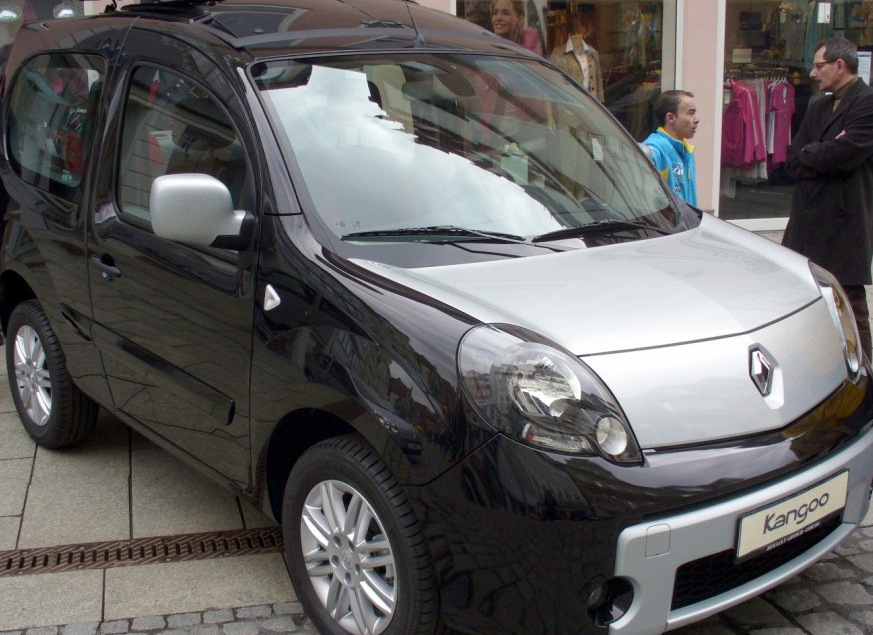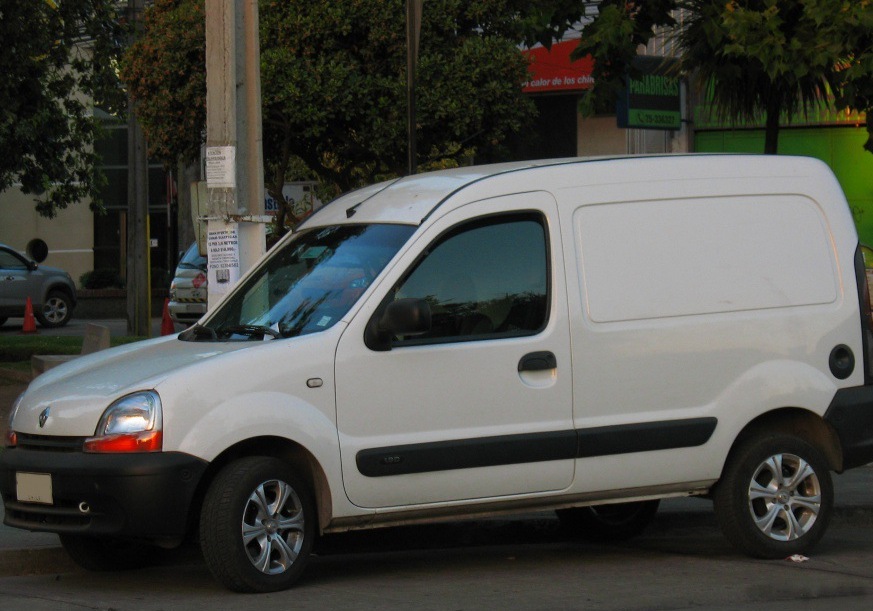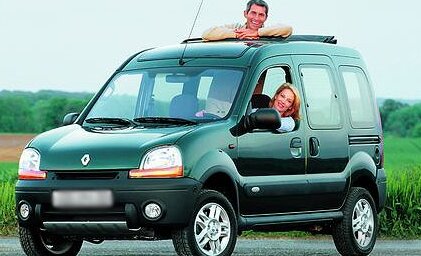
The Renault Kangoo I, specifically the 1.4i 75 horsepower variant with an automatic transmission, was produced between 1999 and 2000. This version occupied an entry-level position within the first generation Kangoo (KC) lineup, designed to offer affordability and practicality for families and commercial users. The Kangoo I, launched in 1997, represented Renault’s foray into the compact leisure activity vehicle (LAV) segment, offering a versatile alternative to traditional hatchbacks and small vans. It was built on the shared Renault-Nissan B platform, also underpinning the Clio II and Nissan Micra. The 1.4i automatic was aimed at buyers prioritizing ease of use over outright performance.
Technical Specifications
| Brand | Renault |
| Model | Kangoo |
| Generation | Kangoo I (KC) |
| Type (Engine) | 1.4i (75 Hp) Automatic |
| Start of production | 1999 |
| End of production | 2000 |
| Powertrain Architecture | Internal Combustion engine |
| Body type | Minivan |
| Seats | 5 |
| Doors | 4 |
| Fuel consumption (urban) | 9.9 l/100 km (23.8 US mpg) |
| Fuel consumption (extra urban) | 6.7 l/100 km (35.1 US mpg) |
| Fuel consumption (combined) | 7.9 l/100 km (29.8 US mpg) |
| CO2 emissions | 188 g/km |
| Fuel Type | Petrol (Gasoline) |
| Acceleration 0 – 100 km/h | 17.3 sec |
| Acceleration 0 – 62 mph | 17.3 sec |
| Acceleration 0 – 60 mph | 16.4 sec |
| Maximum speed | 144 km/h (89.48 mph) |
| Weight-to-power ratio | 15.4 kg/Hp |
| Weight-to-torque ratio | 10.1 kg/Nm |
| Power | 75 Hp @ 5500 rpm |
| Torque | 114 Nm @ 4250 rpm (84.08 lb.-ft. @ 4250 rpm) |
| Engine layout | Front, Transverse |
| Engine Model/Code | K7J |
| Engine displacement | 1390 cm3 (84.82 cu. in.) |
| Number of cylinders | 4 |
| Engine configuration | Inline |
| Cylinder Bore | 79.5 mm (3.13 in.) |
| Piston Stroke | 70 mm (2.76 in.) |
| Number of valves per cylinder | 2 |
| Fuel injection system | Multi-port manifold injection |
| Engine aspiration | Naturally aspirated |
| Engine oil capacity | 3.8 l (4.02 US qt | 3.34 UK qt) |
| Coolant capacity | 5.7 l (6.02 US qt | 5.02 UK qt) |
| Kerb Weight | 1155 kg (2546.34 lbs.) |
| Max. weight | 1665 kg (3670.7 lbs.) |
| Max load | 510 kg (1124.36 lbs.) |
| Trunk (boot) space – minimum | 650 l (22.95 cu. ft.) |
| Trunk (boot) space – maximum | 2600 l (91.82 cu. ft.) |
| Fuel tank capacity | 50 l (13.21 US gal | 11 UK gal) |
| Max. roof load | 100 kg (220.46 lbs.) |
| Permitted towbar download | 75 kg (165.35 lbs.) |
| Length | 3995 mm (157.28 in.) |
| Width | 1663 mm (65.47 in.) |
| Width including mirrors | 2015 mm (79.33 in.) |
| Height | 1827 mm (71.93 in.) |
| Wheelbase | 2600 mm (102.36 in.) |
| Front track | 1405 mm (55.31 in.) |
| Rear track | 1415 mm (55.71 in.) |
| Front overhang | 692 mm (27.24 in.) |
| Rear overhang | 703 mm (27.68 in.) |
| Minimum turning circle | 10.95 m (35.93 ft.) |
| Drivetrain | Front wheel drive |
| Number of gears | 4 |
| Gearbox type | Automatic transmission |
| Front suspension | Spring Strut |
| Rear suspension | Trailing arm |
| Front brakes | Ventilated discs |
| Rear brakes | Drum |
| Assisting systems | ABS (Anti-lock braking system) |
| Steering type | Steering rack and pinion |
| Power steering | Hydraulic |
| Tires size | 165/70 R14 |
| Wheel rims size | 5.5J x 14 |
Powertrain & Engine Architecture
The 1.4-liter K7J engine powering this Kangoo variant is an inline-four cylinder, naturally aspirated gasoline engine. It utilizes a multi-point fuel injection system, a common setup for engines of this era, providing adequate fuel delivery for its modest power output. The engine features a single overhead camshaft (SOHC) design with two valves per cylinder. This configuration prioritized simplicity and cost-effectiveness over high-performance valvetrain technology. The automatic transmission is a conventional four-speed unit, designed to provide smooth, if not particularly rapid, gear changes. This transmission was chosen to appeal to drivers seeking convenience, particularly in urban environments. The K7J engine is known for its relative durability, but it’s not a powerhouse, and the automatic transmission further diminishes performance.
Driving Characteristics
The 1.4i automatic Kangoo delivers a decidedly unhurried driving experience. With only 75 horsepower, acceleration is slow, taking over 17 seconds to reach 60 mph. The four-speed automatic transmission contributes to this, with relatively wide gear ratios prioritizing fuel economy over responsiveness. In real-world driving, the engine feels strained when climbing hills or overtaking. Compared to the more powerful 1.6-liter or even diesel variants, the 1.4i automatic lacks the punch needed for more demanding driving situations. However, the automatic transmission makes it easy to drive in stop-and-go traffic, and the engine is reasonably refined at cruising speeds.
Equipment & Trim Levels
The 1.4i automatic Kangoo typically came with a basic level of equipment. Standard features generally included power steering, central locking, and a basic audio system. Interior upholstery was typically cloth, and the dashboard featured a functional, if somewhat utilitarian, design. Optional extras included air conditioning, electric windows, and upgraded audio systems. The trim level was generally considered the base model, focusing on providing essential transportation at an affordable price point.
Chassis & Braking
The Kangoo I utilized a relatively simple chassis design. Front suspension consisted of MacPherson struts, while the rear employed a trailing arm setup. This configuration provided a comfortable ride, but handling was not particularly sharp. Braking was comprised of ventilated discs at the front and drum brakes at the rear. ABS (Anti-lock Braking System) was often included as standard equipment, enhancing safety. The suspension was tuned for comfort rather than sporty handling, reflecting the Kangoo’s intended role as a practical family vehicle.
Market Reception & Comparison
The 1.4i automatic Kangoo was generally viewed as a sensible, if unexciting, option. Critics praised its practicality and affordability, but noted its lack of performance. Compared to the 1.6-liter versions, the 1.4i offered significantly less power, while the diesel variants provided superior fuel economy. However, the automatic transmission appealed to buyers who prioritized ease of use. Fuel economy was reasonable for its class, averaging around 30 mpg in combined driving. Reliability was generally good, although the automatic transmission could be prone to issues if not properly maintained.
Legacy
The Renault Kangoo I, particularly the 1.4i automatic variant, has become a popular choice among budget-conscious buyers in the used car market. The K7J engine is known for its durability, and parts availability is generally good. While not a performance icon, the 1.4i automatic Kangoo offers a practical and affordable transportation solution. Its simple design and relatively low maintenance costs make it an appealing option for those seeking a reliable and economical vehicle. Today, well-maintained examples are still seen on the roads, testament to the Kangoo’s enduring practicality.