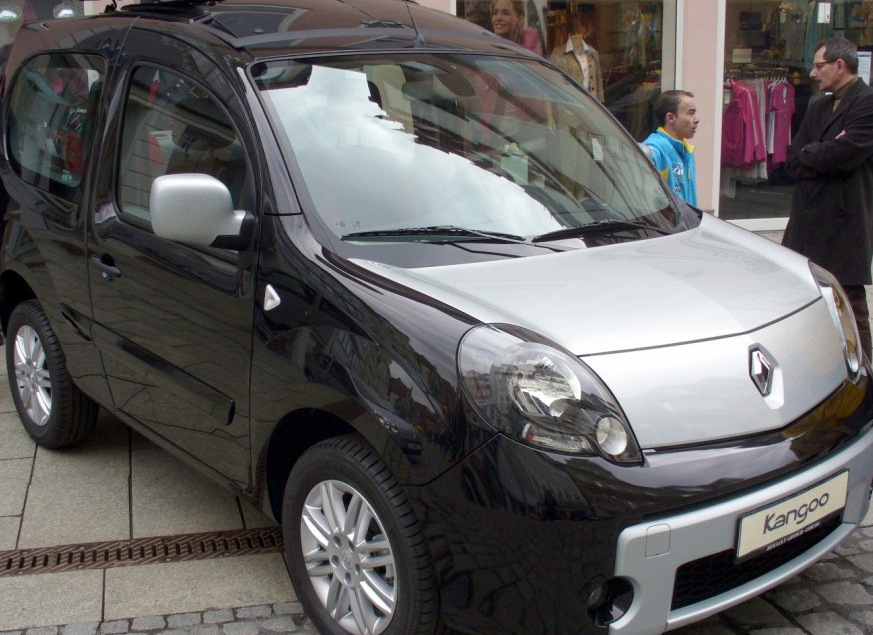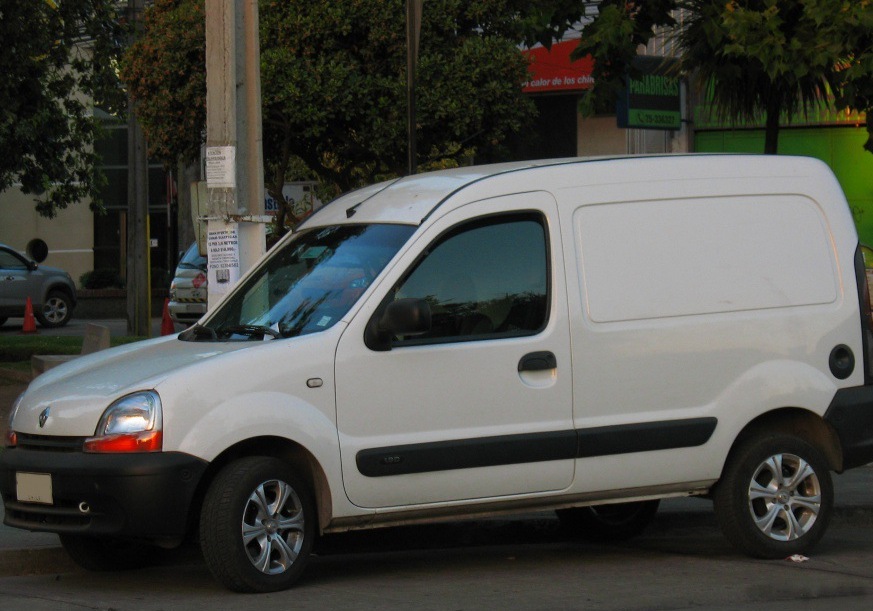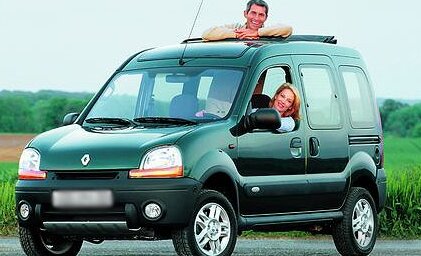
The Renault Kangoo I, specifically the 1.5 dCi variant producing 82 horsepower, was a popular choice in the European light commercial vehicle and multi-purpose vehicle (MPV) segment from 2002 to 2003. Positioned as an entry-level to mid-range offering within the Kangoo I (KC) generation, this model aimed to provide a practical and economical solution for both commercial users and families. Built on the Renault Kangoo platform, it offered a blend of utility, affordability, and relatively modern diesel technology for its time. This version represented a significant step forward in fuel efficiency compared to earlier Kangoo models.
Technical Specifications
| Brand | Renault |
| Model | Kangoo |
| Generation | Kangoo I (KC) |
| Type (Engine) | 1.5 dCi (82 Hp) |
| Start of production | 2002 |
| End of production | 2003 |
| Powertrain Architecture | Internal Combustion engine |
| Body type | Minivan |
| Seats | 5 |
| Doors | 4 |
| Fuel consumption (urban) | 6.3 l/100 km (37.3 US mpg, 44.8 UK mpg, 15.9 km/l) |
| Fuel consumption (extra urban) | 4.6 l/100 km (51.1 US mpg, 61.4 UK mpg, 21.7 km/l) |
| Fuel consumption (combined) | 5.3 l/100 km (44.4 US mpg, 53.3 UK mpg, 18.9 km/l) |
| CO2 emissions | 139 g/km |
| Fuel Type | Diesel |
| Acceleration 0 – 100 km/h | 12.5 sec |
| Acceleration 0 – 62 mph | 12.5 sec |
| Acceleration 0 – 60 mph | 11.9 sec |
| Maximum speed | 155 km/h (96.31 mph) |
| Weight-to-power ratio | 14.3 kg/Hp, 70.1 Hp/tonne |
| Weight-to-torque ratio | 6.3 kg/Nm, 158.1 Nm/tonne |
| Power | 82 Hp @ 4000 rpm |
| Power per litre | 56.1 Hp/l |
| Torque | 185 Nm @ 2000 rpm (136.45 lb.-ft. @ 2000 rpm) |
| Engine layout | Front, Transverse |
| Engine Model/Code | K9K |
| Engine displacement | 1461 cm3 (89.16 cu. in.) |
| Number of cylinders | 4 |
| Engine configuration | Inline |
| Cylinder Bore | 76 mm (2.99 in.) |
| Piston Stroke | 80.5 mm (3.17 in.) |
| Compression ratio | 18.8:1 |
| Number of valves per cylinder | 2 |
| Fuel injection system | Diesel Commonrail |
| Engine aspiration | Turbocharger, Intercooler |
| Valvetrain | OHC |
| Engine oil capacity | 5 l (5.28 US qt | 4.4 UK qt) |
| Coolant capacity | 5.5 l (5.81 US qt | 4.84 UK qt) |
| Kerb Weight | 1170 kg (2579.41 lbs.) |
| Max. weight | 1630 kg (3593.53 lbs.) |
| Max load | 460 kg (1014.13 lbs.) |
| Trunk (boot) space – minimum | 650 l (22.95 cu. ft.) |
| Trunk (boot) space – maximum | 2600 l (91.82 cu. ft.) |
| Fuel tank capacity | 50 l (13.21 US gal | 11 UK gal) |
| Max. roof load | 100 kg (220.46 lbs.) |
| Permitted trailer load with brakes (12%) | 1200 kg (2645.55 lbs.) |
| Permitted trailer load without brakes | 585 kg (1289.7 lbs.) |
| Permitted towbar download | 75 kg (165.35 lbs.) |
| Length | 3995 mm (157.28 in.) |
| Width | 1663 mm (65.47 in.) |
| Width including mirrors | 2015 mm (79.33 in.) |
| Height | 1827 mm (71.93 in.) |
| Wheelbase | 2600 mm (102.36 in.) |
| Front track | 1405 mm (55.31 in.) |
| Rear track | 1415 mm (55.71 in.) |
| Front overhang | 692 mm (27.24 in.) |
| Rear overhang | 703 mm (27.68 in.) |
| Minimum turning circle | 10.95 m (35.93 ft.) |
| Drivetrain | Front wheel drive |
| Number of gears | 5 |
| Gearbox type | Manual transmission |
| Front suspension | Spring Strut |
| Rear suspension | Trailing arm |
| Front brakes | Ventilated discs |
| Rear brakes | Drum |
| Assisting systems | ABS (Anti-lock braking system) |
| Steering type | Steering rack and pinion |
| Power steering | Hydraulic Steering |
| Tires size | 175/65 R14 |
| Wheel rims size | 14 |
INTRODUCTION
The Renault Kangoo I 1.5 dCi (82 Hp) was produced between 2002 and 2003 as part of the first generation (KC) of the Kangoo model. This variant occupied a crucial position in the lineup, offering a balance between affordability and practicality. The Kangoo I, launched in 1997, was Renault’s answer to the growing demand for compact, versatile vans and MPVs. The introduction of the 1.5 dCi engine in 2002 brought improved fuel economy and refinement to the range, making it a more competitive option in the European market. It was designed to appeal to both commercial customers needing a small van and families seeking a spacious and economical vehicle.
Powertrain & Engine Architecture
The heart of this Kangoo variant is the Renault K9K 1.5 dCi engine. This engine is a four-cylinder, inline diesel engine utilizing a common rail direct injection system. The K9K engine family is known for its relatively simple design and robust construction. The 82 horsepower output was achieved through a turbocharger with an intercooler, enhancing both power and torque. The engine’s 18.8:1 compression ratio is typical for a direct injection diesel, contributing to its efficiency. The engine is paired with a five-speed manual transmission, chosen for its durability and cost-effectiveness. The transmission’s gear ratios were optimized for fuel economy and everyday driving, rather than outright performance. The valvetrain utilizes an overhead camshaft (OHC) configuration, simplifying the engine’s design and reducing maintenance requirements.
Driving Characteristics
The 1.5 dCi 82 hp Kangoo offered a practical, if not particularly exciting, driving experience. Acceleration from 0-60 mph took around 11.9 seconds, and top speed was limited to 155 km/h (96.31 mph). The engine’s 185 Nm (136.45 lb-ft) of torque, available from 2000 rpm, provided adequate pulling power for everyday driving and light commercial use. Compared to higher-output versions of the Kangoo, such as those with the 1.9 dCi engine, this variant felt noticeably slower, especially when fully loaded. However, the 1.5 dCi’s strength lay in its fuel efficiency and relaxed cruising ability. The five-speed manual transmission allowed drivers to keep the engine in its optimal torque band, maximizing fuel economy. The gear ratios were spaced to prioritize usability over sporty performance.
Equipment & Trim Levels
The 1.5 dCi 82 hp Kangoo typically came with a fairly basic level of equipment, reflecting its position as an entry-level to mid-range model. Standard features generally included power steering, central locking, and a driver’s airbag. Interior upholstery was typically cloth, and the dashboard featured a functional, if somewhat utilitarian, design. Optional extras included air conditioning, electric windows, and a radio/CD player. Higher trim levels offered upgrades such as improved interior trim, alloy wheels, and additional safety features. The Kangoo’s interior was designed with practicality in mind, offering ample storage space and a flexible seating arrangement.
Chassis & Braking
The Kangoo I utilized a relatively simple chassis design. Front suspension consisted of MacPherson strut springs, while the rear employed a trailing arm setup. This configuration provided a comfortable ride quality, although handling was not particularly sporty. Braking was handled by ventilated discs on the front wheels and drum brakes on the rear. Anti-lock Braking System (ABS) was standard, enhancing safety during emergency braking situations. The suspension was tuned to prioritize ride comfort and load-carrying capacity over dynamic handling. The relatively narrow tires (175/65 R14) contributed to the Kangoo’s fuel efficiency but limited grip in demanding conditions.
Market Reception & Comparison
The Renault Kangoo I 1.5 dCi (82 Hp) was generally well-received by critics for its practicality, fuel efficiency, and affordability. It was seen as a sensible choice for both commercial users and families. Compared to other trims in the Kangoo lineup, the 1.5 dCi offered a more economical option, albeit with reduced performance. The 1.9 dCi variants provided more power but came at a higher price and with slightly lower fuel economy. The 1.5 dCi’s fuel economy of around 5.3 l/100 km (44.4 US mpg) was a significant selling point, particularly in Europe where fuel costs were high. Reliability was generally good, although some owners reported issues with the diesel particulate filter (DPF) in later models.
Legacy
The Renault Kangoo I 1.5 dCi (82 Hp) powertrain has proven to be relatively durable and reliable over the long term. The K9K engine is known for its robustness, and many examples are still on the road today. In the used car market, these Kangoos are often sought after for their affordability and practicality. However, potential buyers should be aware of potential issues with the diesel particulate filter and the common rail injection system. Overall, the 1.5 dCi Kangoo remains a popular choice for those seeking a dependable and economical light commercial vehicle or MPV.