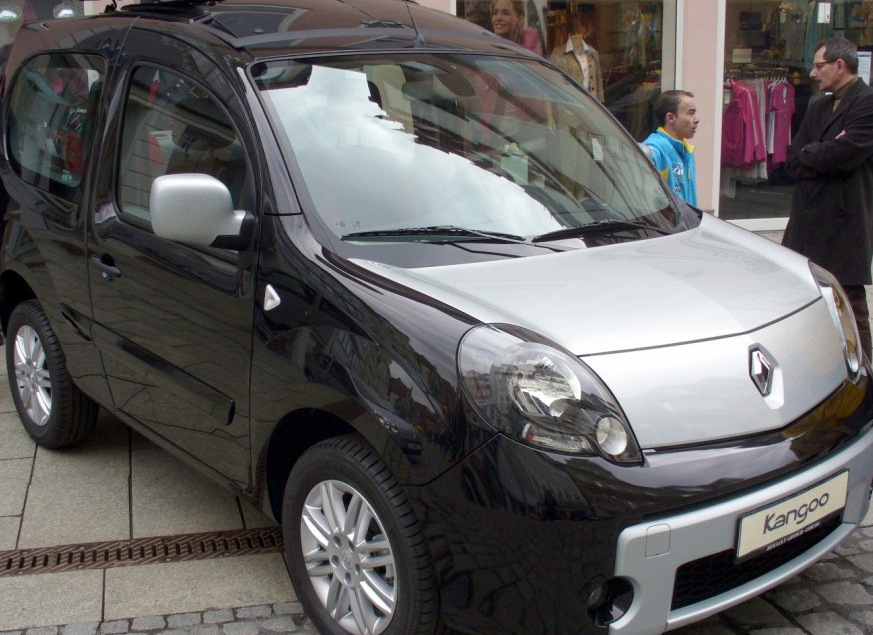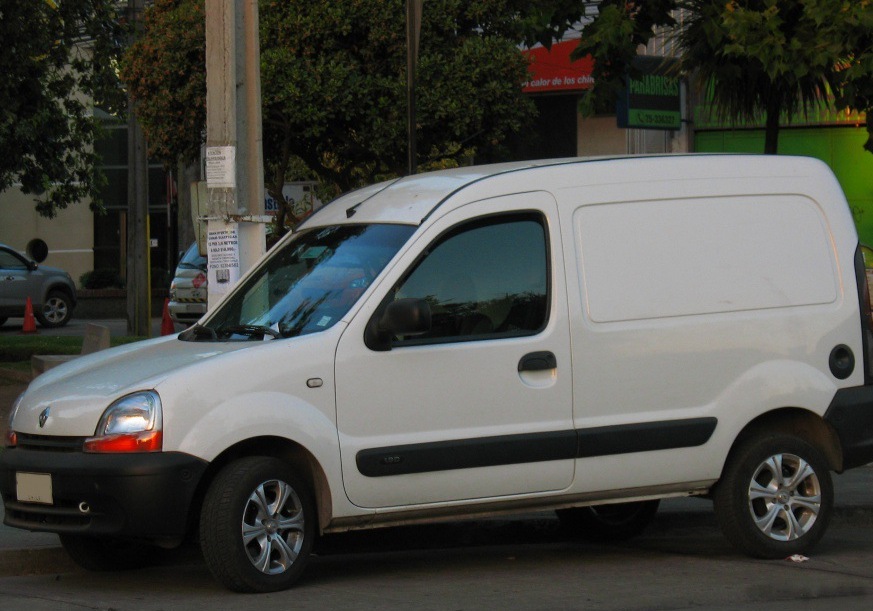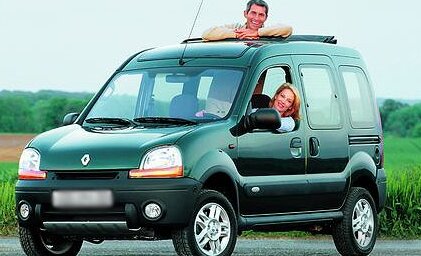
The Renault Kangoo I, specifically the 1.6i 16V 4×4 variant, was produced between 2001 and 2003. This model represented a niche offering within the first generation (KC) Kangoo range, combining the practicality of the Kangoo’s van-derived body style with the added capability of all-wheel drive. Positioned as a more versatile option, it catered to buyers needing enhanced traction for varied conditions, though at a slight premium over the standard front-wheel-drive models. The Kangoo I itself was a significant vehicle for Renault, offering a compact, affordable, and functional vehicle that bridged the gap between passenger cars and light commercial vehicles, particularly popular in Europe.
Technical Specifications
| Brand | Renault |
| Model | Kangoo |
| Generation | Kangoo I (KC) |
| Type (Engine) | 1.6i 16V (95 Hp) 4×4 |
| Start of production | 2001 |
| End of production | 2003 |
| Powertrain Architecture | Internal Combustion engine |
| Body type | Minivan |
| Seats | 5 |
| Doors | 4 |
| Fuel consumption (urban) | 10.8 l/100 km (21.8 US mpg, 26.2 UK mpg, 9.3 km/l) |
| Fuel consumption (extra urban) | 7.3 l/100 km (32.2 US mpg, 38.7 UK mpg, 13.7 km/l) |
| Fuel consumption (combined) | 8.6 l/100 km (27.4 US mpg, 32.8 UK mpg, 11.6 km/l) |
| CO2 emissions | 205 g/km |
| Fuel Type | Petrol (Gasoline) |
| Acceleration 0 – 100 km/h | 13.1 sec |
| Acceleration 0 – 62 mph | 13.1 sec |
| Acceleration 0 – 60 mph | 12.4 sec |
| Maximum speed | 153 km/h (95.07 mph) |
| Weight-to-power ratio | 14.5 kg/Hp, 69.1 Hp/tonne |
| Weight-to-torque ratio | 9.3 kg/Nm, 107.6 Nm/tonne |
| Power | 95 Hp @ 5000 rpm |
| Power per litre | 59.4 Hp/l |
| Torque | 148 Nm @ 3750 rpm (109.16 lb.-ft. @ 3750 rpm) |
| Engine layout | Front, Transverse |
| Engine Model/Code | K4M |
| Engine displacement | 1598 cm3 (97.52 cu. in.) |
| Number of cylinders | 4 |
| Engine configuration | Inline |
| Cylinder Bore | 79.5 mm (3.13 in.) |
| Piston Stroke | 80.5 mm (3.17 in.) |
| Number of valves per cylinder | 4 |
| Fuel injection system | Multi-port manifold injection |
| Engine aspiration | Naturally aspirated engine |
| Valvetrain | DOHC |
| Engine oil capacity | 4.9 l (5.18 US qt | 4.31 UK qt) |
| Coolant | 6 l (6.34 US qt | 5.28 UK qt) |
| Kerb Weight | 1375 kg (3031.36 lbs.) |
| Max. weight | 1850 kg (4078.55 lbs.) |
| Max load | 475 kg (1047.2 lbs.) |
| Trunk (boot) space – minimum | 650 l (22.95 cu. ft.) |
| Trunk (boot) space – maximum | 2600 l (91.82 cu. ft.) |
| Fuel tank capacity | 60 l (15.85 US gal | 13.2 UK gal) |
| Max. roof load | 100 kg (220.46 lbs.) |
| Permitted trailer load with brakes (12%) | 1200 kg (2645.55 lbs.) |
| Permitted trailer load without brakes | 685 kg (1510.17 lbs.) |
| Permitted towbar download | 75 kg (165.35 lbs.) |
| Length | 3995 mm (157.28 in.) |
| Width | 1675 mm (65.94 in.) |
| Width including mirrors | 2015 mm (79.33 in.) |
| Height | 1894 mm (74.57 in.) |
| Wheelbase | 2600 mm (102.36 in.) |
| Front track | 1410 mm (55.51 in.) |
| Rear (Back) track | 1430 mm (56.3 in.) |
| Front overhang | 692 mm (27.24 in.) |
| Rear overhang | 703 mm (27.68 in.) |
| Minimum turning circle | 10.95 m (35.93 ft.) |
| Drive wheel | All wheel drive (4×4) |
| Number of gears and type of gearbox | 5 gears, manual transmission |
| Front suspension | Spring Strut |
| Rear suspension | Trailing arm |
| Front brakes | Ventilated discs |
| Rear brakes | Drum |
| Assisting systems | ABS (Anti-lock braking system) |
| Steering type | Steering rack and pinion |
| Power steering | Hydraulic Steering |
| Tires size | 185/65 R15 T |
| Wheel rims size | 15 |
Powertrain & Engine Architecture
The 1.6i 16V engine, designated K4M by Renault, is a naturally aspirated, inline-four cylinder petrol engine. This engine was a mainstay in many Renault and associated brand vehicles during the 1990s and early 2000s. The ‘16V’ designation indicates a four-valve-per-cylinder configuration, enhancing breathing and contributing to improved power output compared to earlier two-valve designs. Fuel delivery is managed by a multi-port fuel injection system, providing precise fuel metering for optimal combustion. The engine’s 59.4 horsepower per liter demonstrates a relatively efficient design for its time. The 4×4 system employed a viscous coupling to engage the rear wheels when front wheel slip was detected, offering automatic all-wheel drive functionality without driver intervention. The transmission was a five-speed manual, chosen for its durability and relative simplicity.
Driving Characteristics
The 95 horsepower output of the 1.6i 16V engine, coupled with the added weight of the 4×4 system, resulted in a 0-60 mph acceleration time of around 12.4 seconds. While not particularly brisk, the engine provided adequate power for everyday driving and load-carrying duties. The five-speed manual transmission offered a reasonable spread of gear ratios, allowing the engine to operate efficiently at cruising speeds. Compared to the base 1.4-liter engine, the 1.6i offered a noticeable improvement in performance, particularly when fully loaded or tackling inclines. However, it lacked the punch of higher-spec engines available in the Kangoo range. The all-wheel-drive system provided enhanced traction on slippery surfaces, making it a more confident choice for drivers in regions with inclement weather or unpaved roads.
Equipment & Trim Levels
The 1.6i 16V 4×4 trim typically included features such as power steering, ABS brakes, and a basic audio system. Interior upholstery was generally cloth, with a functional, hard-wearing design. Options available could include air conditioning, electric windows, and a sunroof. The Kangoo’s interior was designed with practicality in mind, offering a spacious cabin and a versatile cargo area. The rear seats could be folded or removed to maximize cargo capacity. The dashboard layout was straightforward and easy to use, with clearly labeled controls.
Chassis & Braking
The Kangoo I utilized a relatively simple chassis design, featuring a MacPherson strut front suspension and a trailing arm rear suspension. This setup provided a comfortable ride quality, although handling was not particularly sporty. The front brakes were ventilated discs, offering good stopping power, while the rear brakes were drums, a cost-saving measure common in this class of vehicle. The all-wheel-drive system added weight and complexity to the chassis, but also improved stability and traction.
Market Reception & Comparison
The Renault Kangoo I 1.6i 16V 4×4 was generally well-received by critics as a practical and versatile vehicle. Its all-wheel-drive system was praised for its ability to handle challenging road conditions. However, some reviewers noted that the engine lacked refinement and that the ride could be somewhat bumpy on rough surfaces. Compared to other trims in the Kangoo lineup, the 1.6i 4×4 offered a good balance of performance and capability, but at a higher price point. Fuel economy was reasonable for a vehicle of its type, averaging around 27.4 US mpg in combined driving.
Legacy
The Renault Kangoo I 1.6i 16V 4×4, while not the most common variant, has proven to be a relatively reliable vehicle. The K4M engine is known for its durability, and the 4×4 system is generally robust. Today, these vehicles can be found on the used car market, often at affordable prices. They represent a practical and versatile option for buyers seeking a compact, all-wheel-drive vehicle for work or leisure. Maintenance is generally straightforward, with parts readily available. However, potential buyers should be aware of the possibility of rust, particularly in vehicles that have been exposed to harsh weather conditions.